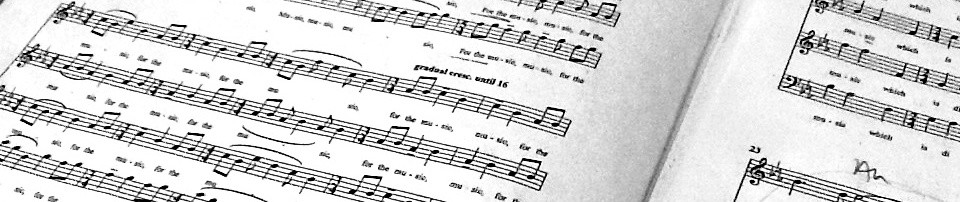
A busy choral week this week with both the Chamber and Cecilian Choir rehearsals.
As we get closer to the Crypt concert, the Chamber Choir rehearsals become progressively more involved, as we work to really make sure the intonation is good and that we can perform without the piano. There are moments when the choir really flies without the accompaniment – and then a few moments when we come to the ground with something of a bump… We’ve been taking particularly challenging progressions out of context, working to tune the motion between the chords effectively to ensure each voice-part knows the direction of the line. It’s especially challenging in the two Italian giants, the Lassus and the Monteverdi.
In contrast, Saint-Saëns’ Calme des Nuits is starting to develop a real sense of space, as we let particular chords build or dwell on the more static passages.
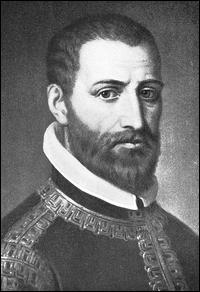
Renaissance master: de Victoria
In contrast, the Cecilian Choir rehearsal revelled in the glory of that masterpiece of the Renaissance period, two movements from Victoria’s Missa O Magnum Mysterium; we looked today at the ‘Sanctus’ for the first time, exploring sustaining the rich melismas right through until their very end. There’s a wonderful point where the sopranos are descending in stately fashion through the Aeolian mode whilst the other three voices are weaving their counterpoint underneath: a highly effective moment at the words ‘Dominus Deus.’ The ensuing ‘Hosanna’ moves to triple metre, and creates a positively dancing finish to the movement.
But no cake at the Chamber Choir rehearsal on Tuesday night: what’s happened to the Choir Cake Monitor’s due diligence ?!

 The Cecilian Choir has once again blossomed this year, and in recent rehearsals has been working on being the Chorus of Cold People in the ‘Frost Scene’ from Purcell’s King Arthur. As is customary, the Choir is formed from members of the University community – staff, students and alumni – as a sister-choir to the Chamber Choir, as part of Kent’s flourishing musical life.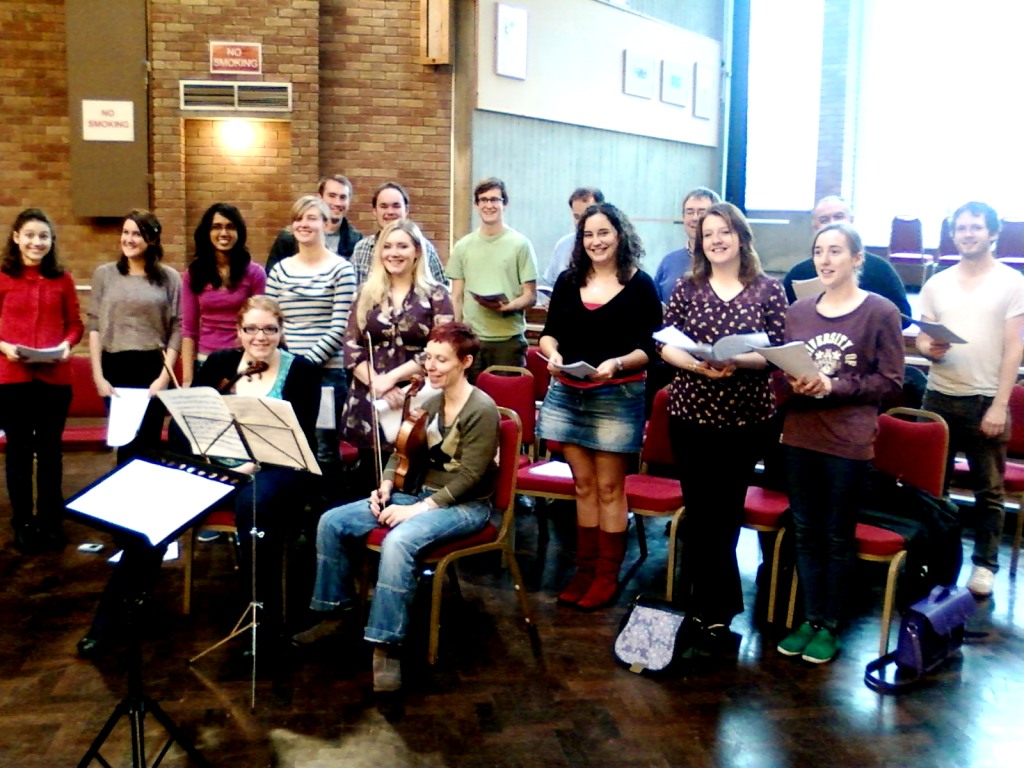
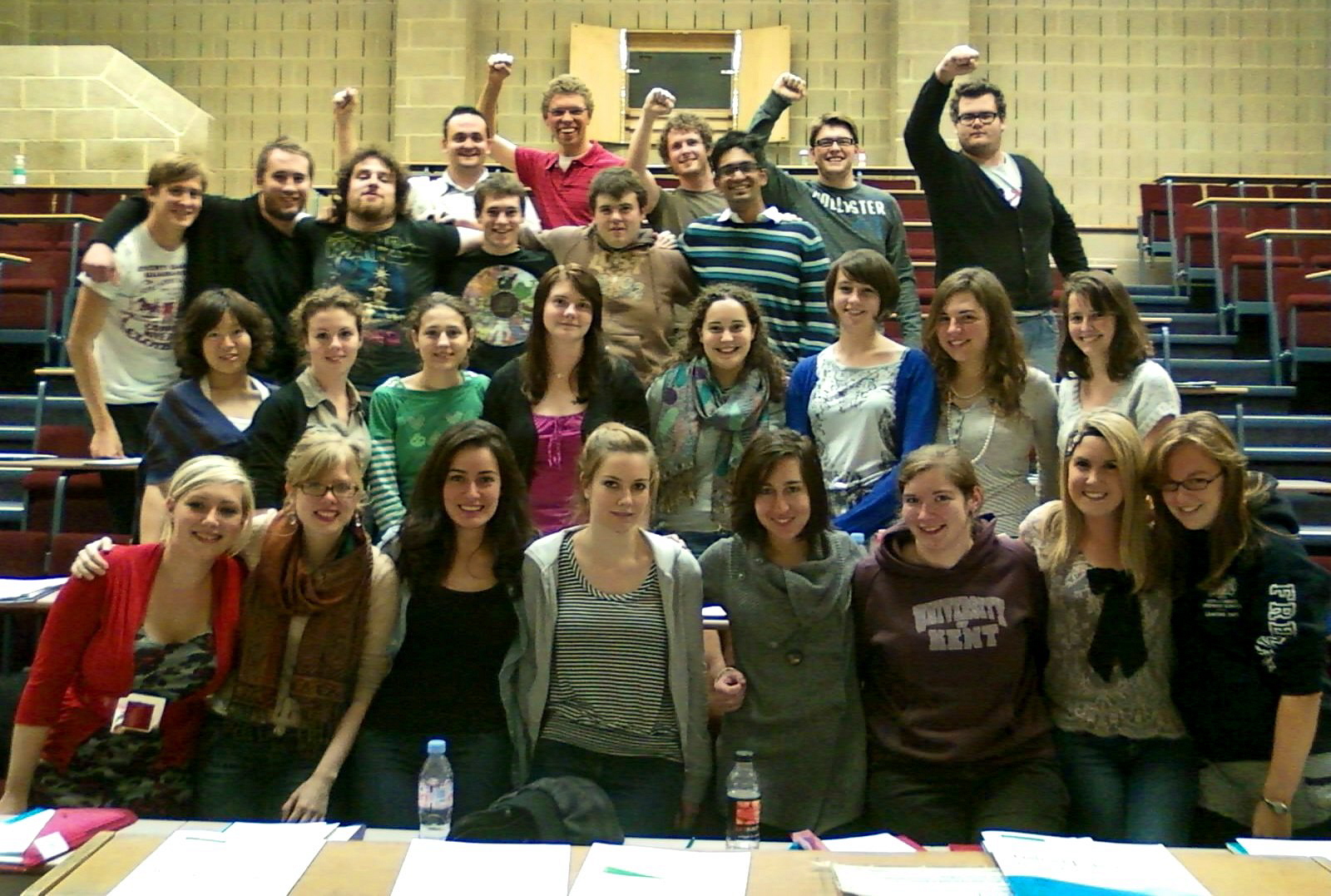
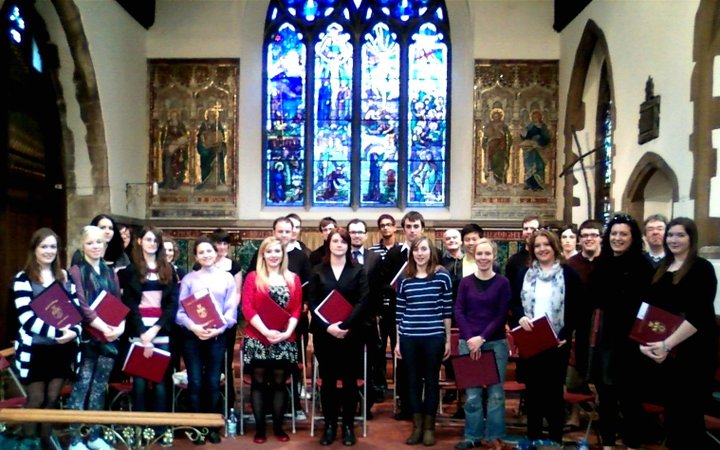


 As a companion and a contrast to the Saint-Saens setting of the Ave Verum Corpus, the Cecilian Choir today began rehearsing Mozart’s setting of the same text. Two very different treatments of the text: Saint-Saëns’ quite straightforward response to the words, Mozart’s much more lyrical and impassioned. I find programming two contrasting settings of a piece of text to be a interesting feature of concert-planning; each throws up facets of the other that listeners might not have otherwise noticed, or be able to compare a setting they might already know with one they’ve not heard before.
 We gathered in the round – Circle Time! – to sing the Saint-Saëns, and also to re-visit the plainchant ‘Ubi Caritas’ and Duruflé’s setting from last week. We took the plainchant more slowly than we have done before; I find that slowing pieces down just a little opens up a conversely larger amount of space in music – there’s time to really feel the phrases finish, to let the notes die away in a resonant acoustic before moving on. Getting the choir to stand in a circle really makes for a rich sound; suddenly, people can hear and relate to other voice-parts moving that they hadn’t previously really been aware of; they also feel more a part of the collective whole, rather than standing strung out in two lines as we are when we are seated in rehearsal.
 Ave verum corpus is best-known in a setting by Mozart, but the Cecilian Choir began their spring rehearsals with a version by Saint-Saens, that I confess was a recent discovery for me. It’s a wonderfully simple setting in Eb major, which in the more colourful second section, at the words ‘Cujus latus perforatum,’ moves to chords of Db and Gb major, climaxing in the relative minor before subsiding to a gentle ending.