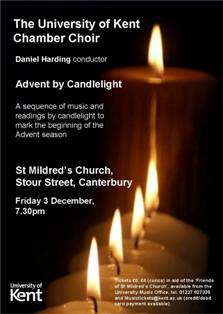
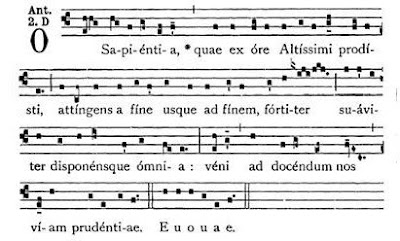
And so, this week we ventured yet further into our Advent repertoire. With the concert looming at the end of November, time to start the great Advent antiphons. As written about in a previous post, the magic of these antiphons resides in breathing life and flexibility into them, finding a rhythmic freedom that will allow the lines to ebb and flow with a naturalness, whilst still retaining the integrity of the ensemble. We explored the first and third, ‘O Wisdom’ and ‘O, Root of Jesse.’ Singing this music is a direct link with the past; you really feel history coming alive as the music unfolds. The antiphons date from before the ninth century, culled from Old Testament texts to foretell the coming of the Messiah, and singing them puts one in direct contact with a tradition dating back over a thousand years.
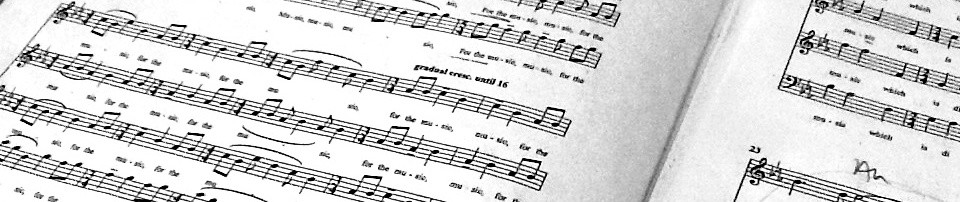
 From medieval simplicity to the rich, clashing harmonies of the carol, Remember, O Thou Man; we worked at particularly pungent chords, moving very slowly between particular dissonances in a way that rendered certain passages actually rather alarmingly modern.
Steph then led the group in their first look at the Carol of the Bells, getting the choir to sound like bells ringing. A sprightly piece, this, and popular with the group. Lots of words to get across, too…
Time also to get to grips with a tricky corner in Barnum’s Dawn, building some of the chords note by note, a real opportunity to revel in the rich colours of many of the added-note chords that require great commitment from the voice-parts: the chords need to be delivered with great conviction for the colours to bloom.
Brahms’ In Stiller Nacht is maturing nicely; just some pronunciation aspects to sort out, as there are also in Monteverdi’s Ecco mormorar l’onde. This piece is the hardest so far. By contrast, and as a respite from the linguistic minefields afforded by these pieces, we went back to Sleep Wayward Thoughts, which is starting to lift off the page and achieve some rhythmic grace.
A final return to Whitacre’s Sleep, to look at the climactic section towards the end; tricky lines for the choir, where each part has to have courage to follow their lines through and stand firm in clashing dissonances.
A great rehearsal, full of colour; next week, we’ll be getting seriously in the Christmas mood as we broach, for the first time this year, that harbinger of the Christmas season: Carols for Choirs…
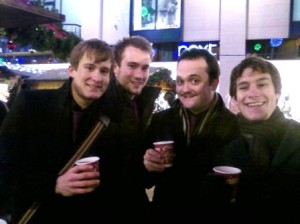
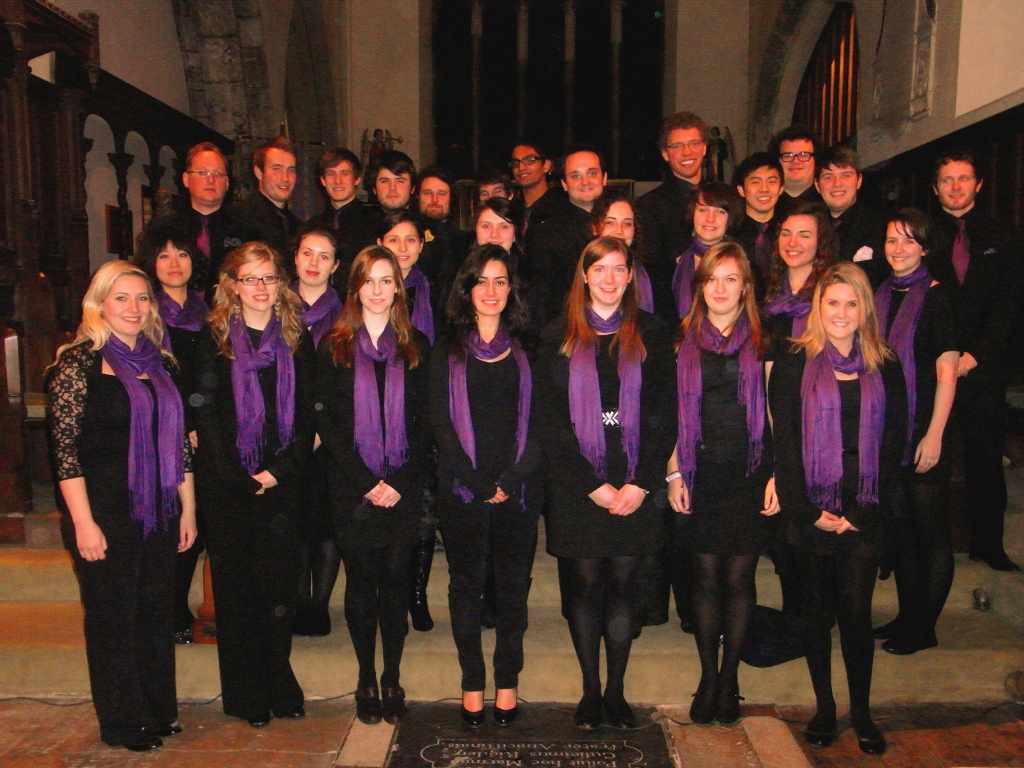
 Inside St. Mildred’s Church, however, light, music and jollity abounded; we had battled the elements in order to hold our customary Tuesday night rehearsal in the church, in order to work without a piano and to get a sense of the space and the acoustics for the concert.
 The final singing of the evening was a chance to re-visit Skempton’s He Wishes for the Cloths of Heaven. It’s not a Christmas piece, it’s not in the Advent service in a few weeks’ time – in fact, we’re not actually singing it until February. But this was too good an opportunity to miss: the chance to sing it in a sonorous acoustic, arranged in a crescent-shape similar to the way we’ll be standing to perform in the Cathedral Crypt. (And besides, I love the piece, so any opportunity to sing it is welcome indeed…). We took it a fraction under-tempo, as it’s been several weeks since we first sang it, and this is only the second reading; this meant the chords hung in the air for just a little longer than usual, and the colours really had a chance to blossom. It worked so well, in fact, that I’m wondering whether it shouldn’t go at that speed in performance; it’s marked Andante, but perhaps my enthusiasm has pushed the speed slightly ? Something to think about…
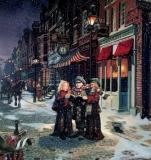 The anthologies having arrived, this week was the chance to get in a festive mood by working on the carols for the Advent service looming around the corner. To start, Ding, dong merrily on high! and the opportunity to work on sustaining the long phrases on ‘Gloria,’ and to get the bell-sounds pinging off the page – as with the Vaughan Williams ‘Full fathom five,’ there needs to be a really percussive ‘d’ to the ‘ding’ and bright vowel-shapes to get the notes crisp and vibrant, rather than heavy and dragging.