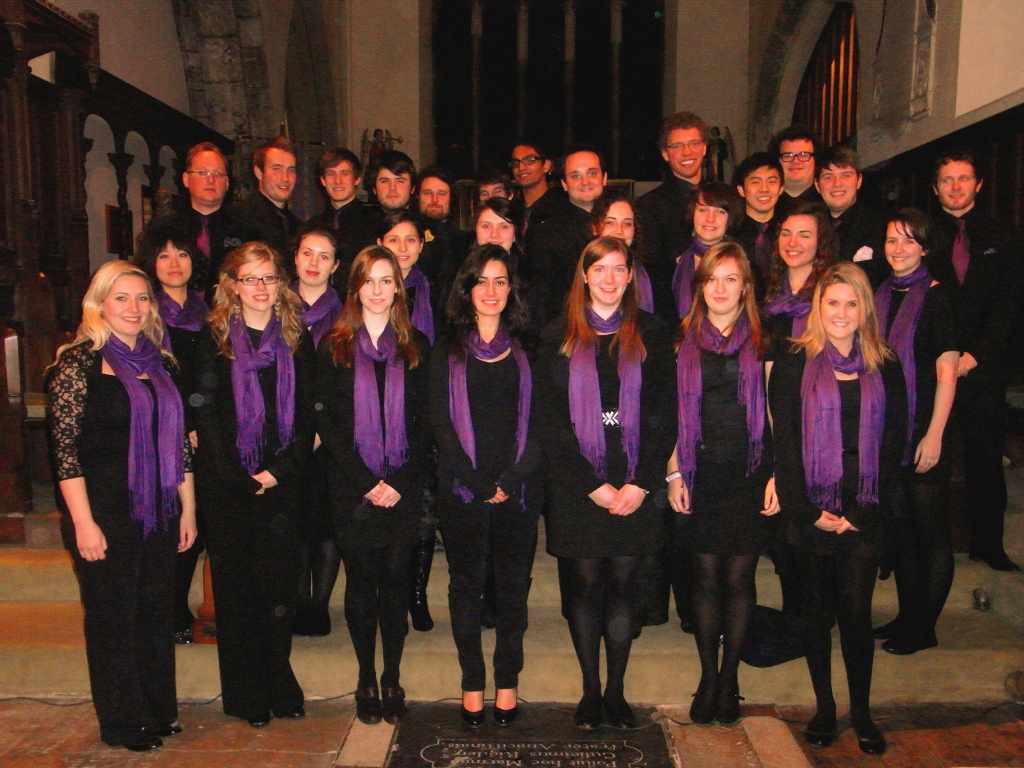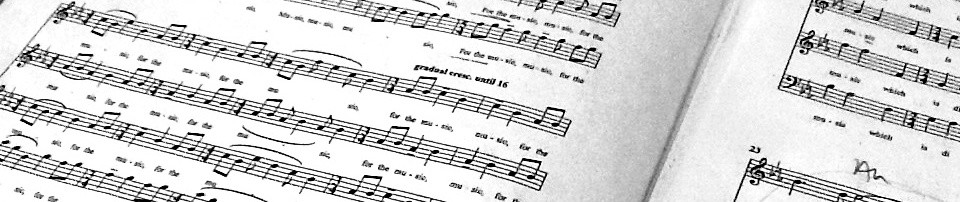

 Ave verum corpus is best-known in a setting by Mozart, but the Cecilian Choir began their spring rehearsals with a version by Saint-Saens, that I confess was a recent discovery for me. It’s a wonderfully simple setting in Eb major, which in the more colourful second section, at the words ‘Cujus latus perforatum,’ moves to chords of Db and Gb major, climaxing in the relative minor before subsiding to a gentle ending.
(Unfortunately, there’s a phrase in the middle that is identical to the opening phrase in ‘Tale As Old As Time’ from Disney’s Beauty and the Beast (1′ 43” in the video above), but we’re hoping listeners don’t notice…).
We renewed our acquaintance with the Victoria Ave Maria we’d begun last term, with its terrific rhythmic flexibility; the phrase ‘Sancta Maria, mater Dei’ is set in triple-metre instead of the compound metre up until that point, which imparts a lovely dance-feel.
Circle-time ensued: we moved away from the piano and gathered in a circle in the middle of the hall to sing it through – it really means you have to get used to not relying on a supporting instrument playing your line, and start listening to the other voices around you. It worked, too: some lovely chords echoed round the hall, and the tuning was spot-on.
Finally, a return to the drama of Brahms’ Ach, arme Welt, with its sudden crescendi and unstable harmonies.
All bodes well for the concert, which is currently being finalised: more details coming soon!
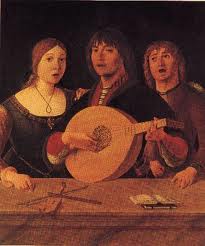
 The flowering of madrigal composition in England yielded a rich variety of works, and our selection includes Sing We and Chant It by Morley, Bennett’s profound misery in Weep, O Mine Eyes and Weelkes’ Hark, All Ye Lovely Saint Above. The Bennett piece is often performed at a slow two-in-a-bar pace – there’s no tempo marking, the score simply says ‘Sadly’ – but we’re working on a slow four-in-a-bar feel that will really elongate the chromatic dissonances and tonal clashes between the voices; hopefully it will be a much more anguish-ridden meditation at a slower tempo. To balance this, and make sure neither choir nor audience are riddled with abject misery, the other two pieces are lively, with a dance-feel that we’re working hard to capture – the rhythmic lilt and dip often going over the bar-line.
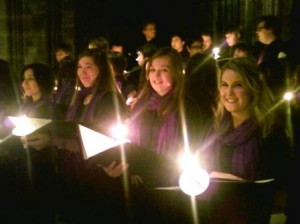 The Chamber Choir rose to the occasion in admirable form, beginning the service with Tavener’s Today the Virgin, delivered with punch and rhythmic vitality – having performed it this time last week at the Advent Concert, it’s become comfortably familiar, and the group delivered it with great confidence, each lengthening ‘Alleluia’ growing and filling the Cathedral with ringing harmony.
 Merry Christmas, everyone.