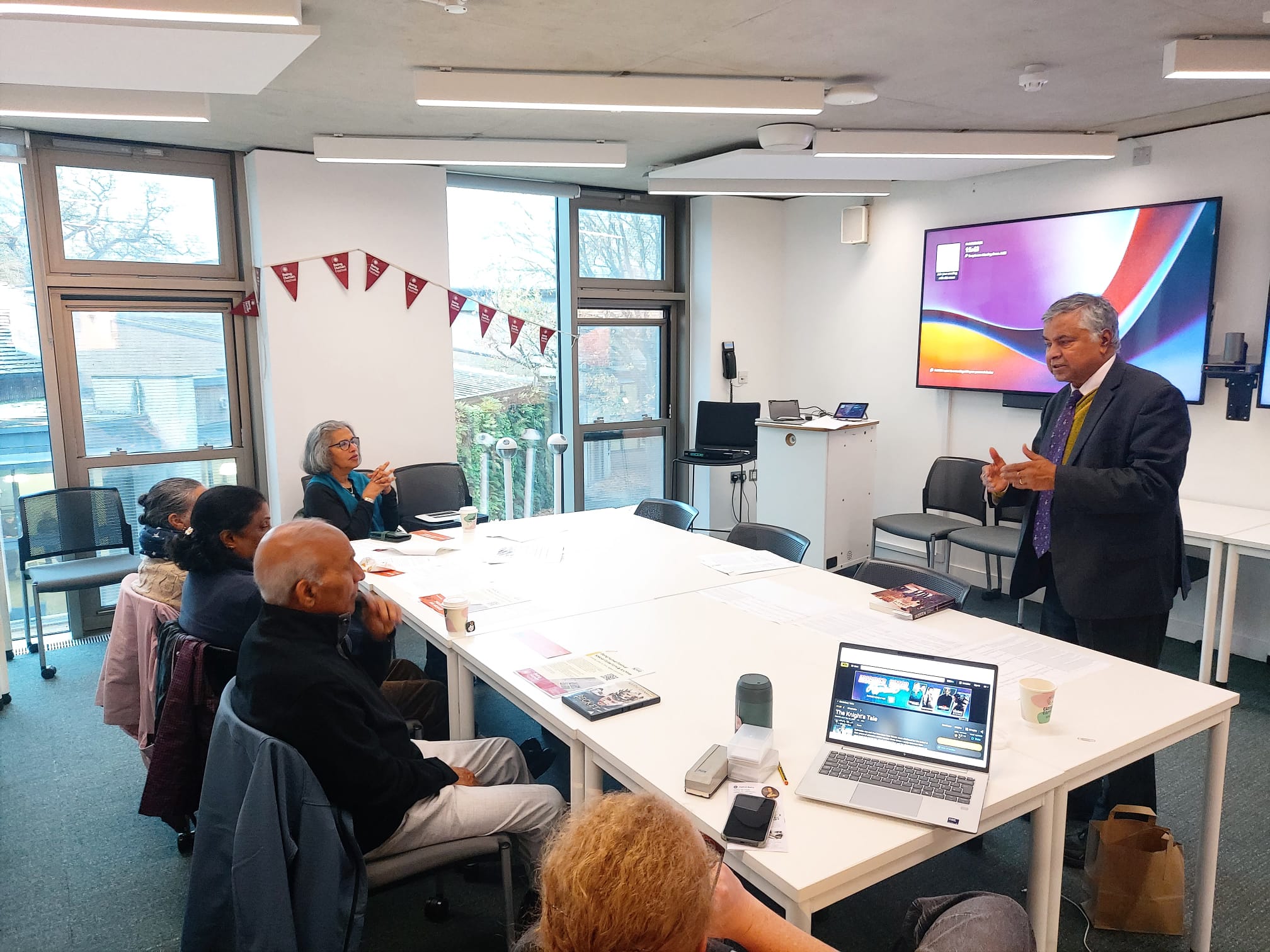
This blog post reports on the events we held in November 2025 as part of the Being Human Festival, co-written by Christine Davies and Dr Balasubramanyam Chandramohan.
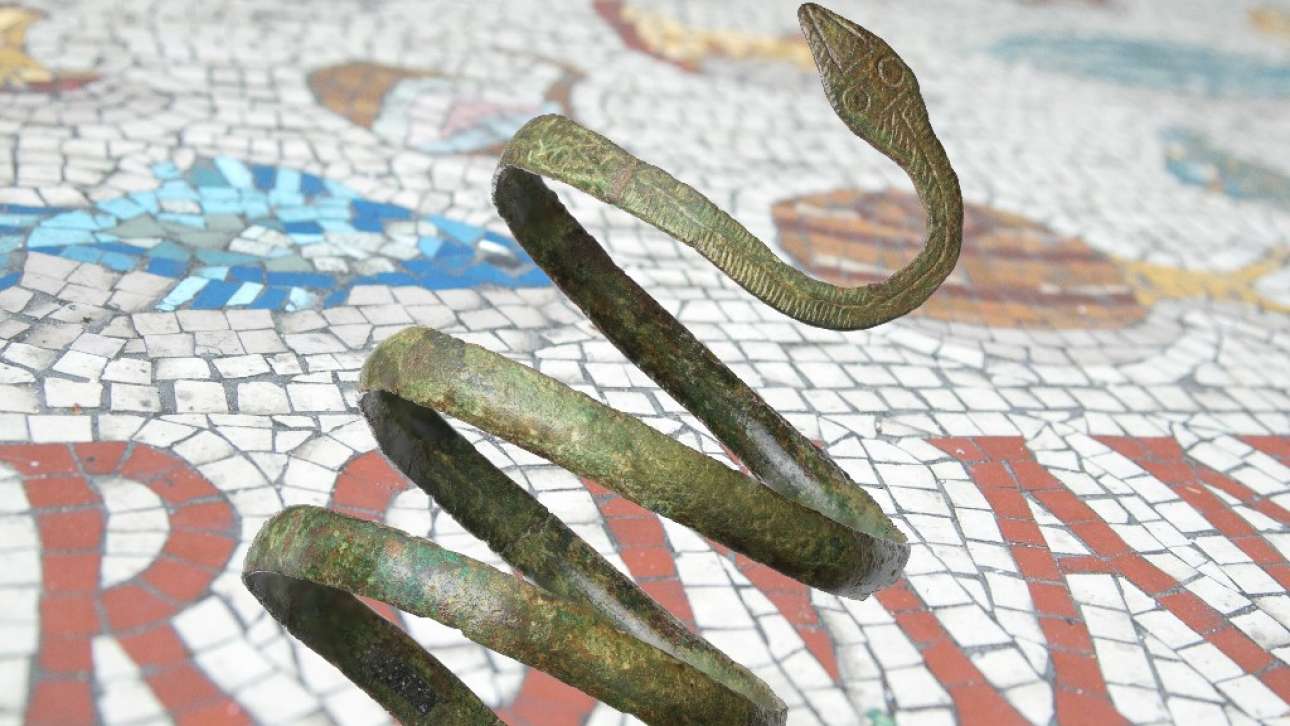
Artefacts from Canterbury Roman Museum, image courtesy of Canterbury Museums and Galleries
What is the Being Human Festival?
The Being Human Festival is an annual festival celebrating the Humanities usually held in November led by the School of Advanced Study at University of London, in partnership with the Arts and Humanities Research Council and The British Academy.
During the Festival, researchers, academics, and cultural organisations across the UK organise events in a range of public places mostly with a range of Partner Institutions.
The theme for the 2025 Festival was ‘Between Lines’ and explored ‘boundaries, crossings, and intersections – the spaces in between, where meaning is made and remade. Exploring everything from migration to motherhood and boardgames to beer!’ and took place from 6 – 15 November 2025.
Being Human at the University of Kent 2025
Our events comprised a pop-up exhibition and two in-person events at the start and close of the festival, titled ‘Crossing Lines in Time, Space and Genre’. The purpose of these events was to explore events, personalities, and creative works, from the Roman period to the present day in Canterbury, including a dedicated section on Global Canterbury focussing on recent engagement with organisations such as the UN and the Commonwealth.
Special Collections and Archives workshop on 6th November 2025
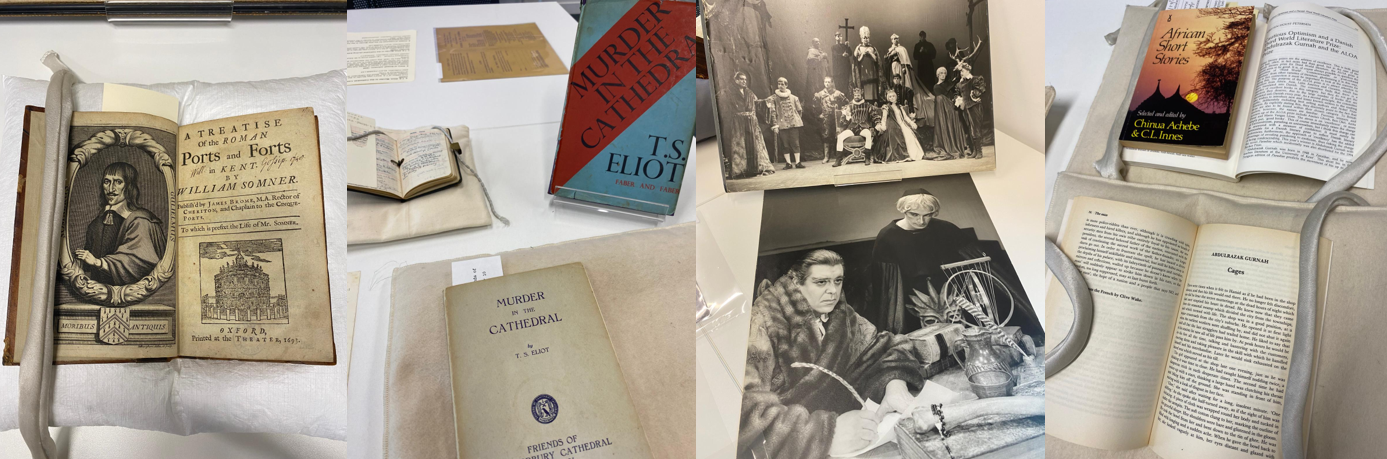
Select materials from Special Collections and Archives, University of Kent
This event showcased curated materials from our collections for a public audience who had the opportunity to handle rare and unique items that uncovered stories from Canterbury’s cultural past. We began the workshop by looking at the scholar and antiquarian William Somner (1598-1669) who was born in Canterbury and whose printed works of the seventeenth century reveal a deep fascination with England’s Roman past. Proceeding to medieval Canterbury, we looked at material pertaining to the production of T.S. Eliot’s Murder in the Cathedral for the Canterbury Festival of 1935 and to tales of Chaucer’s legendary pilgrims who, of course, never actually make it to Becket’s shrine. We moved on to Christopher Marlowe (1564-1593) and Aphra Behn (1640-1689) through the lens of late twentieth-century productions of their plays in Canterbury at the Marlowe and Gulbenkian Theatres. Leaping forward in time, we finished by acknowledging the work of Nobel laureate Abdulrazak Gurnah, much of which was composed right here at the Templeman Library!
Whilst our handling workshop was limited to fifteen participants (in order to allow the safe supervision of rare books and archive material), we gave longevity to the event via our audio-visual machine, whereby curated selections could be accessed virtually for the duration of the festival.
Panel discussion on 14th November 2025
Dr Chandramohan’s session started with the screening of the introductory video of the Being Human Festival, which provided an overview of the programme nationally, and, in the process, the context for the event in Canterbury.
Balasubramanyam Chandramohan chairing panel discussion, image courtesy of Dr Chandramohan
The activities during the session traced historical events, and the repurposing and changed perceptions of the events in later periods. The original events were seen within the ‘lines’ of knowledge taxonomies/academic disciplines (such as Archaeology, History and Literature), while the contemporary/altered repurposing was seen as being between or beyond the original ‘lines’, for example in Tourism or Outreach/Public Relations agendas of organisations, including local universities, or in problem-solving initiatives.
The activities were framed within Dr Chandramohan’s disciplinary/interdisciplinary research at the Institute of Commonwealth Studies, School of Advanced Study.
The participants were able to sample and discuss select display of material on the Romans, Thomas Becket, Geoffrey Chaucer, Christopher Marlowe, Aphra Behn, Abdul Razak Gurnah, and ‘Global Canterbury’ (Commonwealth, UN, etc.) as featured in our pop-up display of main collection print materials and DVDs.
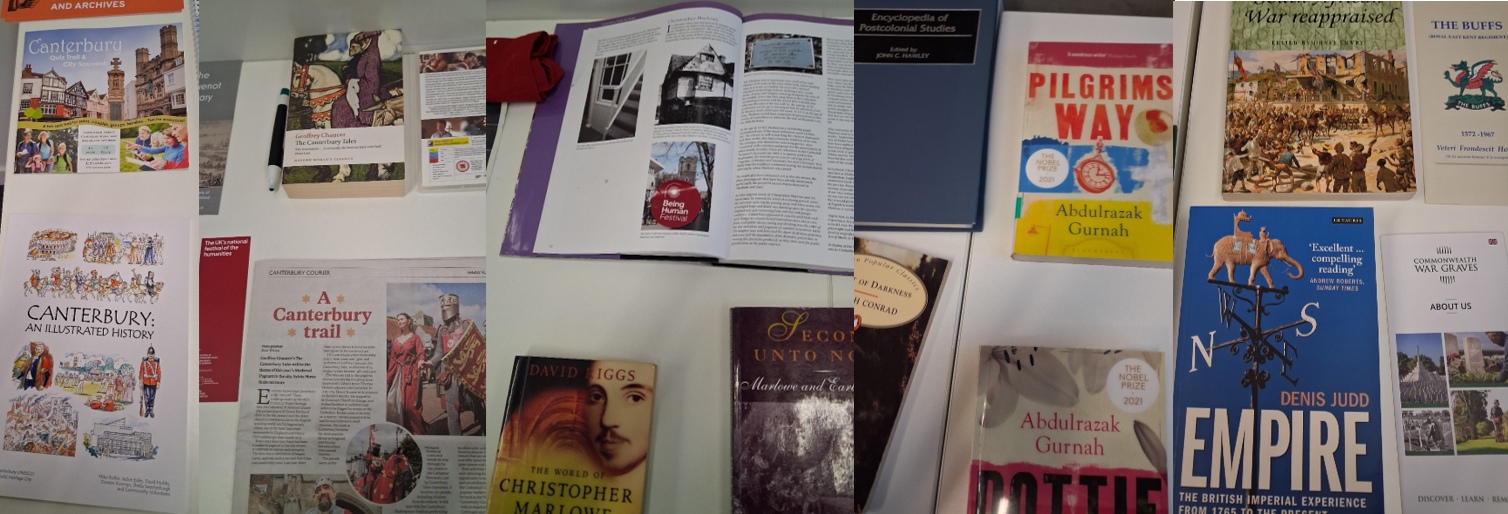
Materials selected by Dr Chandramohan supporting the panel discussion
Afterlives
Following the events organised for Being Human 2025, Christine and Dr Chandramohan were delighted to feature on a podcast episode of The Business Show, hosted by Arif Zaman of the Bloomsbury Institute to plug into global enterprise trends and sustainable commerce.
We were incredibly gratified by what these events achieved, both in what Special Collections and Archives material could evidence in the way of history repeating and reinventing itself in defiance of the strictures of time, space and genre, and in the conversations generated between participants both within and outside different academic fields. We look forward to obtaining the programme for 2026 and welcome expressions of interest to collaborate on similar public engagement projects in the future.
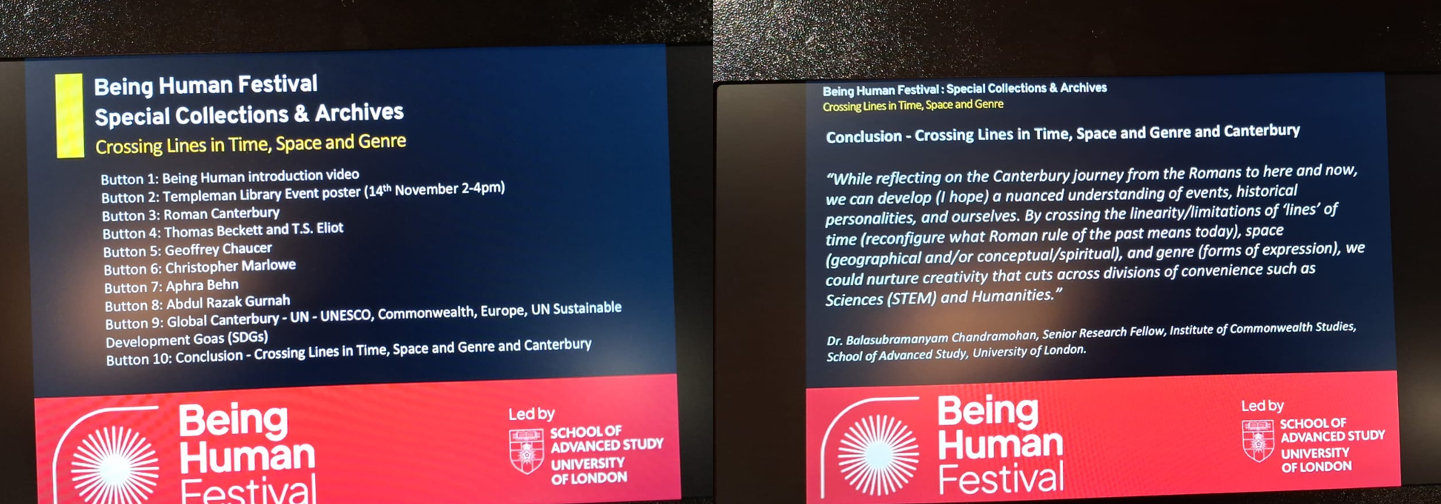
AV slides created for the pop-up exhibition