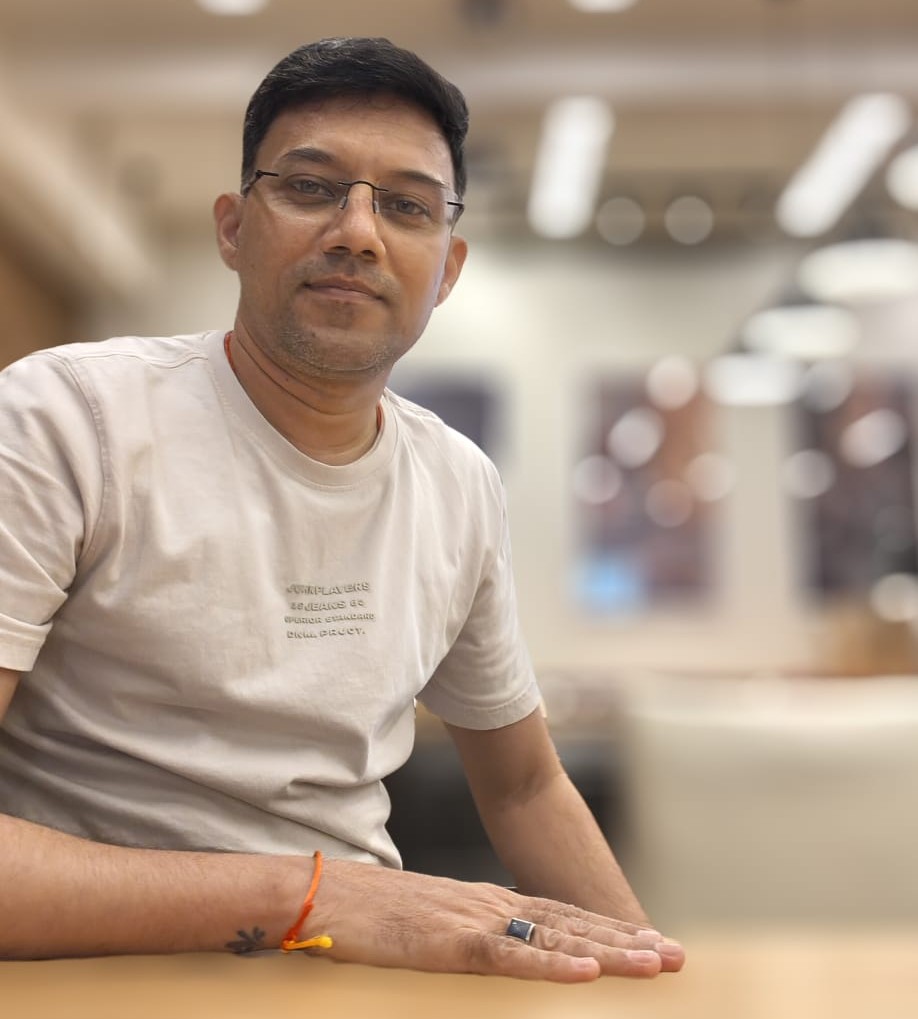
Ashish Thakre (MBA 2025) is currently a Project Manager with OPINTELS Solutions Ltd, UK, based in Canterbury, leading an Innovate UK-funded maritime decarbonisation programme.
The aim of the EIF project is to assess the feasibility of full electrification on the Dover – Calais – Dunkirk corridor, which is one of the UK’s busiest ferry routes by building a scalable modelling tool that integrates ferry performance, berth energy transfer, port infrastructure, and economics to support operators transitioning to zero-emission fleets.
The route which carries 33% of UK – EU trade, generates £144bn annually, and produces 1.1MtCO₂ (8% of UK maritime emissions), where the Port of Dover alone handles 2.4M trucks annually (32% of UK HGV freight).
We asked Ashish how the Kent MBA transformed his career.
What were you doing before you joined Kent Business School?
“I had spent two decades building my career in industrial engineering, project delivery and commercial leadership. As Regional Branch Head at Bry-Air Asia, I led commercial and delivery operations across a portfolio that grew to £3.1 million.”
What are you doing now?
“My role involves monitoring and coordinating industry and academic partners, managing programme governance, mitigating risks, engaging stakeholders and ensuring successful delivery.”
How did your MBA develop your leadership skills?
“It fundamentally changed how I approach decisions. Earlier, I focused primarily on operational excellence; today I balance commercial viability, stakeholder expectations, sustainability and long-term strategy. The programme strengthened my confidence to contribute at board level, communicate across diverse teams and evaluate complex business challenges with greater structure.”
Why did you choose Kent Business School?
“While my 21 years of experience gave me confidence in execution and leadership, the next stage of my career required stronger strategic thinking, financial decision-making and a broader global business perspective. That realisation became the driving force behind my decision to pursue an MBA. I chose Kent Business School because it combined academic excellence with practical relevance. Its Triple Crown accreditation, international learning environment and curriculum aligned perfectly with my aspiration to become a strategic business leader capable of creating sustainable impact.”
Which aspects of the programme were especially valuable?
“I appreciated the practical nature of the programme. Rather than memorising theories, we were encouraged to apply strategic frameworks to real business challenges. That approach bridged the gap between academic learning and professional practice, making every module immediately relevant.
The group consultancy projects were particularly valuable because they reflected the realities of modern organisations. Collaborating with professionals from diverse academic and cultural backgrounds taught me that successful leadership is less about directing people and more about aligning different perspectives towards a shared objective.
The real-world case studies also had a lasting impact. They encouraged us to analyse ambiguous business situations where there was no perfect solution, requiring us to evaluate risks, consider multiple stakeholders and justify our decisions with evidence rather than intuition.
Together, these experiences ensured that my MBA was not simply an academic qualification but a genuine period of professional transformation.”
How do you apply what you learned at Kent in your current role?
“My current role requires balancing technical delivery, stakeholder expectations, governance requirements and long-term strategic objectives.
Early in the project, several competing priorities emerged between consortium partners regarding timelines, resource allocation and project risks. Instead of addressing these issues individually, I applied the structured decision-making and stakeholder management approaches that had been reinforced throughout the MBA.
Rather than focusing solely on immediate operational concerns, I facilitated discussions that aligned every decision with the programme’s overall objectives, ensuring that technical, commercial and governance considerations were evaluated together. This collaborative approach strengthened communication across the consortium, improved transparency and supported effective risk management throughout the project.
The MBA taught me to step back and consider the broader organisational context, asking how individual projects contribute to long-term business objectives, competitive positioning and sustainable growth.
Modules covering financial analysis and business strategy improved my ability to evaluate investment decisions, assess commercial risks and balance technical recommendations with financial realities.
Communication also became a major strength. Regular presentations, group discussions and written assignments improved my ability to communicate complex ideas clearly to audiences with different backgrounds and priorities.”
 How did studying in an international learning environment influence you?
“I had previously worked across different regions, but studying alongside classmates from multiple countries meant discussions were enhanced by alternative perspectives shaped by different cultures, industries and professional experiences. I realised that effective leadership is not about convincing others to adopt your viewpoint; it is about understanding why different viewpoints exist and finding common ground. Those conversations taught me to listen more carefully and question my own assumptions.
Perhaps the greatest lesson was recognising that global business is ultimately about people. Regardless of industry or geography, trust, integrity, respect and effective communication remain the foundations of successful leadership.”
How has your degree prepared you for the future of work?
“Throughout my career I have been passionate about reducing energy consumption and supporting environmental initiatives. The MBA provided a stronger strategic framework for understanding how sustainability creates long-term business value rather than simply fulfilling compliance requirements. This perspective directly complements my current work within maritime decarbonisation.”
What has been the impact of your Kent MBA?
“It transformed years of professional experience into strategic leadership, equipping me with the confidence, perspective and global mindset to create sustainable value for organisations, communities and the wider society.”
What advice would you give to prospective students considering this course?
“Approach the MBA with curiosity rather than simply as a qualification.The greatest value of the programme lies not in the degree itself but in how willing you are to challenge your own assumptions, engage with people from different backgrounds and embrace perspectives that differ from your own.Participate actively in discussions, collaborate with classmates and seek feedback from lecturers. Some of the most valuable lessons come from conversations with peers, group projects and reflecting on different approaches to leadership.
If you’ve been inspired by Ashish’s story, find out more about the Kent MBA.