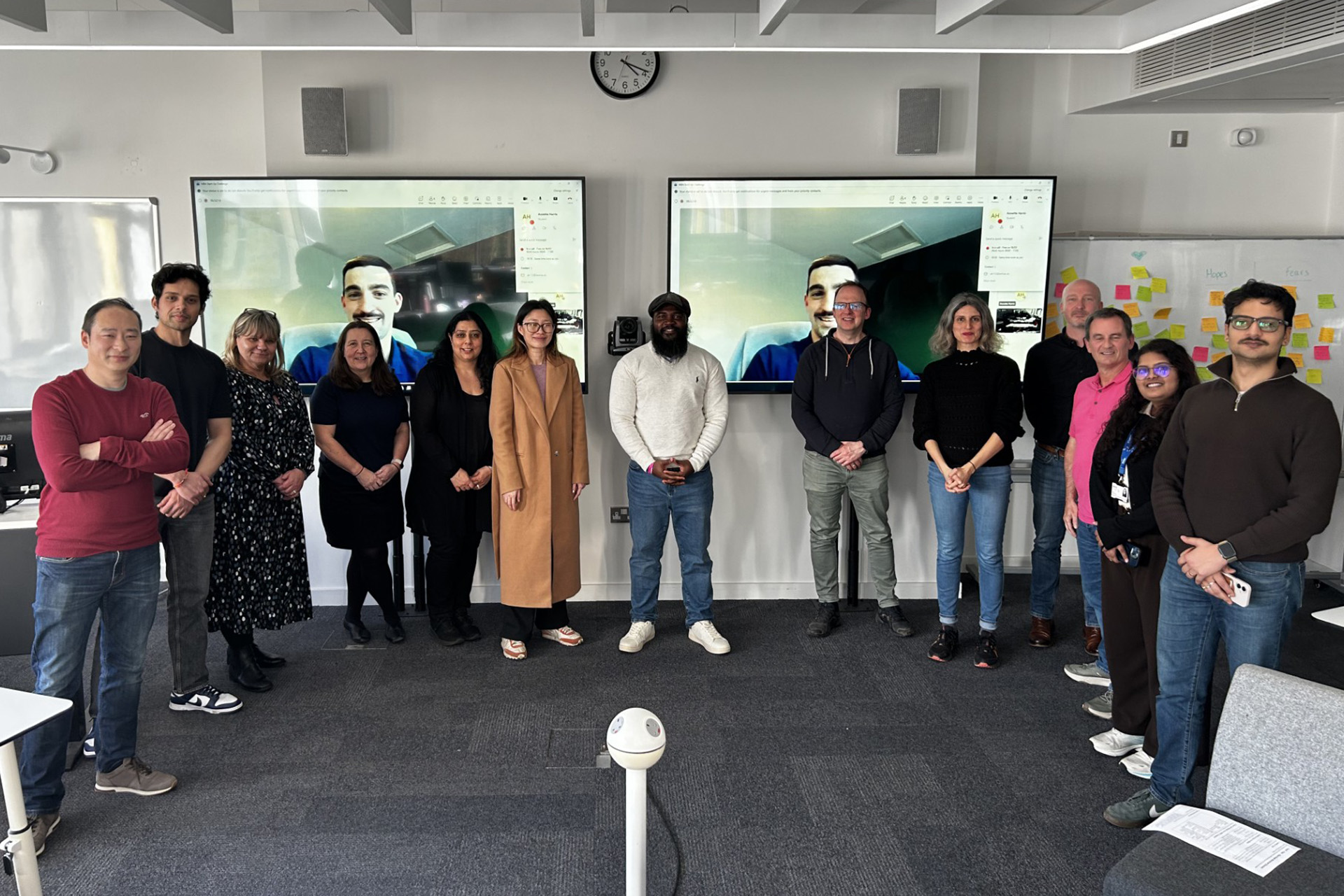
MBA students at Kent Business School took part in an intensive week-long Business Start-Up Challenge, delivered through the University of Kent’s ASPIRE programme, designed to immerse participants in the realities of entrepreneurial problem solving.
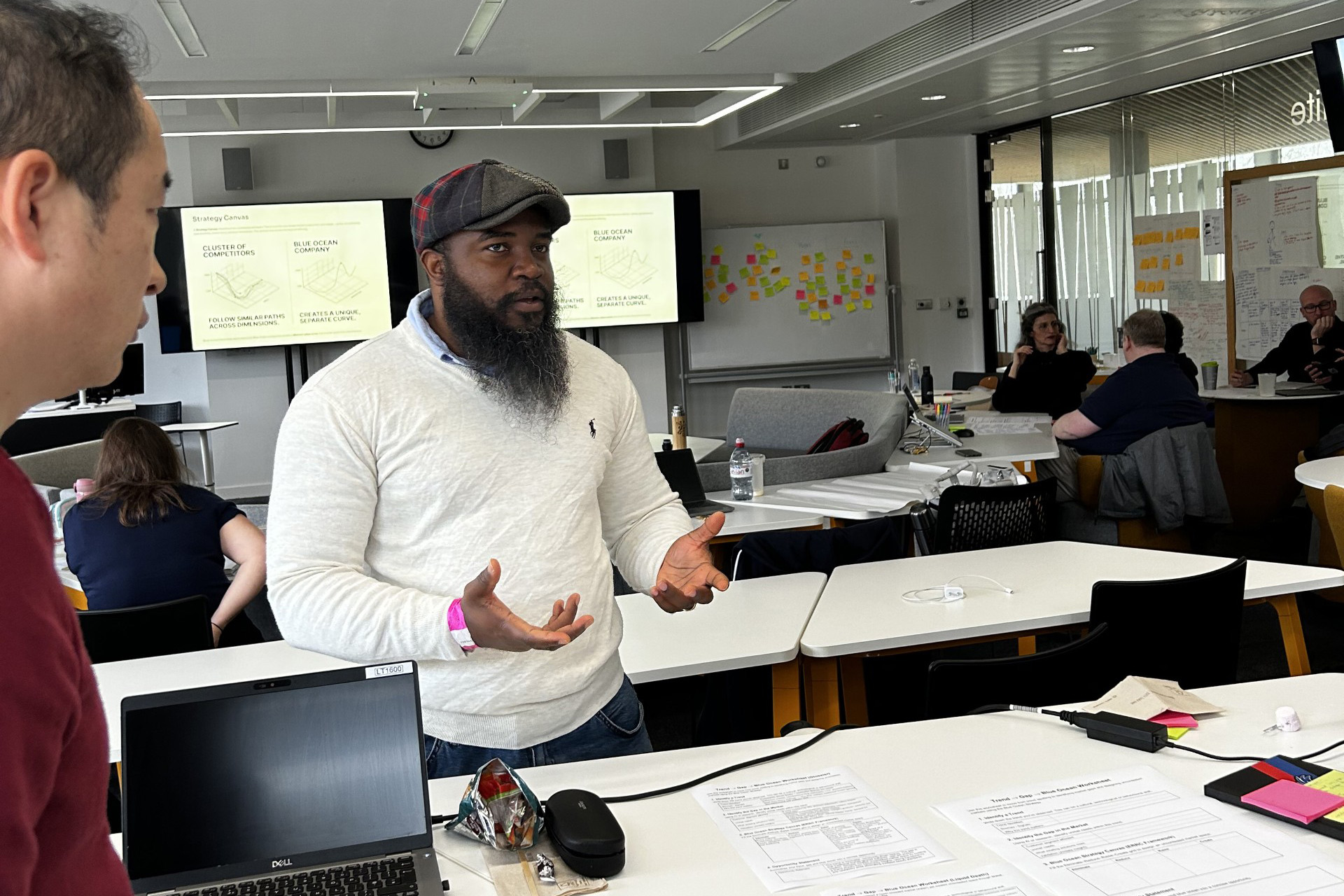
The module brought together practical tools from modern innovation practice, combining Agile techniques and Design Thinking, introduced by ASPIRE Innovator in Residence Jo Pullen, with Blue Ocean Strategy, delivered by ASPIRE Entrepreneur in Residence Johnson Bada. Together, these approaches encouraged students to move beyond traditional business planning and instead focus on identifying meaningful human problems and designing innovative solutions.
At the centre of the week was a deep dive into human-centred problem solving. MBA participants worked collaboratively to explore real-world challenges and develop early-stage venture ideas that could address them. The problems investigated were wide-ranging and reflected the diversity of student interests and professional backgrounds. Projects explored included the development of inclusive AI-powered learning resources, solutions to support parents with young babies, health and wellness coaching platforms, and even innovative concepts around horse ownership.
Through a highly practical format, students gained hands-on experience applying Agile iteration, customer discovery and strategic positioning. Many participants highlighted how the tools and frameworks used during the week could be directly applied to their professional roles and future career ambitions.
The programme also connected students with the wider entrepreneurial ecosystem through guest speakers from the KBS alumni community.
Investor Naz Bashir offered a detailed overview of how investors evaluate early-stage ventures. His presentation emphasised that while strong products and technologies matter, investors ultimately invest in people and teams. Founders must demonstrate clear vision, credible leadership, and the ability to execute their plans. Naz also highlighted the importance of a strong value proposition, scalable business models, realistic financial projections and clearly articulated exit strategies when seeking investment.
The week’s capstone was a virtual entrepreneurship seminar, organised by MBA students Jingjuan Zhao, Abi Ademoyero, Neha Bhambale and Sahil Mehra, titled Lessons from Entrepreneurship. The session aimed to move beyond theory and explore the practical realities of building and sustaining a venture.
The panel featured Kent Business School alumnus Odera Akachukwu, Founder and CEO of StayLyte, alongside Dipan Dalal, Anant Kulkarni, and contributors Samantha Jane and Jodie Devlin.
Drawing on his own founder journey, Akachukwu emphasised that entrepreneurship is often misunderstood as inspiration or big ideas. In reality, he argued, it is fundamentally about decision-making under pressure, execution without perfect information, and maintaining clarity in uncertain environments.
He also encouraged aspiring founders to focus less on chasing trends and more on identifying repeating everyday problems experienced by real people, echoing the principles instilled throughout the week. Successful ventures, he explained, often emerge from solving consistent and overlooked forms of friction in daily life.
For the MBA students attending, the seminar provided a valuable opportunity to hear candid reflections on topics such as strategic decision-making under uncertainty, funding challenges, scaling pressures and lessons learned from failure.
By combining frameworks from industry practitioners with lived experiences from founders and investors, the MBA programme continues to provide students with meaningful opportunities to explore what business looks like beyond the classroom.