The story of how 106 Kent Business School students worked with Port of Dover, Macknade, Barretts Kent, and Enterprise Mobility to deliver real business impact.
By Khawar Naveed Bhatti
The idea behind the challenge
The KBS Challenge was designed around a simple belief: students learn differently when the work is real, the audience is real, and the outcome matters beyond the assessment. When students are trusted with live problems and real stakeholders, their knowledge stops being something they simply demonstrate for marks; it becomes something they apply in response to the challenge in front of them.
Early on, one student described the experience as being “thrown in the deep end”: working directly with senior business representatives, navigating live organisational problems, and having to make decisions without any handholding. In many ways, that was exactly the point. In the world of work, problems rarely arrive fully defined, and professionals often have to create structure where none yet exists. The KBS Challenge was designed to give students that experience. It did not remove the difficulty; instead, it placed the right structure around it, so students could experience the pressure, uncertainty and responsibility of professional work while still being supported to succeed.
The challenge in numbers
Across eight weeks, the KBS Challenge brought together 106 students from across Kent Business School: 76 from Canterbury and 30 from Medway. Students worked in 15 consultancy teams across 10 live projects, supported by four external organisations: Port of Dover, Macknade, Barretts Kent, and Enterprise Mobility.
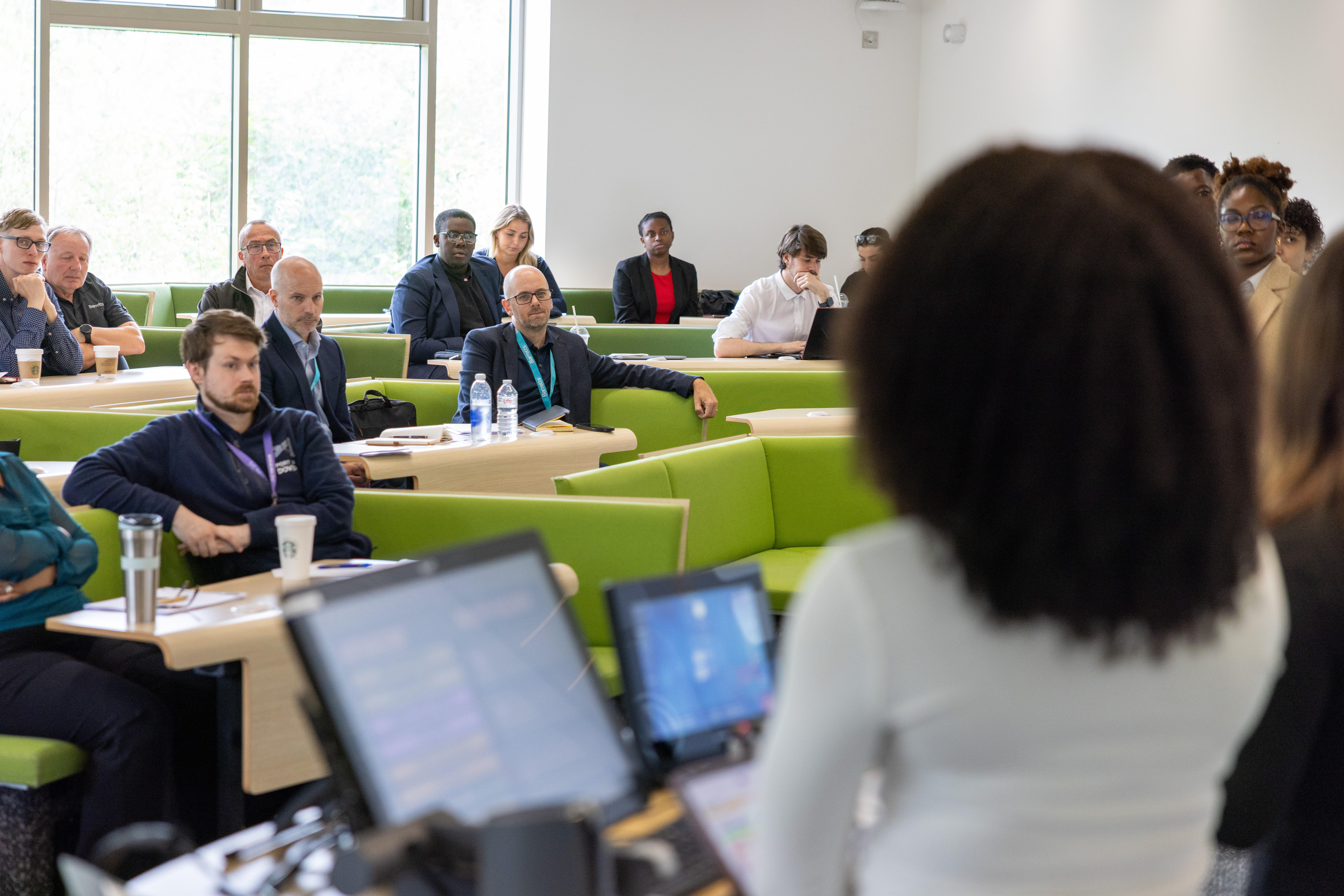
These were not theoretical case studies. Student teams visited business sites, engaged directly with senior business representatives, and each group was asked to produce recommendations that could be presented back to the organisation. Alongside the project work, students were supported by 10 guest speakers, including CEOs, Managing Directors, Directors, Heads of Department, managers and project leads. Before presenting to the businesses, mock presentations were reviewed by a panel of eight academic colleagues from different areas of expertise.
Students rose to the challenge
The KBS Challenge quickly became something that felt less like a traditional module to students and more like a live consultancy programme: one real enough to test them harder than anything else in their university careers. They had to move from “what does the theory say?” to “what does this organisation actually need, and what can we realistically recommend?” The students rose to the challenge and delivered.
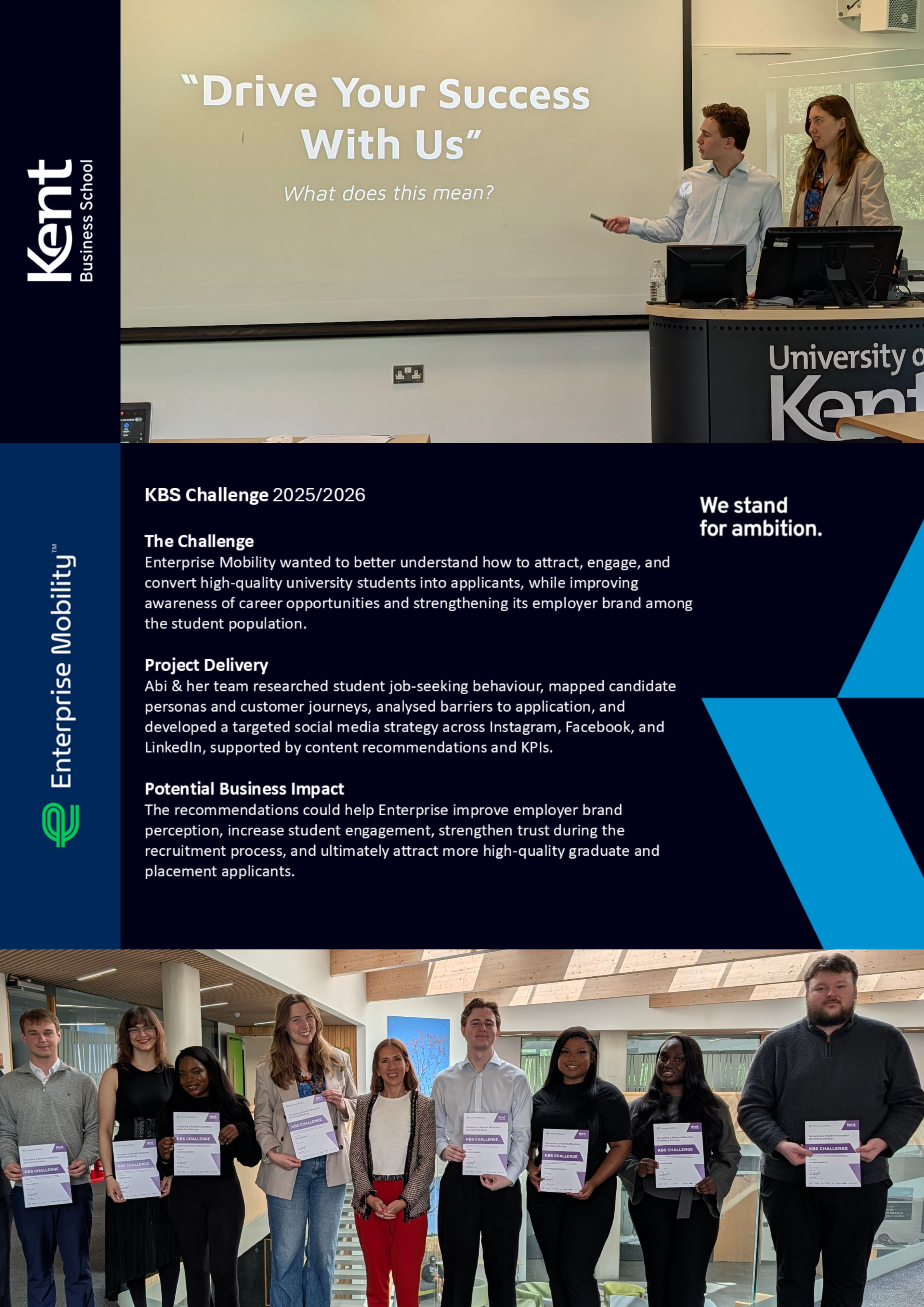
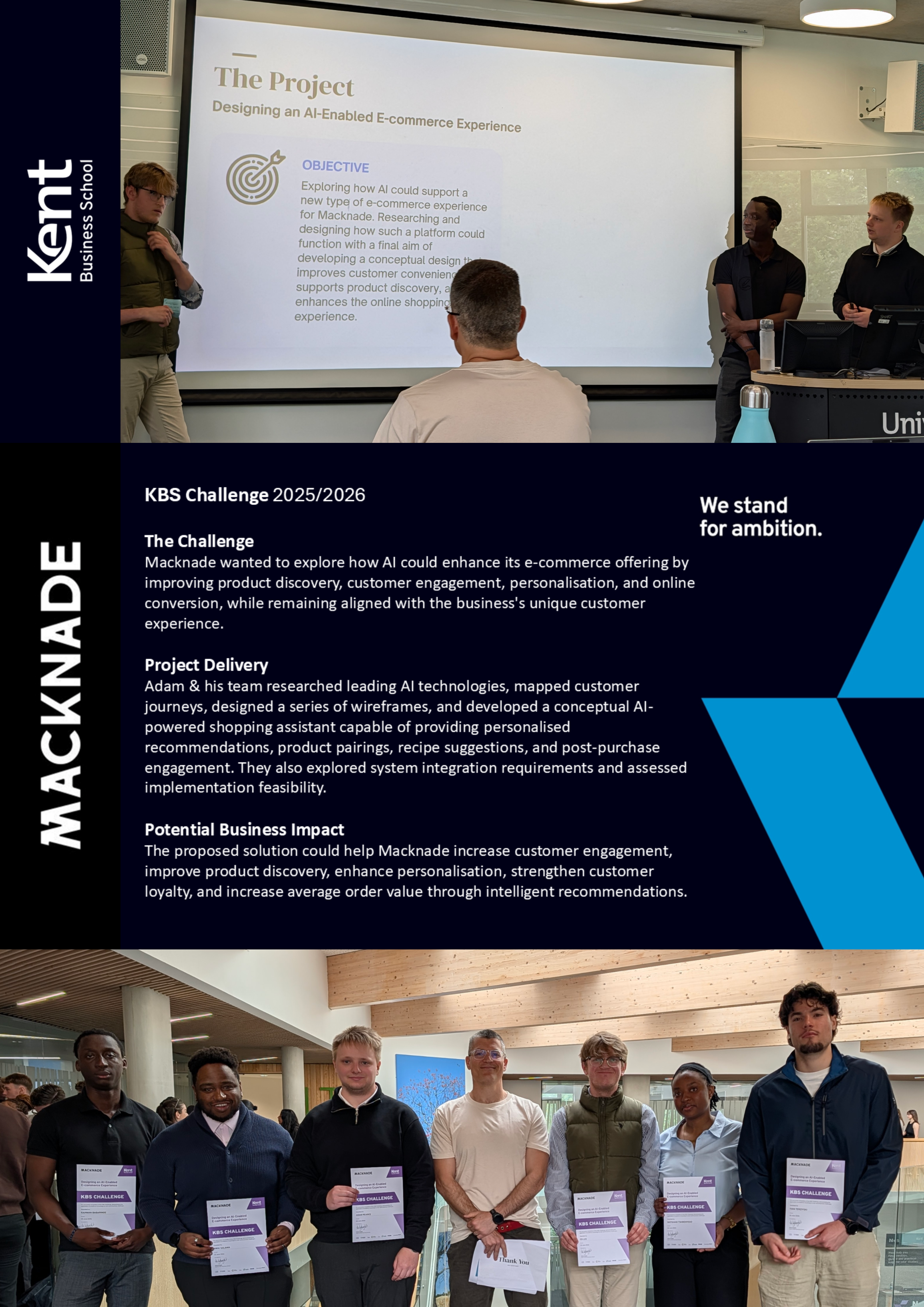
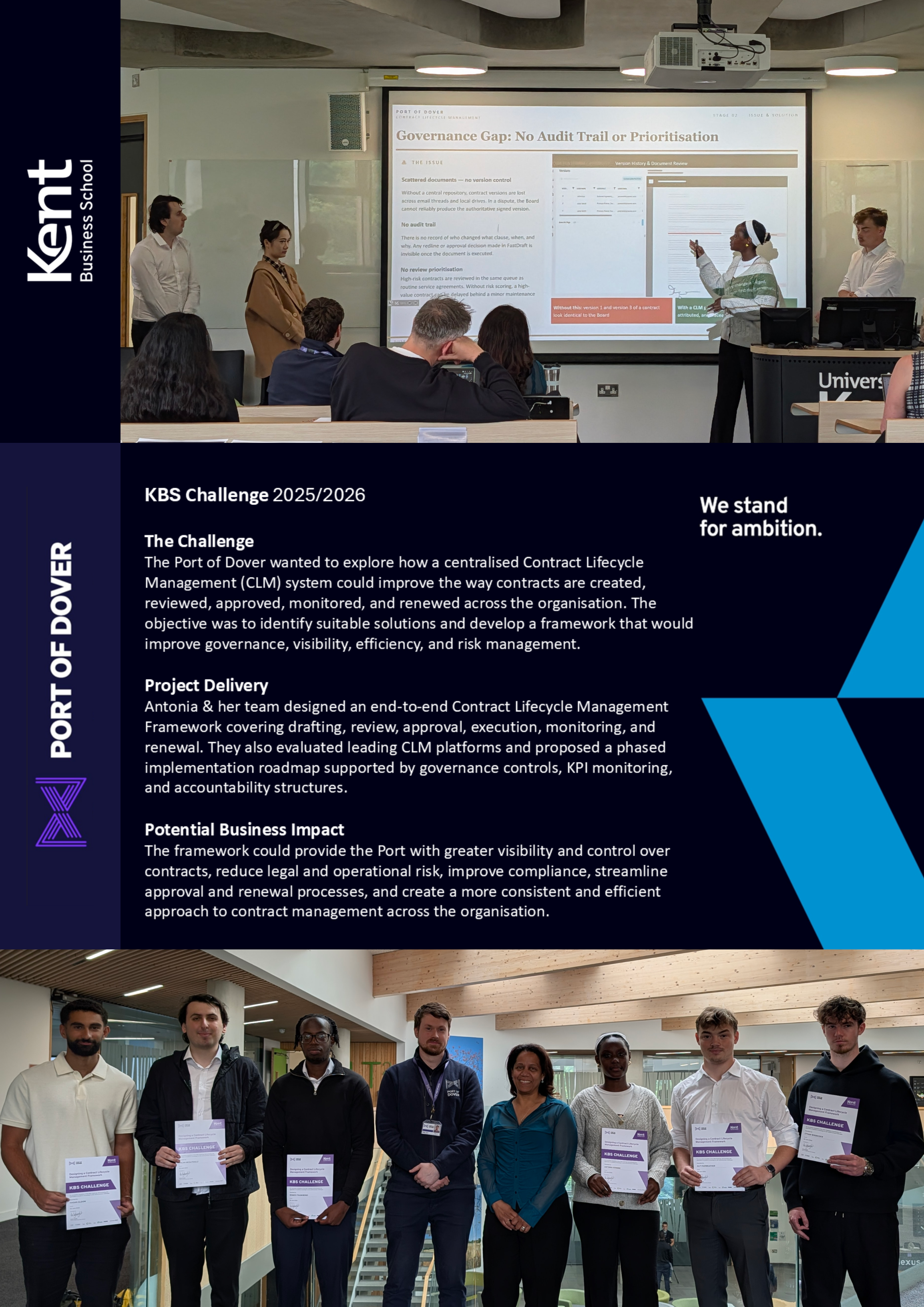
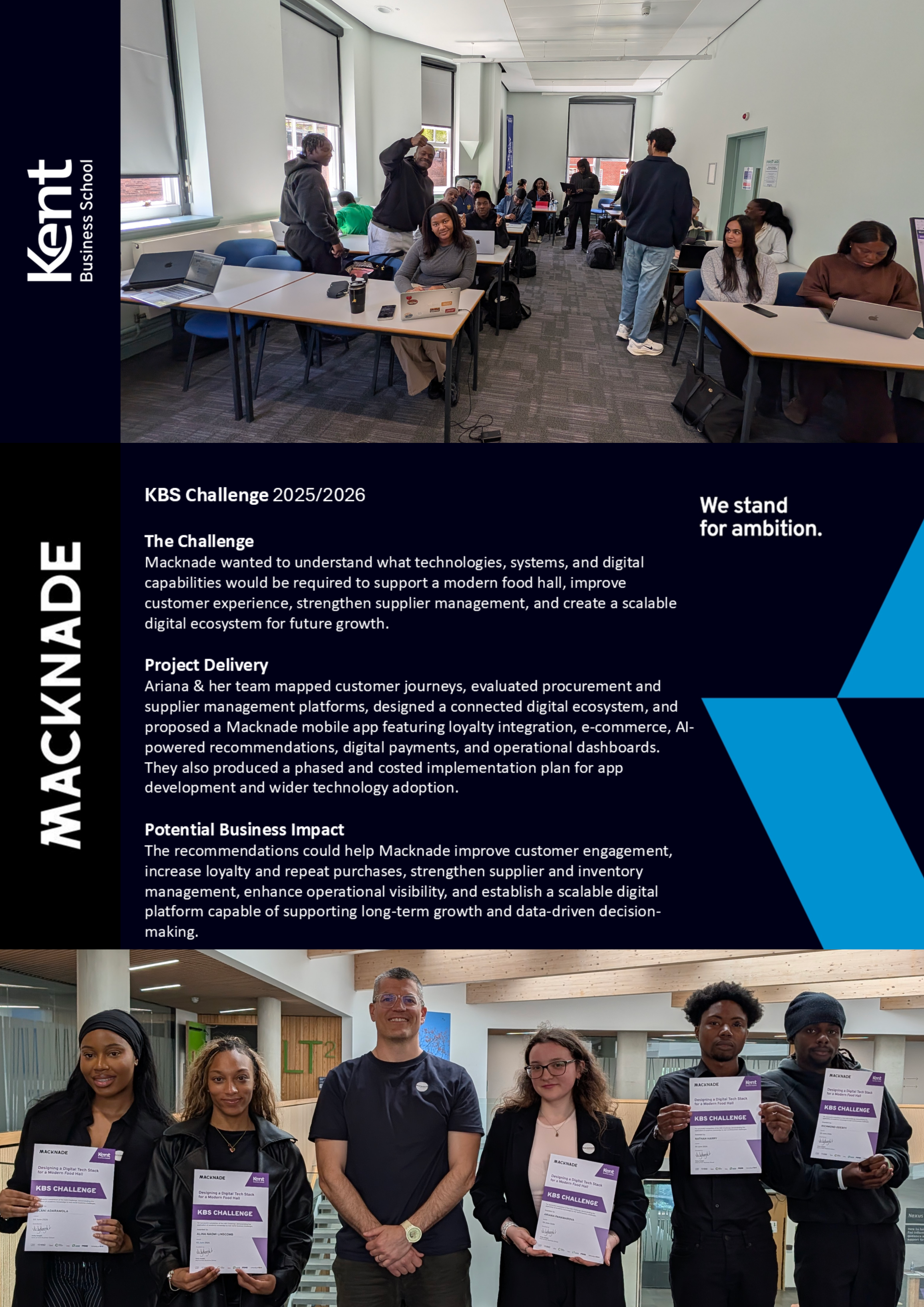
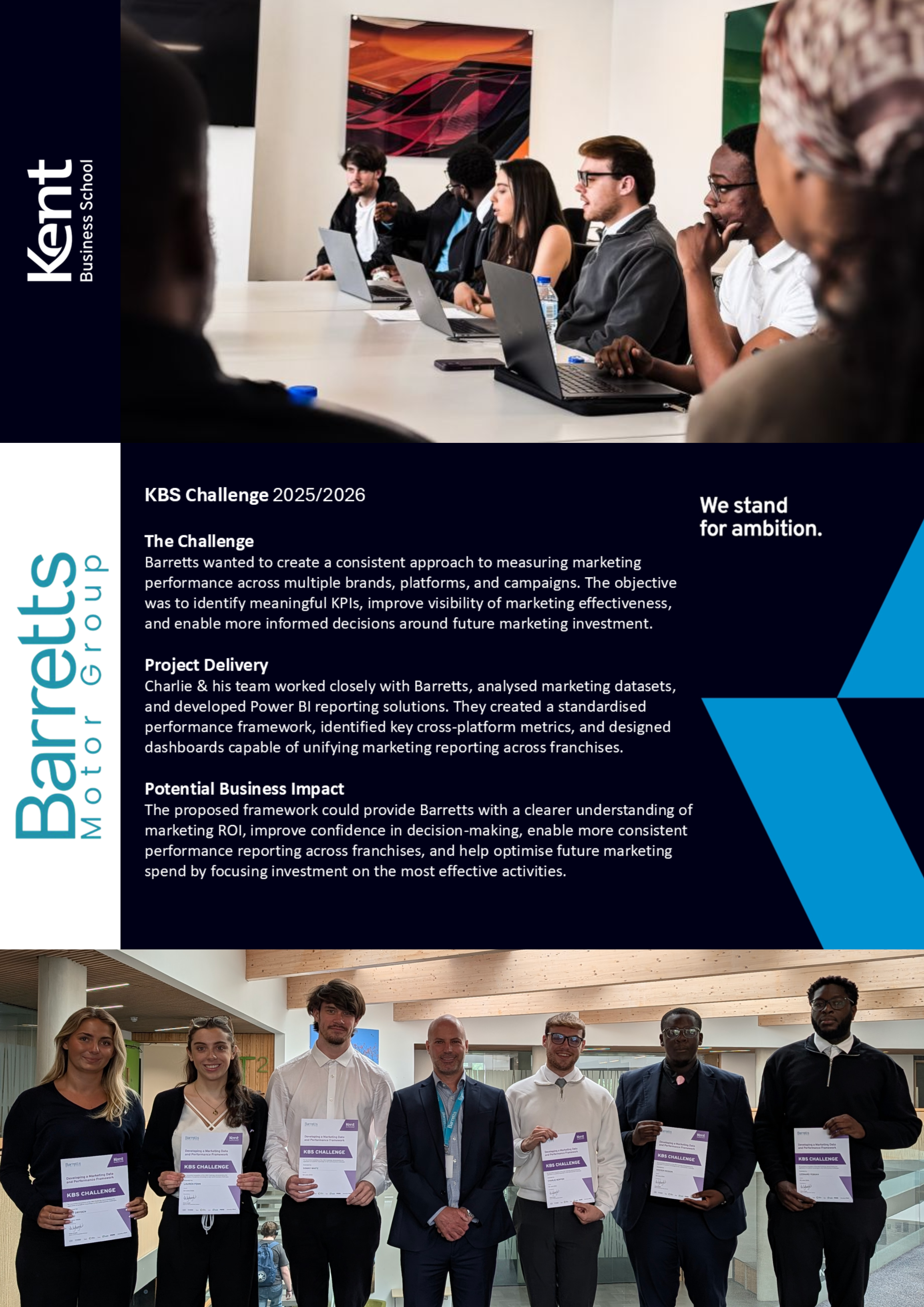
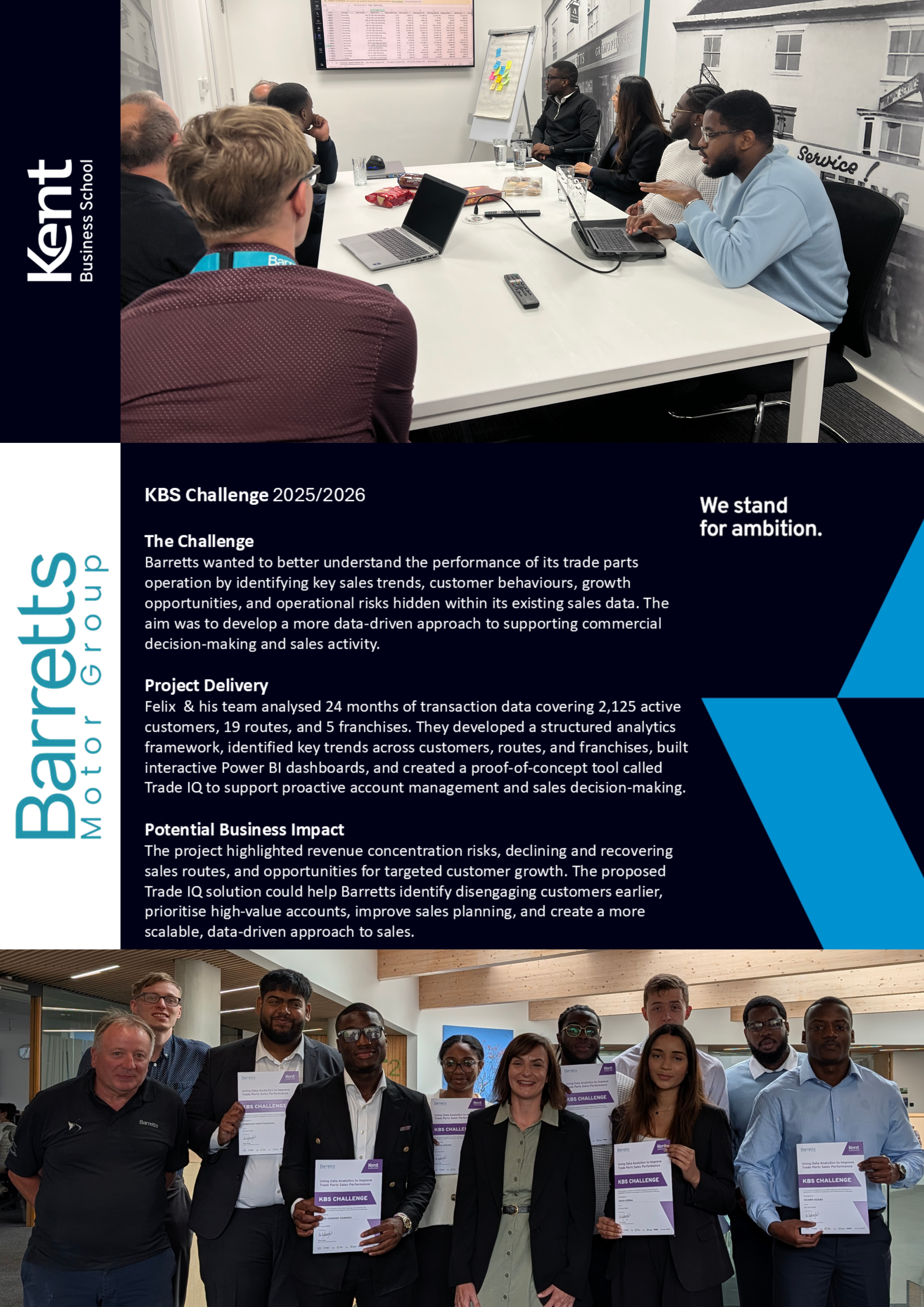
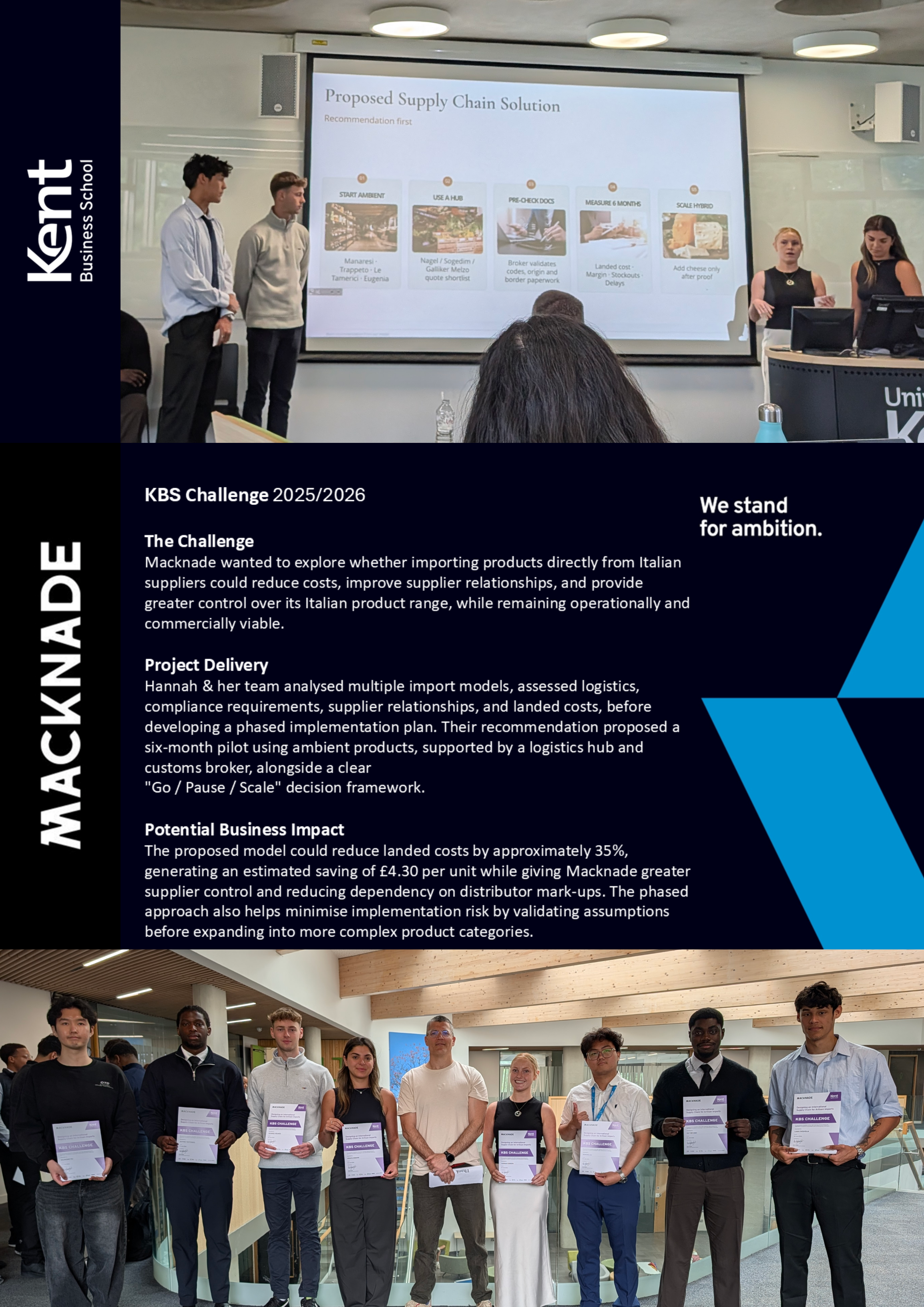
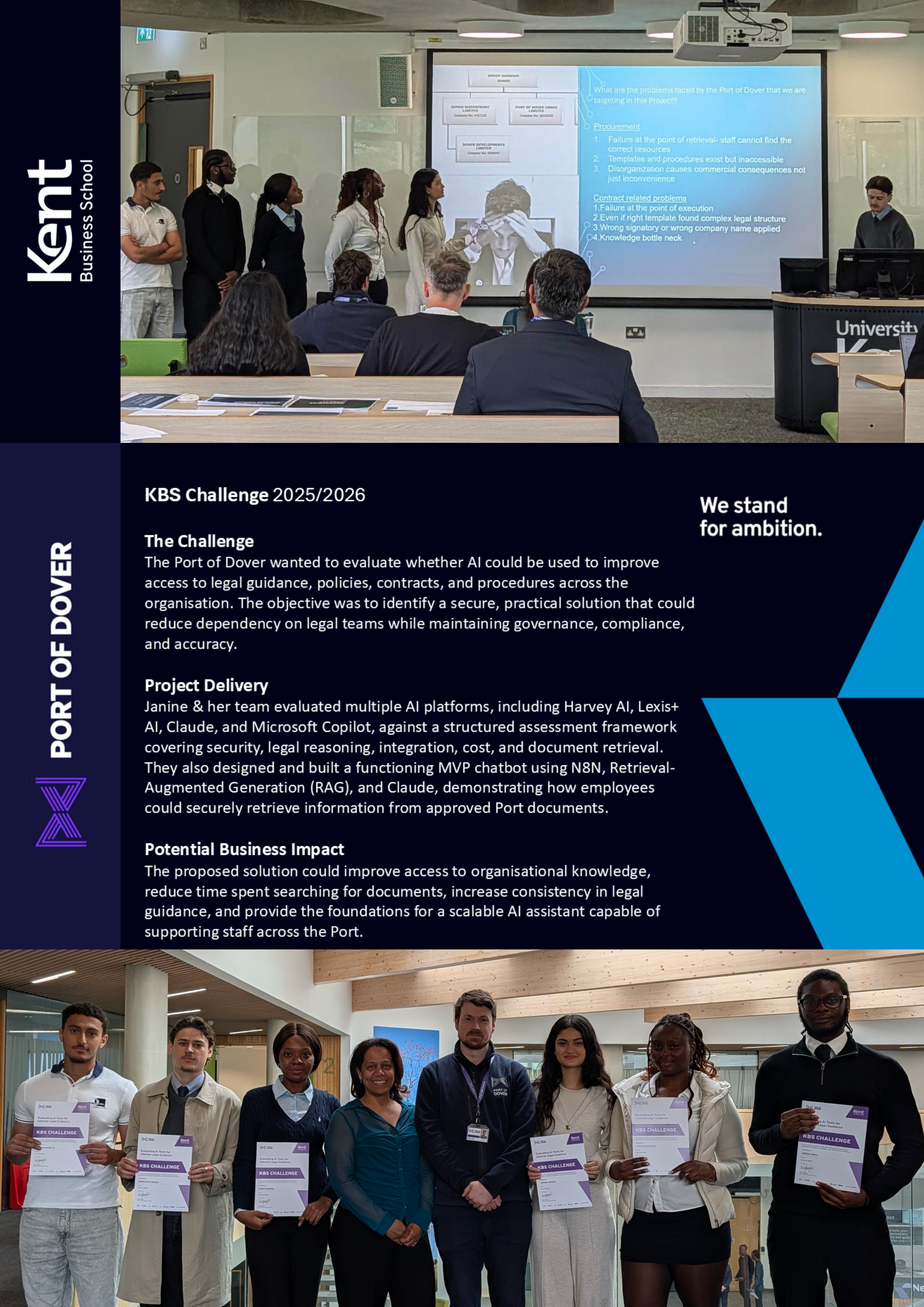
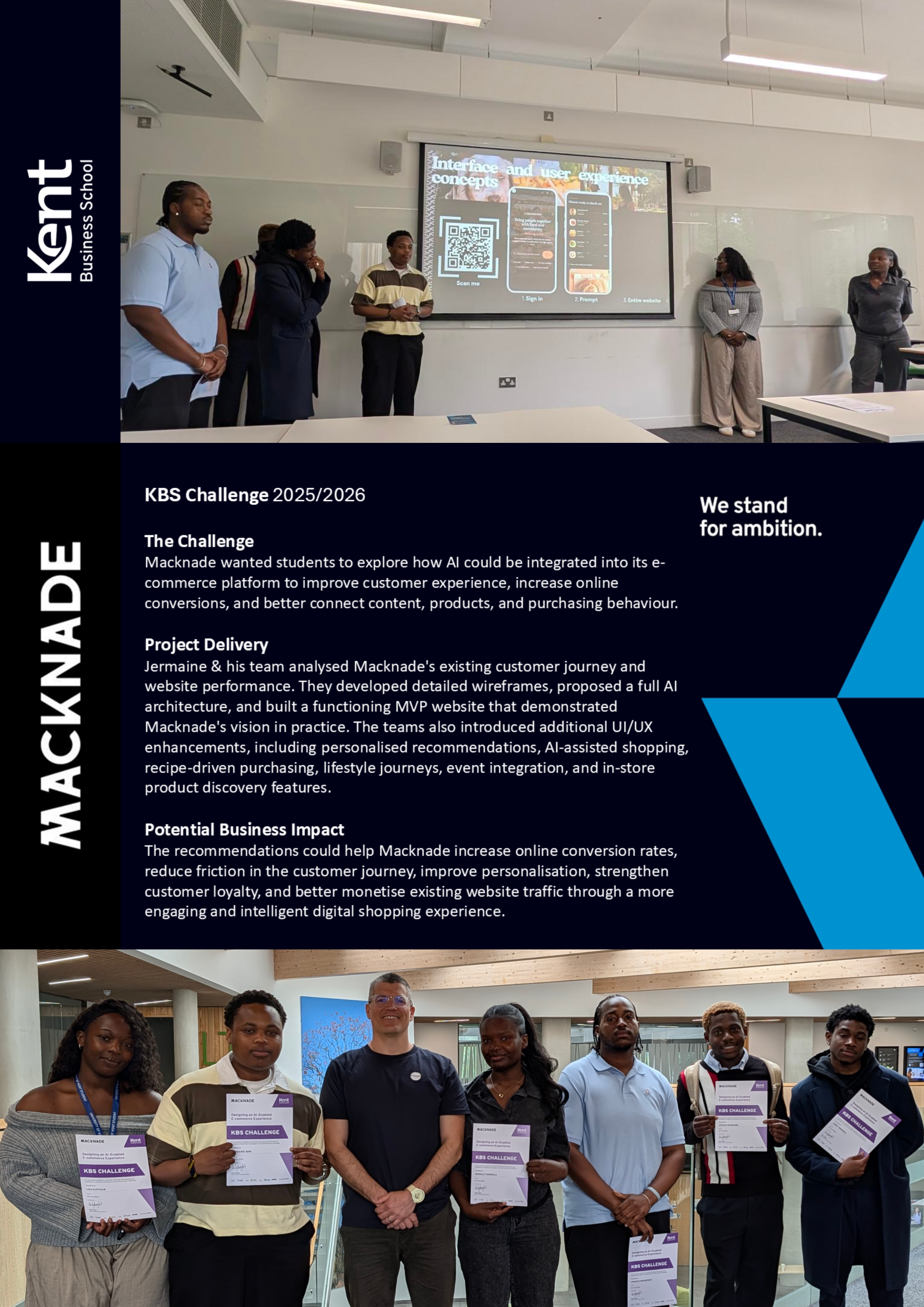
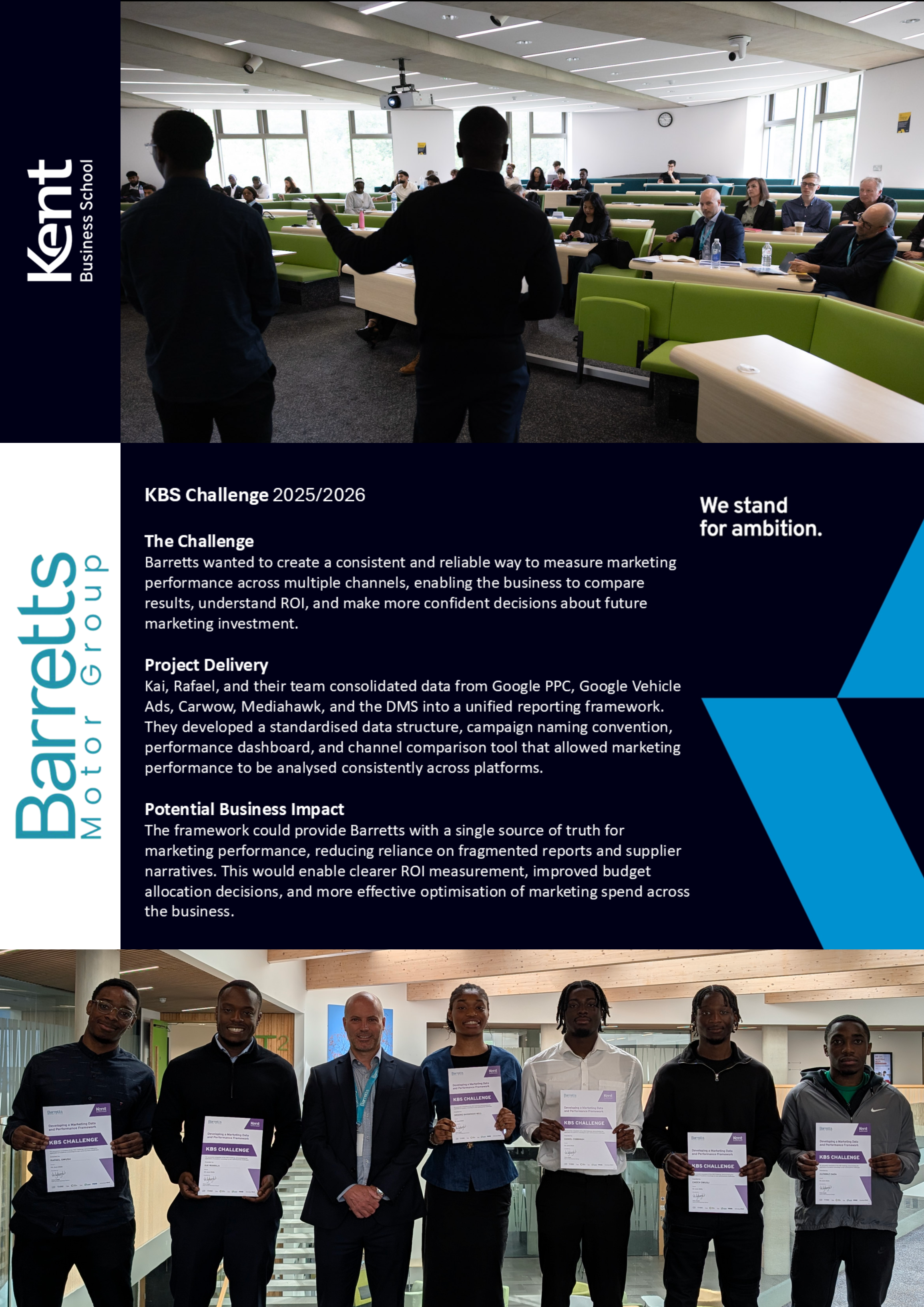
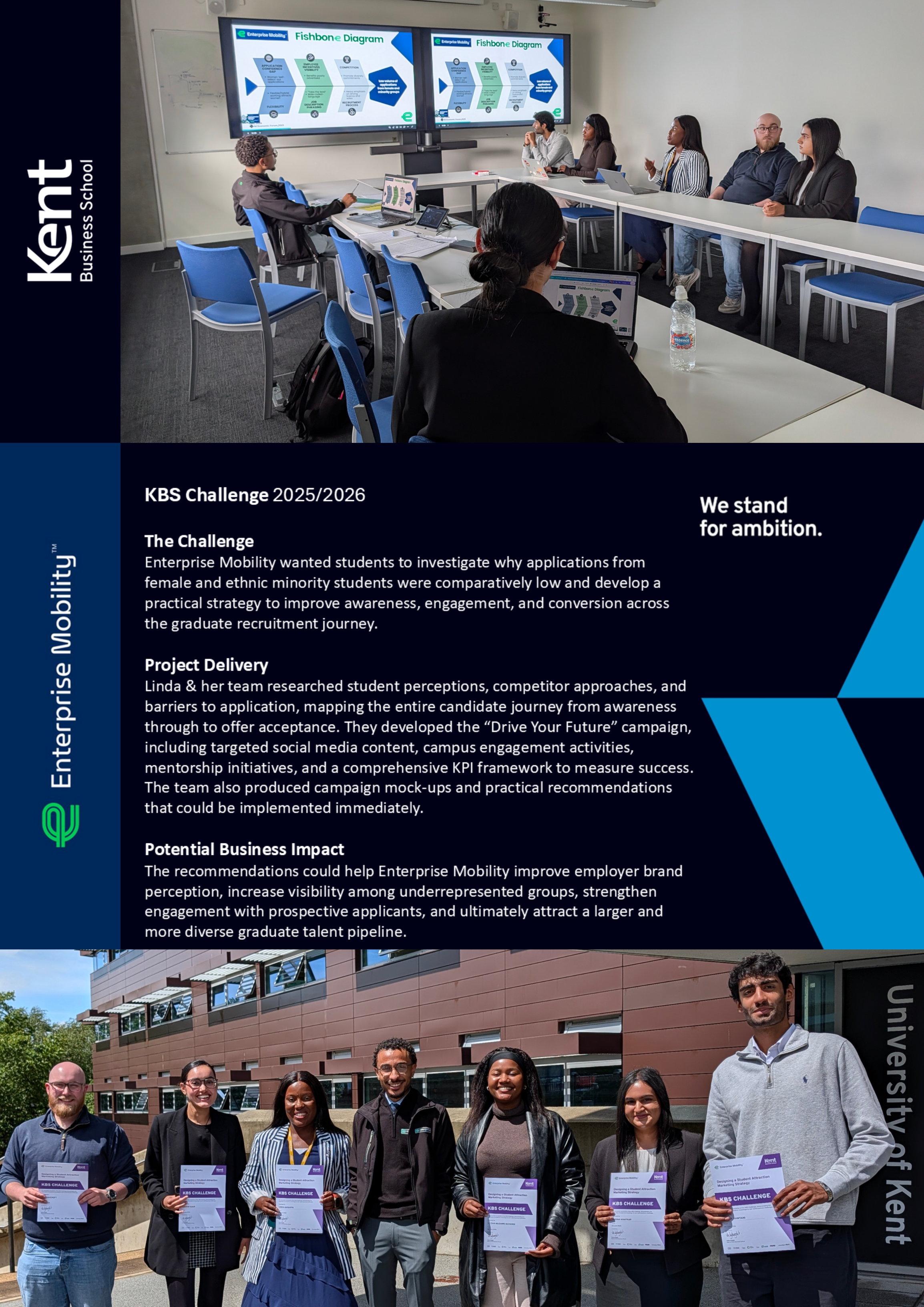
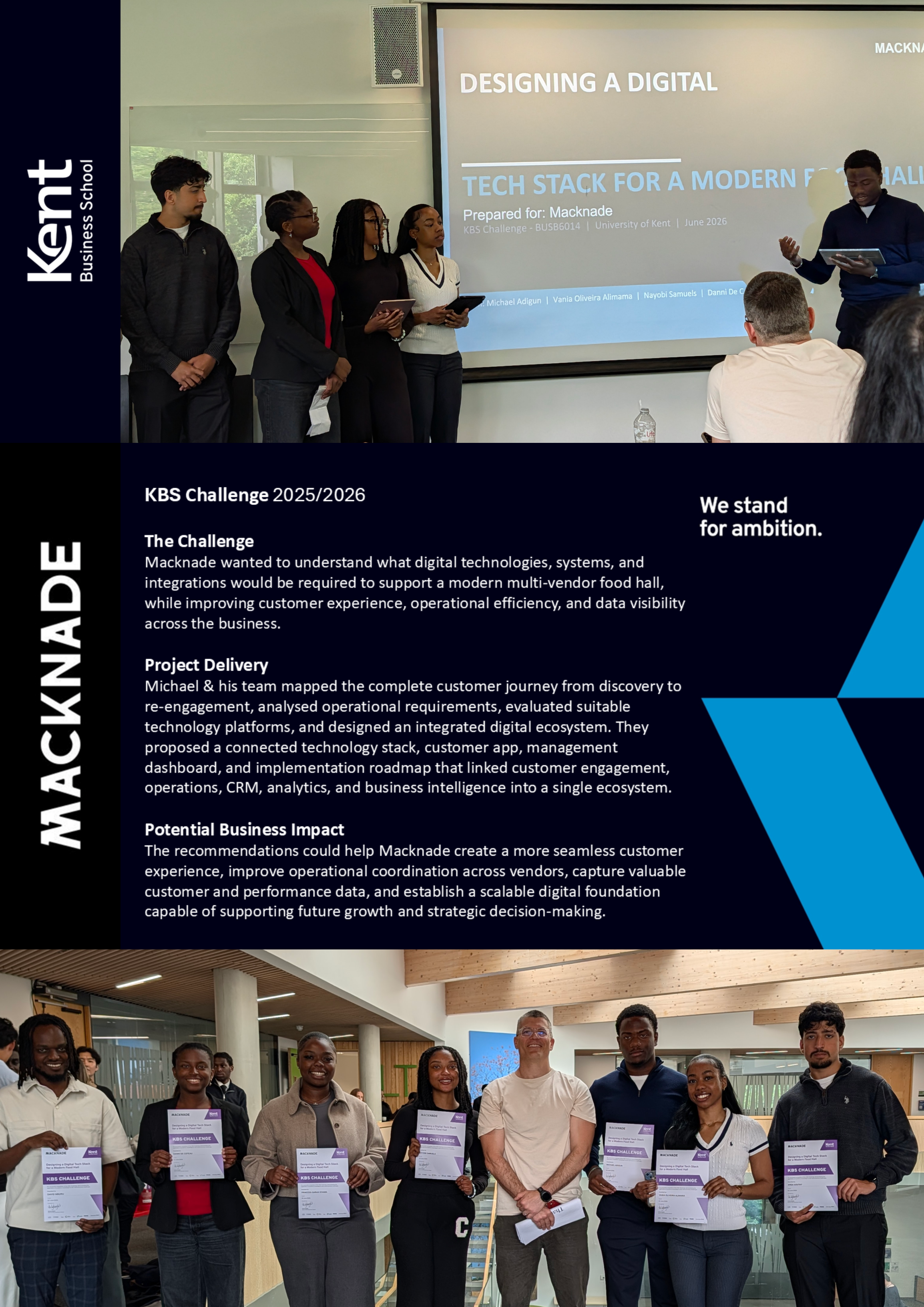
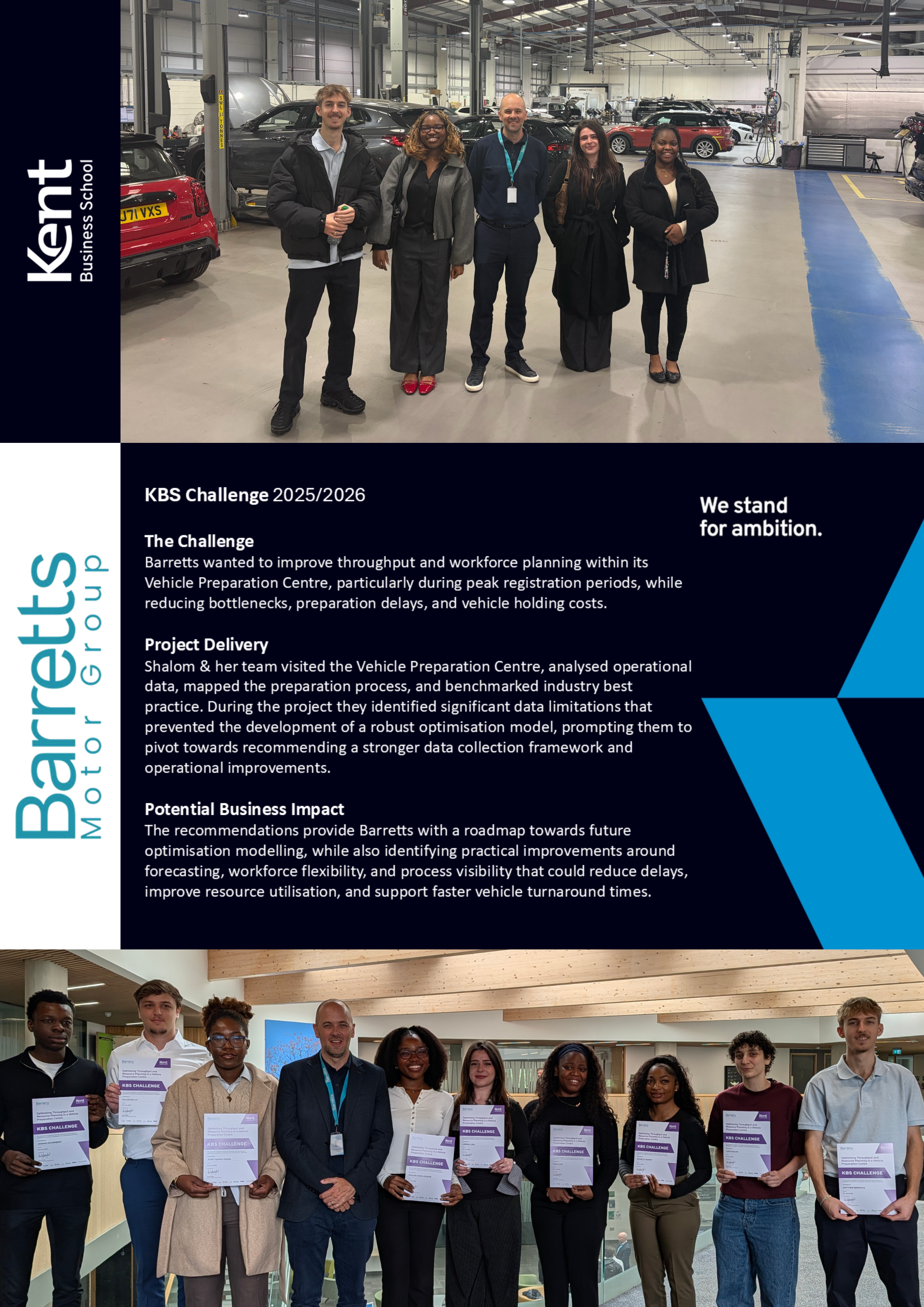
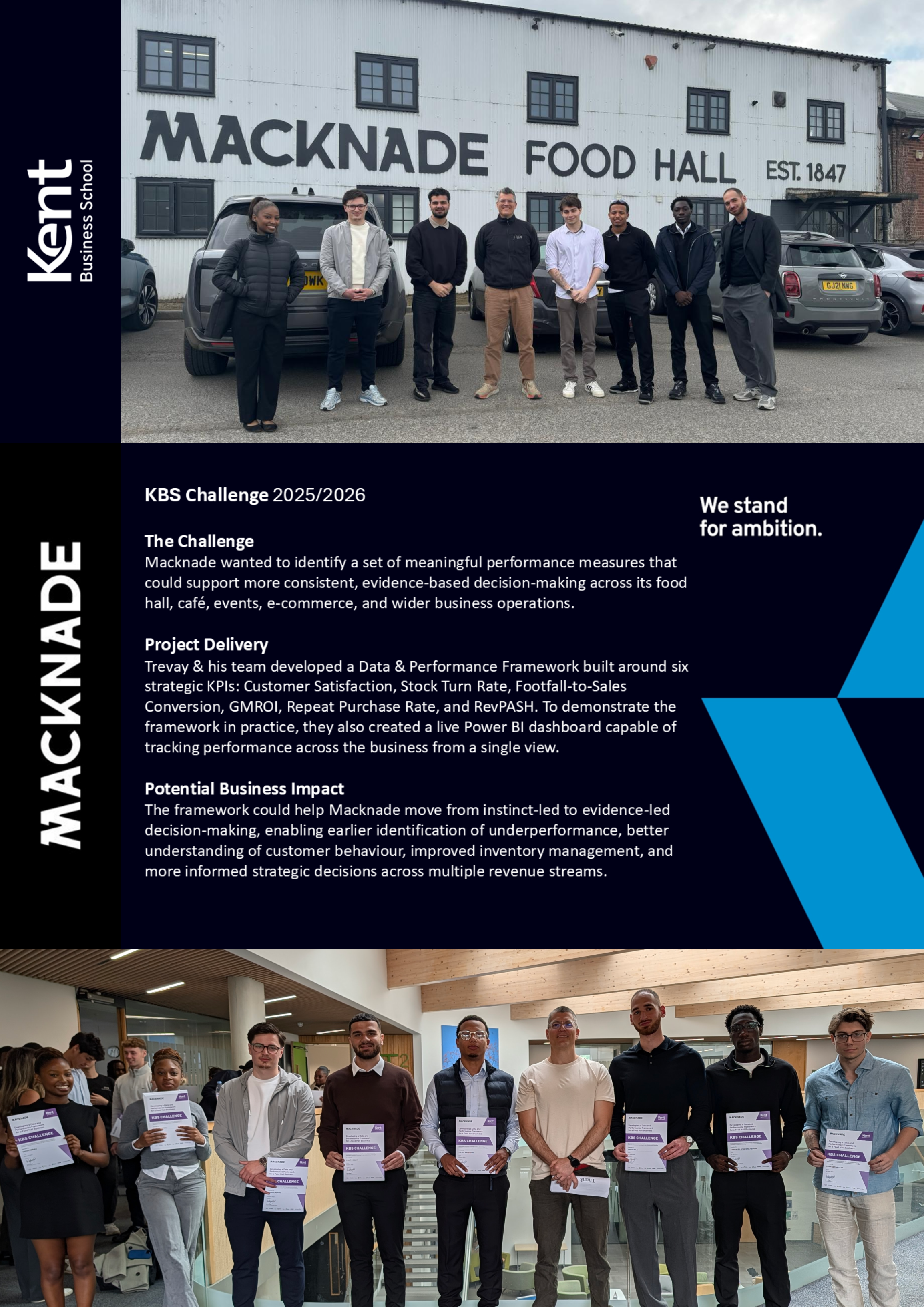
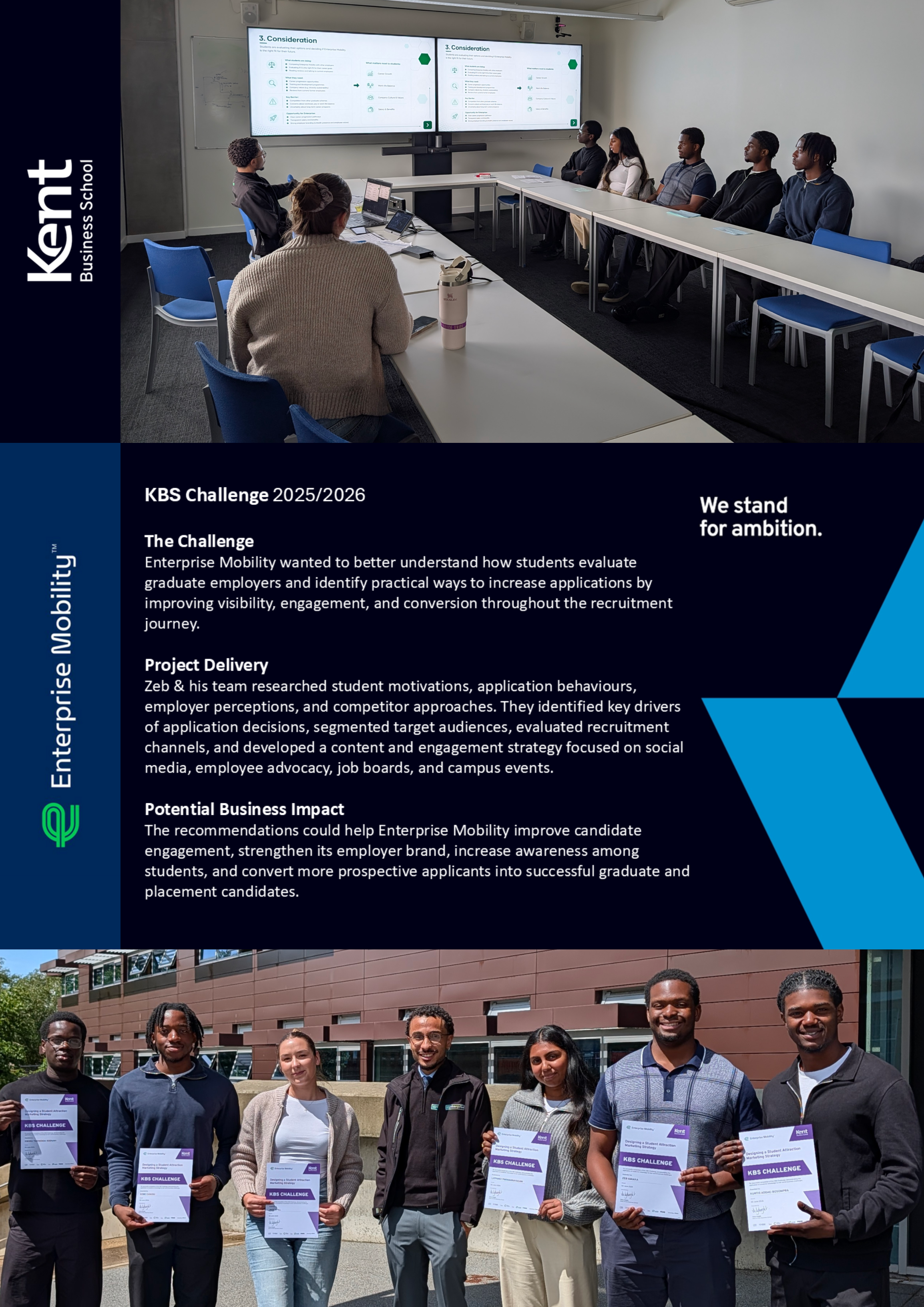
The range of work was deliberately broad, reflecting the kinds of messy, cross-functional problems businesses actually face. The snapshots below give a flavour of the work students produced across the four organisations, from AI and contract management to operations, marketing analytics, sourcing and digital transformation.
Business impact
Safe to say, the businesses were impressed. Port of Dover said they were “delighted with the outputs from the teams given the limited timeframe,” while Barretts Kent described the students’ recommendations as “fantastic,” “realistic and doable,” and grounded in a clear understanding of the business. Enterprise Mobility reflected that the recommendations were “really impactful” and confirmed that some would be taken forward immediately with their marketing team. Macknade’s feedback was especially powerful: they said the quality of work delivered in just a few weeks matched work they had received from commercial agencies, and that some of the recommendations would be brought directly into internal projects. For a student assessment to move from classroom work into something businesses could genuinely use was exactly what we had hoped for.
Student impact
The impact continued beyond the final presentations. Some students impressed the businesses enough to be offered paid opportunities to continue their work on these challenges, with formal terms agreed for some and others already starting. Every student left with something valuable: a story of real impact they can use to strengthen their early career.
The student feedback reflected this. Students described the module as “a real hands-on experience into real work,” “the most hands-on project I’ve ever worked on,” and “the most real-world module in KBS.” One student wrote that they had gained proper work experience and increased their employability through direct stakeholder engagement, budget management, risk management and operations. Another said the module gave them “the freedom, confidence and the tools to make it possible.”
For me, that is the real success of the KBS Challenge. The presentations, reports and recommendations mattered, but what mattered most was seeing students begin to recognise themselves as professionals: people who can speak to senior stakeholders, defend their reasoning, respond to feedback and produce work that matters.
What comes next
The success of the now award-winning KBS Challenge has shown what can happen when students are trusted with real problems and businesses are willing to open their doors to fresh thinking. We want to continue this work but bigger and better. That’s ambitious but, for us at Kent Business School and University of Kent, ambition never stops!
We are always keen to connect with organisations who want to support the next generation of business graduates while gaining new perspectives on live challenges. Whether through live projects, guest sessions, site visits, mentoring or future consultancy-style work, there are many ways to be part of our students’ journeys. If your organisation would like to explore working with Kent Business School students, please get in touch with me (Khawar Naveed Bhatti) or Rebecca Smith.