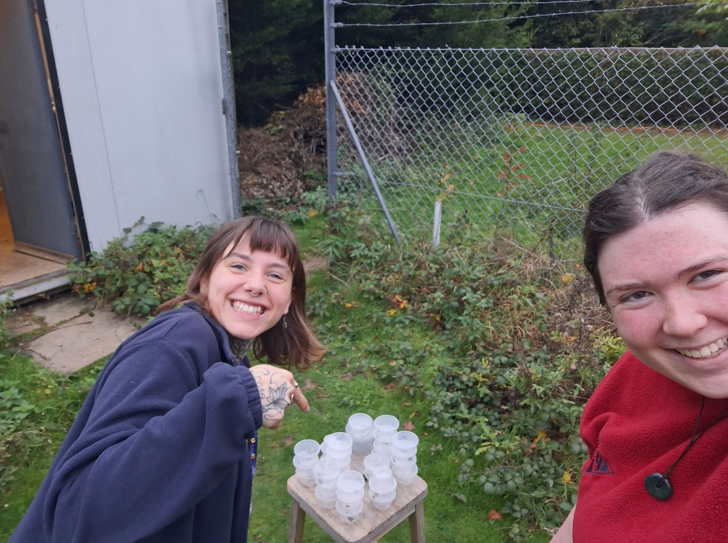
Unless you are conducting wildlife surveys (either in person or through the use of equipment like camera traps), there is a whole side of campus wildlife that you might miss out on because you may never see it! Our campus is home to a wide range of habitats from ancient woodland to new meadow additions and, as such, it is able to support a huge variety of wildlife including nocturnal and crepuscular (active at dawn and dusk) species.
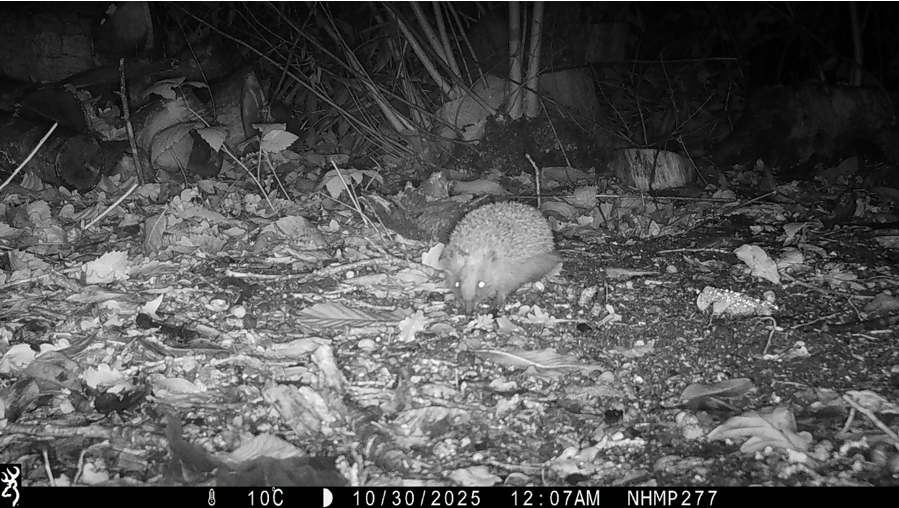
Whilst conducting camera trap surveys as part of the National Hedgehog Monitoring Programme, our cameras were able to give us an insight into what the wildlife on campus gets up to after dark. Species like badgers, owls and bats that we don’t often get to see were picked up on a number of cameras across campus. This also helps to inform landscape management decisions as we discovered areas being used by wildlife that we didn’t previously know about.
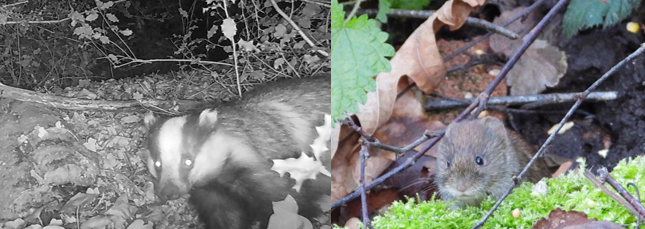
European Badger (Meles meles)
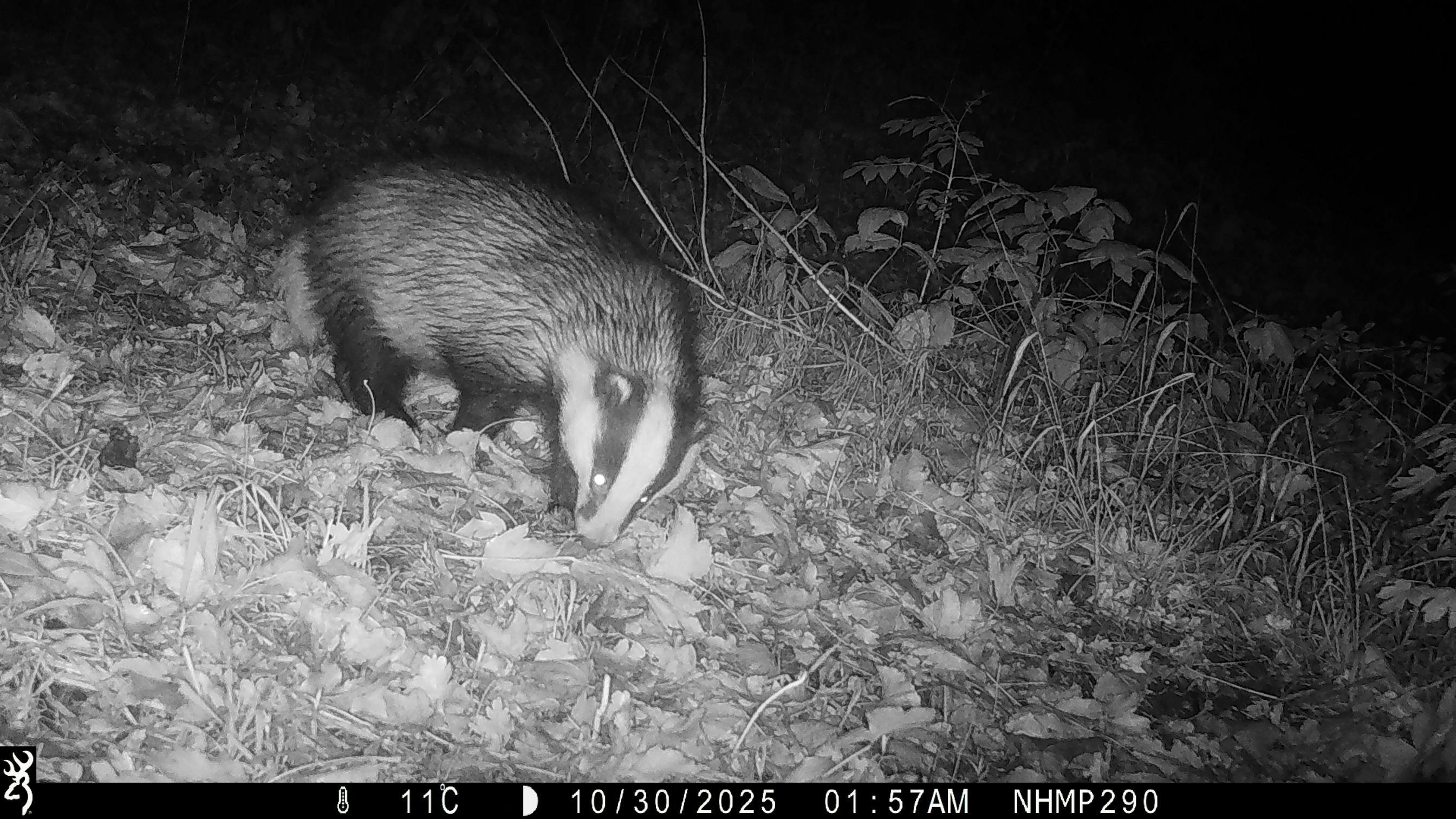
(Image of a badger walking towards the camera trap)
Badgers are the UK’s largest land predator and are one of the most recognisable British mammals. They are found across the UK, with the highest numbers in southern England. Badgers are a species that many people will never get to see in person due to the fact that they are nocturnal and very shy so will try to avoid humans as much as possible. They live in a network of underground tunnels and chambers called setts. Family groups (called clans) of up to 8 individuals can all live together in elaborate setts with several entrances that can extend from around 20 metres to over 100 meters. Badger setts can also be passed down through generations (much like a family home) and some setts have been observed to be over 100 years old! Badgers have been described as ‘opportunistic omnivores’. Their diet mainly consists of earthworms (up to 80 percent) but they will also eat slugs, berries, eggs and even small mammals. In one night, each badger can eat over 200 earthworms! Due to high levels of persecution, badgers and their setts are protected by the Protection of Badgers Act (1992) in England and Wales. The persecution of badgers is often due to high levels of human-wildlife conflict when they are seen as a pest species or carriers of disease however badgers are great at increasing biodiversity and overall woodland health. For example, the diversity of plants like mosses is often greater around badger setts due to the way that they break up compacted soil when they are creating their setts.
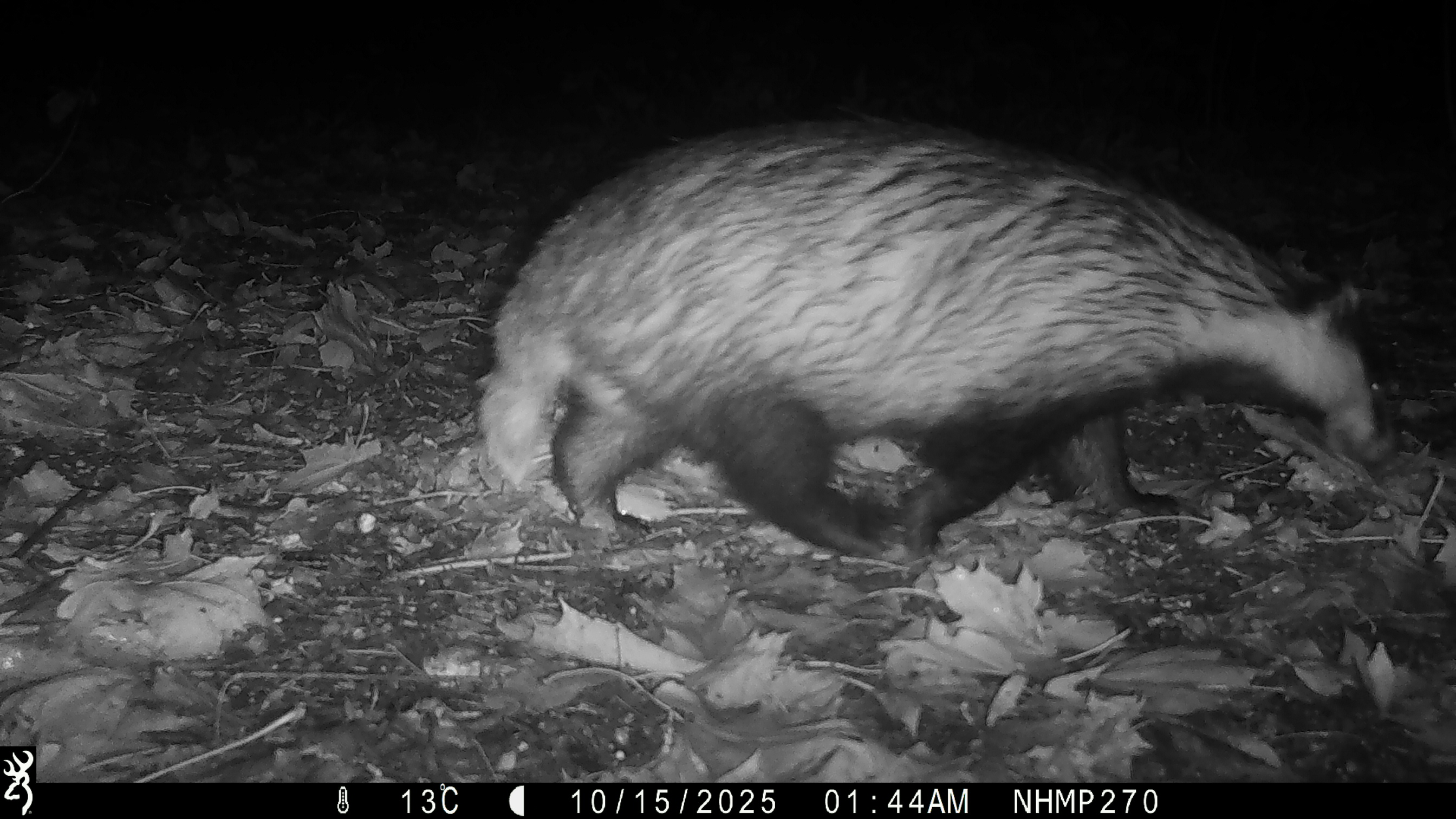
(Image of a badger walking away from one of the camera traps)
Tawny Owls (Strix aluco)
There are 4 native species of owl in the UK, the Barn Owl, Tawny Owl, Short-eared Owl and Long-eared Owl. The Little Owl was introduced into Britain in the 19th century and also regularly breeds in the UK. All UK owls have evolved to be specialist night-time hunters with adaptions such as soft, sound muffling feathers helping them to hunt almost silently and perhaps their most well known adaption, the ability to rotate their head 270◦ to be able to increase their field of view. Owls have been viewed as symbols of wisdom and intellect in folklore all the way back to Ancient Greece (with owls being associated with Athena) however, they are not necessarily smarter than any other bird! They are very skilled, very specialised hunters, but in terms of intelligence, they can’t compete with birds like crows and jays in the corvid family.
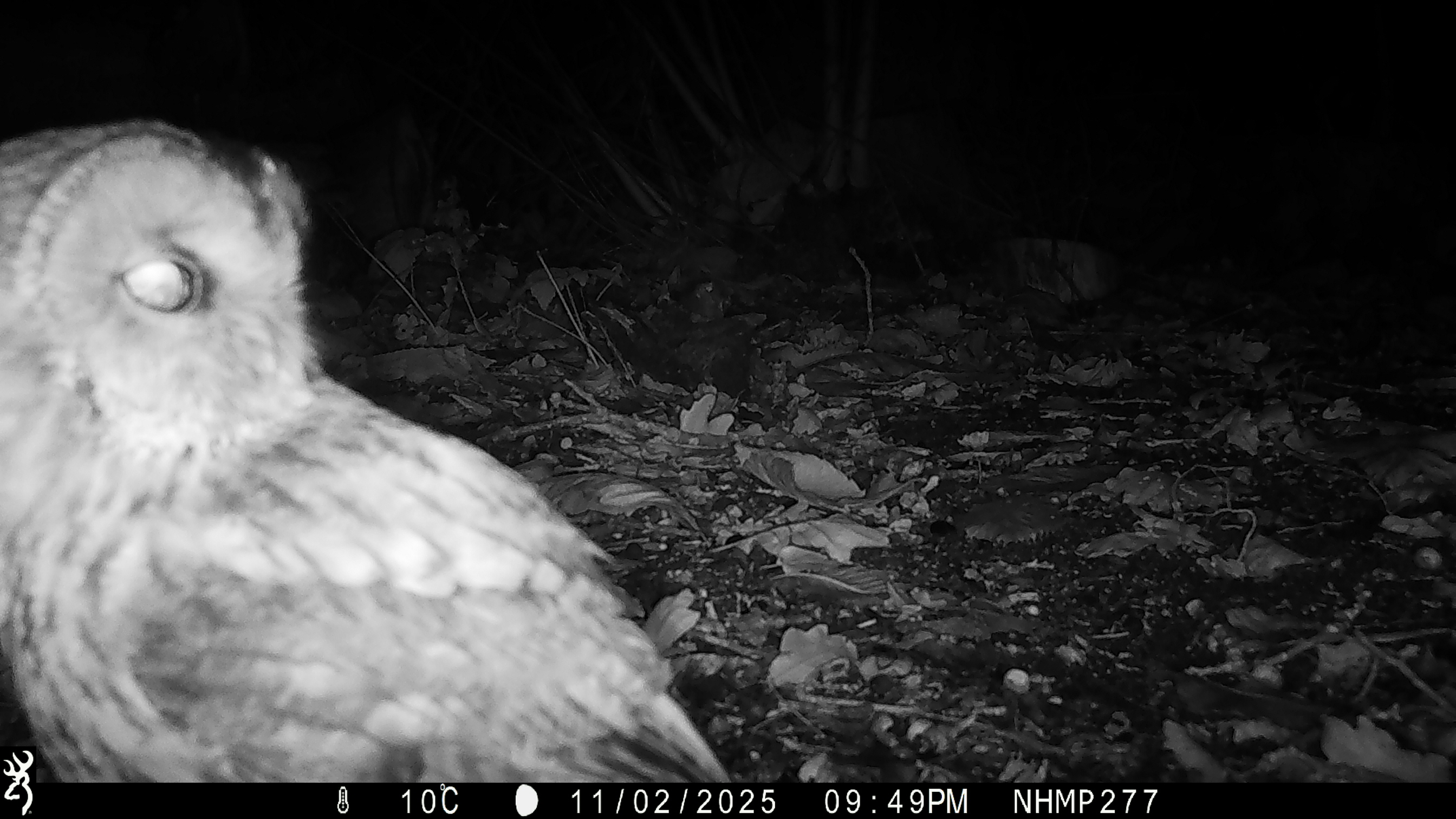
Image of a Tawny Owl (Strix aluco) that has landed next to the camera trap looking into the distance
At the University of Kent, the most frequently heard owl species is the Tawny Owl (especially near Parkwood!) with its distinctive hooting sound that we most associate with owls. But, did you know that the classic ‘twit twoo’ sound isn’t actually made by one bird? It is actually a type of call and response with the female making the ‘twit’ sound and the male responding with the ‘twoo’ sound. Tawny owls are mottled brown and about the size of a woodpigeon. They have a rounded head with no ear tufts and broad rounded wings as well as a short tail. Their short wings and tails help them to be able to easily fly between trees in dense woodland. These owls are the most common in the UK living mainly in broadleaved woodlands (like our woodland on campus). Tawny Owls will mate for life and will often nest in the same tree cavity year after year if they are left undisturbed. They will normally have between 2 – 3 eggs in a clutch and are very territorial, fiercely protecting there areas of woodland from other species like Barn Owls.
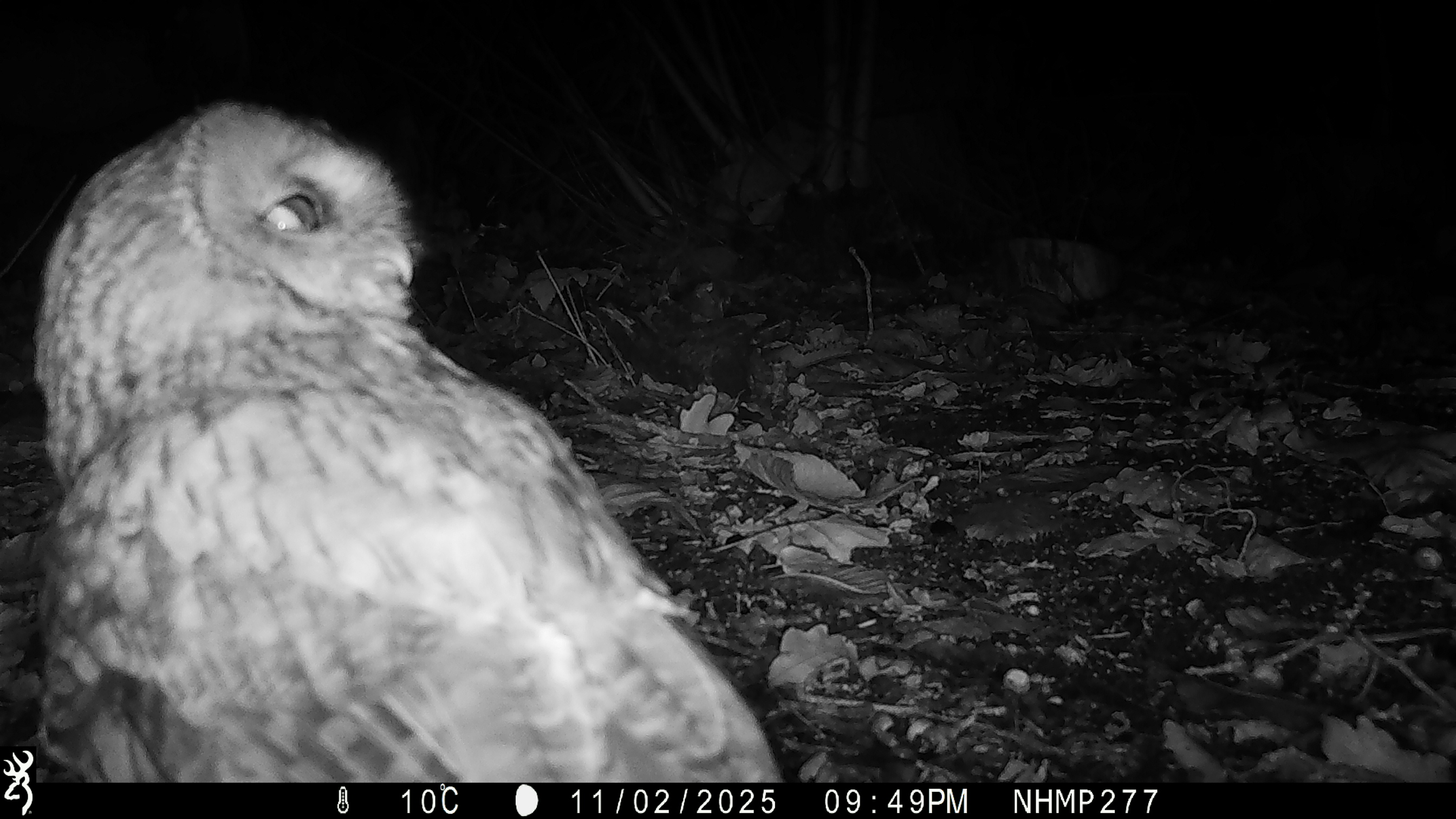
(Side profile camera trap image of a Tawny Owl)
Bats
There are 18 species of bats in the UK (17 of which have been recorded breeding here). Bats are the only flying mammals and account for around 20% of all mammal species worldwide and more than a quarter of the mammals in the UK. It is a myth that bats are blind however most UK bat species don’t have very good night vision and so they rely on echolocation (producing high frequency sound pulses and then listening to the returning echoes to create a ‘picture’ of their surrounding). The most common bat species in the UK are the Common and Soprano pipistrelle. These species have both been recorded on campus during bat surveys when they have been seen emerging from their roosts and through listening to their echolocation calls using bat detectors. These two species can be really hard to tell apart from each other and were only described as two separate species in the 1990’s when it was realised that they had distinctly separate echolocation frequencies. Both weigh between 3 – 8 grams, which is around the same weight as a twenty pence piece! Despite their small size they can eat thousands of small insects, like midges, gnats and mosquitoes every night.
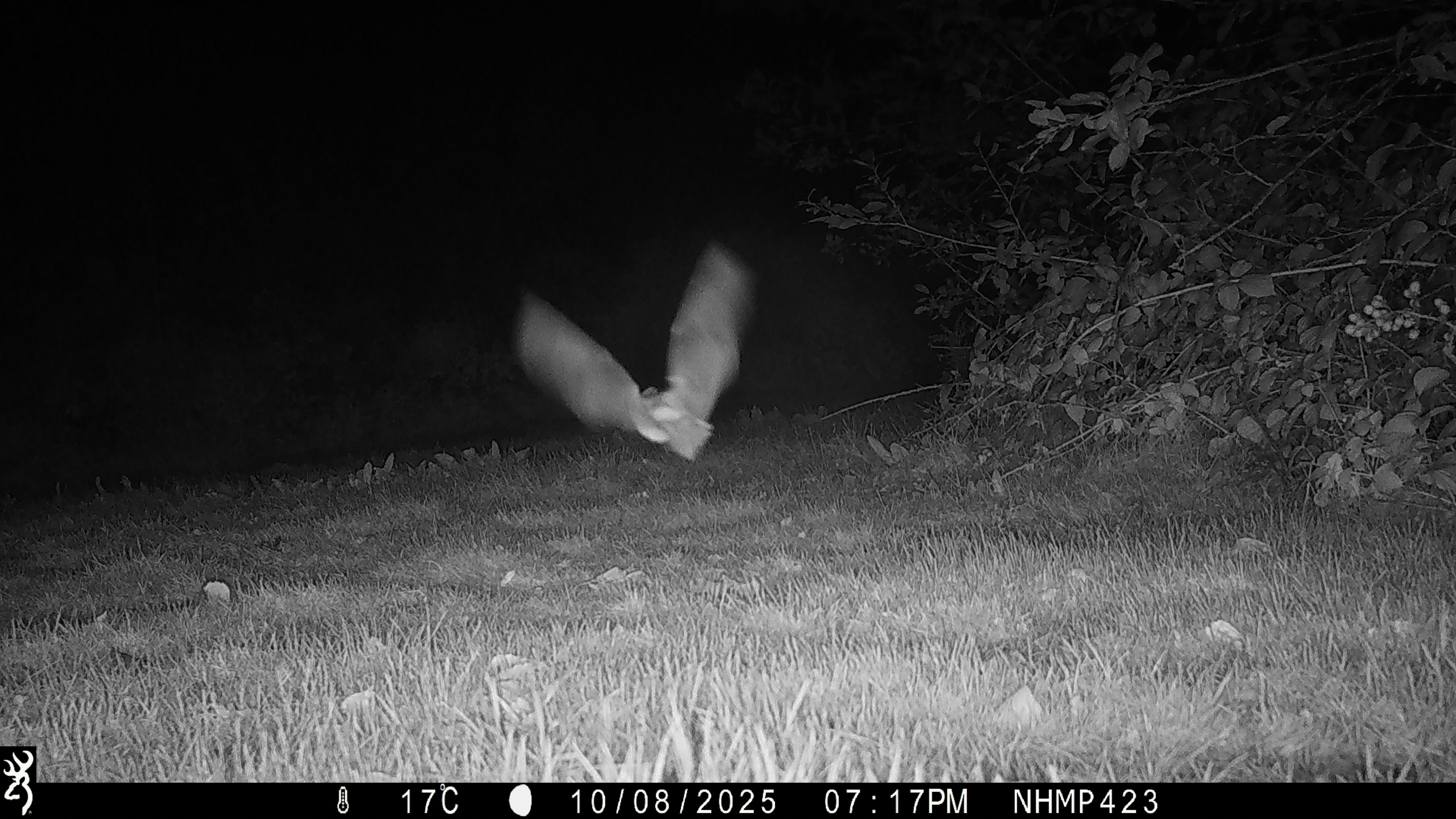
(Image of a bat flying away from the camera trap)
One of the other species that we have records of on campus is the Brown Long-eared Bat! These bats are bigger than pipistrelles normally weighing between 6 – 12 grams and they get their name due to their very distinctive long ears! Their ears are nearly as long as their body and allow them to have exceptionally good hearing. They are often referred to as ‘whispering bats’ as they produce very quiet echolocation sounds since their hearing is so good that even without using echolocation, they can hear a ladybird walking along a leaf!
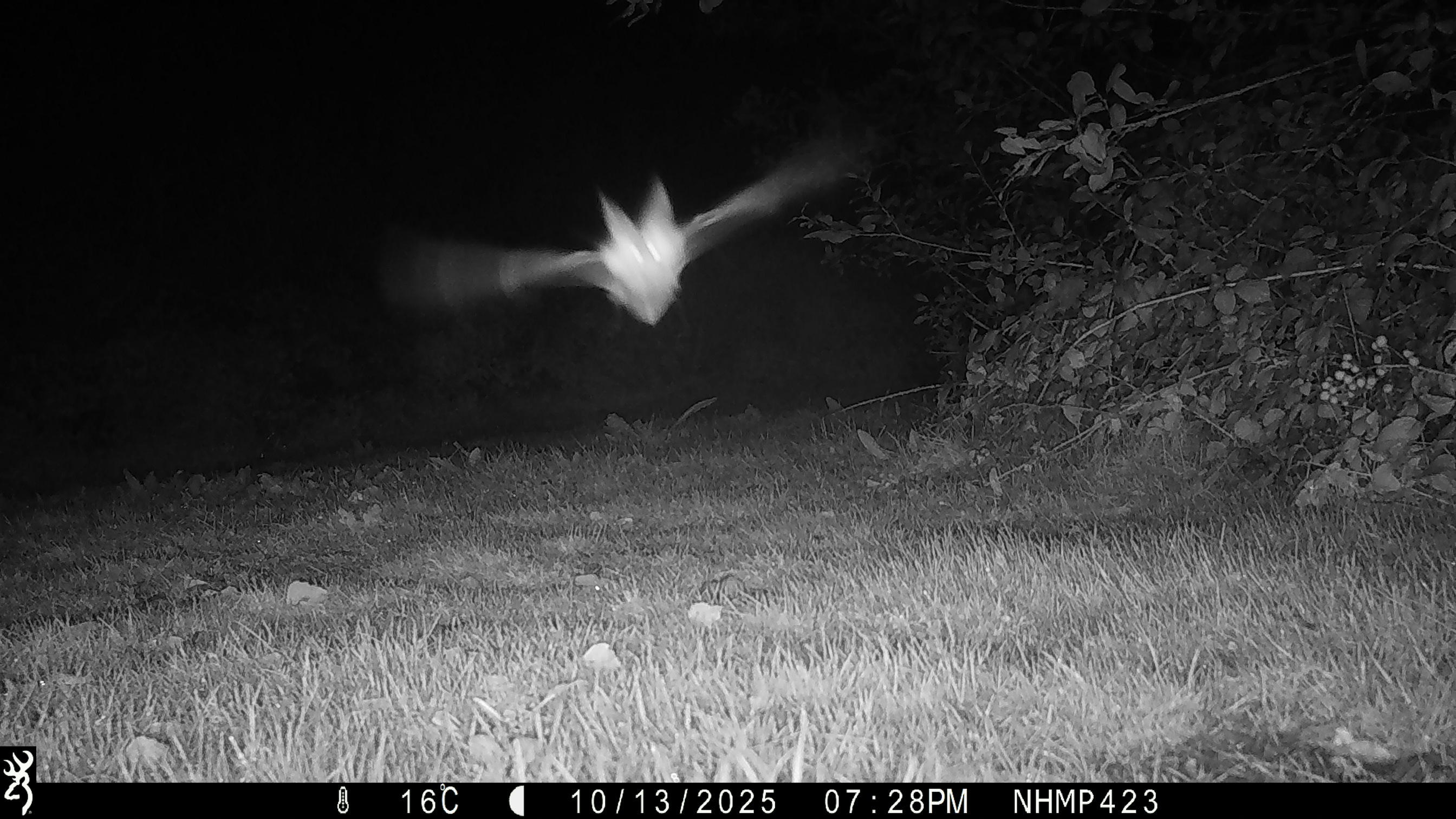
Image of a Brown Long-Eared Bat (Plecotus auritus) flying towards the camera trap
These are just three examples of some of the amazing wildlife that we share our campus with at night. A lot of the data that we have on these species is because of survey techniques like camera traps. Through using tools like camera traps we are able to observe the behaviour of species that we rarely get to see and get and get an insight into what goes on at night with our campus wildlife!
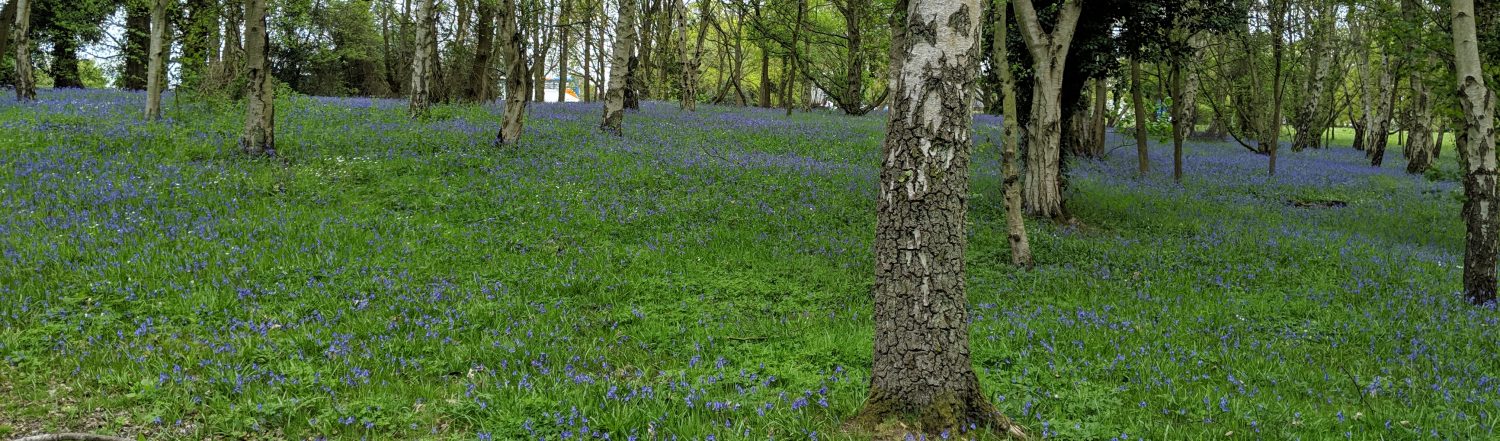

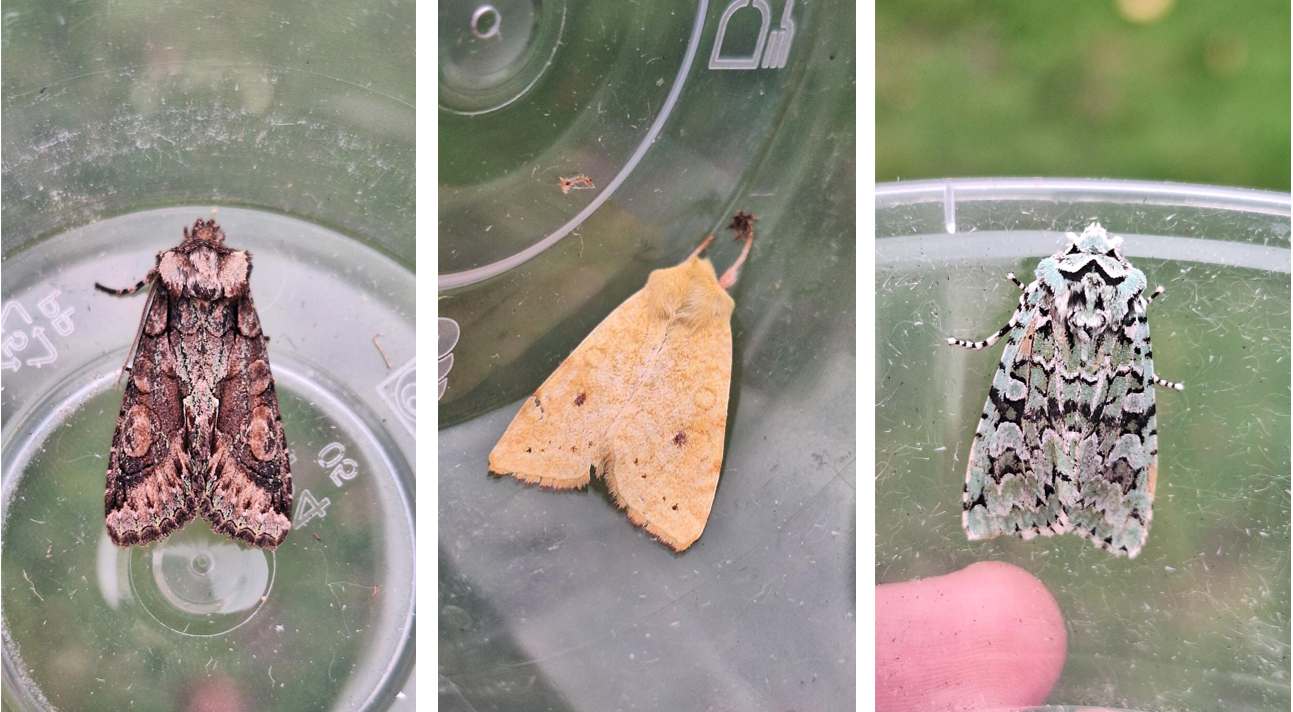
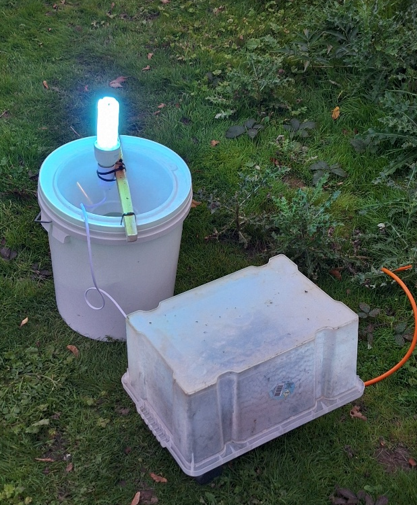 To carry out moth surveys we use a large bucket trap and a type of moth trap called a Heath Trap. These traps wo
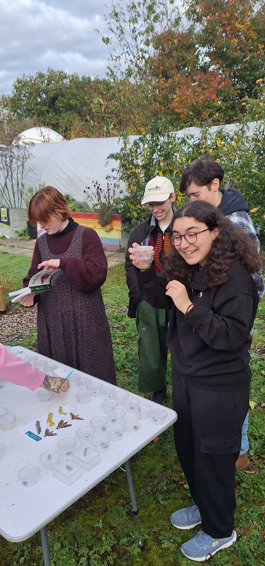 On campus we have a large variety of habitats and so are able to support a diverse range of moth species. Kent Community Oasis Garden is especially important for moths as a lot of work goes into increasing the biodiversity of that area including planting with pollinators (like moths) in mind. On Wednesday 22nd October as part of the Biodiversity Booster series, I ran a session on moths and we were lucky enough to have caught nearly 50 individual moths overnight so we had a pretty good display to show off!! The session was enjoyed by student volunteers and community members and was a great way to highlight the range of species that Kent Community supports that people don’t normally get to see.