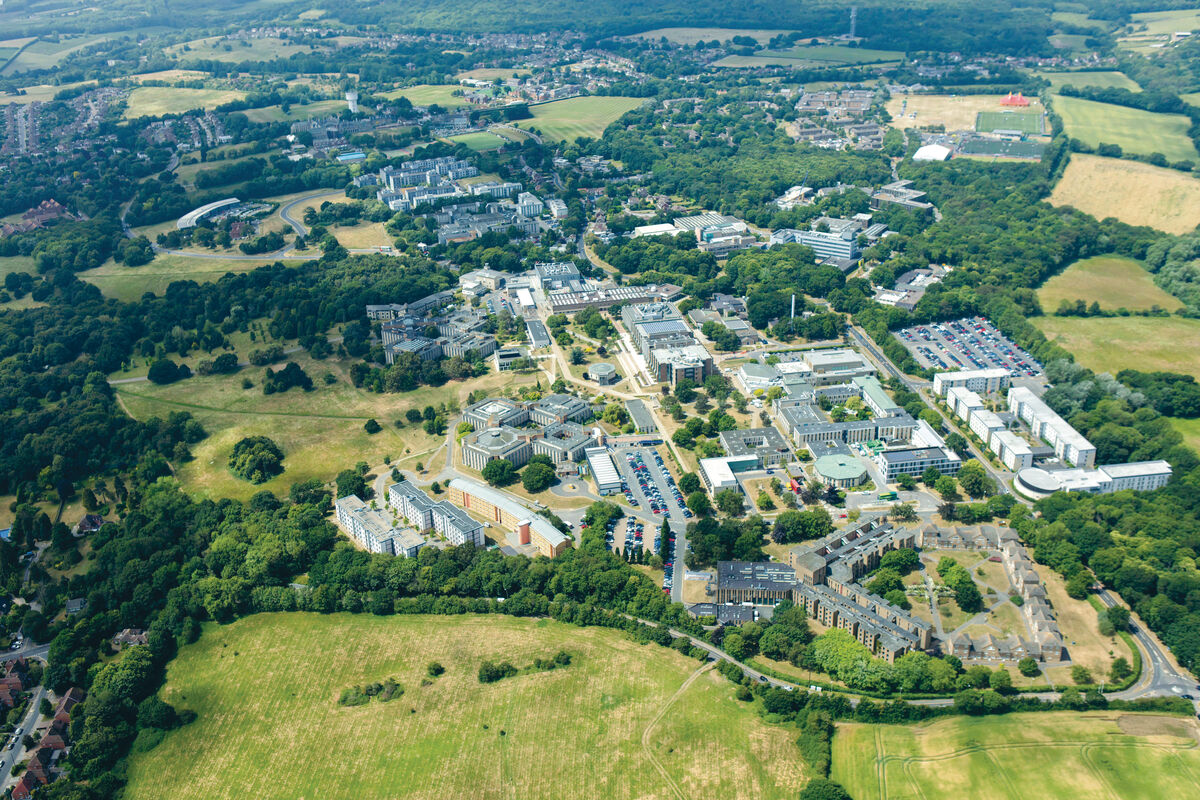
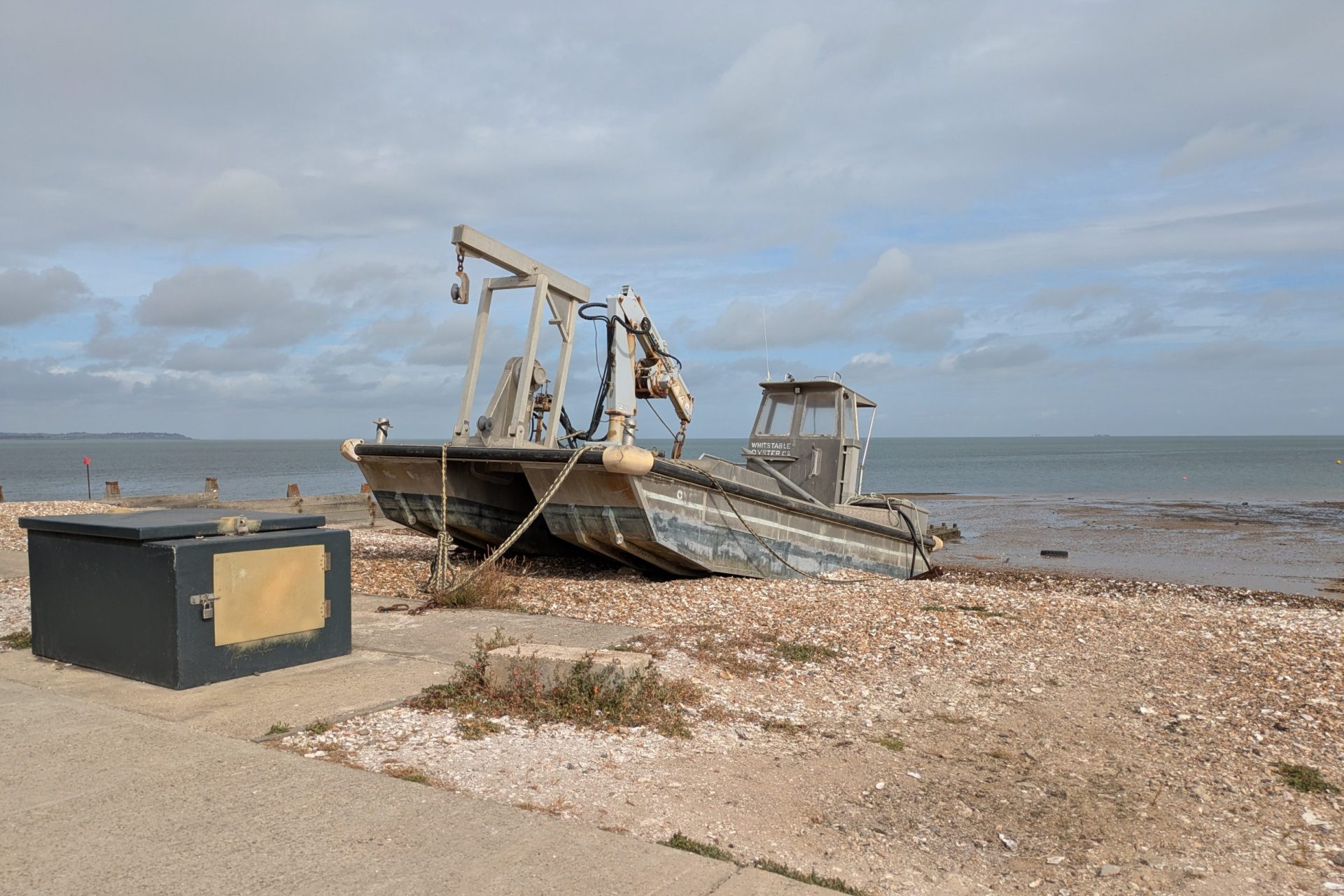
The Centre for Advanced Diagnostics Development and Application (CADDA), led by Kent in collaboration with the University of Manchester and University College London (UCL), is working with the Whitstable Oyster Company (WOC) and Southern Water to monitor oysters for the presence of Norovirus. This collaborative project is bringing together expertise in marine biology, animal health and diagnostics to help local oyster fishery and restaurant, WOC, ensure the highest possible level of food safety, protecting consumers and enhancing confidence in one of Kent’s most iconic food products.
WOC has cultivated oysters for decades. With sustainable practices such as recycling shells for new spat settlement and experimenting with trestle-based growing, WOC remains committed to high-quality, responsible aquaculture.
As part of this partnership, oysters harvested in Whitstable Bay are tested at the University using qPCR-based diagnostics. This highly sensitive method detects norovirus within 24 hours, ensuring that only batches deemed as safe for release reach the market. While not a legal requirement, WOC has chosen to implement this additional layer of testing, reflecting its proactive approach to customer safety and product excellence.
Beyond safeguarding the food chain, the project is generating additional valuable data. Test results are being combined with rainfall patterns, wastewater release records, and local health reports to identify trends and correlations. This integrated approach is providing new insights into the relationship between environmental factors and norovirus presence, supporting better waste management strategies and contributing to the health of the marine ecosystem.
Dr Jo Roobol, undertaking the research as part of CADDA at Kent, emphasises the wider impact: ‘This project is not only helping to ensure safer oysters for consumers, but it also demonstrates how diagnostic innovation can strengthen partnerships between industry, academia, and regulators. Together, we are creating a model for how food safety and environmental health can go hand in hand.’
By applying cutting-edge science, CADDA is demonstrating how modern diagnostics can drive innovation, protect public health, and support the long-term sustainability of the UK’s shellfish industry.