
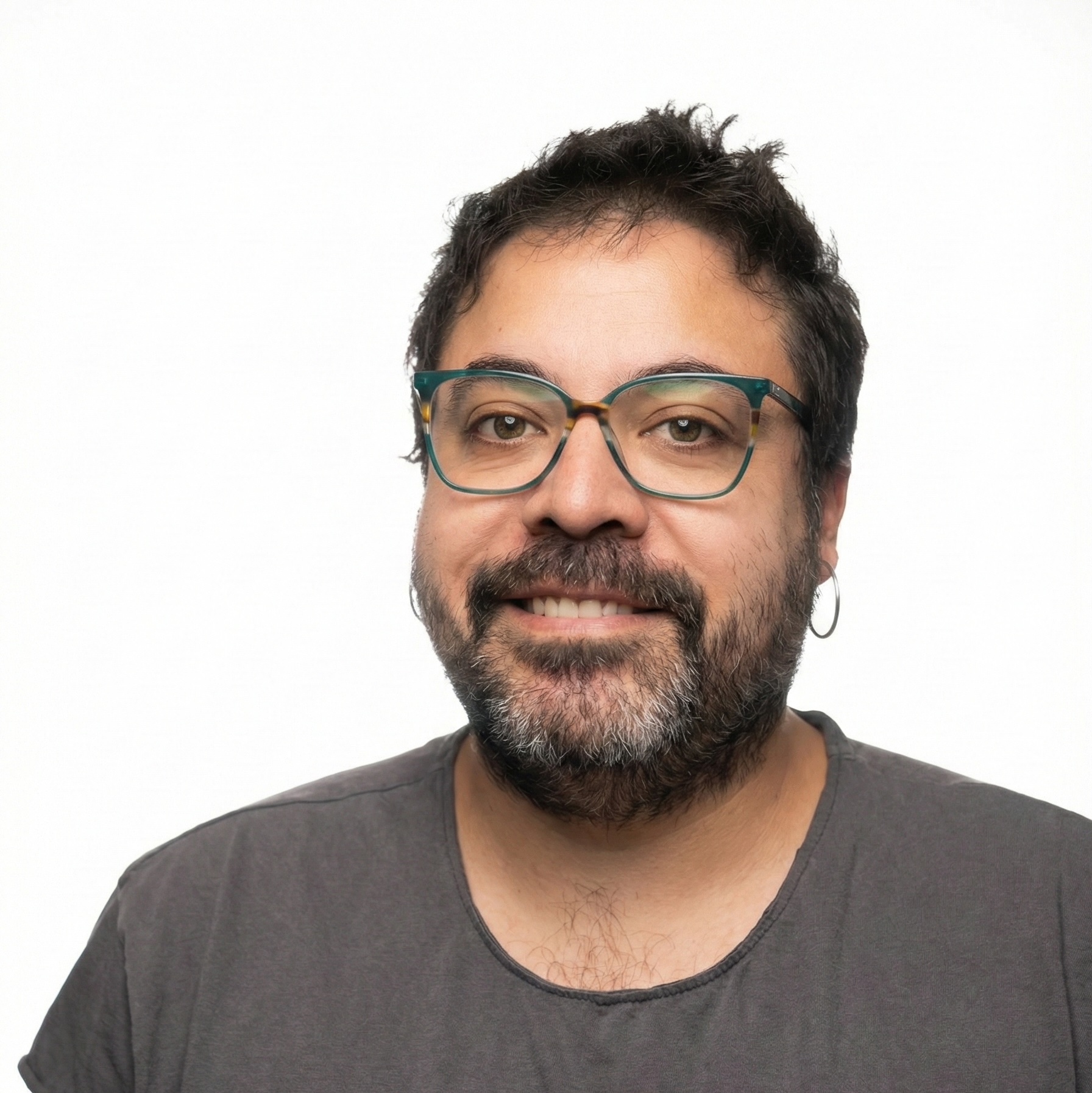
We are delighted to welcome Dr Eduardo Villavicencio to Kent Law School. Bringing an interdisciplinary perspective to questions of property, climate and justice, he joins a community committed to thinking about law critically and in its broader social context. In this profile, we learn more about his academic journey, research and teaching, and what he is most looking forward to in his new role.
Can you tell us about your academic background and what brought you to Kent Law School?
I am a lawyer and went on to complete a Master of Public Policy at Universidad Diego Portales and a Master of Sociology at the Pontificia Universidad Católica de Chile. Before coming to the UK, I spent several years working in rural development and land governance, first as a Land Consultant for Food and Agriculture Organization (FAO – a specialized agency of the United Nations that leads international efforts to defeat hunger) and then as a Project Advisor at PROCASUR (a global organization specialized in harvesting and scaling up homegrown innovations), where I worked on land access and participatory development initiatives across Latin America and Africa.
What brought me to Kent was, in a word, its critical culture. I come from a legal tradition that treats law as something fixed and self-evident—where legal education often amounts to the monotonous repetition of codes and statutes. Kent Law School offered something radically different: a space where law is understood as a living, contested, and deeply social phenomenon. That intellectual environment was unlike anything I had encountered, and it drew me first as a doctoral researcher and now as a member of the academic staff. The School’s genuinely interdisciplinary ethos—where law converses with sociology, geography, philosophy, and political economy—is a perfect fit for the kind of scholarship I want to pursue.
How would you describe your research interests?
My research sits at the intersection of property law, climate change, and socio-legal studies. I am interested in how property regimes—the legal architectures through which we organise ownership and access to land—shape the capacity of communities and territories to respond to environmental transformation. I approach this through the lens of legal geography and critical property theory, using methods that combine spatial analysis, Q-methodology, and qualitative fieldwork.
More specifically, I investigate how land concentration, fragmentation, and the dominant narratives around private ownership affect rural livelihoods and adaptation possibilities. My doctoral work focused on Chile, but the questions I ask—about the relationship between how we legally construct property and how communities navigate ecological precarity—are relevant well beyond any single jurisdiction.
Why is this research important or timely?
We are living through an era in which the consequences of climate change are no longer abstract projections; they are material realities transforming landscapes, livelihoods, and legal orders across the globe. Yet our dominant property systems were designed for a world of stable environmental conditions. They prioritise certainty, individual control, and market exchange—values that become profoundly insufficient when the land itself is changing, when water sources are disappearing, and when entire communities must adapt or relocate.
My research asks whether and how property regimes can be reconceptualised to serve ecological and social functions. This is urgent because, as the climate crisis deepens, the legal frameworks governing land will increasingly determine who can adapt and who cannot, who is protected and who is dispossessed. If we do not critically examine how property law mediates climate vulnerability, we risk perpetuating—and even deepening—existing inequalities in the name of legal stability.
Could you tell us about a publication or piece of research you’re particularly proud of, and why?
I would point to the two articles I published last year in Land Use Policy, which together capture the core of my research trajectory. In ‘The Geography of Property Rights: Land Concentration, Irrigation Access and Rural Poverty Under Climate Change in Chile’, I present empirical evidence of the relationship between land concentration and rural poverty, demonstrating how the spatial distribution of ownership intersects with water access and climate vulnerability to produce deeply unequal outcomes. In the companion piece, ‘Beyond the Agro-Export Boom: The Challenges of Land Concentration and Fragmentation in Chile’, I develop a socio-legal critique of Chile’s rural property model, examining how the dual dynamics of concentration and fragmentation undermine the adaptive capacity of rural territories.
The latter article holds particular significance for me because it was selected at the World Bank Land Conference for inclusion in a special issue of Land Use Policy dedicated to ‘Addressing New Challenges in Design and Evaluation of Land Governance Interventions’. Having that work recognised in such a forum—alongside contributions from established scholars and practitioners worldwide—was a meaningful milestone.
What are you currently working on, or planning to work on next?
My immediate priority is to prepare a monograph based on my doctoral thesis, which will offer a sustained examination of how rural property regimes in Chile are being reconfigured under the pressures of climate change. Beyond that, I am developing a research project that will allow me to extend the concept of the socio-legal infrastructure of property—a framework I elaborated in my thesis—to comparative contexts beyond Chile. I am particularly interested in exploring how this concept might illuminate property transformations in other Latin American jurisdictions and, potentially, in sub-Saharan Africa, where I have worked previously through PROCASUR and IFAD.
What are you teaching at Kent Law School, and how does your research shape your teaching?
I teach Contract Law. At first glance, that might seem distant from my research on land and climate, but the critical culture of Kent Law School makes the connection quite natural. Contract law provides a remarkable window into how private legal arrangements structure power, allocate risk, and reflect broader social and economic assumptions. I encourage my students to engage with contractual doctrine not merely as a body of technical rules to be memorised, but as a set of contested principles that carry real consequences for how resources, obligations, and vulnerabilities are distributed in society.
My research experience also shapes how I approach the classroom more broadly. Having worked extensively with communities in the field—interviewing rural actors, engaging with indigenous organisations, navigating the gap between law on paper and law in practice—I try to bring that sensibility into my teaching: an insistence that legal categories are never neutral, and that understanding law requires attending to the lives it shapes.
What opportunities are there for students to engage with your research?
I am always happy to talk with students who are curious about property, land, climate, or socio-legal approaches more generally. Students interested in pursuing a dissertation or independent research project on topics related to my work are particularly welcome to get in touch. I also hope to develop opportunities for students to engage with the applied dimensions of my research—whether through exposure to the work of international organisations like FAO, or through events that bring together scholars and practitioners working on land governance and climate justice. Kent’s vibrant research culture makes it a wonderful place for those conversations to happen.
What are you most excited about in your new role?
Being part of a community like Kent, where law is lived and thought about in a particularly dynamic and motivating way. There is something rare about a law school that takes critical scholarship seriously not as an add-on, but as the foundation of everything it does—from how it teaches to how it engages with the world. I am excited to contribute to that culture, to learn from my colleagues, and to work with students who are drawn to Kent precisely because they want to think about law differently.
What would you say to anyone considering studying Law in the future?
Come to Kent and experience what it means to live and think law critically. In a time marked by growing threats to fundamental rights—from environmental degradation to democratic erosion—I believe more than ever that we need lawyers with a critical spirit, people who are prepared to place their capacities in the service of social justice and equality. Kent Law School is a place that nurtures that kind of commitment, and I cannot think of a better environment in which to begin that journey.
Outside of work, are there any interests or activities you enjoy that you’d like to share?
I am a musician. I play in a band called Terraqueo, where we make Latin American folk-rock. You can find us on Spotify. Music has always been an important part of my life—it keeps me grounded and connected to my roots in Chile, even while living in Canterbury. I also enjoy spending time with my family exploring the Kent countryside, which, I must say, offers a rather different landscape from the one I grew up with in central Chile, but is no less beautiful.
Would you like to add anything else?
Only that I am deeply grateful for the opportunity to be part of Kent Law School. This institution shaped my intellectual development as a doctoral researcher, and now being here as a colleague feels like coming full circle. I look forward to contributing to the School’s mission and to engaging with the wider Kent community in the years ahead.
We are delighted to welcome Eduardo and look forward to the insight and inspiration they will bring to our students and colleagues alike.