
Kent student wins major award for paper on benefits of evolutionary medicine

A University of Kent student from the School of Anthropology and Conservation has won the international Pollitzer Travel award for the second consecutive year for her paper on evolutionary medicine.

Justyna Miszkiewicz, a third year PhD research student, won the highly-regarded award – open to all physical anthropology undergraduates and postgraduates worldwide – for her submission which encouraged collaboration between physical anthropologists and clinicians.

Evolutionary medicine seeks to explain certain human conditions from an evolutionary perspective.

This year applicants were asked to submit a paper to convince the US president and congressional leaders why the next federal budget should include additional funding for physical anthropology. Justyna’s submission titled: ‘How Evolutionary Medicine can help us battle obesity and type 2 diabetes’ also explained the benefits of adopting healthcare programmes that incorporate evolutionary explanations of health and disease. She argued that these programmes could encourage patients to take a fresh look at their biology.

The competition is named in honour of William S Pollitzer, a human biologist and a Darwin Lifetime Achievement Awardee. It is run by the American Association of Physical Anthropologists (AAPA) – the world’s leading professional organisation for physical anthropologists.

Commenting on Justyna’s success, her PhD supervisor Dr Patrick Mahoney, of the University’s School of Anthropology and Conservation, said: ‘The AAPA reported that they received an unprecedented number of submissions for the competition this year. So to be chosen as one of the international recipients of the award is a great achievement for Justyna. I am very pleased for her.’
Justyna said: ‘I was delighted to hear the news. I am a huge proponent of explaining certain human conditions by using modern evolutionary biology framework so to receive this award for my essay is a fabulous achievement. The money, of course, is also a great help.’
Justyna’s prize includes $500 to enable her to attend the AAPA conference, being held in Knoxville, Tennessee.

For further information contact Katie Scoggins in the Press Office at the University of Kent
Tel: 01227 823100/823581
Email: K.Scoggins@kent.ac.uk
News releases can also be found at http://www.kent.ac.uk/news
University of Kent on Twitter: http://twitter.com/UniKent
Posted in news | Leave a comment

Long Term Care in Europe – Improvements in Policy and Practice

New book co-edited by Jenny Billings of the Centre for Health Services Studies

This book challenges the prevailing discourse centred on the problems of demographic change and long-term care provision for older people by focusing on solutions emerging from progression and improvement in policy and practice. Building on ample research in 13 European countries, evidence is provided for how the construction of long-term care systems can be taken forward by practitioners, policy-makers and stakeholder organizations. By focusing on prevention and rehabilitation, the support of informal care, the enhancement of quality development as well as by decent governance and financing mechanisms for long-term care, stakeholders may learn from European experiences and solutions on the local, regional and national levels.

It also contains articles written, or co-written by Jenny Billings and Laura Holdsworth of the Centre for Health Services Studies.

More information

Posted in news | Leave a comment

Making social care funding work for disabled adults in England

Five charities have got together to write a report on the care crisis facing disabled adults in England. This report was put together with the input of PSSRU staff comprising of Jose-Luis Fernandez, Tom Snell, Julien Forder and Raphael Wittenberg, who carried out research. To view the report, please click here (PDF).

Link: http://www.scope.org.uk/campaigns/social-care-and-support

Posted in news | Leave a comment

Personal Health Budgets Pilot Programme conferences announced

PSSRU are organising two conferences, one in London and one in York, titled “Personalisation in the health care system: Evaluation of the Personal Health Budgets Pilot Programme”. For more information and to register, please see the link.

Link: https://www.phbe.org.uk/2013-conference-information.php

Posted in news | Leave a comment

Structural insights into targets for tumour imaging and therapy

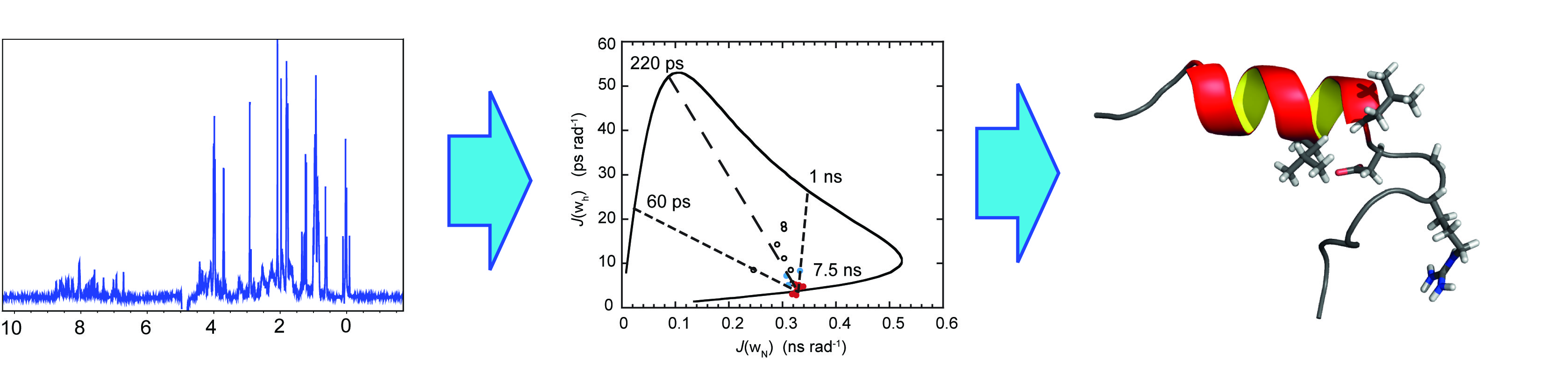
Dr. Mark Howard, Reader in Biological NMR Spectroscopy, comments on a recently published article that features work from his research group and other collaborators at Kent and elsewhere.

“Our research involves nuclear magnetic resonance spectroscopy, a scientific method that can determine the shape and flexibility of molecules.  The molecules we studied in this paper were peptides that are known to bind to a cell surface molecule, integrin avb6, a known cancer marker and of medical interest as a target for tumour imaging and therapy. This paper points to important molecular features in these peptides that make them specific toward the integrin and so useful for medical applications.  This study is part of an ongoing collaboration with John Marshall’s group at the Barts Institute of Cancer, London.”

Integrin structure

NMR relaxation and structural elucidation of peptides in the presence and absence of trifluoroethanol illuminates the critical molecular nature of integrin avb6 ligand specificity. Jane L. Wagstaff, Michelle L. Rowe, Shu-Ju Hsieh, Danielle DiCara, John F. Marshall, Richard A. Williamson and Mark J. Howard. RSC Advances, 2012, 2, 11019–11028.

Posted in news | Tagged , , | Leave a comment

Research study investigates human cardiac myosin function

Mike Geeves, Professor of Physical Biochemistry in the School of Biosciences, comments on a research article published recently featuring work from his laboratory.

“Myosin is the motor protein that drives cardiac muscle contraction and blood circulation.  Mutations in myosin cause inherited heart disease but obtaining human tissue to study the proteins has been difficult. Colleagues in the USA have now expressed human myosin in cells and purified the myosin. We show the two human cardiac myosin isoforms (α-from atria, and β-from ventricles) differ much more than had been thought. α-myosin, in fact, surprisingly behaving like a fast skeletal muscle myosin. The work will now allow a new study of the effect of mutations on human myosin function.”

Prof. Geeves teaches all of our undergraduate students the function of muscle in our core Physiology module. In the final year, his research group’s pioneering work on molecular motors features strongly in Protein Structure and Function, a core module on our Biochemistry degree programme. 

Deacon, J. C., Bloemink, M. J., Rezavandi, H., Geeves, M. A. & Leinwand, L. A. (2012) Identification of functional differences between recombinant human alpha and beta cardiac myosin motors. J Cell Mol Life Sci  69, 261-77. 

Posted in news | Tagged | Leave a comment

Computer simulation promotes understanding of fundamental biological processes

Computer simulations are emerging as useful tools to study how cellular molecules form networks, thereby creating the processes of life. Dr. Tobias von der Haar, working in collaboration with expert computer scientists from the School of Computing at the University of Kent, recently applied this approach to protein synthesis, a core biological process which malfunctions in cancer cells and during viral infections. They revealed that molecules involved in protein synthesis adopt a specialised network which allows healthy cells to produce protein using a minimal amount of energy and other resources.

Dr. von der Haar is Senior Lecturer in Systems Biology in the School of Biosciences brings his expertise to our undergraduate modules in Biochemistry and delivers our cutting edge advanced practical training in our taught Master’s programmes. He is also the coordinator of the School of Biosciences’ science outreach work with the local community.

Chu DF and von der Haar T (2012) The architecture of eukaryotic translation. Nucleic Acids Res 40(20):10098-10106.

Posted in news | Tagged , | Leave a comment

University of Kent and East Kent Hospital collaboration highlighted at US Conference

Dr Mohamed Sakel recently attended the 2012 Conference of the American Congress of Rehabilitation Medicine (ACRM) and presented 3 original research papers involving collaboration between the East Kent Hospitals University NHS Trust and the Schools of Psychology and Engineering & Digital Arts at the University of Kent. The topics were:

  • Patients with hemi-spatial neglect are more prone to limb spasticity, but the former prolong hospital stay. Mo Sakel, Sarah-Jayne Camp, Lara Hammond & David Wilkinson.
  • Developing a vision-based gesture recognition system to control assistive technology in neuro-disability. Mo Sakel, Farzin Deravi, Konstantinos Sirlantzis, Matthew Pepper & S.P.Guness.
  • Using an inertial sensor-based novel system to assess upper limb movement in brain injury. Mo Sakel, L. Bai, Matthew Pepper, Professor Y. Yan & Professor S. K. Spurgeon.

During the conference, Dr Wilkinson, Dr Deravi and Professor Spurgeon were elected as Faculty members of the ACRM conference2012. Dr Sakel, a consultant and Director of the EKHUFT Neurorehabilitation Centre, stated ‘I am pleased to be able to attend this conference and talk about the fruits of our excellent collaboration. There are many opportunities to expand this work and provide enhanced benefits for patients’. Following the success of his presentations, he was asked to join the ACRM International Networking Group for Cross Border Research Collaboration and will be an organiser of a special Symposium during the 2013 ACRM Conference in November.

Posted in news | Leave a comment

Leading Edge

Let me share the latest good news straight away.
Across Kent and Medway, Surrey and Sussex all NHS Trusts are now reporting 100% NHS compliance with NICE Technology Appraisals (TAs). Compliance is a good thing for patients. It is also a confidence-builder with Industry and the AHSN’s central funders in the NHS Commissioning Board. The adoption and spread work goes on of course on a wider front than NICE Technology Appraisals, with an energy to promote adoption and spread of all NICE guidance and Quality Standards across Health and Social Care.

Spread and adoption work also goes deeper, ensuring benefits reach all patients who could benefit. Intraoperative fluid management is one such example. Each NHS Trust now knows the type and number of patients who could benefit from this best practice and are working out how to measure just how many patients actually do benefit from this. Clinicians have worked together to identify the best ways to adopt this practice. As a result of leading edge work on intraoperative fluid management the AHSN has been asked to lead nationally on some further work in this field.

And the collaboration doesn’t end there. NHS organisations and Universities across KSS are working together to apply for NIHR funds to establish a Collaboration for Leadership in Applied Health Research and Care (CLAHRC). Sussex Partnership NHS Foundation Trust has agreed to be the NHS Lead Organisation for the bid. Prof Tom Quinn, acting on behalf of the AHSN Transition Board, is co-ordinating interested parties from across KSS to identify potential areas of focus and ‘Themes’, aligned to priorities established for the AHSN application. A process is underway to refresh the ‘research stock take’ undertaken in preparation for the AHSN so that we have a clearer picture of strengths across the patch, and a transparent process for identifying a (clinical/academic) Director to provide leadership as we move rapidly towards the May deadline for submitting our bid. We will provide regular updates through the AHSN newsletter, but please don’t hesitate to contact Tom Quinn if interested in helping develop the bid.

A KSS-wide meeting on the CLAHRC proposals is being held on 19th March at Gatwick, please contact Anne Hrassnigg if you would like to attend.

Licence latest

In addition to the licence, the NHS Commissioning Board will draw up a formal agreement or contract with each AHSN that sets out the funding from the NHS Commissioning Board to the AHSN and the resulting deliverables. This will detail both funding directly from the NHS Commissioning Board and the local matched funding from local members (much of which is also ultimately funding from the NHS Commissioning Board).

Posted in ahsn | Leave a comment

License Panel


License panel

This week we had our interview with the AHSN Licensing Panel which was chaired by Sir Alan Langlands, CE of the Higher Education Funding Council for England. It included Peter Ellingworth CE ABHI; Dr Russell Hamilton, NIHR; Sir Ian Carruthers; Carol Blount ABPI; Sir John Bell Govt Life Science Champion.

As you know, this represents a defining moment on our journey. Our presentation to the panel was developed around the key points, which give shape and coherence to our vision for the AHSN.

Ten pillars

Our approach to the panel was based on ten points about what we will do and how we will do it.

1. We are a whole system AHSN, inclusive and multi-disciplined, influential and using the levers at our disposal to facilitate, incentivise and achieve improvement.

2. Our focus is on applied research, spread and adoption.

3. There is momentum and commitment across the network, from all sectors, right across the counties.

4. Industry is engaged and will soon be even better engaged through our operating model which will re-engineer the interface between industry and potential business partners.

5. We will invest in pump priming to increase research capacity and capability.

6. Our initial priorities are already agreed – dementia and emergency care.

7. Dementia work is underway, with key players mobilised.

8. We are building on the strengths of the Enhancing Quality programme.

9. We are also building on the strengths of existing industry collaborations and experience, such as Deltex and the 3 Million Lives Pathfinder.

10. WE will contribute on the national stage – in areas such as BNP, intraoperative fluid management, and the Dementia Challenge fund.

Next week I expect to be able to share more about our plans for our first hundred days and details of how you can help us shape the network through to 2018.

Posted in ahsn | Leave a comment