
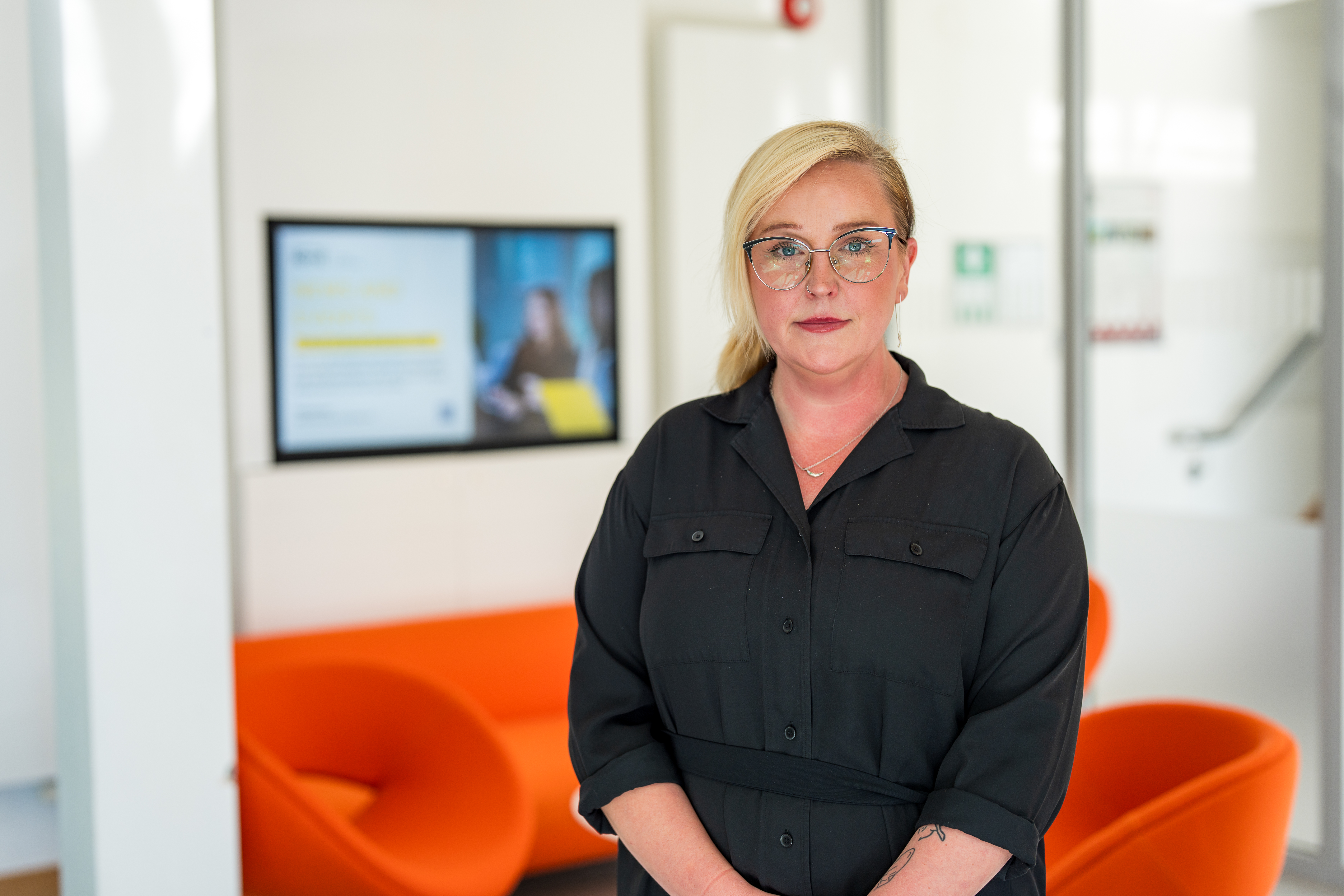
Have you ever turned to an online space, such as a messaging board or a comment thread, looking for understanding after a difficult experience? For Kylie Dunleavy, the 2025 recipient of the Alumni Postgraduate Research Scholarship, these everyday digital spaces are also a way of exploring what it means to be human.
Kylie’s PhD asks how digital spaces shape the ways people communicate and make sense of difficult experiences. During her first year, she has expanded her original focus on posthumanism and trauma to include online environments such as messaging boards.
Posthumanism is a way of thinking that challenges the idea that humans exist separately from the natural world, technology and other living things. Kylie’s research considers how closely our identities and experiences are connected to these wider systems. This perspective is especially relevant when we think about the role technology plays in our relationships, wellbeing and sense of belonging.
As Kylie’s project has developed, so has her research method. She is now writing an auto-theoretical thesis, which brings personal experience into conversation with academic research and considers its wider cultural impact.
“The biggest evolution has been in my methodology,” Kylie explains. “I’m now working on writing an auto-theoretical thesis. This approach takes personal experiences into consideration when looking at research and the impact this has culturally.”
Kylie hopes her research will deepen understanding of trauma and care in an increasingly digital world, while also encouraging us to consider how our lives are connected to the ecological world and to one another.
“My research highlights that the tools we need to lessen our negative impact on the world are already embedded in our everyday lives,” Kylie says.
Her first year has also brought opportunities to share her developing research. Kylie has been involved in Kent’s Research Salon and will present at her first conference in Barcelona this November, following the acceptance of her work.
Alongside her PhD, Kylie works with the Outreach programme, which aims to remove barriers to education for care-experienced and estranged young people. In her second year, she is looking forward to developing the newer elements of her project, presenting at more conferences and continuing this important outreach work.
As Kylie begins the second year of her PhD, she would like to share her gratitude with the alumni whose support has made it possible. She says:
“I wouldn’t have been able to do any of this at all without the scholarship. It’s been absolutely life-changing for me in the best way imaginable. Thank you for your ongoing support and for believing in my project.”
It is so interesting to see how research like Kylie Dunleavy’s explores the ways we use everyday online messaging boards and comment threads to make sense of difficult experiences. Blending personal experience with academic research through an auto-theoretical thesis is such a unique way to study how technology shapes our identities and sense of belonging. If you enjoy diving into fascinating human stories and fresh perspectives on modern life, you might also want to check out https://fortunica-cas.co.uk/. How much do you think online spaces actually help people heal after going through tough times?