
(A table full of moths!! This photo was taken during our second moth survey. Each line is a different species, but we ran out of table space and pots!!)
This year, as part of my placement I am going to be surveying and recording as many different species as I can across campus. One of the species that I am going to be regularly recording throughout the year is moths!! We have around 2500 species of moths in the UK and according to Kent Moths, 2167 of these species have been recorded in Kent. So far, at the University of Kent we have recorded 223 species of moths using our site.
Moths are a very important pollinator, as they are the main invertebrate pollinator at night. Additionally, compared to butterflies, many more UK moth species are active throughout late Autumn and Winter since they have adapted to be able to fly with a colder body temperature. Due to their hairy bodies, they are a very efficient pollinator as pollen is able to easily stick to them and plants like Honeysuckle, Evening Primrose and Ivy rely heavily on the pollination by moths.
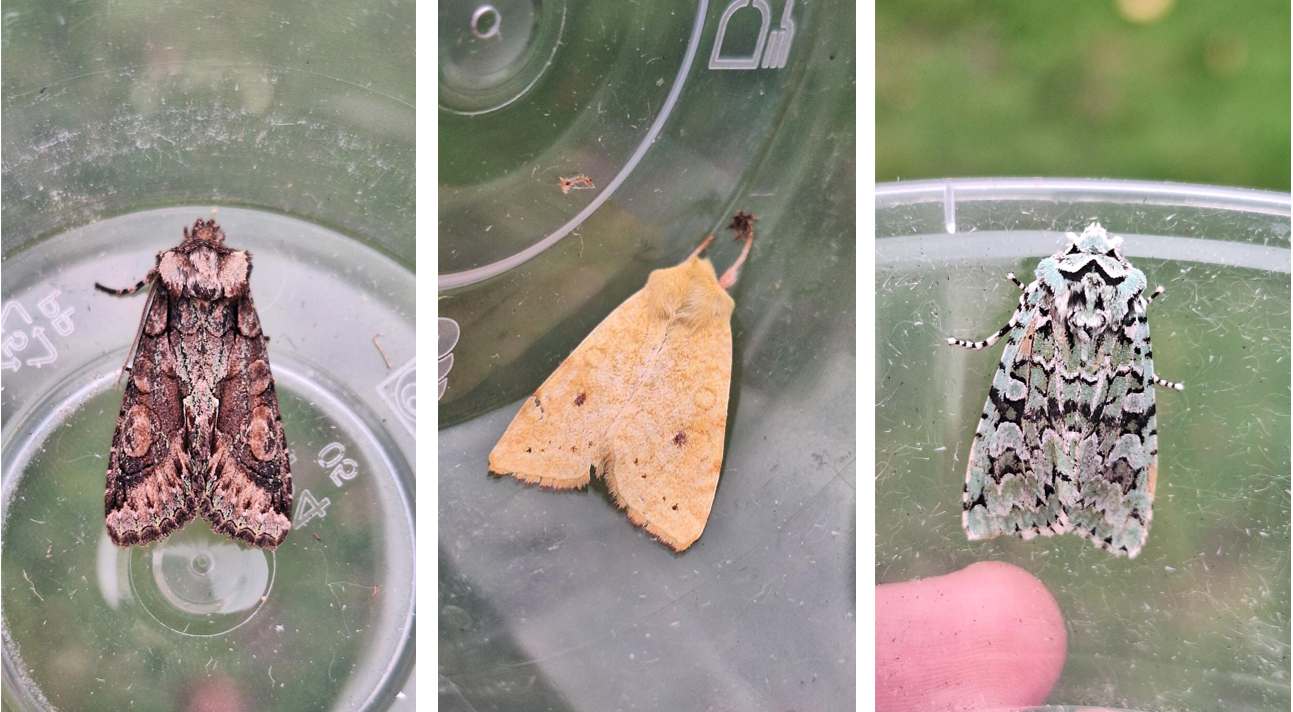
(From left to right: Green-Brindled Crescent, Sallow, Merveille du Jour)
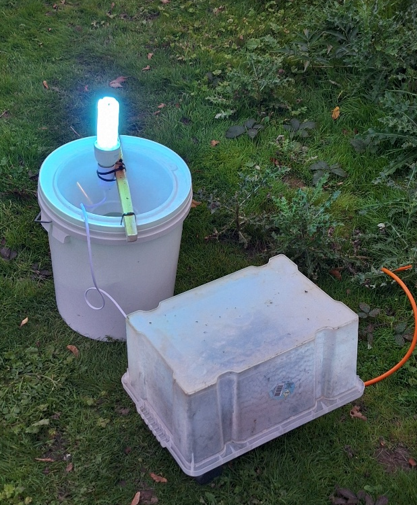 To carry out moth surveys we use a large bucket trap and a type of moth trap called a Heath Trap. These traps work through setting up a very bright light which the moths fly towards and then get directed down into the main collection area that we fill with recycled egg cartons. The moths then stay there overnight, and we are able to come back in the morning to conduct our survey and record the species that we can see before we release them. This process does not harm the moths as they stay warm and sheltered in the egg boxes and then are released where we found them into the cover of bushes so they can hide away for the rest of the day.
(This is one of the bucket traps that we used, set up and ready for a night of attracting moths!)
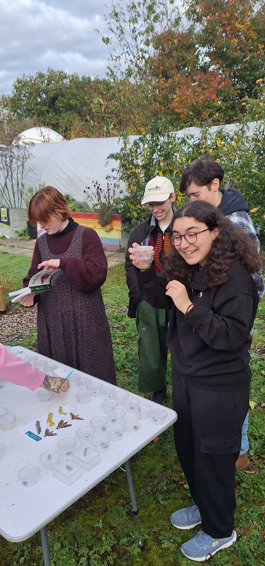 On campus we have a large variety of habitats and so are able to support a diverse range of moth species. Kent Community Oasis Garden is especially important for moths as a lot of work goes into increasing the biodiversity of that area including planting with pollinators (like moths) in mind. On Wednesday 22nd October as part of the Biodiversity Booster series, I ran a session on moths and we were lucky enough to have caught nearly 50 individual moths overnight so we had a pretty good display to show off!! The session was enjoyed by student volunteers and community members and was a great way to highlight the range of species that Kent Community supports that people don’t normally get to see.
(On the right is a photo of student volunteers at a Biodiversity Booster Session enjoying seeing the moths)
In my first month of placement, I have carried out 2 moth surveys and recorded just under 90 individuals which equated to 32 species of moths 18 of which had not been recorded on campus before. I am looking forward to continuing these surveys throughout my placement and recording many more species!!
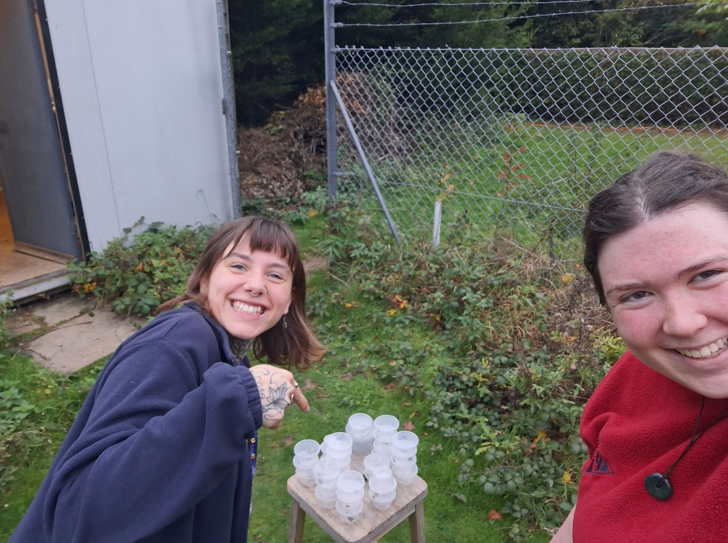
(Two very happy conservationists after a successful survey)