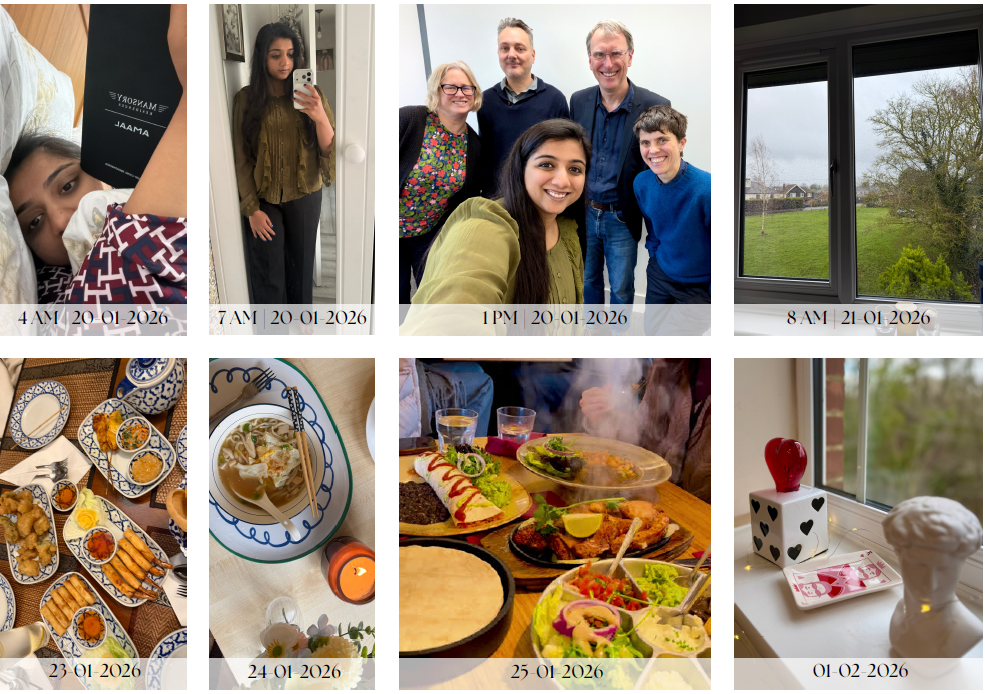

In this reflective piece, Yeshashwini Kadiri, PhD in Urban Studies, turns her attention not to the viva itself, but to the quieter, more disorienting days that followed. While the examination brought an unequivocally positive result, what unfolded afterward was far more complex than celebration.
Through an honest and intimate account, she traces the emotional aftershocks of completing a PhD: the numbness that can accompany success, the sudden absence of structure, the quiet unravelling of routine and identity, and the unexpected grief for a chapter that once shaped every waking hour. “Life After the Viva” names a period rarely discussed — the in-between space where achievement settles slowly, and where relief, exhaustion, doubt, and loss coexist.
My viva was scheduled for 10 a.m. I woke up at 3 a.m., switched off my alarm, and tried to sleep again. I woke at 4, then 4:30, and eventually realised there was no point pretending rest was still possible. Anxiety had already taken over. I opened my laptop, skimmed through my notes without really absorbing anything, took a shower, had breakfast, and reached campus by 8 a.m.
The night before, I had stayed over at a colleague’s place. She is already a professor, and that small act of care mattered more than I realised at the time. Over breakfast, she talked me through the morning, dropped me at campus, and walked me in. The steady friendships you form during a PhD often carry you through moments like these. Another friend had come down purely for emotional support. She waited with me, reassured me, and promised she would stay around. At some point, I ran into my internal examiner. They noticed how nervous I was, smiled, and said, “You’ll be all right.” It was a small moment but deeply grounding.
I met my supervisor around 9:15. I ran through a few questions I thought might come up and how I planned to answer them. He nodded, told me it sounded fine, and suggested I go for a short walk around campus to clear my head. My head, of course, did not clear. Instead, I distracted myself by opening all the conference papers and articles currently in the pipeline anything to stop my thoughts spiralling. I walked anyway, came back, and walked into the viva room.
The viva itself was good. Better than good. Interesting questions, generous examiners. But that is a different story, maybe for another time. What I want to write about is what happened after.
After the final question, they asked me to step outside while they discussed. I went to my supervisor’s office on the same floor. We were mid-conversation when the internal examiner knocked and said, slightly amused, “Oh, we thought you were waiting in the kitchen. Come in, we have a decision.”
They congratulated me. Then there was a pause. They said, “you’ve passed with no corrections.” I genuinely did not process it. No corrections felt unreal. As an international student, I had mentally prepared myself for minor or major corrections. I had planned timelines, visa contingencies, everything. None of that mattered anymore, but my mind had not caught up. The external examiner asked if it was culturally appropriate to give me a hug and then did. They told me it was an excellent thesis. Everyone was smiling. Everyone was happy. And yet, my face remained blank. No visible reaction. No excitement. No laughter.
I kept telling myself it was jet lag. I had arrived from India the night before. Maybe my body was confused. Maybe I had just completed my viva half-asleep. Somewhere in the background, imposter syndrome was already doing its job, Did I really deserve this? Did I answer well because I was on jetlag? One of my supervisors gently asked, “You don’t seem very happy, are you okay?” I insisted I was. We went out for lunch. They asked why I hadn’t called my family or friends yet, not even the friend who had waited for me that morning. I said I would. It all felt like it needed time to sink in.
That evening, while congratulatory emails flooded in, I went home and slept. When the reality finally did sink in, my body chose crying as its outlet. Not celebratory crying, but something messier. My parents did not react in the way I had imagined. They did not fully grasp what “no corrections” meant, or why this moment was such a big deal. Perhaps it was that gap between what this meant to me and how it was received that needed space to be felt.
And then came the days after. I finished my viva on the 20th of January. As I write this now, it has been over two weeks. Those two weeks have been more emotionally intense than the period before submission or the days leading up to the viva itself. At least then, there was a deadline. A direction. A reason to get up and work towards something. Suddenly, there was none. No PhD. No job. No structure.
For three years, eight to nine hours of every day revolved around this one thing. When it disappeared, it left behind a void I was not prepared for. I do not know if “post-PhD depression” is a recognised term, but for a full week, I barely left the house. I did not cook. I did not shop for groceries. I ordered food and stayed indoors. It did not feel like me, but it was me. I began looking at jobs, did not apply though. Scrolling through social media kept my days going. The week after, I worked intensely on a synopsis to convert my thesis into a book, a process familiar, something tethered to the PhD. I sent it to my supervisor, even while knowing that post-PhD, their formal responsibility had technically ended.
What surprised me most was how hard it is to detach from your supervisor, from the university, from the academic setting that has quietly structured your life for years. The
PhD does not end cleanly with the viva. Even when the outcome is unequivocally positive, even when there are no corrections to work through, the emotional disentangling takes time. Perhaps especially then, there is just a sudden stillness where urgency used to be.
I am learning that finishing a PhD is beyond a single moment, it is a period. The weeks after the viva carry their own weight, their own confusion, their own recalibration. When the result is better than you ever allowed yourself to hope for, it can be overwhelming in a way that is difficult to articulate. There is relief, certainly, but also disbelief, exhaustion, and an unexpected sense of loss for the routine, for the identity, for the constant striving that once gave shape to every day.
The PhD is only one part of a much longer journey, and I know that what comes next will unfold in time. My future does await me, even if it is not yet fully visible. This piece is about naming this particular in-between period, which are the emotionally dense weeks after the viva, when the title arrives before the feeling does. If you find yourself here, know that the disorientation is in its own way a part of the journey too.