From this term, you’ll start to see carbon labels appearing alongside food items across University of Kent catering outlets.
The labels are designed to give students, staff and visitors a clearer understanding of the carbon impact of different menu choices, helping those who want to factor sustainability into their purchasing decisions. They may also reveal some surprising facts about the food we eat. For example, while rice is often perceived as a low-impact ingredient, it can have a relatively high carbon footprint due to the way it is grown. By highlighting information like this, the labels help us make more informed choices while learning more about the environmental impact of different foods.
At the same time, we recognise that factors such as taste, value for money, convenience and health remain important considerations when choosing what to eat. The labels are intended to add information, not replace personal preference.
What do the labels mean?
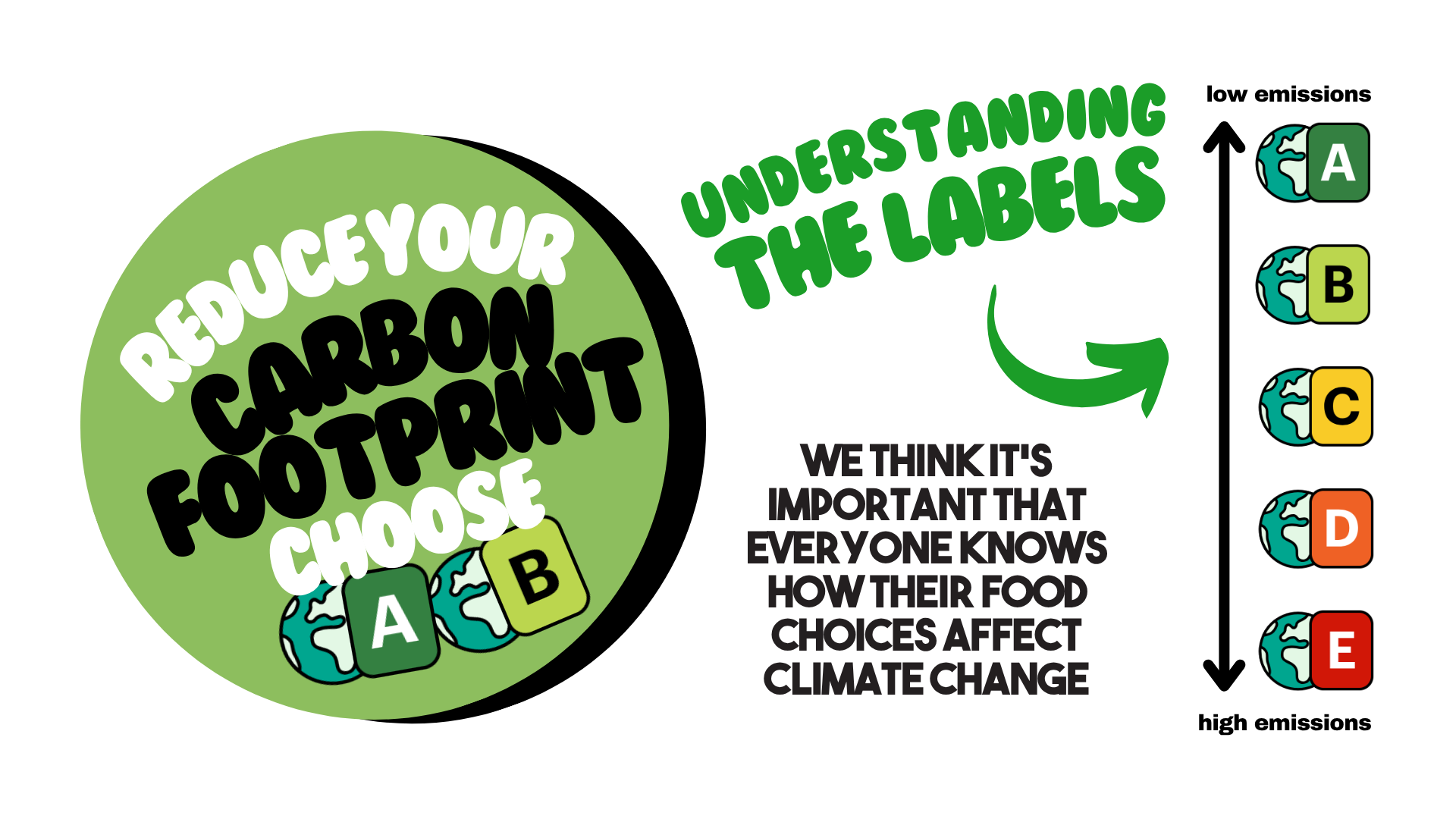
Each menu item is given a rating from A to E, displayed using a simple traffic-light colour system.
- A = Very low carbon impact
- B = Low carbon impact
- C = Moderate carbon impact
- D = High carbon impact
- E = Very high carbon impact
The ratings provide a standardised way of comparing foods based on the greenhouse gas emissions associated with producing them.
How is the carbon impact calculated?
The labels are provided through Foodsteps, a food sustainability platform that assesses the environmental impact of food products and recipes.
Foodsteps uses internationally recognised Life Cycle Assessment (LCA) data to estimate the greenhouse gas emissions associated with a food item throughout its lifecycle. This includes emissions from farming and ingredient production, as well as processing, packaging, transport and waste.
The ratings are based on a global carbon budget for food developed by the EAT-Lancet Commission, which provides a benchmark for comparing the climate impact of different foods.
One part of a wider picture
While carbon emissions are an important aspect of sustainability, they are only one part of the story. Factors such as nutrition, biodiversity, land use, water use, food security and fair working conditions also play an important role in creating a sustainable food system.
By introducing carbon labels, the University aims to provide greater transparency about the food served on campus and support everyone in making choices that work for them. The information will also help us better understand the environmental impact of our menus, identify opportunities for improvement and design future menus that balance preferences with sustainability goals. Over time, this will support the development of food options that are both popular and better for the planet.
Want to find out more?
We’ll be hosting a drop-in engagement session on Wednesday 14 October, from 12pm to 2pm at the Gulbenkian Café. Whether you’re curious about how carbon labels are calculated, want to learn more about the environmental impact of food, or have questions about the new ratings, come along and chat with the team.