The project team was lucky enough to visit Aarhus, Denmark to host a session at the Roman Archaeology Conference 2026. Our session Finding the Fifth Century brought together speakers from Britain, Denmark and Norway and sparked lively discussion throughout the day.

The session aimed to bring together people working on the transition from the Roman to post-Roman period in and outside the former Roman Empire, challenge traditional perspectives and explore the distinctive and complex nature of fifth century society. It felt like the right moment to do so. Advances in scientific dating and material‑culture studies are steadily pushing more sites and artefacts into the fifth century, opening new avenues for exploring social and cultural change. What emerges is a world where old ways continue alongside new; where buildings and objects are reused and reimagined; and where multiple languages, religions, customs and identities coexist.
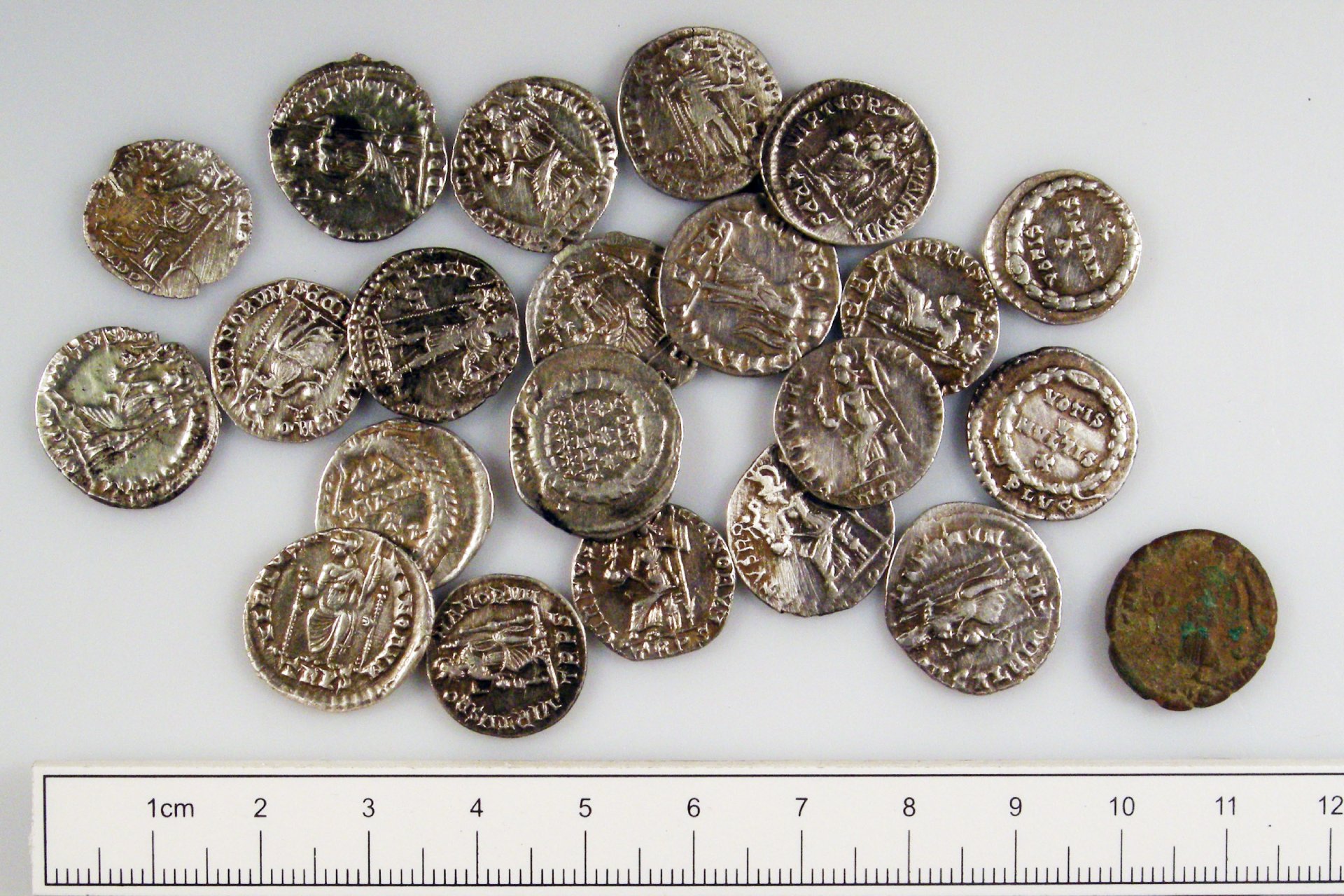
Our team presented early results from our work re‑evaluating fifth‑century hoards from Britain. Continuing with this theme, Fraser Hunter presented his team’s work on silver hoards from Scotland, while Richard Hobbs revisited the Water Newton hoard to shed new light on the complexity and diversity of religion in post-Roman Britain.
Other papers challenged long‑held assumptions. Martin Papworth spoke about his work for the Nation Trust and discussed evidence for longer occupation at Chedworth (Gloucestershire) and Badbury Rings (Dorset). Will Bowden showed how bringing together phases that are usually separated by period labels such as ‘Roman’ and ‘Anglo-Saxon’ can transform our understanding of the Roman town of Caistor (Venta Icenorum) in Norfolk. Rich Best problematised the concept of residuality in relation to fifth‑century material, prompting fresh debate about how we interpret mixed contexts.
Trade, travel and connectivity in the fifth century also featured strongly in the discussion. David Spiller and James McBlane explored the practicalities of maritime trade in contrast to the narratives of elite consumption at Tintagel. Rowan English examined North Sea networks through lowland grave sites in Britain and Germany and Dagfinn Skre connected the longevity of Roman imperial imagery to mobility in the Scandinavian Iron Age.
The fifth century no longer feels like a gap in the narrative, but a rich, distinctive and dynamic chapter that we are starting to appreciate more fully.