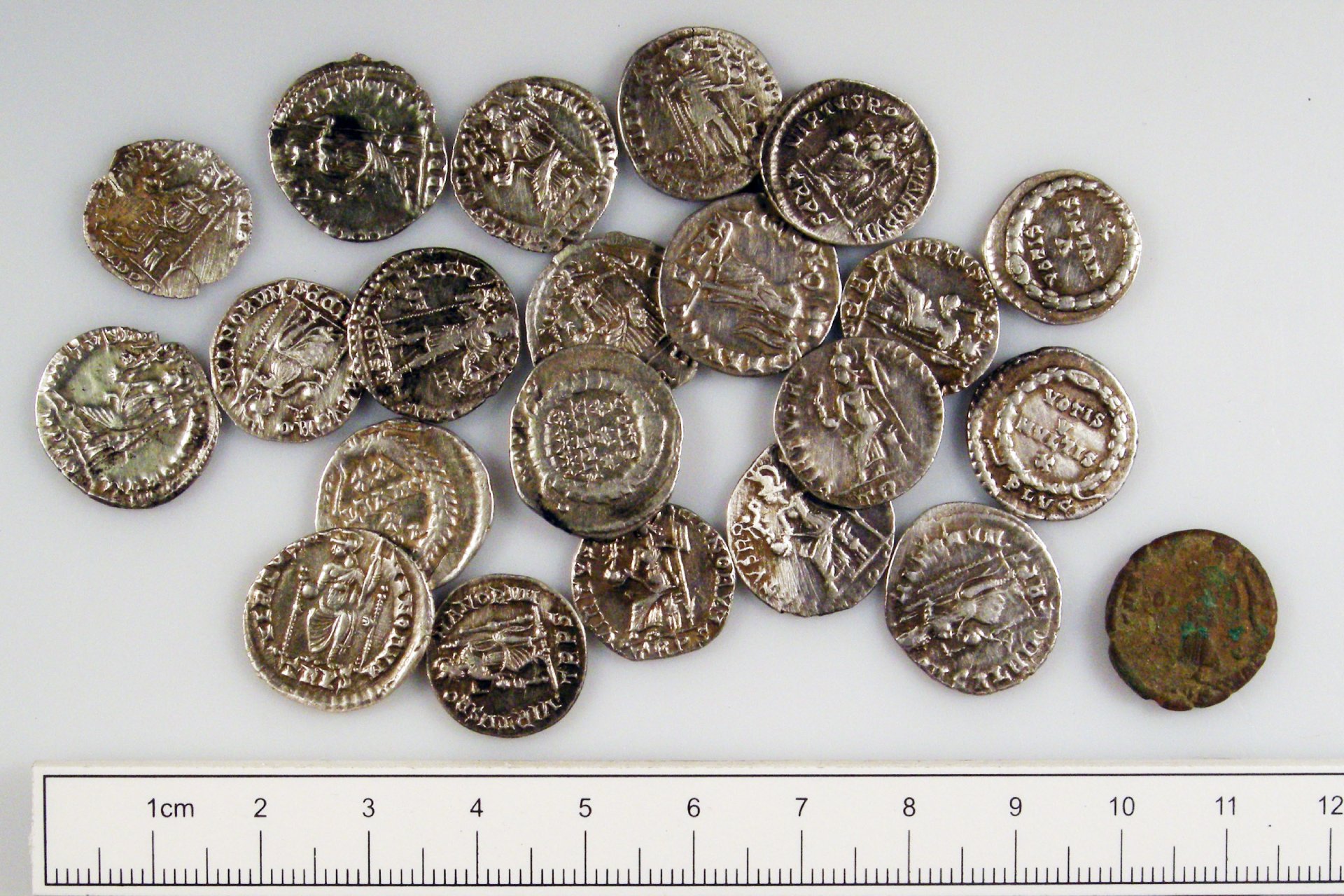
In one of our earlier blog posts, we discussed a wooden tankard that was discovered at Shapwick Heath by peat workers in the 1930s. The tankard was found near to two other late Roman vessels, and the three items were considered to represent a single hoard. Two other late-Roman hoards (known as Shapwick I and II respectively) were also discovered by peat workers in the same area and we examined their contents during our visit to the Museum of Somerset late last year.
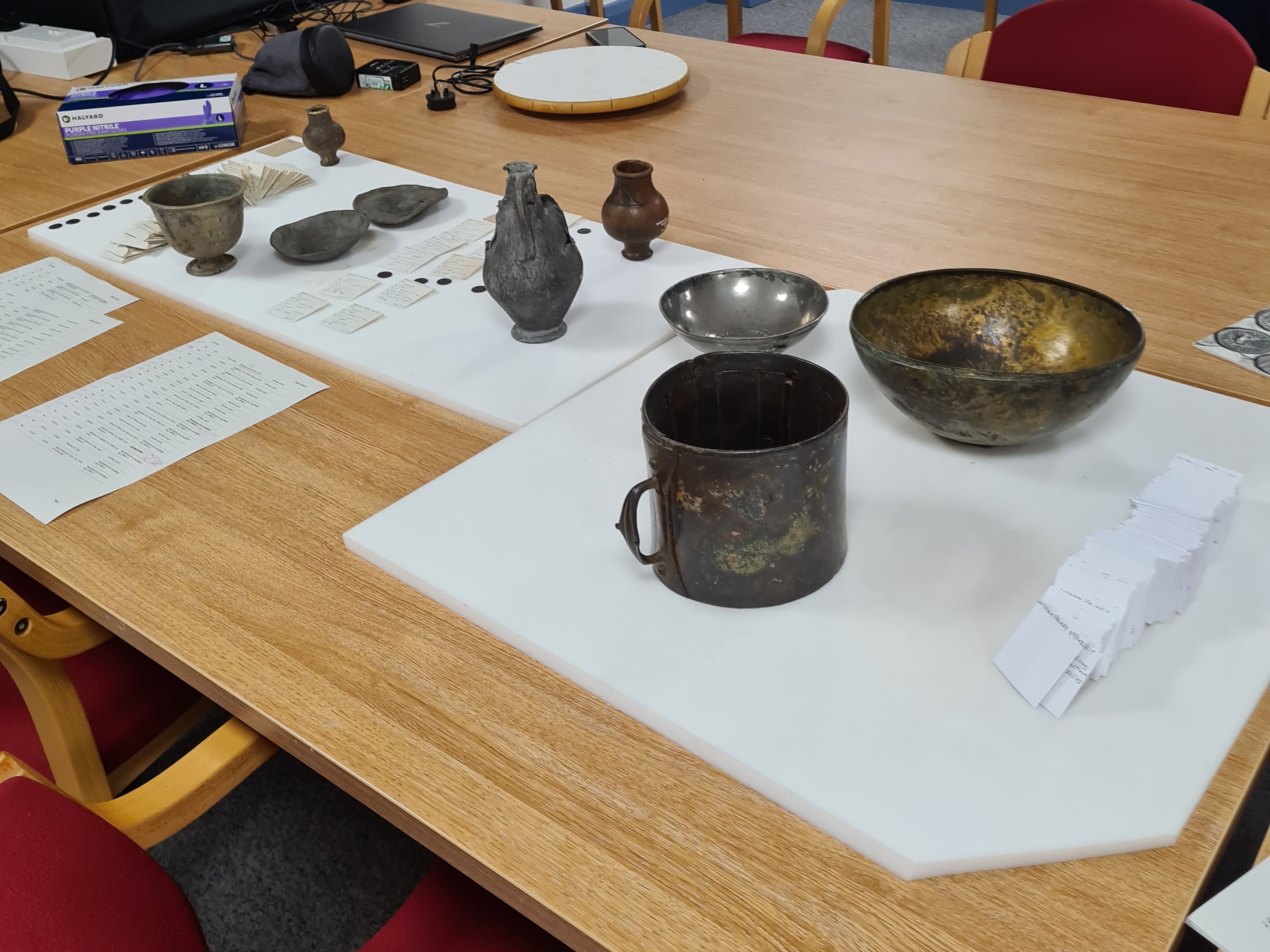
Interestingly, the internal composition of these hoards seems to suggest that these containers were carefully selected rather than hastily chosen and buried. The 120 siliquae from Shapwick I were found in a miniature New Forest Colour Coated Ware beaker which had been concealed within a pewter cantharus (a handled drinking cup) with a lead-alloy squat bowl and dish placed on top. Two leather shoes were also associated with this find. Similarly, the 125 silver coins from Shapwick II were first placed by the owner(s) in another small New Forest Colour Coated Ware beaker and then placed inside a lead-alloy jug.
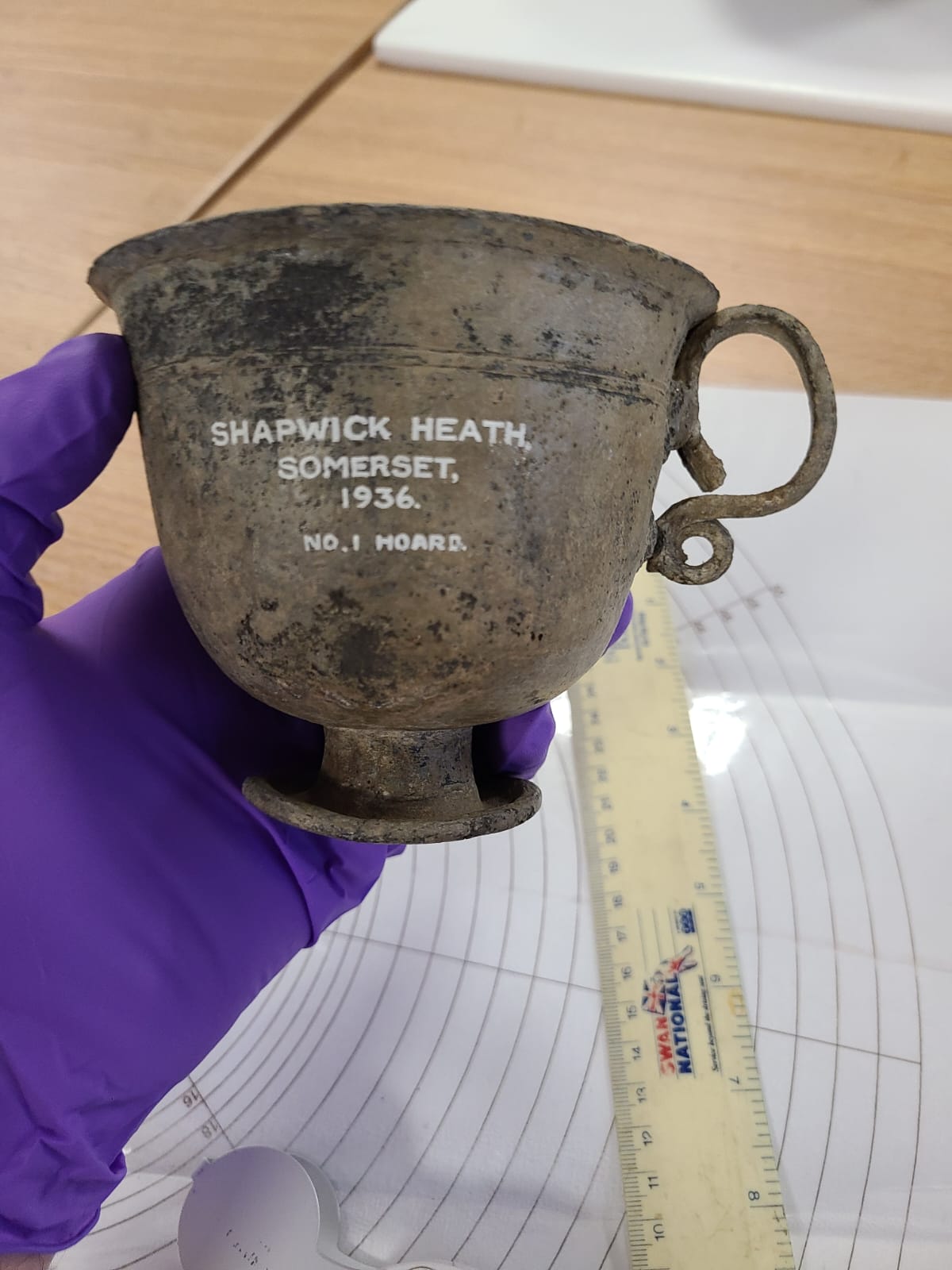
Lead-alloy vessels, which are commonly called pewter, are distributed widely across southern Britain in the late Roman period. Evidence for their manufacture comes from the Mendips and elsewhere and they probably served as tableware alongside other vessels made of pottery, copper-alloy, glass and silver. Pewter vessels were sometimes hoarded in their own right and must have had their own value.
The two little pottery beakers are both products of the late Roman kilns in the New Forest. What is interesting about the two examples from Shapwick is the size: both are very small. Miniature vessels sometimes occur at religious sites and whoever hoarded these objects was able to select a small vessel to fit their group of coins.

One of the surprises of our visit to Taunton was discovering that Shapwick I was associated with two Roman shoes. Shapwick II also includes a little piece of organic material, probably leather and this hints at other objects that may have been deposited with the coins and vessels but not survived.
The coins from Shapwick II were possibly gathered for burial before those in Shapwick I. Most of the coins from Shapwick I were issued during the period 364-378 CE. By comparison, Shapwick I contains very few of these issues and a greater number are late fourth century issues (395-402 CE). The coins from both hoards, however, are either unclipped or very lightly clipped.