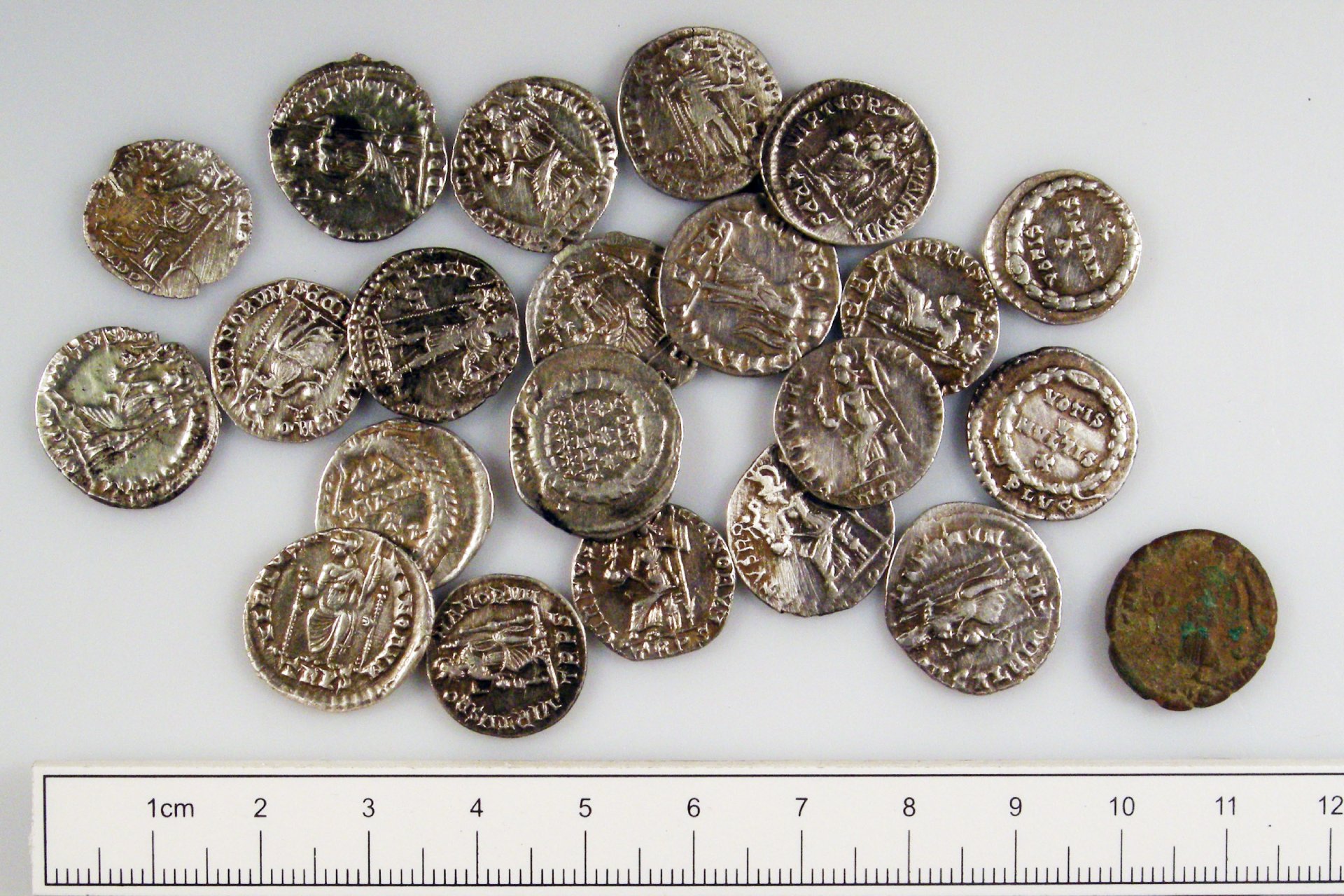
In 2008, a metal-detectorist discovered the Hunmanby hoard in North Yorkshire. The hoard consists of 76 siliquae and 10 bronze coins known as nummi. A small pottery fragment was also found along with the coins, and it was assumed that the fragment was probably from the container. The hoard was acquired by the Treasure House Museum in Beverley and the team visited the museum in December to examine the find.

Most of the coins date to the period 355-402 CE, though two of the ten nummi were issued at the beginning of the fourth century (306-337 CE). It is not uncommon for earlier coins to be found in the latest hoards and we have a number of similar examples in our dataset.
Meanwhile, close inspection of the pottery fragment revealed that the sherd could not have been part of the hoard container. Instead, the sherd is from a kitchen vessel known as a mortarium, a shallow bowl that was used to grinding or mixing foodstuffs. The interior surface of these vessels are embedded with stoney grit to help grind items and you can see this in the image of the washed sherd below.
