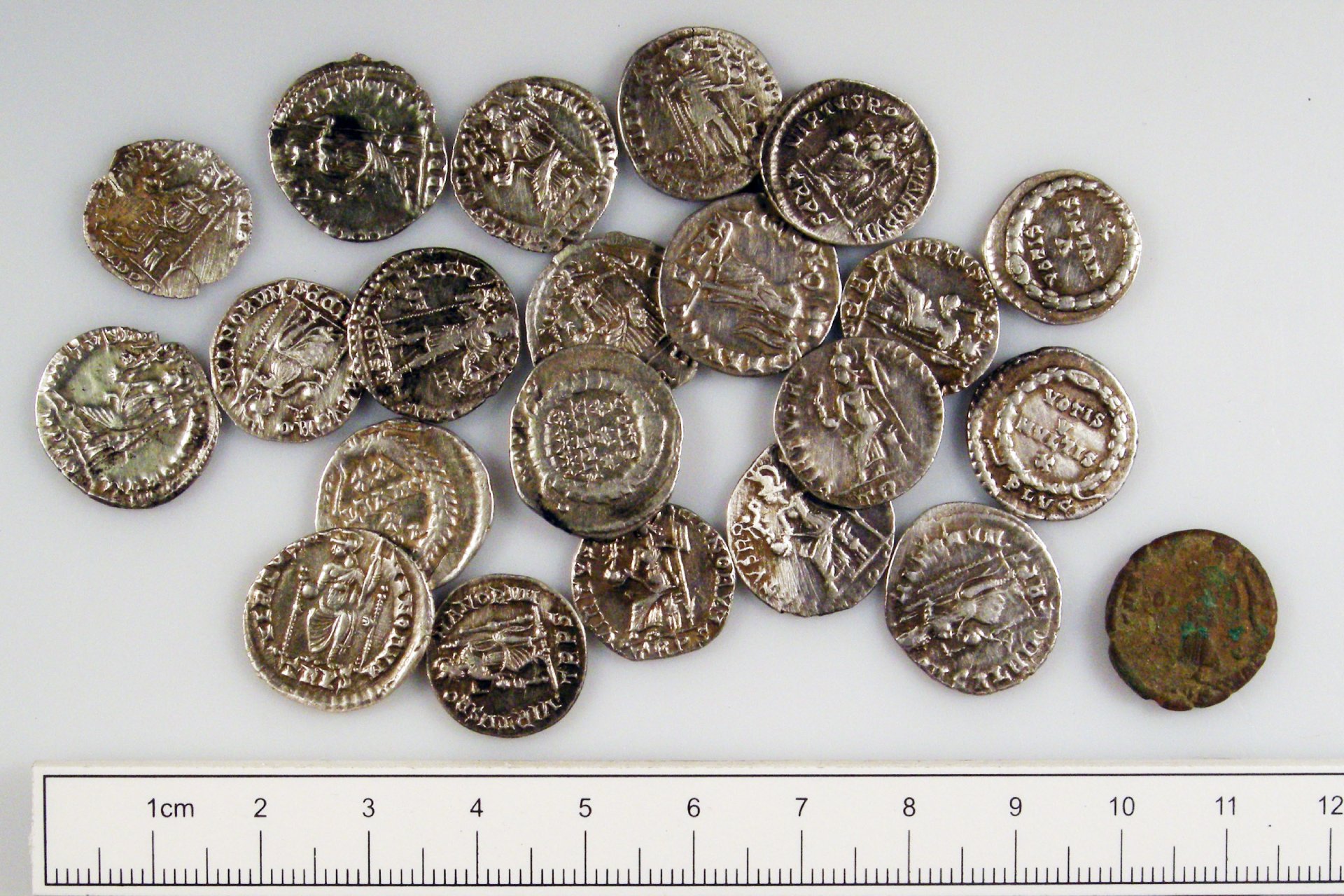
One of the latest-dating hoards in our study is a rare find from Wem Rural parish in Shropshire, discovered by metal detectorists in 2018. After being declared Treasure, it was eventually purchased by Shropshire Museums, where it continues to be researcher by Roger White. The hoard contains over 350 objects, including coins, plates, vessels, rings and buckles. Like Patching, Wem is a hacksilver hoard and most of the objects were deliberately chopped up into pieces. One of the complete objects is a penannular brooch which you can see in the centre of the image below. It seems likely that the hoard was placed inside an organic container and secured with the brooch.
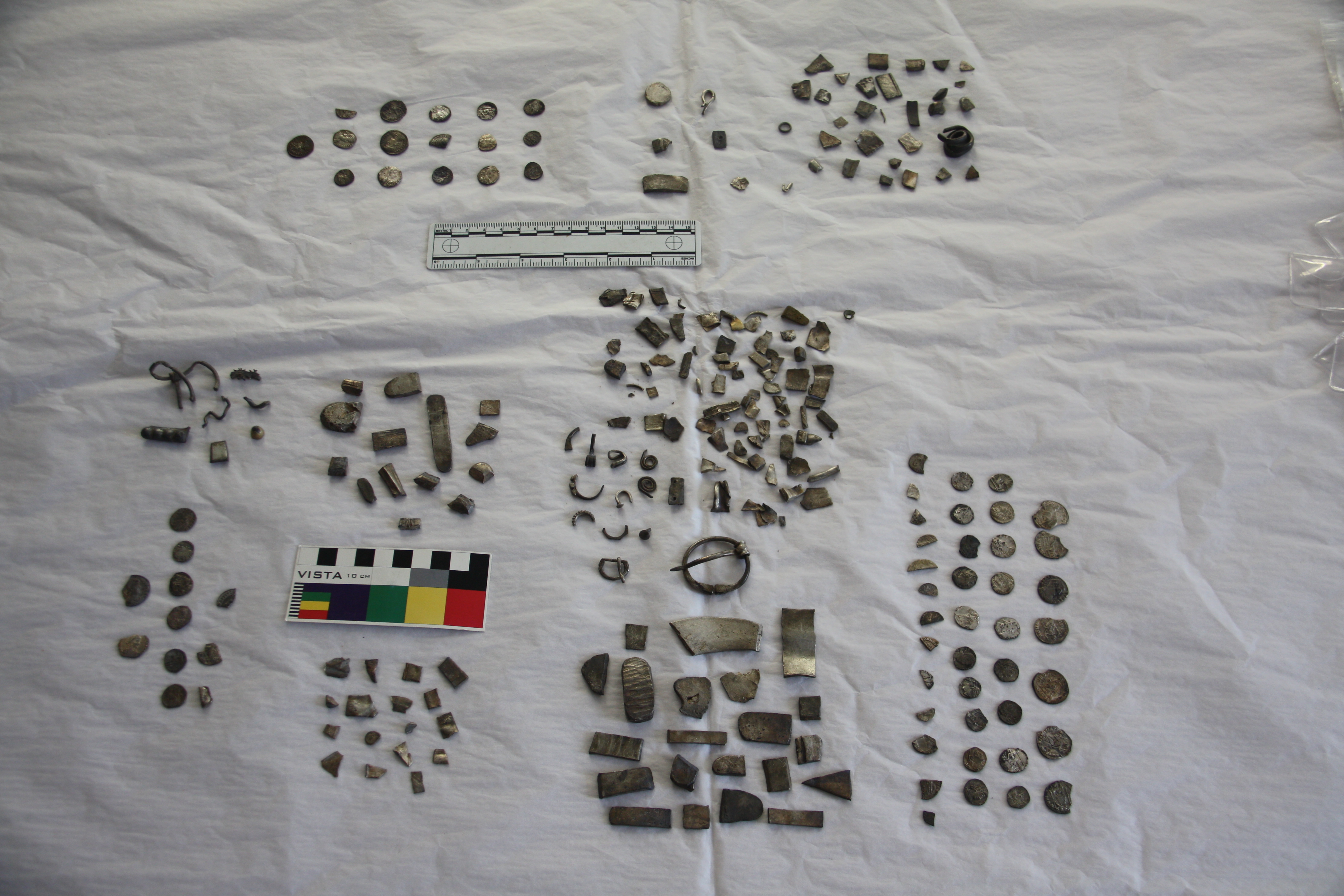
These silver fragments served as important stores of precious metal that could be traded in set weights with other people across the post-Roman world. Many of the fragments are parts of silver objects of earlier date that have ended up cut into small pieces. Some of these are so small that the original object is barely recognisable. One of the challenges for people researching the hoard is to work out what objects the fragments came from, like a giant 3D jigsaw puzzle.

In the photo above, you can see two silver coins and an unfinished finger ring. The coins were found squished tightly inside the ring itself. Together, they weigh exactly 4.5g. This corresponds to 1/6th of a Roman ounce (uncia), or roughly the weight of a standard gold solidus. The people who buried Wem did not use the silver coins in the hoard as coins, but instead valued them just for their weight in silver, like the object fragments. In earlier hoards, the face of the emperor on the coin was kept for as long as possible even when silver was clipped from the edges. In this hoard, coins of various dates were just chopped up into halves or quarters. The hoard also contained ingots of melted down silver. This is much closer to the way that Vikings used silver and allowed the hoard to be useful in communities without a coin-using economy. The location of Wem in Shropshire might suggest that the hoard was traded around the Atlantic and Irish Sea area.
