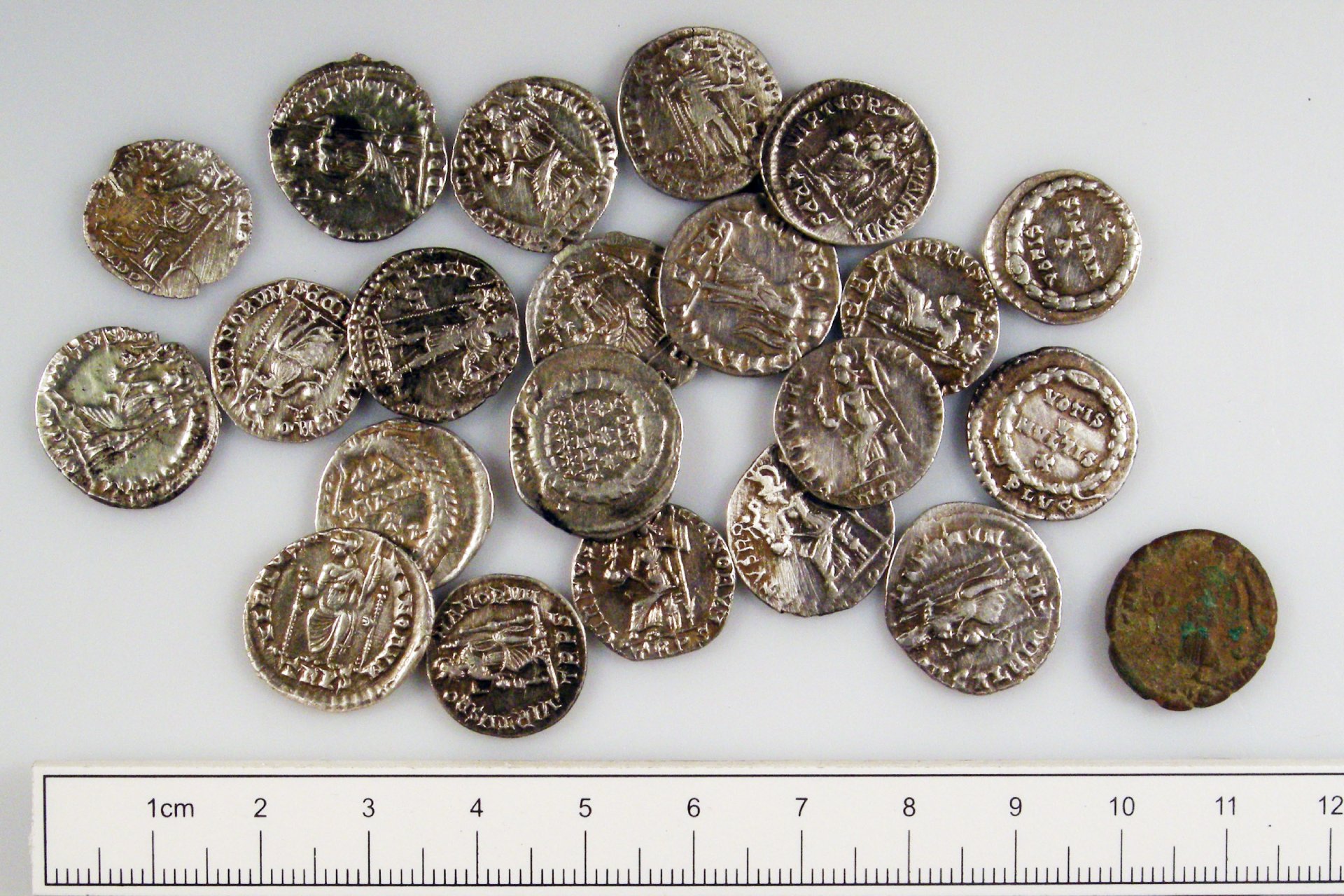
The Hoxne hoard represents a considerable amount of wealth. Rather than being owned by one person, the hoard objects probably originally belonged to more than one individual, as they include inscriptions with several different personal names. In his study of the hoard, Peter Guest suggested that the hoard was accumulated over time, whilst Catherine Johns thought that the items were owned by a single family and were buried together for safekeeping.

Most of the inscribed items are silver spoons, ten of which are engraved with the same name, Aurelius Ursicinus. Four other spoons include the name Silvicola whilst a further four bear the name Peregrinus. Since the name Aurelius Ursicinus appears more frequently than any of the others, some scholars have speculated that the hoard was perhaps owned by this individual at one point. There is no clear evidence that they were responsible for the burial of the hoard.
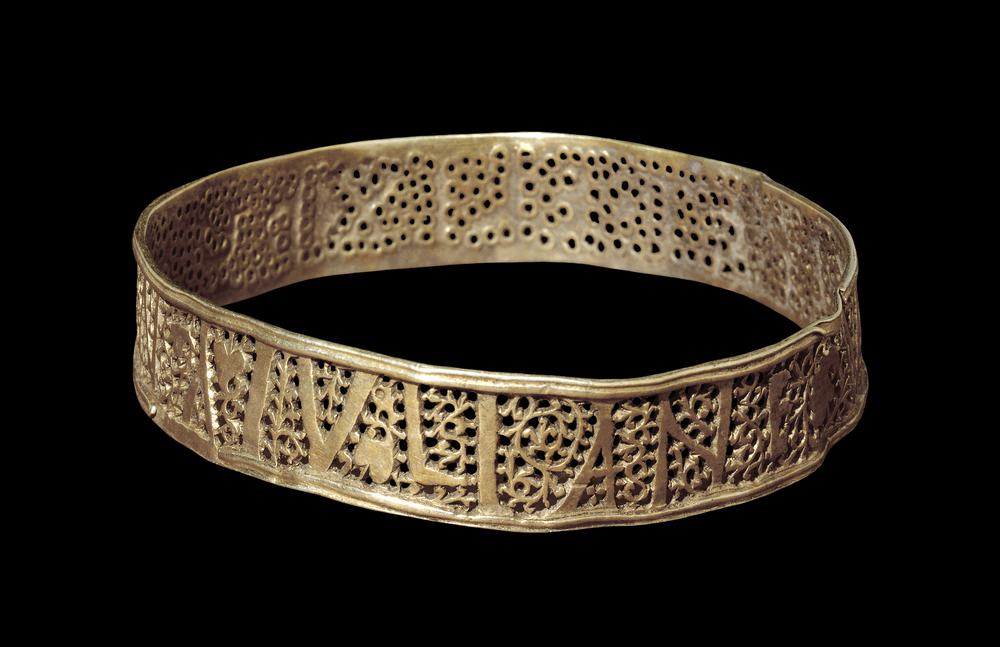
Other objects inscribed with names include items of jewellery. A gold pierced bracelet from the hoard bears the inscription UTERE FELIX DOMINA IULIANE (‘use this happily lady Juliane’). The bracelet appears to have been a personal gift to a female named Juliana and the donor was wishing her good fortune. Engraving objects with messages of good fortune was a common practice in the Roman period.
References:
P. Guest, The Late Roman Gold and Silver Coins from the Hoxne Treasure (British Museum Press:London, 2005)
C. Johns, The Hoxne Late Roman Treasure: Gold jewellery and silver plate (British Museum Press: London, 2009)