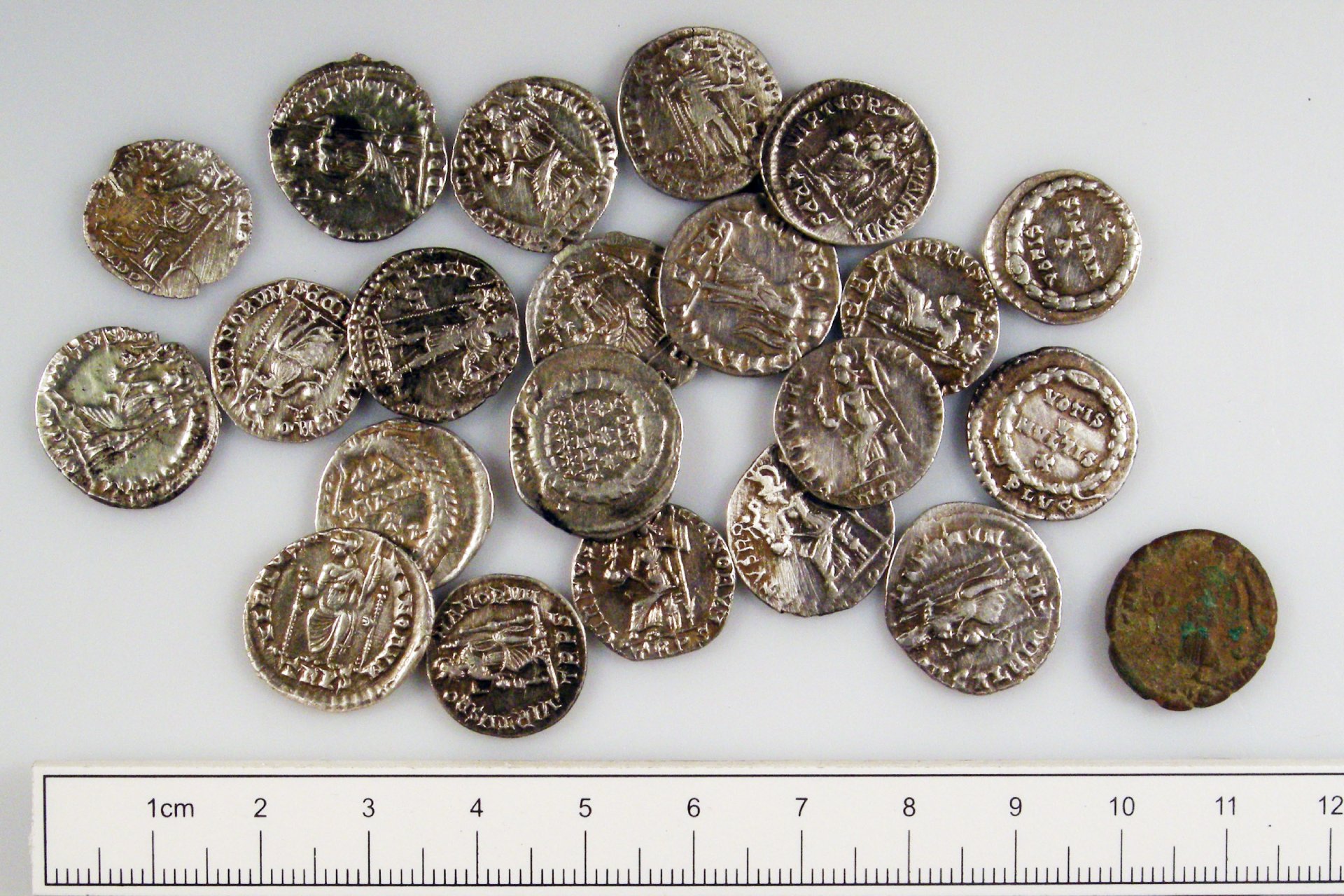
If you are lucky enough to find Treasure, this might one day end up in a museum for future generations of people to enjoy. Many of the hoards we have studied have been bought by museums, or even better, donated to them by the finders and landowners. But what happens after that?
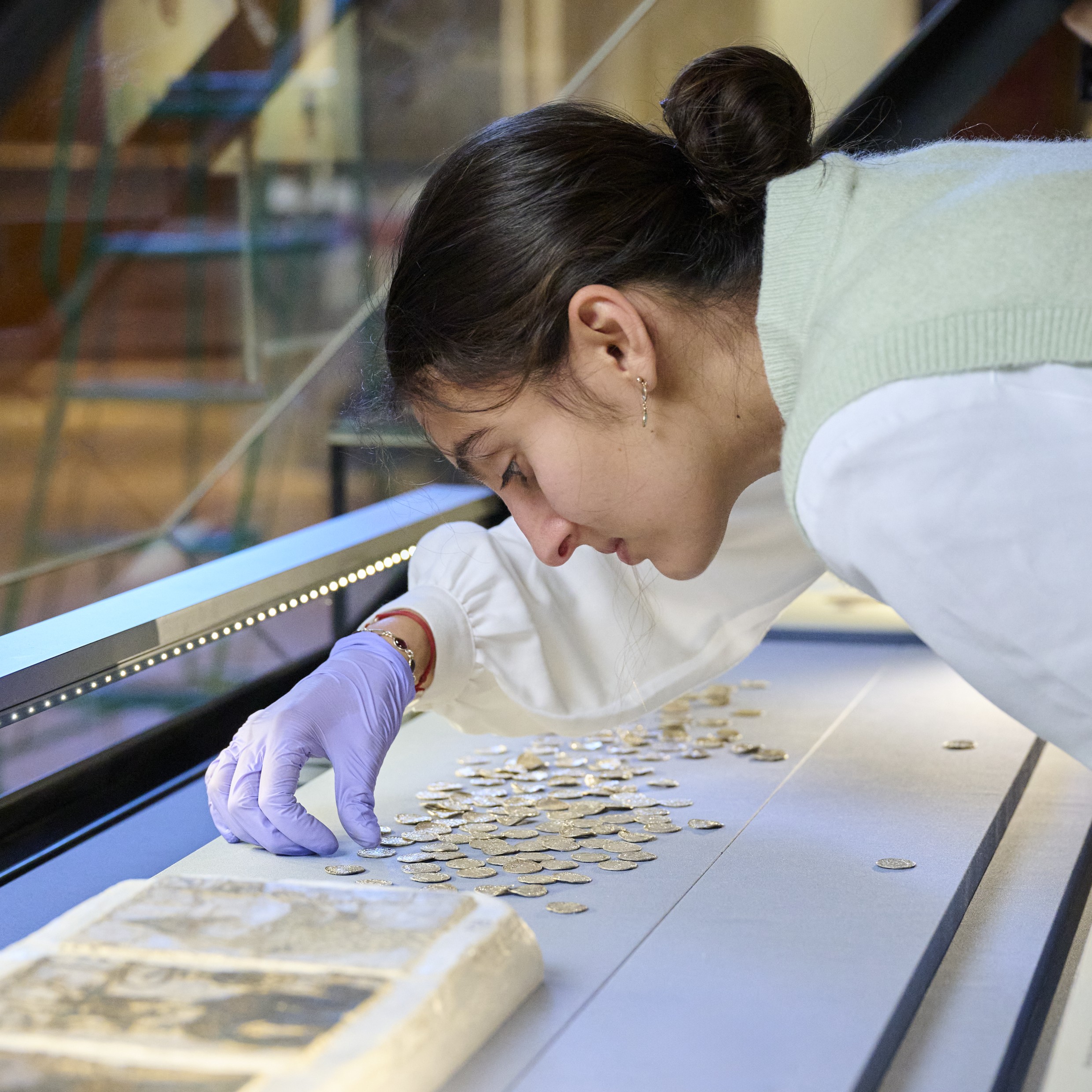
When the hoard arrives at the museum it might first be cleaned, photographed and a description entered on a database. Museums use coin hoards in different ways – they can be placed in showcases to illustrate the history of the local area or to tell stories about the use of money in the past. The museum curator might decide to put the whole hoard on display or just pick out a few interesting objects.

This hoard is on display with just a few coins resting on padding inside the pot, so it looks like the pot is full. The rest of the coins are safely in storage behind the scenes, but they are still used in different ways by the museum.
Stored museum collections are made available to researchers who try to find out new information from studying old finds. They are also seen by other visitors, perhaps school groups studying the Romans, or even sometimes included in handling boxes taken on visits to people who can’t get to the museum. Other museums can borrow objects for special exhibitions – so the hoard might continue to travel, just as it once did before it was buried!