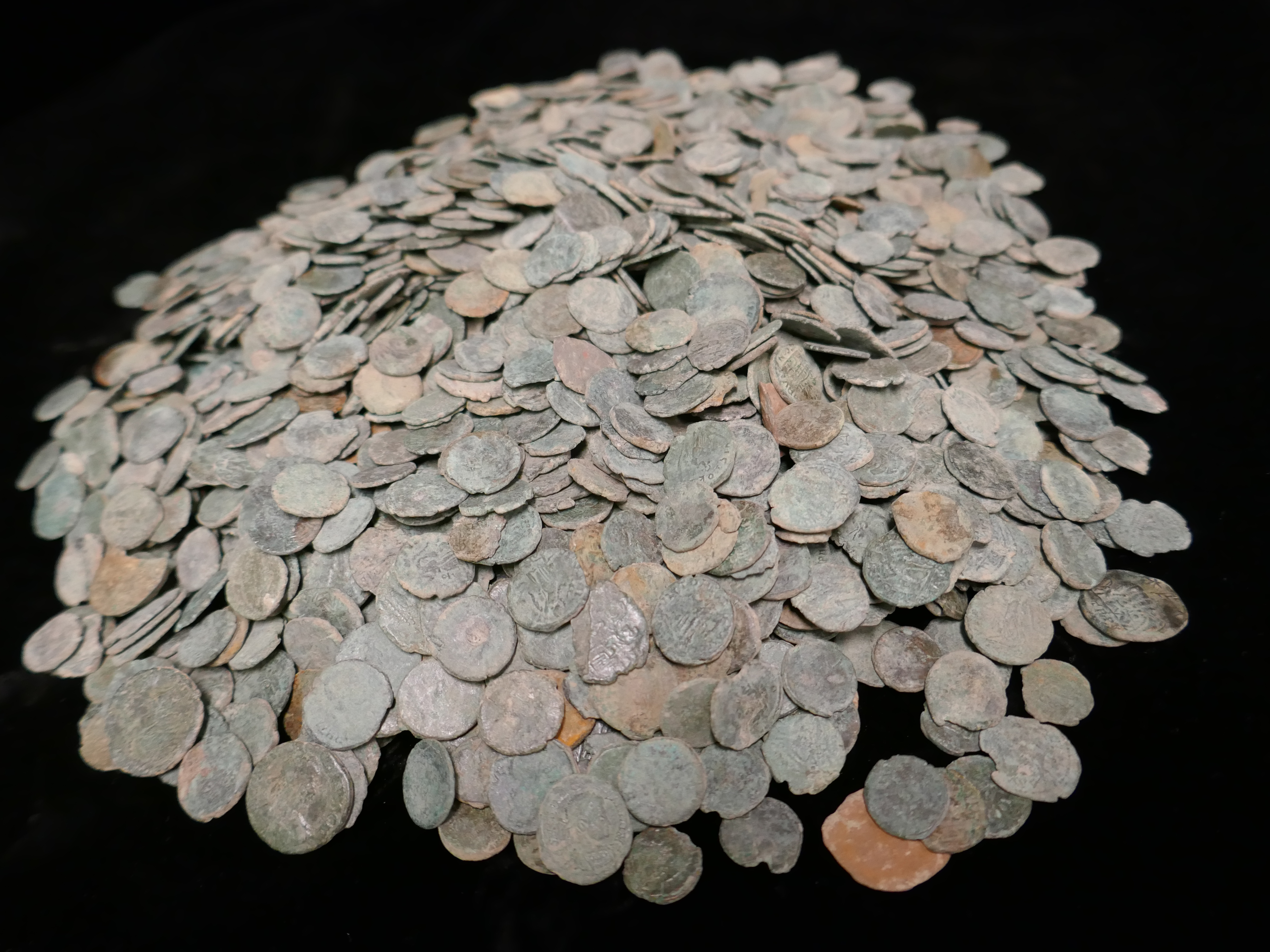
Hoard of 2077 late Roman bronze coins from Winterslow, Wiltshire (Photo: © The Trustees of the British Museum)
Not all of the hoards that we are studying are precious metal ones. Some of them contain fourth century bronze coins of the denomination now commonly referred to as a ‘nummus’. This denomination was used throughout the fourth century AD and was subject to various fluctuations in its size and weight but was the main coin in use for daily transactions. They are found widely on late Roman archaeological sites in Britain and are a common type of find reported to the Portable Antiquities Scheme.
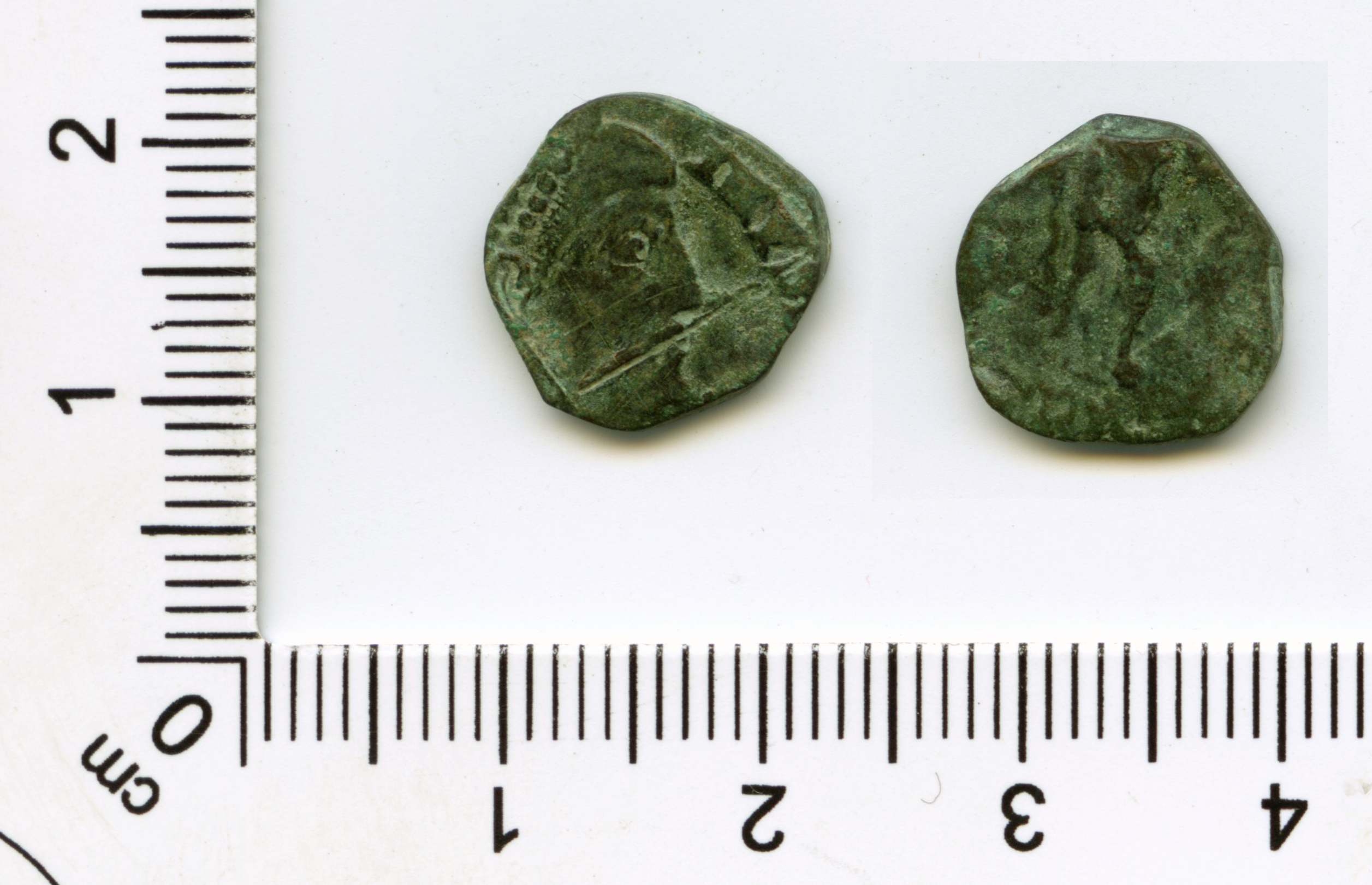
By the end of the fourth century, the nummus had become very small (smaller than a 5p piece) and was often poorly made. The individual coins can be quite difficult to spot and to identify, particularly when corroded, and it is likely that many are under-reported. Hoards of bronze coins were not included under the former law of Treasure Trove and were only required to be reported as potential Treasure as recently as 1997. This means that not so many survive in museums. However, some of the older hoards we have studied did contain a few bronze coins alongside silver ones.
More recently, several larger late Roman bronze hoards have been studied at the British Museum and have allowed us to have a better understanding of what was in circulation in Britain around the time that the regular Roman coin supply ceased. As well as the tiny nummi issued around 388–402 CE, these hoards often include a few smaller coins from periods dating back to the third century that had entered the pool of available coinage. Some hoards show evidence of the recycling of earlier coins by chopping them into smaller pieces and / or restriking them with later designs. The Winterslow bronze coin hoard (shown in the image above) was discovered in 2019 and contains 2077 coins and fragments of the ceramic container also survive. Many of the coins in the hoard were cut down including a coin issued by the emperor Magnus Maximus (383-388 CE) suggesting that this practice could have continued later than has generally been thought.
We are thinking about the relationship between the silver and bronze coins in the hoards we are studying and what the implications are for the longevity of bronze coin circulation in Britain.