We have an exciting update to share with you this week – we can confirm that we have found another late Roman hacksilver hoard!
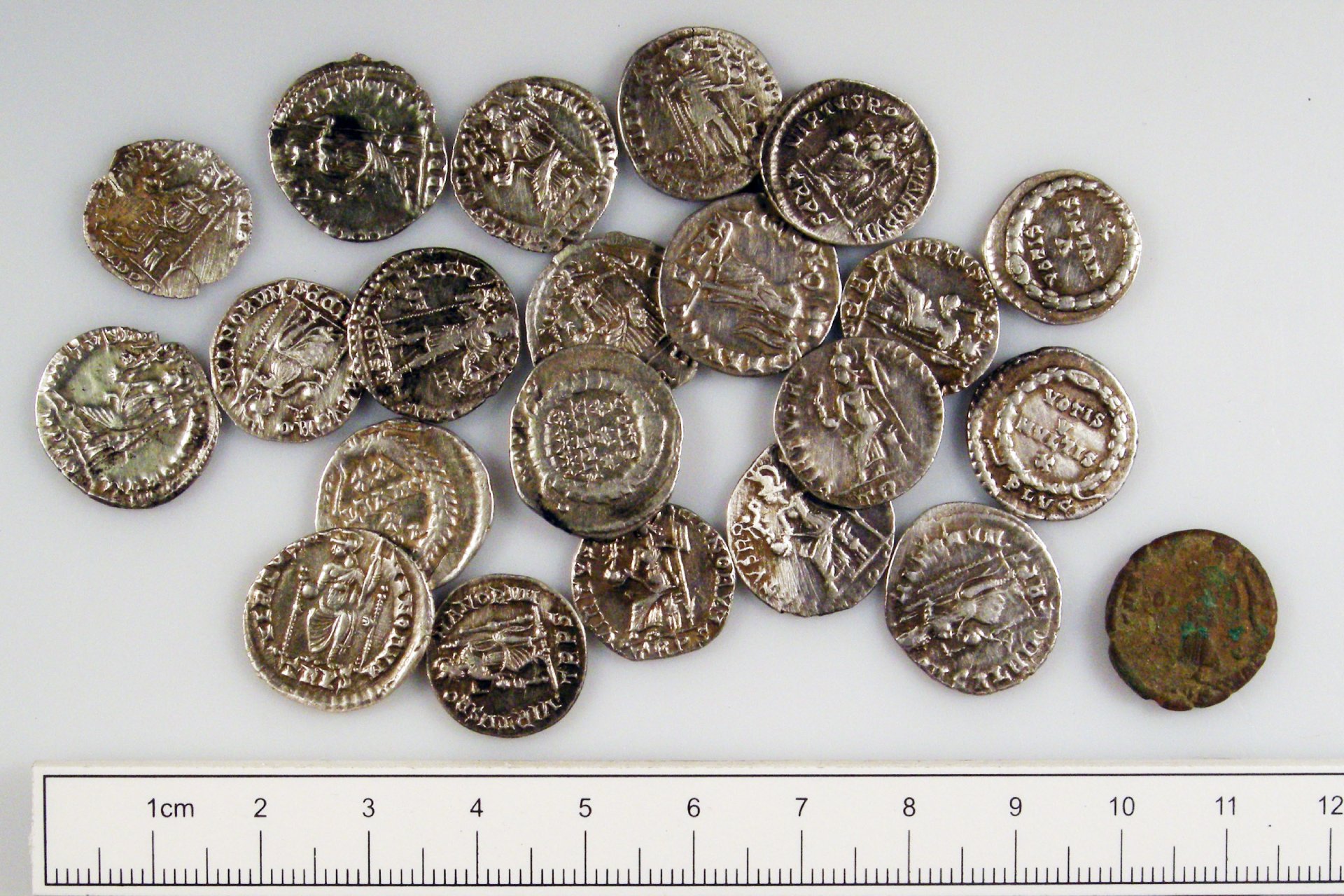
The Burgate hoard was discovered in Suffolk by a metal detectorist in the 1990s and contains a mixture of coins and artefacts including rings and spoons. In total there are 209 coins from the hoard including one gold solidus of the mint of Lyons issued by the emperor Eugenius (388-395 CE) as well as several artefacts including silver rings and spoons. Most artefacts from the hoard are now in the collections of Ipswich Museum and a small number of coins were acquired by Diss Museum. Earlier this year we visited both museums to study these objects.
The Burgate hoard contains mostly fragments of silver spoons. Those who have previously studied the hoard, such as Richard Hobbs and Fraser Hunter, wondered if this was hacksilver – silver objects deliberately cut up and circulated for their bullion value. Hacksilver is known from several fifth century British hoards, notably the Traprain Law treasure in the National Museum of Scotland, Edinburgh, which is almost entirely composed of it. As coins became less widely available, it is thought payments were sometimes made using cut-up precious objects instead.

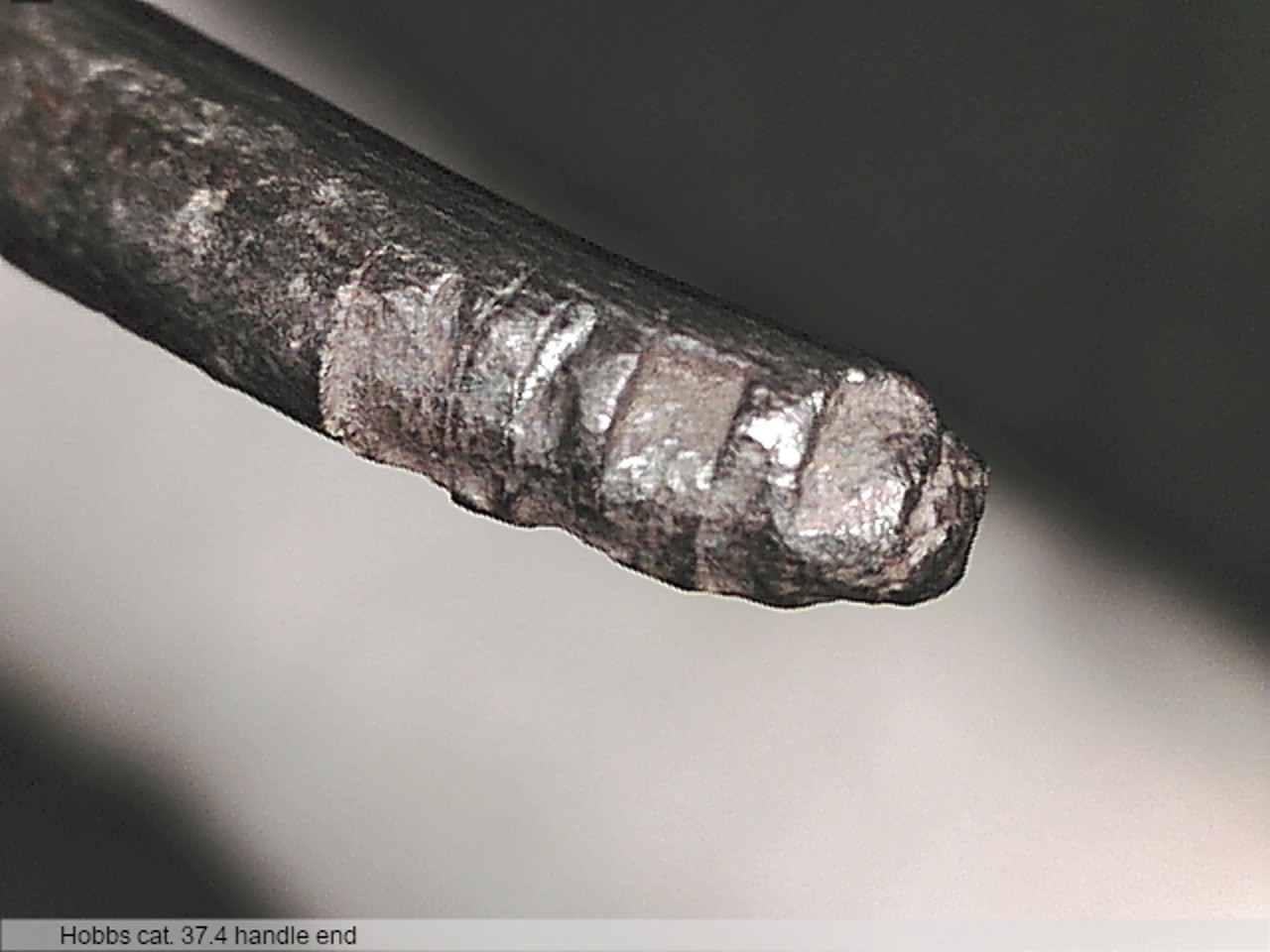
It can be difficult to identify hacksilver, especially if working from photographs or drawings, because objects buried in the ground are often damaged by ploughing as well. In our study at Ipswich museum, aided by a microscope camera, we were able to confirm that some of the Burgate fragments have deliberate cuts. It means that when the objects were buried, they were only valued for their weight in silver, and their previous function, as fine dining equipment, was obsolete. The pictures above and below show a quarter of a spoon bowl that has some neatly sheared edges (above), and a spoon handle fragment with some intriguing cut marks across it, either to remove small strips of silver, or as preliminary cuts made before removing the end of handle.
Compared to the spoon fragments, the coins do not display evidence of deliberate cutting and interestingly display very little wear. Roughly half of the 209 coins are only very lightly clipped (CF1) and around a quarter are moderately clipped (CF2). It is also interesting to note that the number of coins issued during period 364-378 CE and 388-402 CE in the hoard is roughly equal and that there seems to be no distinction in the way that they were treated. Coins from the western mint of Trier dominate the assemblage but there are also a small number of issues from eastern mints in the hoard including coins from Constantinople (Turkey) and Thessalonica (Greece).