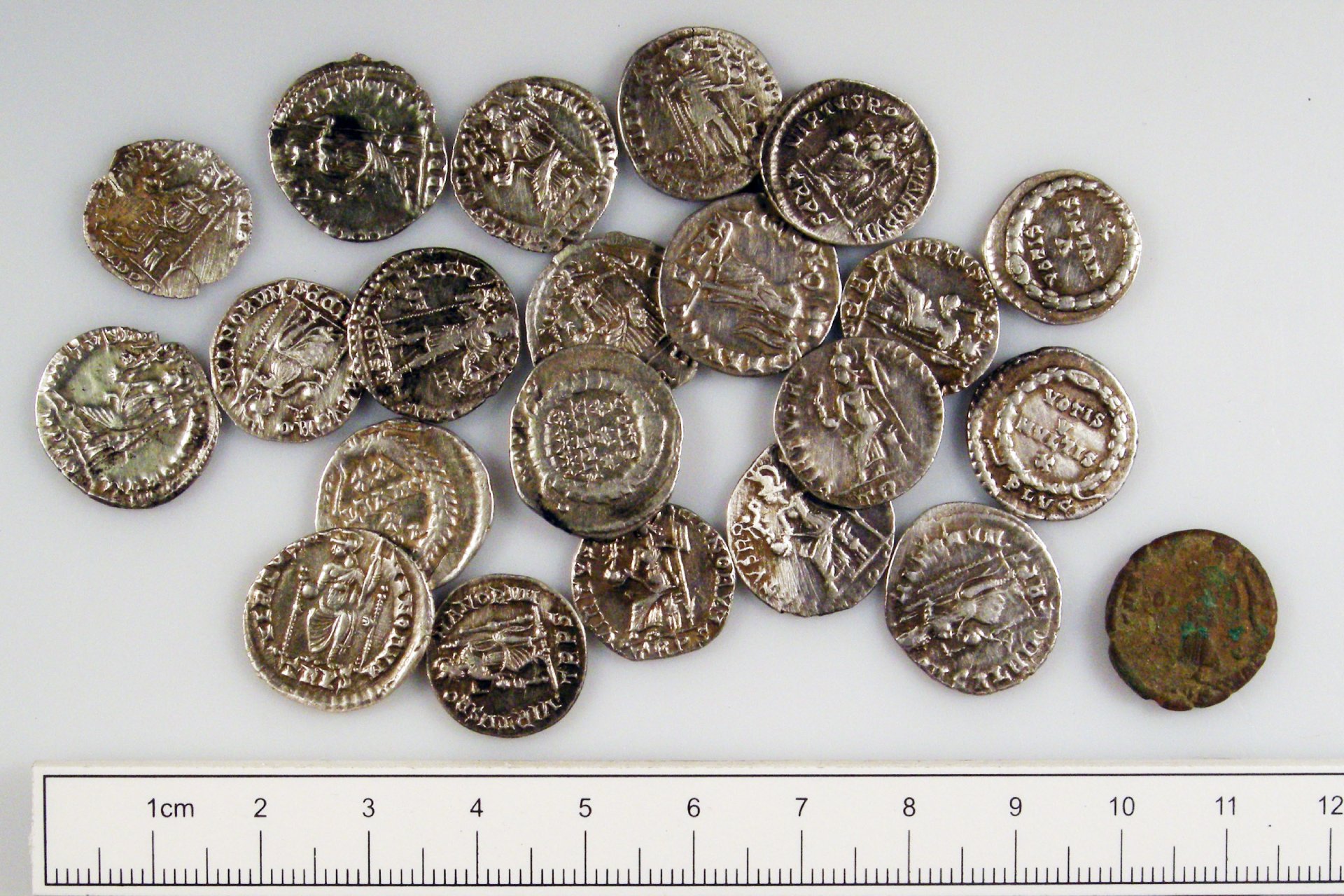
In 1938, a small late Roman hoard was discovered in a sandpit at Tuddenham St Martin in Suffolk. 114 silver coins and a gold ring with blue-stone inset were found inside a small earthenware pot and the hoard was eventually declared as Treasure Trove in 1947. Unfortunately, the ring from the hoard is now lost but there are descriptions of the ring made at the time of its discovery and a single photograph. In early June, the team travelled to Ipswich Museum to study the coins and the container.

The earliest coins in the hoard are an issue of Constantius II (355-361 CE) and a siliqua bearing the name of Julian Caesar (359-361 CE). The latest coins are issues of Arcadius and Honorius (395-402 CE) minted at Milan. Over 50 of the coins in the hoard date to Reece Period 21 (388-402 CE) whereas those from Reece Period 18 (355-364 CE) are far fewer in number with only 7 coins identified. The clipping of the earlier and later coins are similar and most are either heavily (CF3) or very heavily clipped (CF4). This strongly suggests that the earliest coins circulated together with the latest coins well into the fifth century.
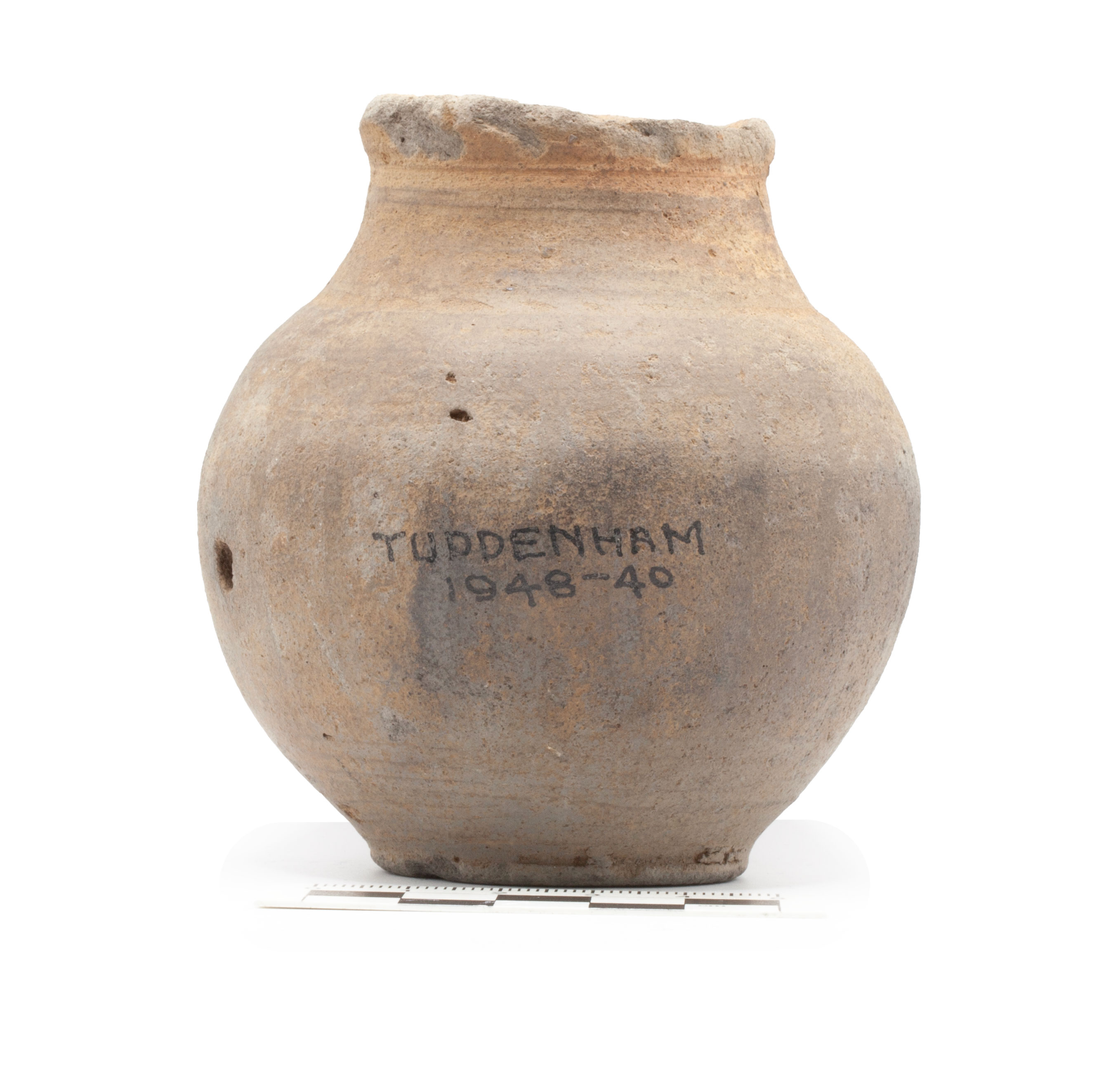
The hoard container is a small greyware beaker decorated with small vertical burnished lines. As you can see in the image to the left, there is an intriguing small hole on the side of the pot. The careful nature of the piercing suggests that the hole was intentional. There is also pronounced wear on the foot of the vessel which points to an active use life.