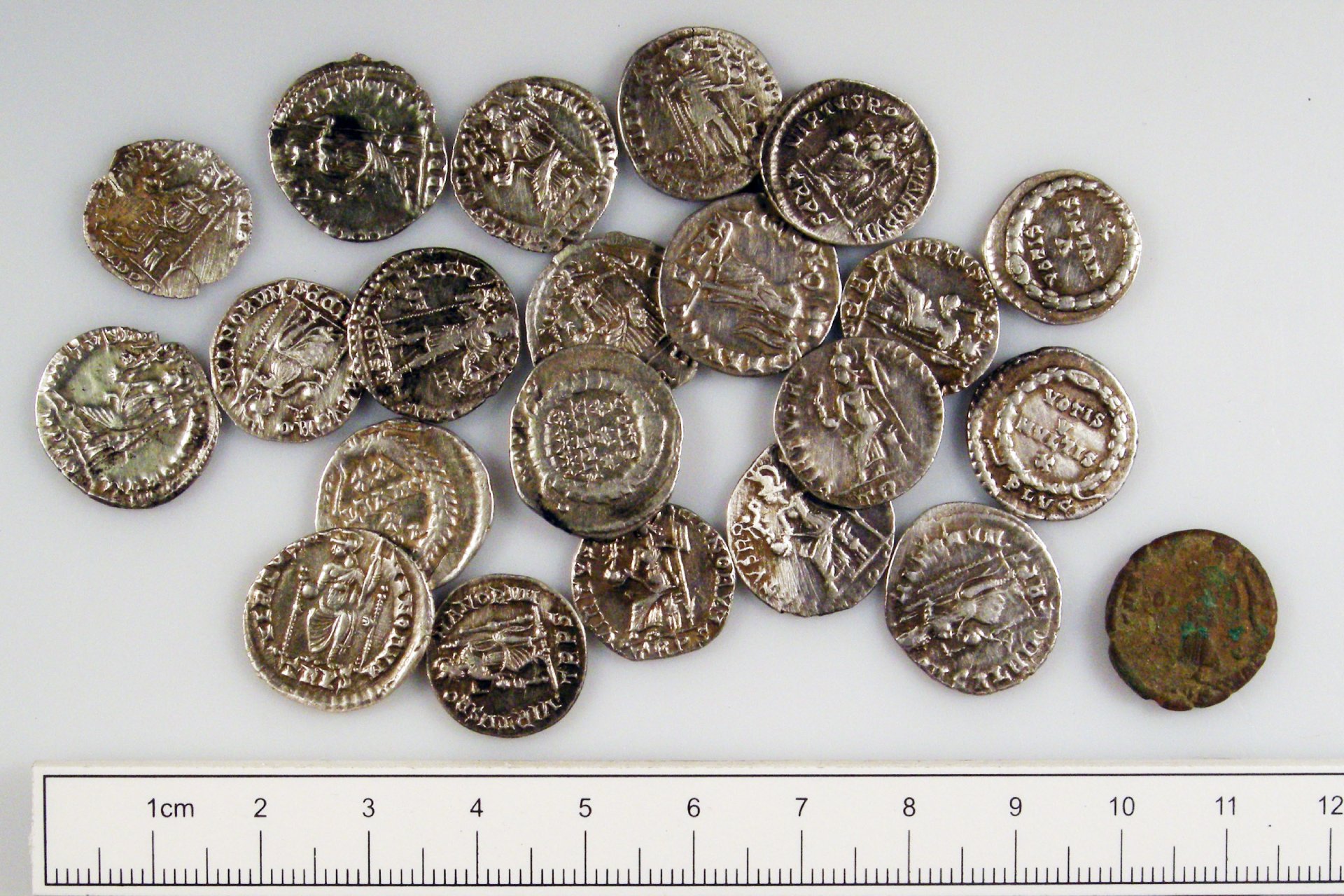
Last week, we travelled to the Corinium Museum to study a late Roman hoard found at Cirencester in the late nineteenth century. The hoard consists of ten bronze nummi and a pot.
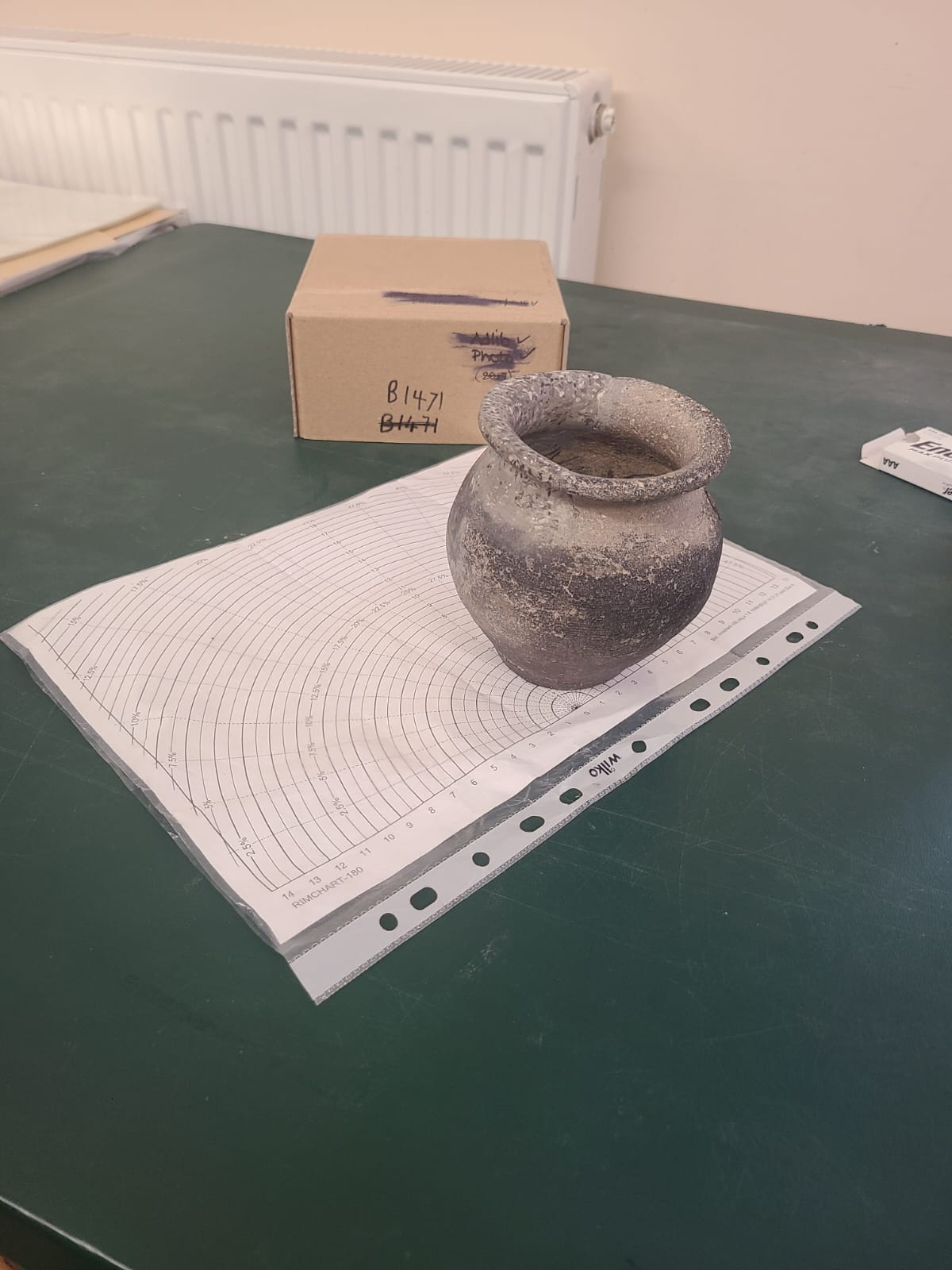

The little pot shown in the image above is a typical example of a late Roman shell tempered jar. Vessels like these were in use at the very end of the fourth and into the fifth century and were probably used for cooking and/or storage. Given the date of the pot, it is an example of the current vessels in Roman Britain’s twilight years. This example was damaged, but the missing piece has been skilfully reconstructed by a conservator.
The coins are in a poor condition and are very worn which makes it difficult to identify their type and date. The earliest coin we can identify is an issue of Constans (337-350 CE) with the reverse inscription VICTORIAE DD NN AVGG Q NN meaning ‘Victory/ies of our Lords and Emperors’. Two of the coins have the inscription SALVS REIPVBLICAE (‘Safety of the Republic’) on their reverse and represent some of the latest Roman bronze coins to reach Britain in the late fourth century.