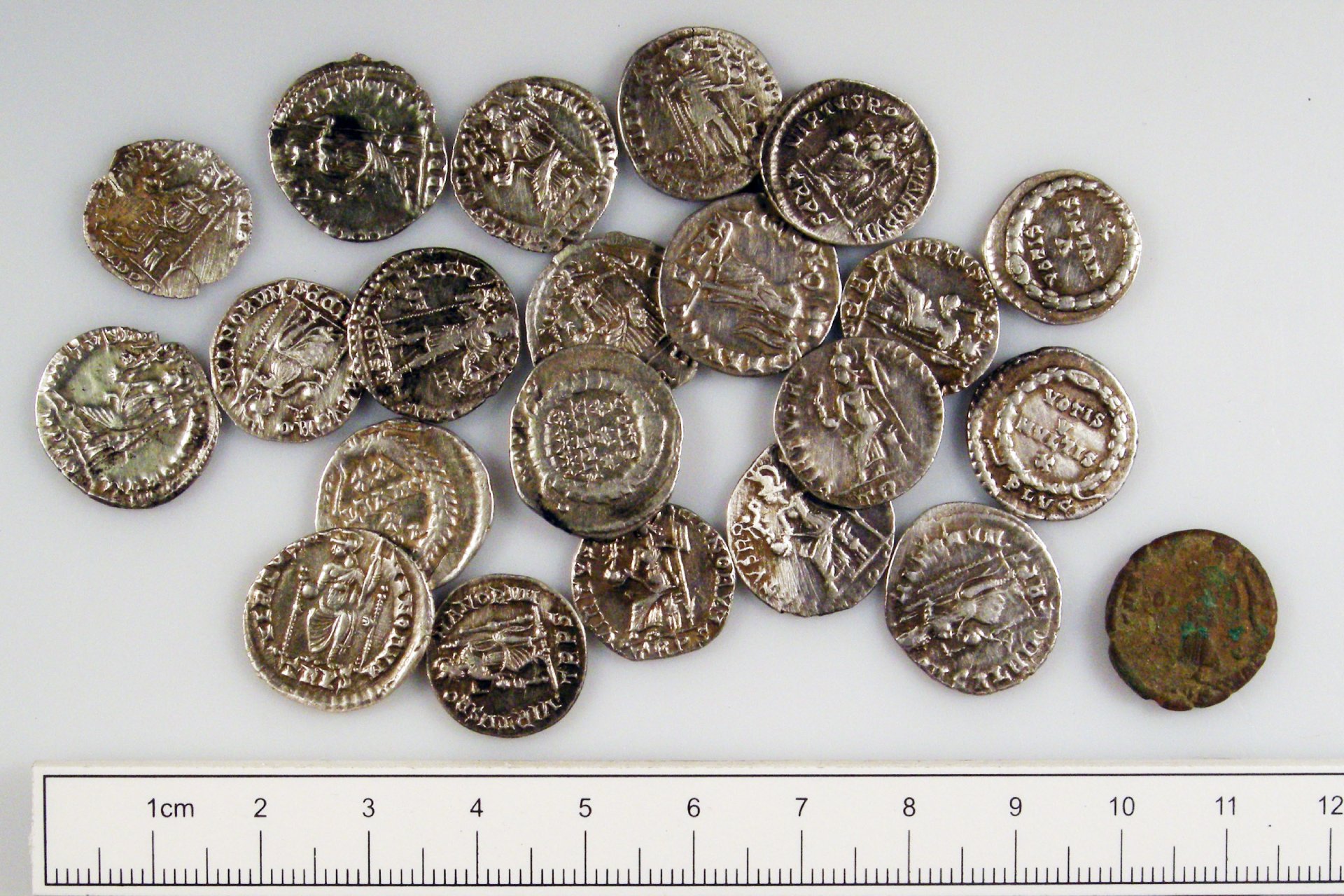
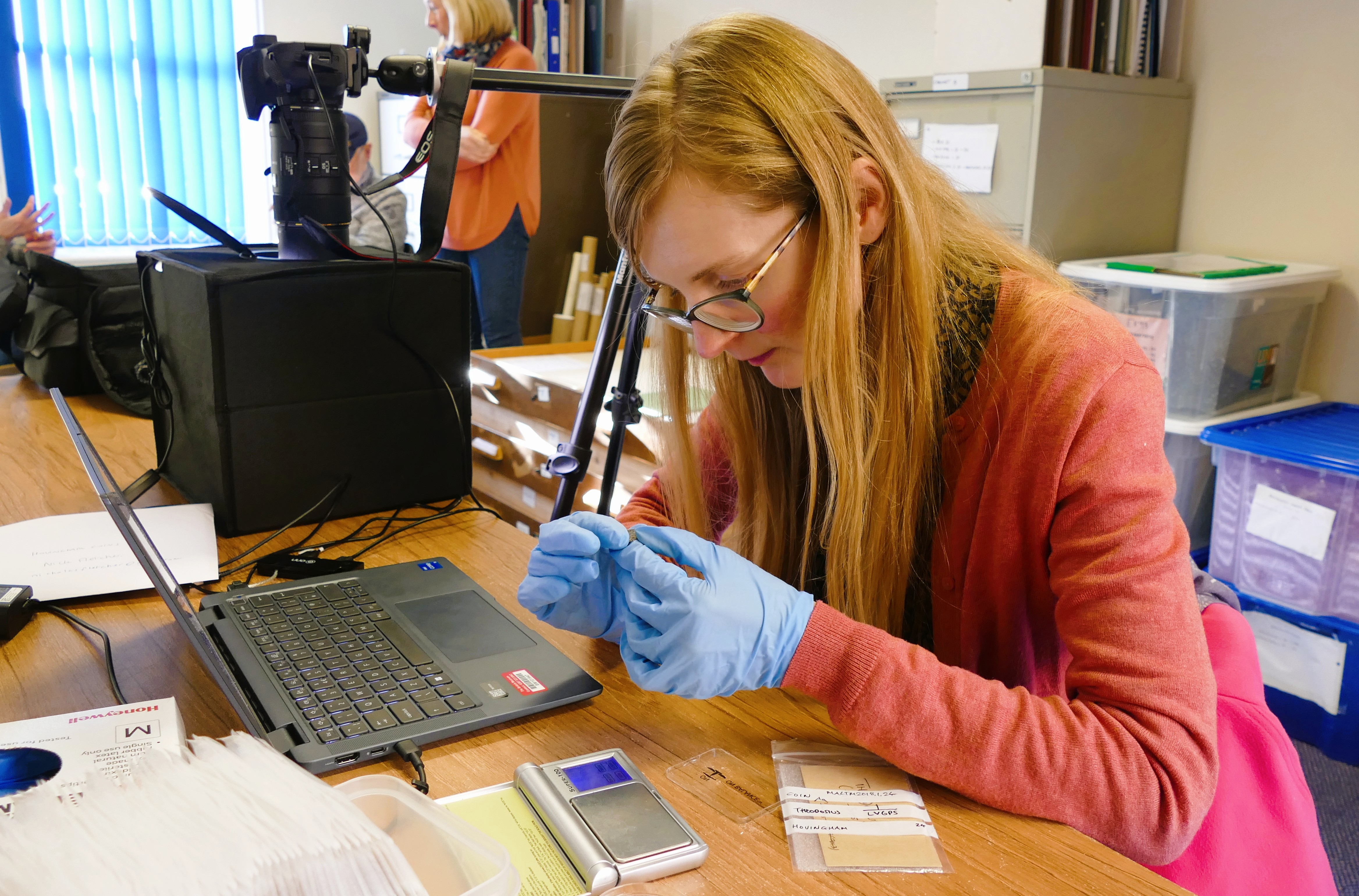
In 1980, a group of children in North Yorkshire were throwing stones in a burn and discovered the Hovingham Park hoard. The children recovered 18 silver coins but found no trace of a pot or container. A further 26 coins were found in the area the following year and were declared to be part of the same hoard. Malton Museum acquired the entire hoard, and Kelly recently visited the museum to examine the coins and spoke to one of the finders who is now a volunteer at the museum.

The hoard was found near the site of a rural Roman Villa which was discovered at the end of the eighteenth century and the coins probably belonged to its inhabitants. Many Late Roman silver hoards are found in rural settlements and demonstrate the level of economic wealth that farmsteads held in the late fourth and early fifth centuries. A Roman fort was situated nearby at Malton with evidence of occupation in the late fourth and possibly early fifth century.
The coins were minted across the period 355-402 CE and the earliest coins are those of Constantius II (355-361 CE). The latest coins were minted at the end of the fourth century at Milan under Arcadius or Honorius (395-402 CE). Compared to the coins from the Worlington hoard, the coins from Hovingham are more lightly clipped (CF1-2) and only one coin is moderately clipped (CF3).
The most interesting thing about the coins is that many appear to be rare issues found in Britain. A siliqua of Valens minted in Aquileia in 364-367 CE and bearing the reverse legend RESTITVTOR REIP (‘Restorer of the Republic’) is one of the finds from the hoard and was not recorded amongst the thousands of coins at Hoxne. There is only one example in the British Museum’s collection from the Ballinrees hoard discovered in Northern Ireland in the nineteenth century. Likewise, a coin issued under Gratian at Thessalonica (now in modern day Greece) during the years 375-378 CE is also a rare find. The coin has been damaged and curled but if you look closely at the image below, you may be able to make out the cross of the chi-rho symbol in the mint-mark and compare it to this example.
