
As part of the 2025-26 Official Development Assistance (ODA) funding allocated by Research England to the University of Kent, the Institute of Cyber Security for Society (iCSS) successfully delivered an impact and engagement project “TTT-CyberEthiopia: ‘Train the trainers’ cyber education for teachers and children in Ethiopia” between January and March 2026. The project’s aim was to upskill schoolteachers in Ethiopia on delivering cyber security and online safety education to children. It was designed to address a major challenge facing many Ethiopian schools and teachers on the lack of sufficient experience and resources to offer cyber security and online safety education to children.
The project was made possible by strong support from two local delivery partners in Ethiopia: Abune Gorgorios Schools, a private educational institution operating 29 branches in Ethiopia which are administrated under the overall management of the Esdros Construction, Trade and Industry S.C., and the Information Network Security Administration (INSA), Ethiopia’s national agency on cyber security. The project’s main deliverer was Temesgen Kitaw Damenu, an iCSS PhD student from Ethiopia whose research focuses on cyber security and online safety education for children. The project’s lead manager was iCSS Director Professor Shujun Li, who was supported by iCSS Deputy Director (Education) Dr Virginia Franqueira, and iCSS Research Collaboration Lead Dr Alexandra Covaci. The project received support from the UK’s National Cyber Security Centre (NCSC) by getting their permission to use materials of its CyberFirst programme.
The project was the first one iCSS delivered in an overseas country, helping expand its school outreach and wide impact activities beyond the UK. It was a great example of how stakeholders from different countries can work together to do more on pre-university cyber education, as recommended in the technical report “Pre-University Cyber Security Education: A report on developing cyber skills amongst children and young people” iCSS produced in 2022 for the GFCE (Global Forum on Cyber Expertise).
At the core of the project was 21 “Train the Trainers” (TTT) workshops, which were attended by over 600 Ethiopian teachers working at 93 schools in Addis Ababa. The first TTT workshop took place at the Addis Ababa of INSA on Saturday 14th February. It was delivered by Temesgen Kitaw Damenu, focusing on training a seed pool of local teachers who can then organise more TTT workshops to benefit more teachers. The training emphasised real-world risks faced by children, while also providing guidance on how to introduce them to technical cyber security topics to help them navigate related career paths in the future. This workshop also led to the establishment of a local community of teachers led by a committee formed by five volunteer teachers who will help sustain the TTT activities after the ODA project’s funding period (31st March 2026).

Building on the success of the first workshop, 20 more workshops were delivered to train over 600 teachers, between 14th of February to 31st of March. The additional 20 workshops were delivered by 16 teachers trained in the first workshop. This cascading approach significantly amplified the project’s impact, creating a growing network of teachers equipped with more relevant skills and resources to conduct cyber education. In the future, more such TTT workshops will be planned and delivered by the established local community of teachers, with continuous support of iCSS. This will help further enlarge the project’s impact to benefit more schools and teachers (and ultimately children), for a longer term and for a larger area in Ethiopia, beyond the capital city.

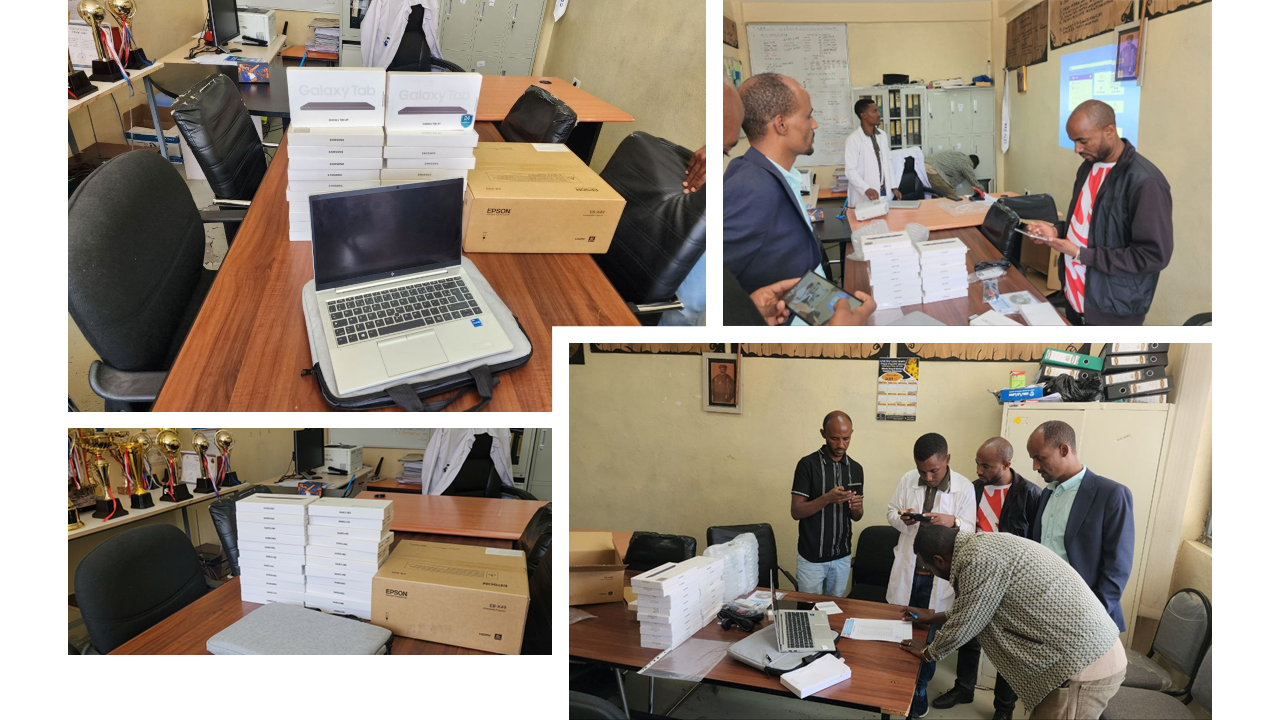
To support the local committee’s work in the future, another important part of the project is about the procurement of some essential computing equipment: a laptop, a projector, and 22 tablets. The equipment was procured through a local supplier in Ethiopia, with funding provided by the TTT-CyberEthiopia project. The equipment will be managed by the project’s partner Abune Gorgorios Schools, ensuring that trainers have access to the tools needed to continue delivering more TTT workshops and other activities.
The project’s main deliverer Temesgen Kitaw Damenu said “As children spend increasing amount of time online and engage with a wide range of apps and connected devices, equipping them with the right cyber security capacity has never been more important. This project marks an important step in strengthening teachers’ capacity to deliver cyber security and online safety education for children in Ethiopia. By empowering those at the forefront of education, we are helping to shape a generation that can stay safe online and view cyber security as a meaningful future career. I would like to thank all the stakeholders who made this project a success. I look forward to seeing this growing community of teachers expand its reach across the country and continue inspiring both educators and children, with the continued support of the stakeholders.”
The project’s lead manager Professor Shujun Li said “I am excited to have the opportunity to work with my PhD student Temesgen and two Ethiopia delivery partners on the TTT-CyberEthiopia ODA project. We have been hoping to do a project of this kind in Africa for many years, since we did the technical report on pre-university cyber education for GFCE in 2022. It is great to see so many local teachers in Ethiopia participated our TTT workshops and some donated their time to deliver the additional 20 TTT workshops to their peers. We hope the equipment we purchased for the local teacher community will help them to sustain such TTT workshops and other cyber education activities in Ethiopia. Now the project has completed, but we will do our best to continue our support and collaboration with the local community to improve cyber education for children in Ethiopia. We also hope this will allow us to find other opportunities to duplicate the success in other African countries.”
Alemu Wolde, Deputy CEO of Esdros Construction, Trade and Industry S.C. and CEO for its Education Sector managing Abune Gorgorios Schools, said “Cybersecurity is increasingly becoming an important global issue that impacts individuals, families, and the wider community. For students in particular, challenges such as cyberbullying, data breaches, and identity theft have become common and concerning risks. This project created a valuable opportunity to engage the wider school community in cybersecurity initiatives and awareness programs. The platform provides the opportunity for both the teachers and students to discuss about the ups and downs of the digital world and how to use it for the betterment of the younger generation. Through these efforts, a number of teachers and students are now better equipped with the knowledge and skills needed to navigate the digital world safely and responsibly. In sum, the initiative represents a timely and important effort to strengthen students’ capacity to use technology safely, promoting responsible digital behavior and a more secure learning environment.”
Hannibal L. Gurmesa, Deputy Director General at INSA, said “The project has made a significant impact on strengthening cybersecurity capacity among teachers, particularly in secondary schools across Addis Ababa. It successfully reached a substantial number of educators, equipping them with essential knowledge and skills in cybersecurity and online safety. This, in turn, empowers teachers to transfer this knowledge to their students, thereby extending the project’s impact to thousands of learners and families. Beyond skill development, the project also fostered the creation of a collaborative digital community among teachers. This platform enables continuous engagement, knowledge sharing, and peer learning, contributing to the sustainability of the initiative.”
Simeneh Anmut, Chair of the local committee and a representative of the benefiting schoolteachers working at Gelan Boys’ Boarding Secondary School, said “Participating in the cybersecurity training workshop for teachers was an inspiring blend of hands-on learning and real-world problem-solving. It was also a privilege to contribute to the follow-up cyber security training workshops and to engage with such a motivated group of teachers. It was particularly encouraging to see participants actively engaging with practical activities and discussions. The energy in the rooms reflected a shared commitment to empowering children with the skills to navigate the digital world safely, along with a growing confidence among teachers in delivering this important education effectively. We would like to thank the University of Kent for this opportunity.”
Abune Gorgorios Schools is a private educational institution established in Ethiopia, operating a network of 29 branches across the country. Of these, 20 branches are situated in Addis Ababa, while the remaining nine are located in regional cities, namely Bahir Dar (five branches), Dire Dawa (two branches), and Woldia (two branches). All branches are administered under the overall management of Esdros Construction, Trade and Industry S.C. The Schools provide structured formal education spanning kindergarten, primary, and secondary levels, in accordance with national education standards. Through its extensive network and integrated management system, the institution serves a substantial student population and plays a meaningful role in expanding access to quality education both in the capital city and in regional areas.
The Information Network Security Administration (INSA) is a governmental agency based in Addis Ababa, established with the mandate to safeguard Ethiopia’s information and information infrastructure from cyber-related threats. According to its official mandate, it is responsible for protecting national digital assets, developing and implementing cybersecurity policies and standards, and ensuring the security and resilience of critical information systems. INSA also works on monitoring cyber threats, supporting incident response, and building national capacity in information security through technical and institutional development activities.