
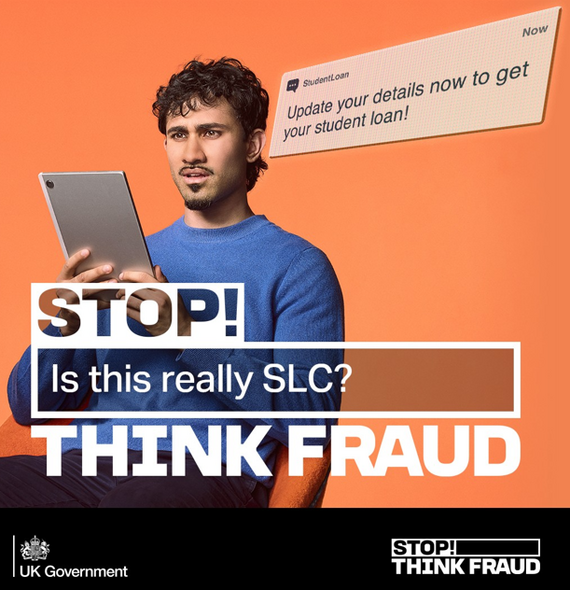
As students across the country prepare to start or return to university, the Student Loans Company (SLC) are urging you to ‘stop and think before you click’ when responding to any unusual messages or communication about their student finance.
In September, SLC pay approximately £2.6 billion in maintenance support to 1.1 million students. Scammers use this busy payment period to send convincing text messages, emails, or make phone calls claiming that a student’s payment is at risk.
These messages are made to look like that they come from a trusted organisation and may say that a payment has been blocked, bank details need to be updated, or an account will be closed unless the recipient acts immediately.
Students are being reminded that SLC will never ask them to provide or confirm personal or financial information by email, text message or any social media platform. Anyone who receives an unexpected communication should avoid clicking links and instead sign in to their student finance account through GOV.UK
SLC’s Top Tips for spotting and stopping a scam
Criminals may impersonate the Student Loans Company (SLC) to try and steal your personal information or money. They will text, email or call you claiming there is an issue with an upcoming payment that needs urgent action, especially around times when student loan payments are made in September, January and April.
- SLC will never:
- Ask you to provide your personal or financial information by email or text message.
- Send a message with an urgent deadline for example ‘failure to respond in 24 hours will result in your account being closed’.
- If you’ve asked SLC to make changes to your bank details, they will send you a text message to confirm these changes. If you receive a text message and have not asked for changes to your bank details, log onto your online account to check your information is correct.
- Never share the following information online which criminals can use to impersonate you – name, date of birth, customer reference number, course information or your current or previous address.
- If you receive a call or message claiming to be from SLC, always take time to stop and think if the request is genuine before handing over personal information. Avoid clicking on links and check a request is genuine by logging into your online account.
SLC and Student Finance England do not provide services through WhatsApp. They will also not initiate contact through social media to discuss a student finance application or entitlement.
Suspicious emails should be forwarded to report@phishing.gov.uk. Scam text messages can be forwarded free of charge to 7726. Students who believe their student finance account may have been compromised should contact SLC using the official contact details on GOV.UK
More advice is available in SLC’s guide to identifying a scam, from Report Fraud, and through the government’s Stop! Think Fraud campaign. The City of London Police had also created a new booklet for students to protect them against fraud and cyber within their university campuses – more information can be found here – University students booklet – Report Fraud