It has been our privilege at the GRC to once again be able to provide students with a top-up fund to support exceptional requests to assist PhD research. We have supported a range of exciting activities; specialised training, the presentation of papers at national and international conferences, fieldwork and data collection, and visits to archives.
We received an incredible forty-five applications from the PGR community, overall, we awarded approximately £27,502.08 to support the outstanding research of Kent’s PGRs. Hear from PGR Jason Mazzocchi about how access to the GRC PhD Top-Up Fund benefitted Jason’s research.
Jason Mazzocchi is a second-year PhD Researcher with the University of Kent. This summer, Jason received a funding award via the GRC PhD Top-Up Fund and visited The National Archives. The visit to The National Archives gave Jason the opportunity to work with original records, supporting Jason’s research success.
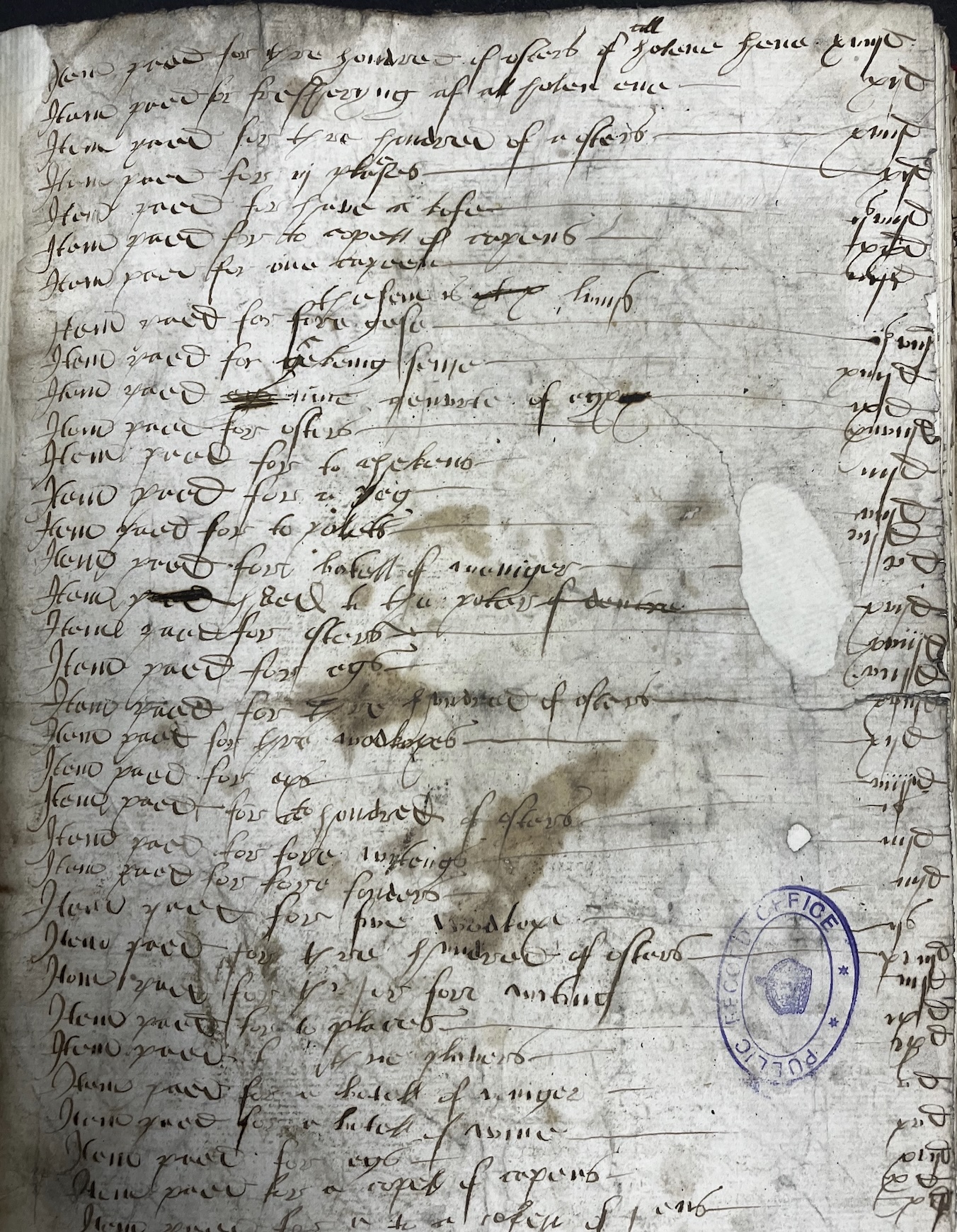
“Although archival microhistory has become less prominent within historical research in recent years, my experience at The National Archives reinforced my belief in its continuing value. Research of this kind requires curiosity as much as determination. The answers are rarely obvious, and each document raises new questions as well as providing fresh evidence. One particularly fascinating aspect of my visit was examining the State Papers, which revealed details of the royal household’s consumption of oysters and plovers. These records offered valuable insights into the significance of maritime resources and the connections between local communities and the Tudor court.
The visit also reminded me that archival research is about much more than uncovering new historical knowledge. Working with original records develops a range of transferable skills, including critical analysis, source evaluation, attention to detail and the ability to interpret complex evidence. These are valuable not only for completing a doctorate but also for future careers in academia, archives, museums, heritage organisations, and beyond.
One of the most enjoyable aspects of the visit was seeing how seemingly routine administrative records can reveal so much about people’s everyday lives. Individually, these documents may appear unremarkable, but when considered together they begin to build a much richer picture of the experiences of maritime communities in north Kent. I was particularly interested in examining the original legal records relating to the Faversham Oyster disputes (c. 1599–1608). Seeing these documents first-hand brought the dispute to life in a way that simply reading published transcripts never could, highlighting the complexity of local conflicts over valuable maritime resources.
I also came away thinking about the wider impact that this research can have. While my thesis will contribute to academic understanding of north Kent’s maritime communities, I hope the findings will also be of interest to local history societies, museums, heritage organisations and community groups. Sharing research beyond academia is an important part of doctoral study, and archival projects provide excellent opportunities for outreach and knowledge exchange by helping people connect with the history of their local communities.
My visit to The National Archives reminded me why archives remain at the heart of historical research. They are not simply repositories of old documents but places where new discoveries are made and overlooked stories can be brought to light. As a self-funded, part-time PhD student at the University of Kent, I am extremely grateful for the opportunity to benefit from this award. As I continue my doctoral research, the experience has strengthened my appreciation of the enduring value of archival microhistory – borrowing Edward Muir’s quotation of Sherlock Holmes’ knack about the vital nature of ‘observing trifles’ – and the important contribution this approach continues to make to both historical scholarship and public understanding of the past.”