
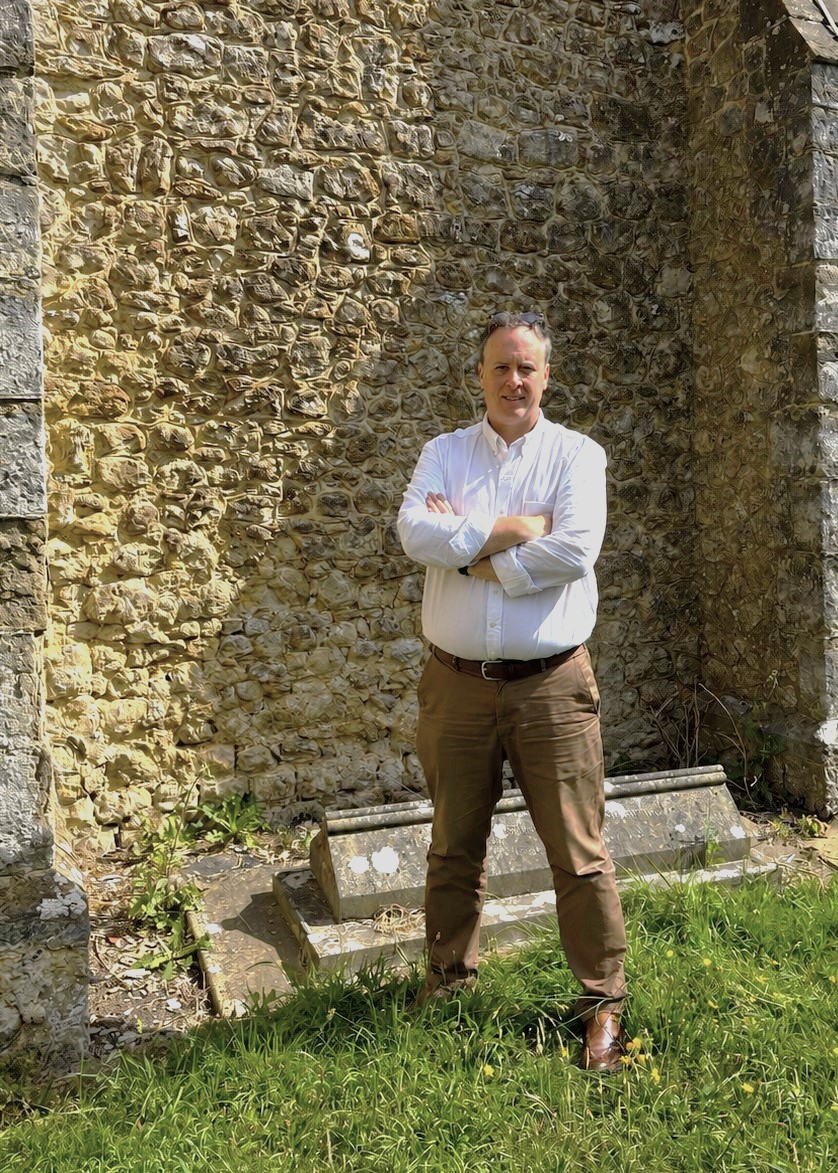
A University of Kent researcher has uncovered new evidence indicating that stone from Henry VIII’s long-lost Sandown Castle was reused in the Victorian extension at Constable’s Gate, Dover Castle.
Dr Christopher Moore, a Research Fellow and former PhD researcher in hidden and lost heritage at Kent, combined archive records with architectural evidence to link the 1883-84 extension to Sandown Castle, one of Henry VIII’s 16th-century coastal forts. Supported by the University and carried out with the cooperation of English Heritage, the research offers fresh insight into the history of Dover Castle and the story of one of England’s lost Tudor fortresses.
“This sheds light on how Dover Castle’s 19th-century works incorporated masonry from an earlier Tudor fortress,” said Dr Moore. “Sandown Castle is best known as a casualty of coastal erosion, but the documentary trail and the surviving fabric show that parts of it lived on at Dover Castle and at other sites across East Kent.”
Sandown Castle was one of three “castles of the Downs” built in 1539-40 to defend England’s coast. Unlike nearby Walmer Castle, which still stands, Sandown was abandoned to the sea during the 19th century and largely demolished.
Dr Moore’s archival research uncovered an 1883 report stating that materials from Sandown were being sent to Dover to build an extension at Constable’s Gate. The extension, built in 1883-84 as quarters for the Castle’s commanding officer, adds to the evidence that masonry from Sandown Castle was reused in the building.
Beyond Constable’s Gate, Dr Moore’s research identified other East Kent sites where stone from Sandown Castle was reused, including Eastry Union Chapel, Walmer Castle and Deal’s second pier abutment. Together, they show how parts of the lost castle survive across East Kent in buildings that many people pass every day.
Dr Moore is also co-founder, with Dr Manolo Guerci, of The Henrician Archaeological Research Foundation (The HARF), a registered charity dedicated to uncovering and preserving lost architecture from the Early Modern period, particularly sites such as Sandown that were lost through coastal erosion, neglect or demolition.
HARF co-founder Dr Manolo Guerci, Director of Graduate Research Studies at the School of Arts and Architecture at the University of Kent, said:
“Research like this exemplifies what Kent is all about – combining academic rigour with real-world heritage preservation. By bringing together further evidence for Sandown Castle’s reused masonry at Dover and elsewhere, Dr Moore has advanced scholarly knowledge and given the public a compelling new way to understand a much-loved site.”
Dr Moore believes the discovery offers a rare opportunity to connect directly with a lost piece of Tudor England:
“When you stand beside the Victorian extension at Constable’s Gate and realise that parts of its masonry came from Sandown Castle – a fort Henry VIII built and the sea later claimed – it sends chills down your spine. It’s a tangible connection across centuries of history. I encourage everyone, from local families to history buffs, to come to Dover Castle and experience this hidden heritage for themselves.”
