
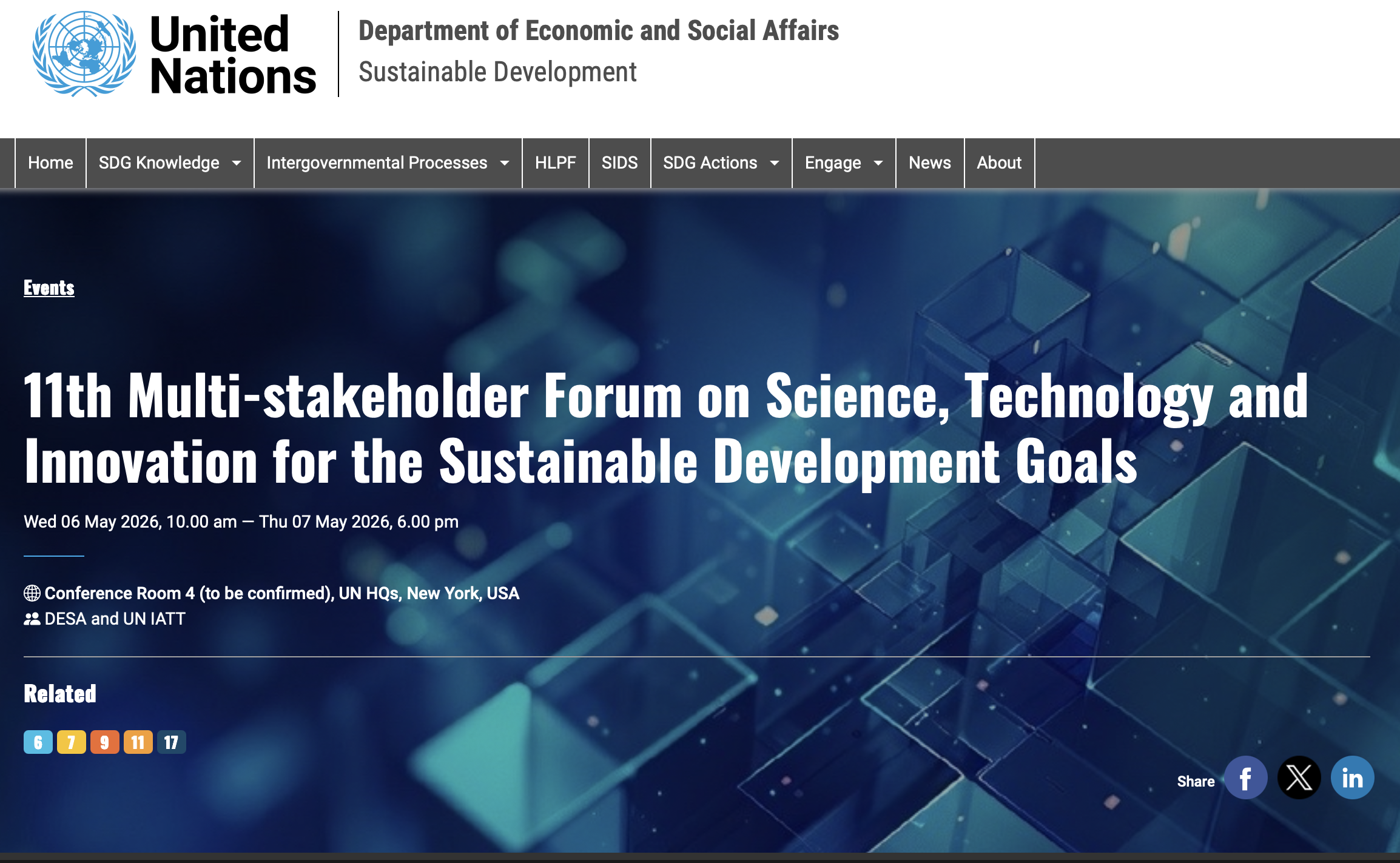
The Centre for Global Science and Epistemic Justice (GSEJ), University of Kent, will co-organise a high-level side event at the 11th United Nations Multi-stakeholder Forum on Science, Technology and Innovation for the Sustainable Development Goals (STI Forum) on 6 May 2026.
Co-hosted in partnership with the China Association for Science and Technology (CAST) and the Andean Road Countries for Science and Technology (ARCST), the event brings together global experts to explore how science popularisation can strengthen scientific innovation and accelerate progress toward the Sustainable Development Goals (SDGs).
As the world enters a decisive phase in implementing the UN 2030 Agenda for Sustainable Development, the role of science, technology and innovation (STI) has never been more critical. Yet achieving the SDGs is not only about producing knowledge—it is about ensuring that knowledge is accessible, trusted, and equitably shared.
The event, Science Popularization Empowering Scientific and Technological Innovation and Application, foregrounds public engagement and science communication as a crucial “bridge” between scientific communities and wider society. By making science more inclusive and publicly engaged, science popularisation fosters the social conditions necessary for innovation to flourish and for its benefits to be more evenly distributed.
Aligned with the 2026 STI Forum theme and the SDGs under review this year, the discussion will focus on how science communication, participation, and literacy can empower innovation ecosystems and support more equitable global development.
The session will feature contributions from leading international figures:
🔹 Shaofeng Hu (Director, Division of Science Policy and Basic Sciences, Natural Sciences, UNESCO) – Synergy between Science Popularization & Technological Innovation under the vision of the “International Decade of Sciences for Sustainable Development” Global Policy Framework and Implementation path
🔹 Zhimin Zhang (Chinese Research Institute for Science Popularization) – Logic and Evidence of Science Popularization Driving Scientific and Technological Innovation
🔹 Joy Zhang (Professor, University of Kent, Founding Director, Centre for Global Science and Epistemic Justice) – From Cooperation to Uptake: A New ODESSI for Global Genomic Science
🔹 Natalia Pasternak (President of the Institute Question of Science, Professor, Columbia University) – Countering Science Misinformation: Reducing Social Costs for Technological Innovation
🔹 Romain Murenzi (Former Executive Director of TWAS, Former Rwandan Science Minister) – Citizen Science: From Energy Data Foundation to Engine of Innovation
🔹 Marco A. Cabero Z. (Chairman of the Andean Road Countries for Science and Technology, Director of the Journal of Latin American Sciences and Culture) – From Evidence to Impact: Why Science Culture Matters for a Sustainable Future
The event will conclude with an interactive Q&A session.
Following the event, a summary report and policy brief will be produced, contributing to global discussions on how science communication and public engagement can support SDG implementation.
We warmly invite colleagues, partners, and the wider public to join this important conversation.
