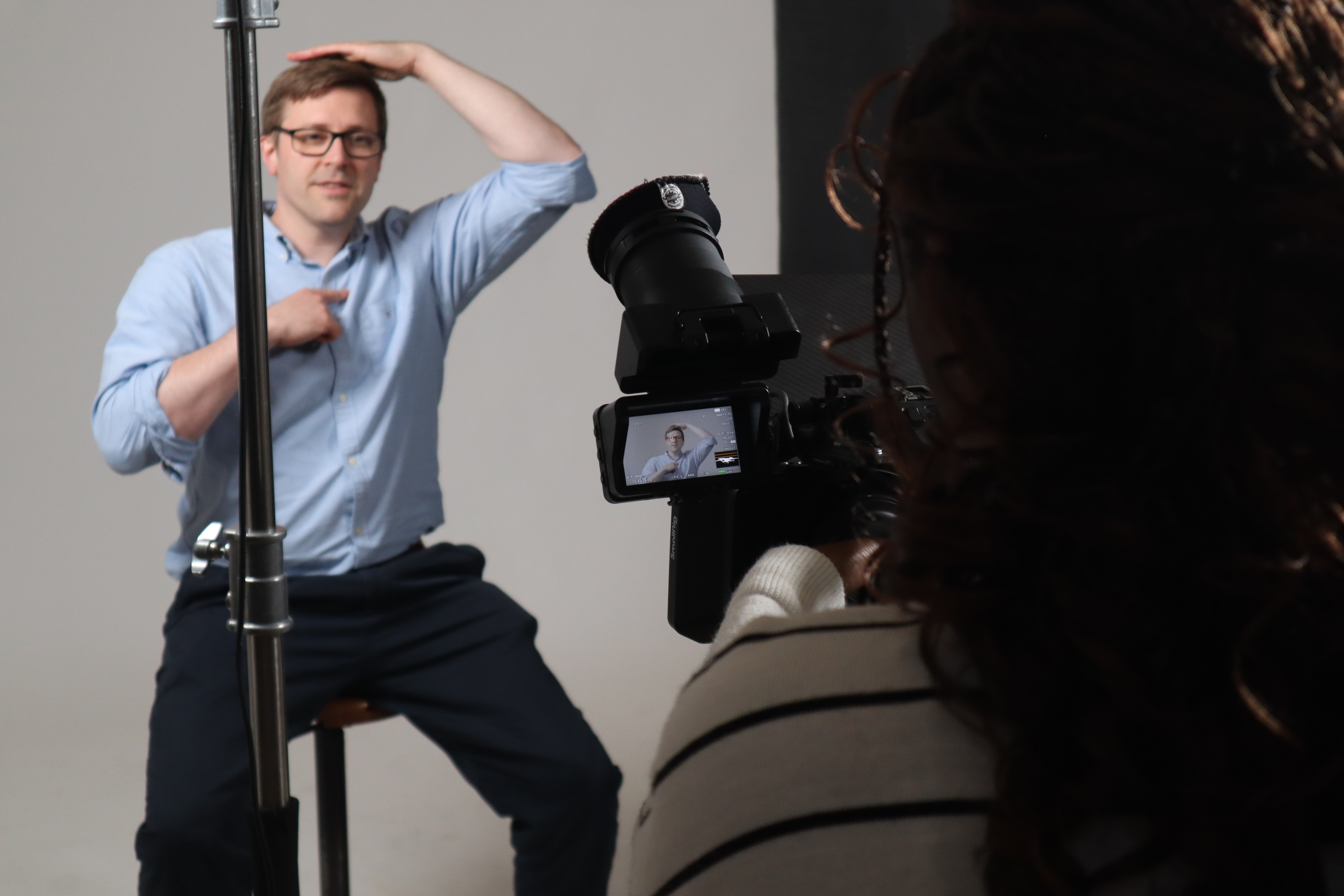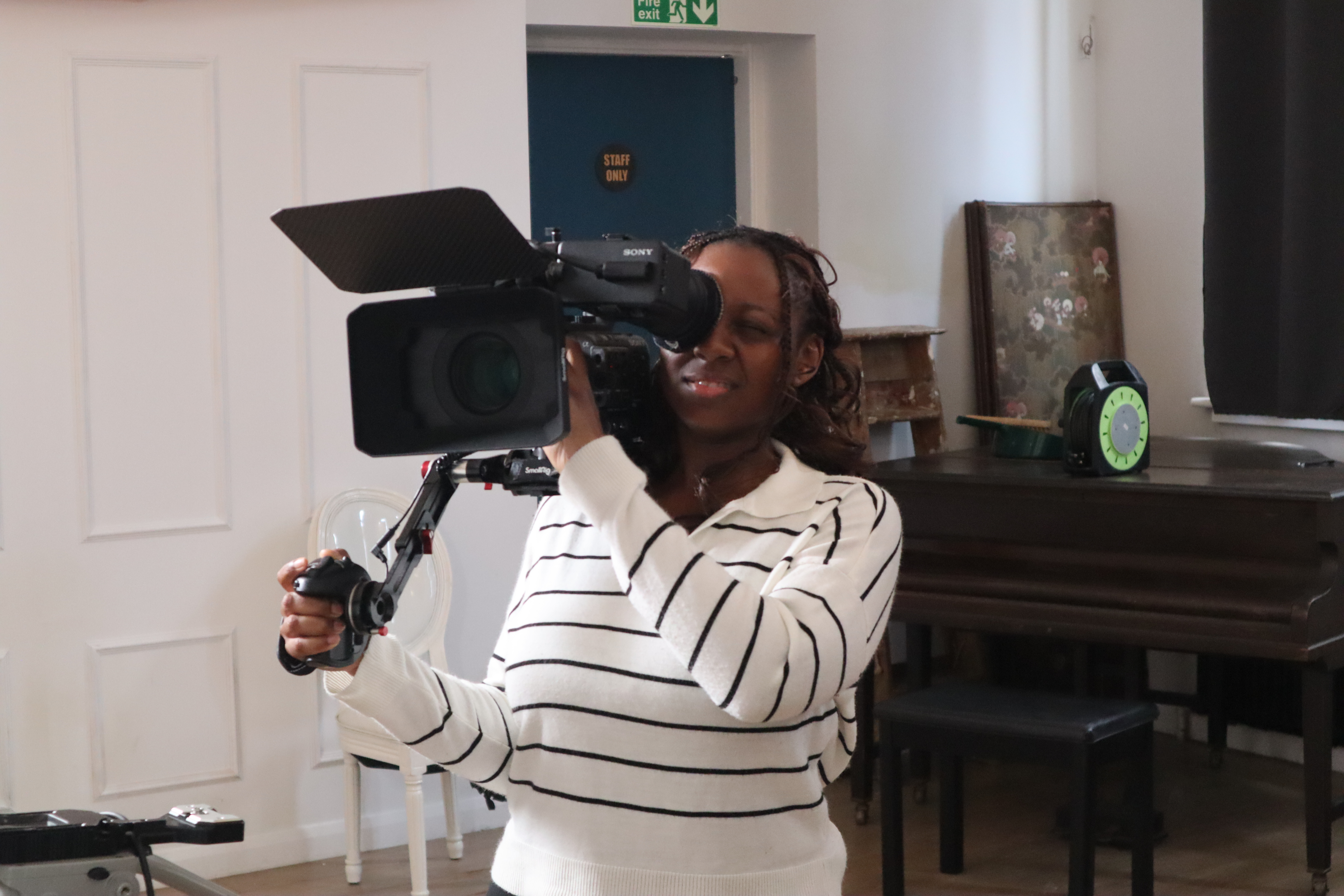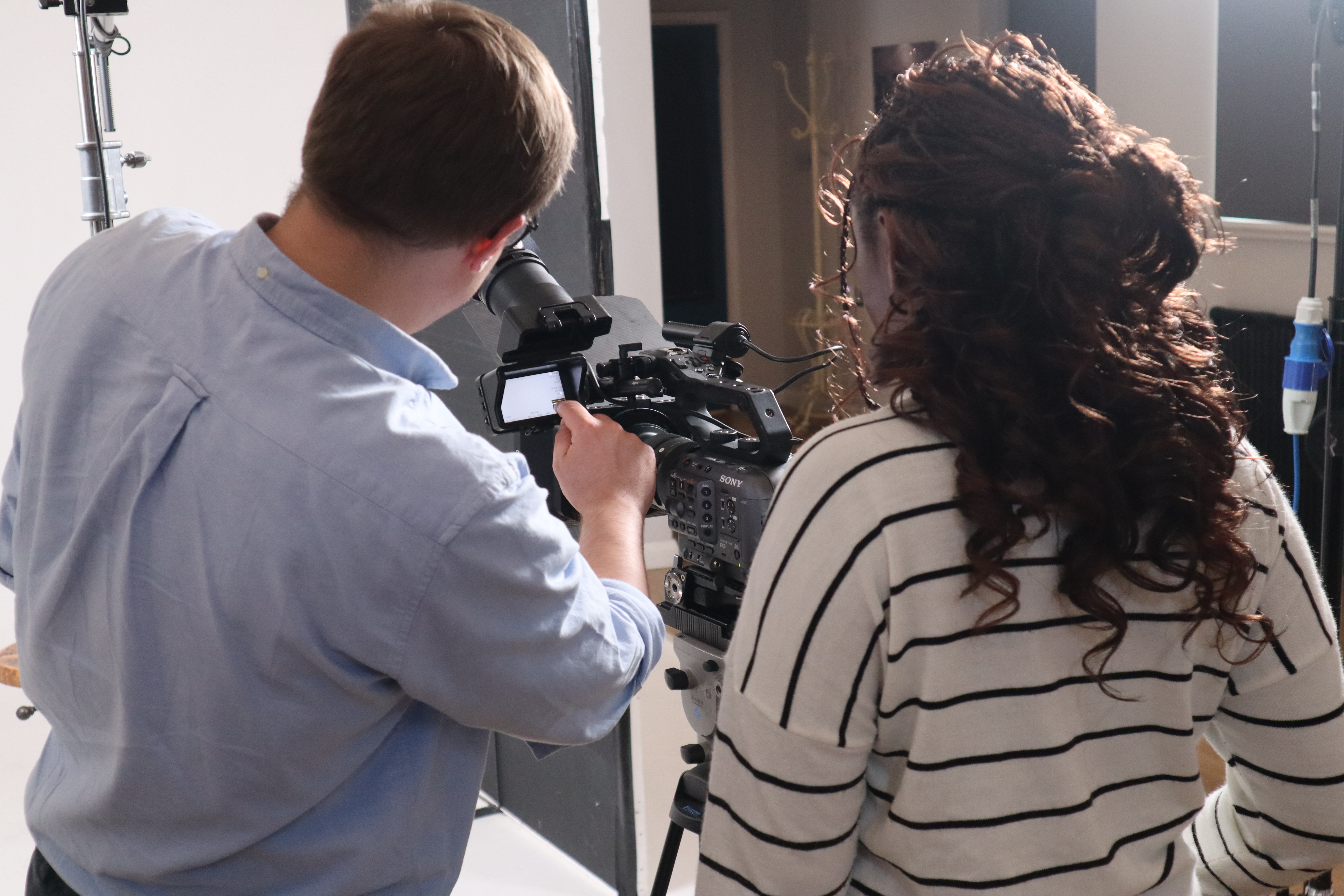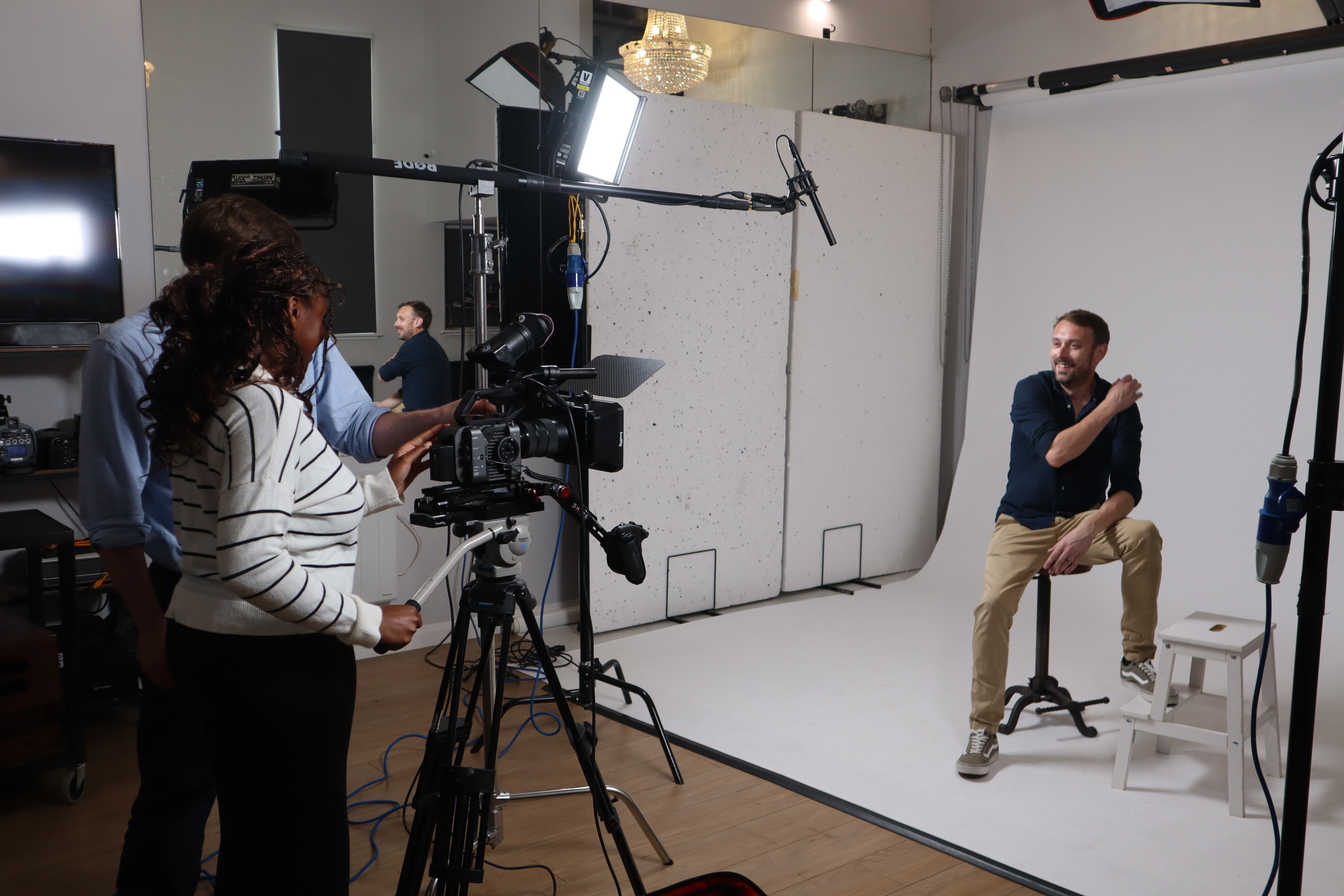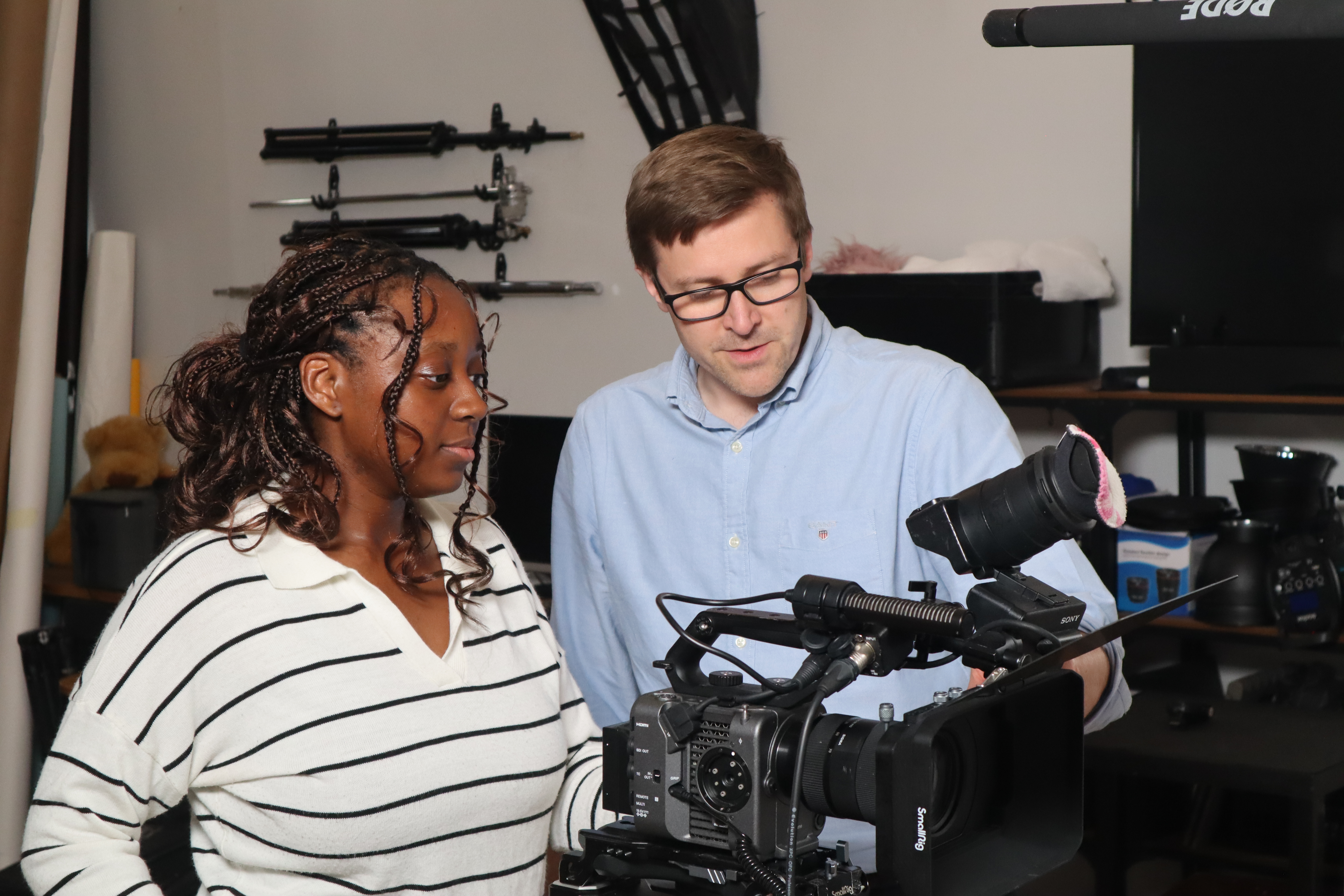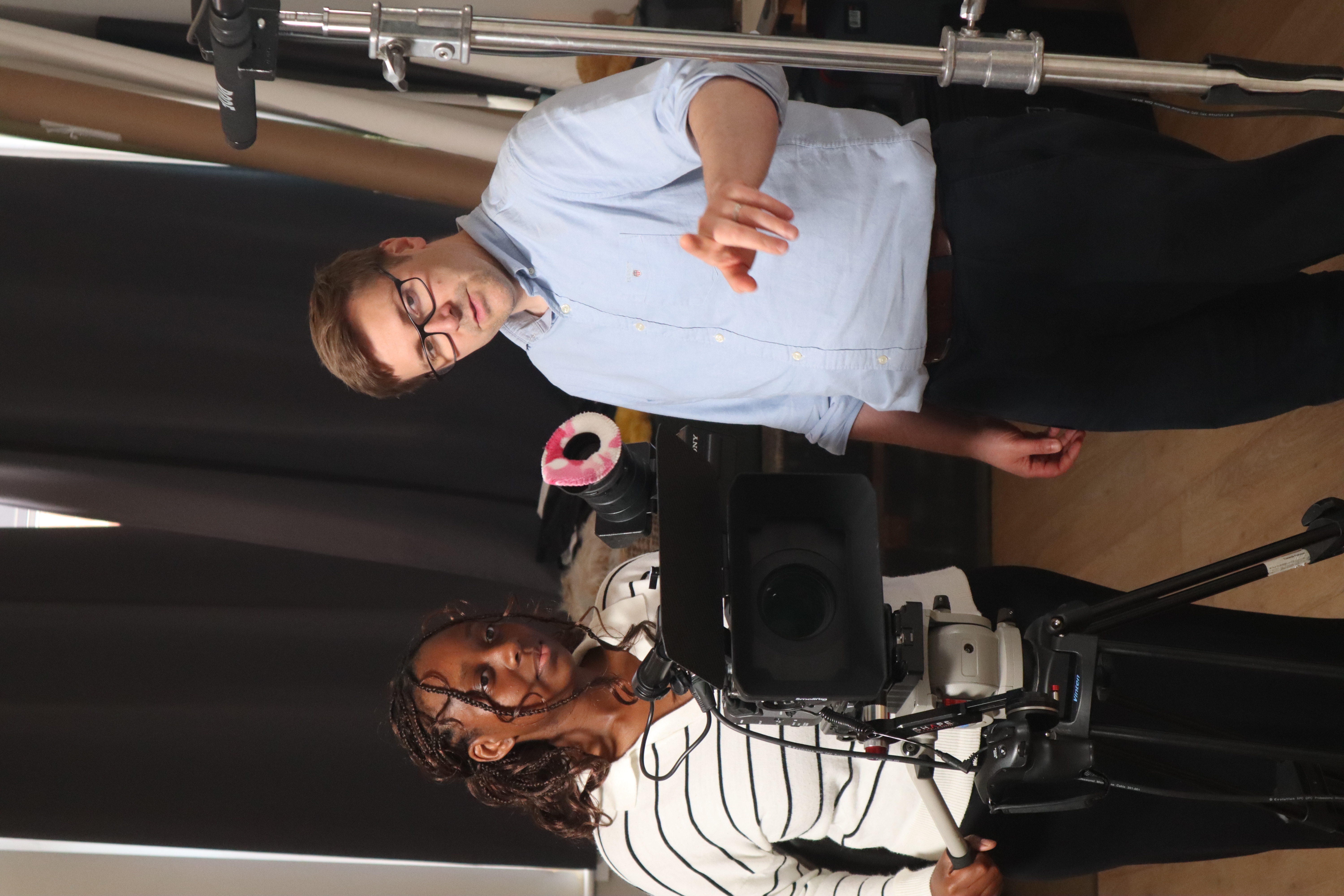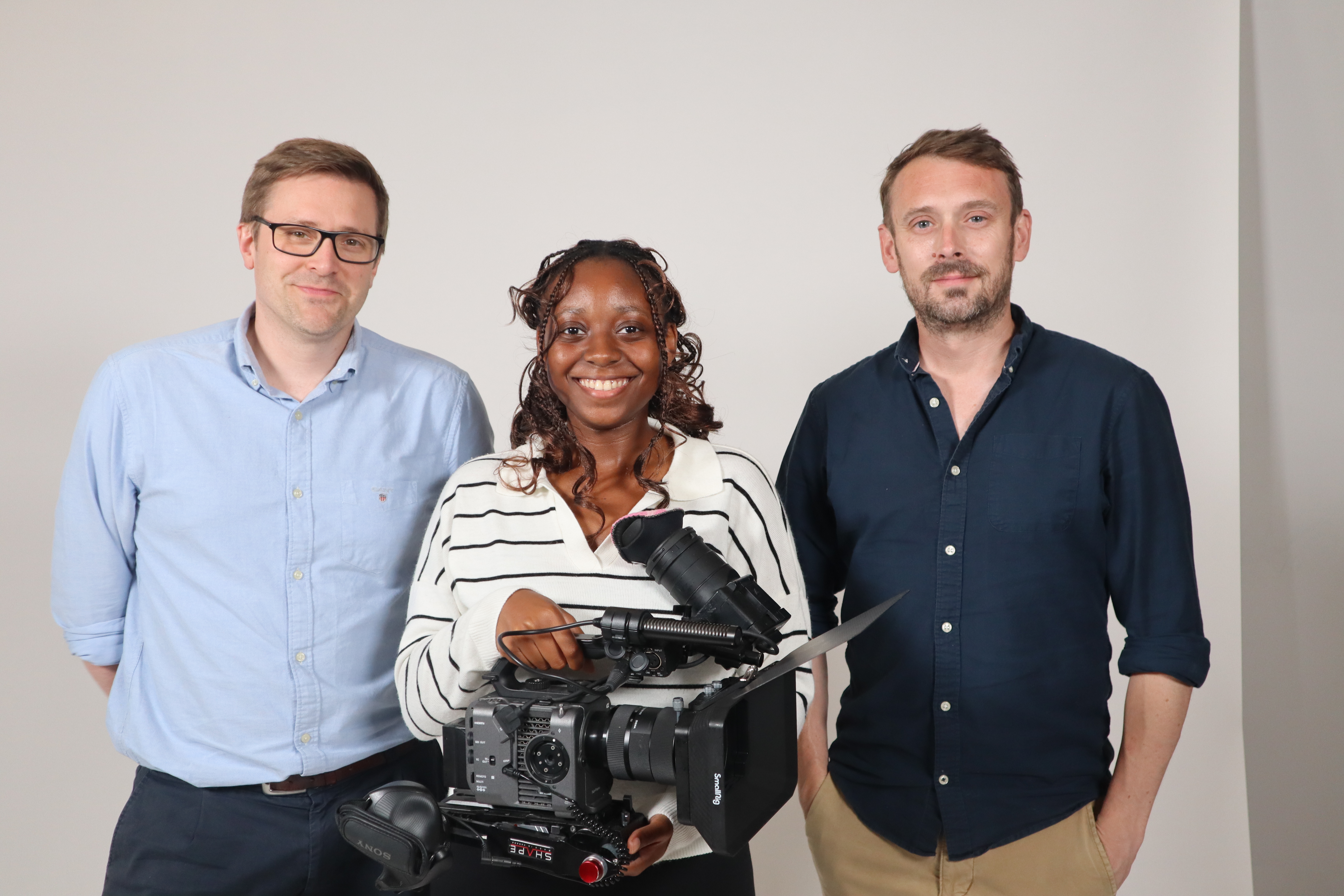

John had the pleasure of visiting the Borderpoint Film studios in Ashford to catch up with Karlene who was interning with them to see how things were going. It turned out to be a retrospective for Karlene as it was her last day at Borderpoint!
How’s it going?
It’s been going really great actually. First off, all the people I work with are really nice. They’ve been giving me a lot of feedback as I’ve been working which is really helpful because of the type of work we are doing. My manager has been great because they’ve been giving me duties to see different kinds of material and try out different things, like editing, because I’ve never edited before. I like how the internship has used what I’ve learnt at university, because I did Biomedical Science, and this is a research based project. It’s built on what I did at university and developed throughout my time at Borderpoint. I’ve been working with Dom directly too.
What have you been doing with Borderpoint?
At the beginning, Dom said we would be making some science videos and he gave me free rein to choose any topic I wanted. I went off and I did research for the first part of the internship trying to find what interesting science topics I could find with some help from Dom. From there, I had to make a vision document, which I had never done before. He then taught me how to write scripts for the video content, then we got a scientist to come and look at the scripts, add their own bits and pieces, we then brainstorm about what we liked and what we didn’t like then shortlisted the topics together. We had a filming day where we filmed all of the different content videos. He’s now given me the opportunity to edit one of the videos, which is really fun!
You went from Biomedical Science to a media researcher role. How is this different to what you have studied?
The core concepts are the same, I still have to look at research papers, because we’re making scientific content. What I initially found challenging was I was now reading content which was not Biomed related. I was leaning into more Biology based topics, but Dom thought it would be nice to do a bit of a mixture of other scientific topics as well. It was a really good challenge I really liked. I surprised myself. There were some topics I liked reading about that I didn’t expect to like reading about. Using the core concepts, especially from my research project, it meant that the first couple of weeks weren’t too difficult for me because I already knew how to do the research needed.
What did you research for the role?
I researched a wide variety. We shot a video on T-Rexes that we’re working on right now. Everybody likes T-Rexes so that’s an obvious one. We did an interesting one on starfish. There are some scientists that are looking at how starfish can detach their own arms and how that can be used in medical research. I found some weird and wacky ones, like fox domestication. It wasn’t one of the ones which was shortlisted but was interesting as it was looking at people who wanted to turn foxes into dogs.
Were there any skills that you have developed while at Borderpoint which has surprised you?
I have really liked the editing aspect of it. I feel like its almost like working with a jigsaw puzzle. You’ve got the whole take, the bloopers and mistakes that happen, and you need to learn to cut, edit and make sure that the story flows. That was really interesting, I had never edited before, so I was watching tutorials in my free time. Then Dom and Richard. (expand on person here), went through and explained how to use the editing software as well. It’s really fun because I had a friend at Kent who did media at the same time as I was doing degree. It’s nice seeing her doing everything, and now I’m doing the same thing!
What’s the impact this internship has had on you?
This has had a really positive impact in terms of me thinking about my future career. In my final year, I chose to do science communication and public engagement and that’s run by Dan Lloyd. It was very interesting module as it was very different to the usual biomed course and looking at how to communicate science to a non-scientific audience. That led me to a communication project as my final year project. Doing this internship is in the realm of science communication, so that’s really made me think I want a career in science communication. It’s changed my idea of when I was in first year when I wanted to work in a lab, now I want to work in science communication.
Before this, I didn’t realise, scientists are really good at explaining the subject to other scientists, but explaining it to the public, it’s a very different story.
Is there anything you’ve found surprising while in this role?
It really made me appreciate how hard it is and how much effort is put into making science content. You think it’s just – take an idea, do a little bit of research, make a video and that’s it. Actually, there are a lot of stages, back and forth, a lot of editing, feedback, meetings, brainstorming. These aren’t things I thought about and considered. It surprised me about how much process went into this.
What did you do to earn Employability Points?
One of the first things I remember doing was going to a LinkedIn Workshop because I hadn’t made a LinkedIn profile yet. I read the different emails which the Careers and Employability Service team were sending and I saw Employability Points. I saw that there were different events going on online. I signed up for the LinkedIn workshops, I went to careers fairs and found them really helpful. I also worked part time for the Student Union in my first and second year as student activities administrator, so I could log that. I did summer work with agencies, working at festivals so I could log that. I worked at Woodies in my final year which gave me a lot of experience again. I was able to add things I did during my placement year with Unilever. I did quite a bit of outreach volunteering work, so I was able to log that.
By my second year, I knew what the scheme was and I was able to look back and reflect on my time at Kent and identify activities that I did which could get me points because it makes you reflect on things that you’ve done through the year. It allowed me to look at different workshops and events going on and gave me a bit more incentive to attend them.
How did you find reflecting on the activities that you did?
in the beginning, I initially thought, “I haven’t done much. What can I even add?” And then going through each of the categories and the different types of points you get, it made me realise, Wow I’ve actually done a lot employability wise. It made me realise that there’s a lot of skills that I’ve gained that I didn’t even realise that I had before. It was really nice opportunity to look at all the different jobs and different experiences I had, and to go through the process of sitting down there looking for everything.
What was the most impactful thing you did while earning your Employability Points?
The two that stick out to me are kind of similar but, one of them was the Technomics Summit and that was run by the Economics Society and they sent an email asking for people to volunteer and at least in first year I really hated public speaking. I really hate public speaking, presenting, I really didn’t like it, but looking at Employability Points well, why don’t I just put myself forward for it and see how it goes? Then I was a part of the student panel, I’ve spoke in front of a crowd, it was a really good experience and the same thing again because I had that experience of doing it across my first and second year, by the time I did my placement and the volunteering for outreach, we went to a primary school and did a workshop at a school with primary school children. Again, that’s public speaking and I was really not good at it. It gave them that opportunity to really push myself and to develop those skills. Now when I’m at the point in my final year of Uni I had to do my research project, I have to do a presentation. Easy! I didn’t have any problems with it. That also helped me as well because I went back to my secondary school to do a presentation about my research project as a part of that project. Again because of those times that I did with public speaking, it really helped. If you if you don’t practise it, then you’ll never get better at it.
How has the EP scheme helped you overall?
I think it’s helped me because it really pushed me to not just think about my degree, but also to think about the future and think about what kind of skills can I gain, and what can I do already whilst I’m at Uni. It really made me consider all the resources that are available at the Uni because a lot of students don’t realise that as well.
Because of that I’ve been able to find different resources, like the CV and cover letter guidance that’s available on the website, the fact that our degrees have careers advisers as well as & going out to speak to them has helped me think a bit more about the future. That’s really helped especially in final year because that’s the time when you need to think about what comes next.
How has the scheme enhanced your employability?
I think it’s helped me gain a very wide variety of skills throughout my time. I think it’s going to help me with my CV because now there’s a lot of stuff that I can put in terms of skills. So for example, if I didn’t do the Techonomic Summit because of the EP Scheme, then I wouldn’t be as confident with my public speaking, communication skills & listening.
It’s helped me get a wide variety of skills because I’ve had so many different experiences as well. Just like basic things like setting up my LinkedIn. That’s a really important thing. Going to the CV workshops and going to the placement year workshops as well. Those really help me throughout my time at Kent.
As today is your last day with Borderpoint, what skills will you be taking away from this opportunity?
I think some of the skills that I’ve learnt are very closely related to the work that I’ve done. Learning how to write a script, that’s completely new to me, learning how to edit a video & learning how to make a briefing document, which is what I struggled with in the beginning. You have to have a balance of making sure you put enough information that they can understand but also not too much so then that it becomes a really big document that they can’t read because that’s something that’s supposed to be quick.
Again, enhancing my science communication skills thinking about target audience. How do I write content in a way that someone else can understand, even if they don’t have the same background as me?
Another is learning how to take feedback. So getting a lot of constructive feedback and can feel like It can feel quite personal because that’s your work. The team over here, like Dom, has been really, really nice and he’s made sure to break down the feedback for me saying what I’ve done wrong, how I can do better and then that helps me understand what I can do next as well.
Then just the practical skills again, Communication, speaking to Dom, listening skills, writing skills, organisation and time management. Because it is a because it is a short internship. Making sure that I try to set my goals during the day and then if I can’t finish all the tasks that I want to do making sure I pick up them up the next time I come in.
Find out more about Borderpoint Films here: https://borderpointfilms.com/