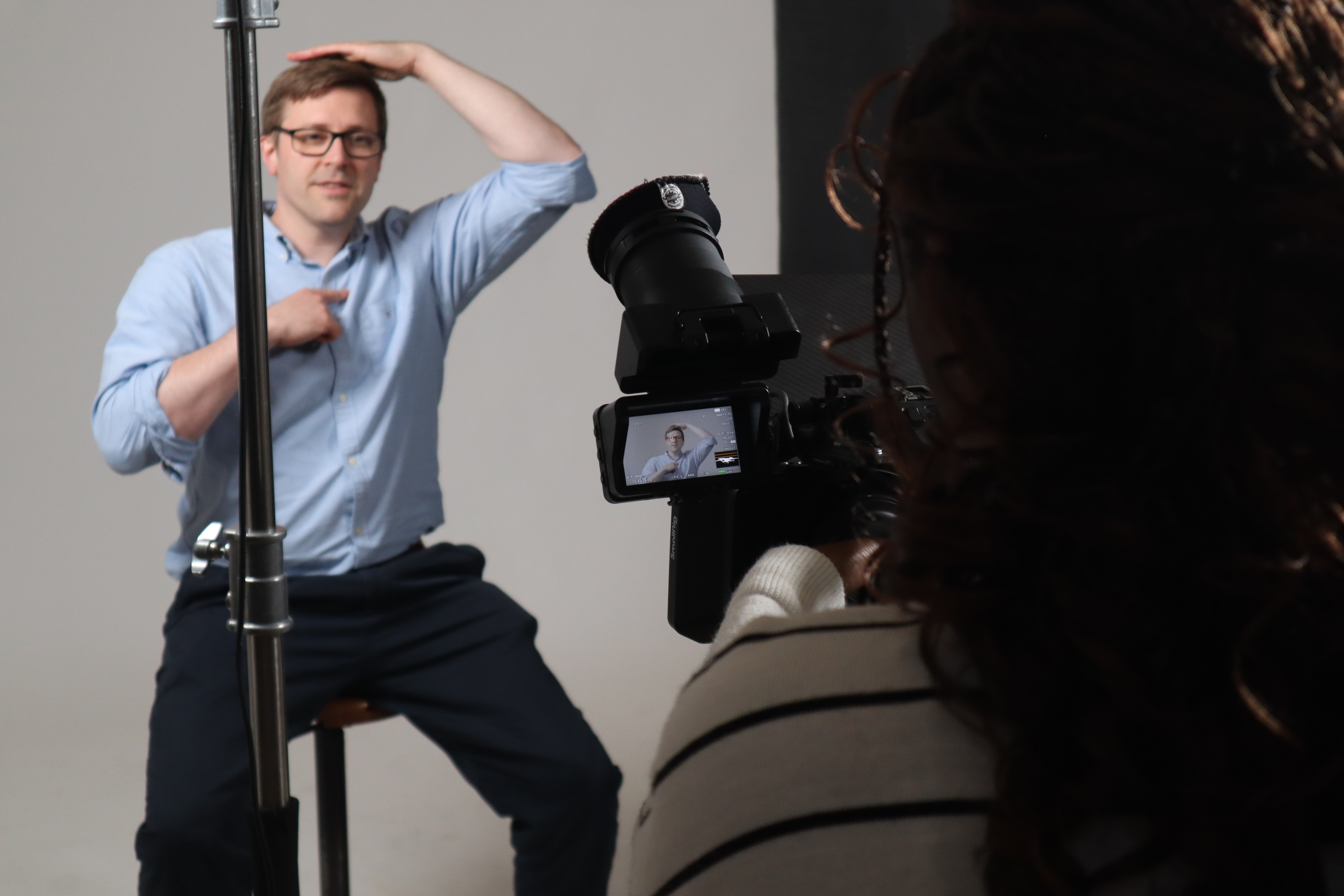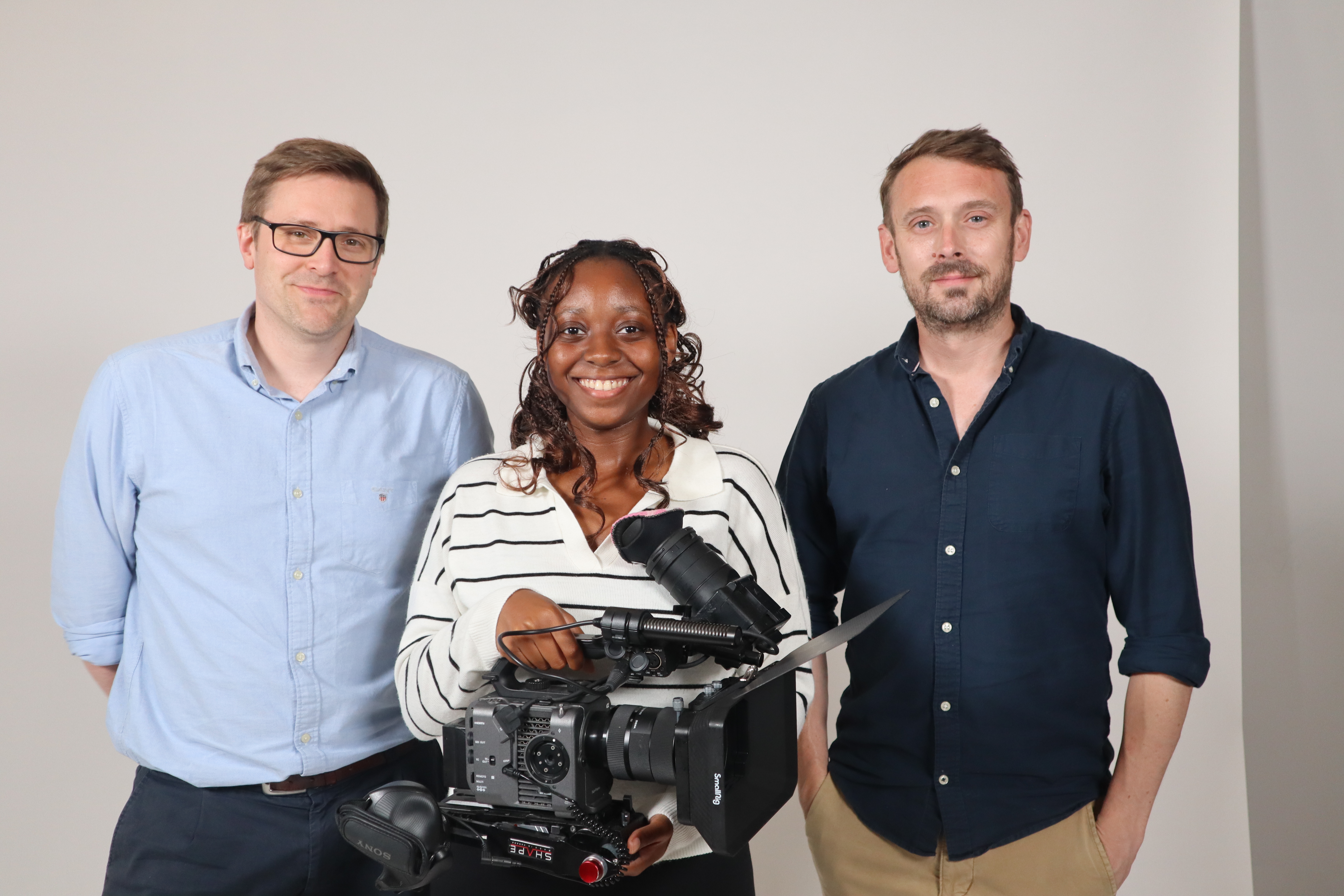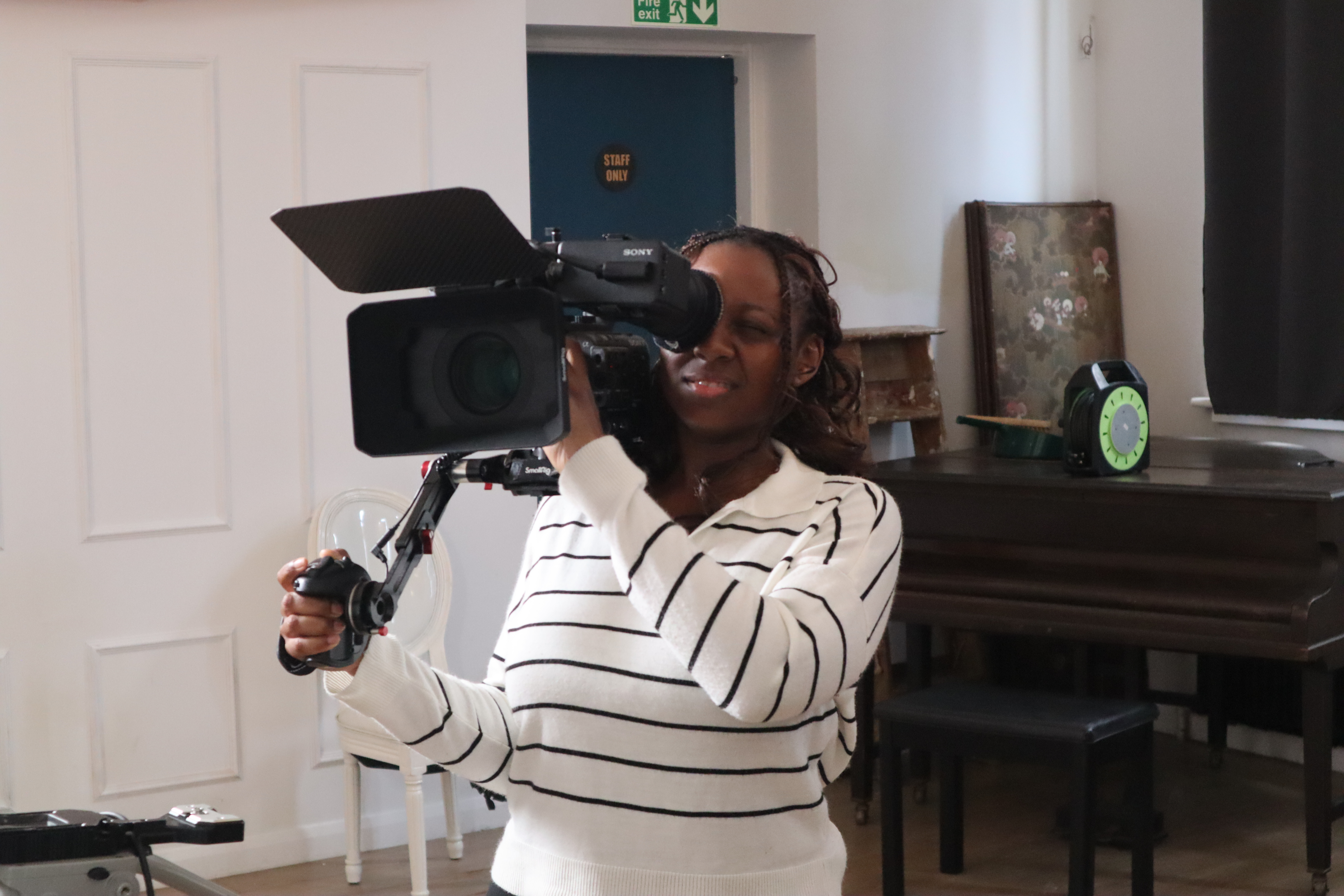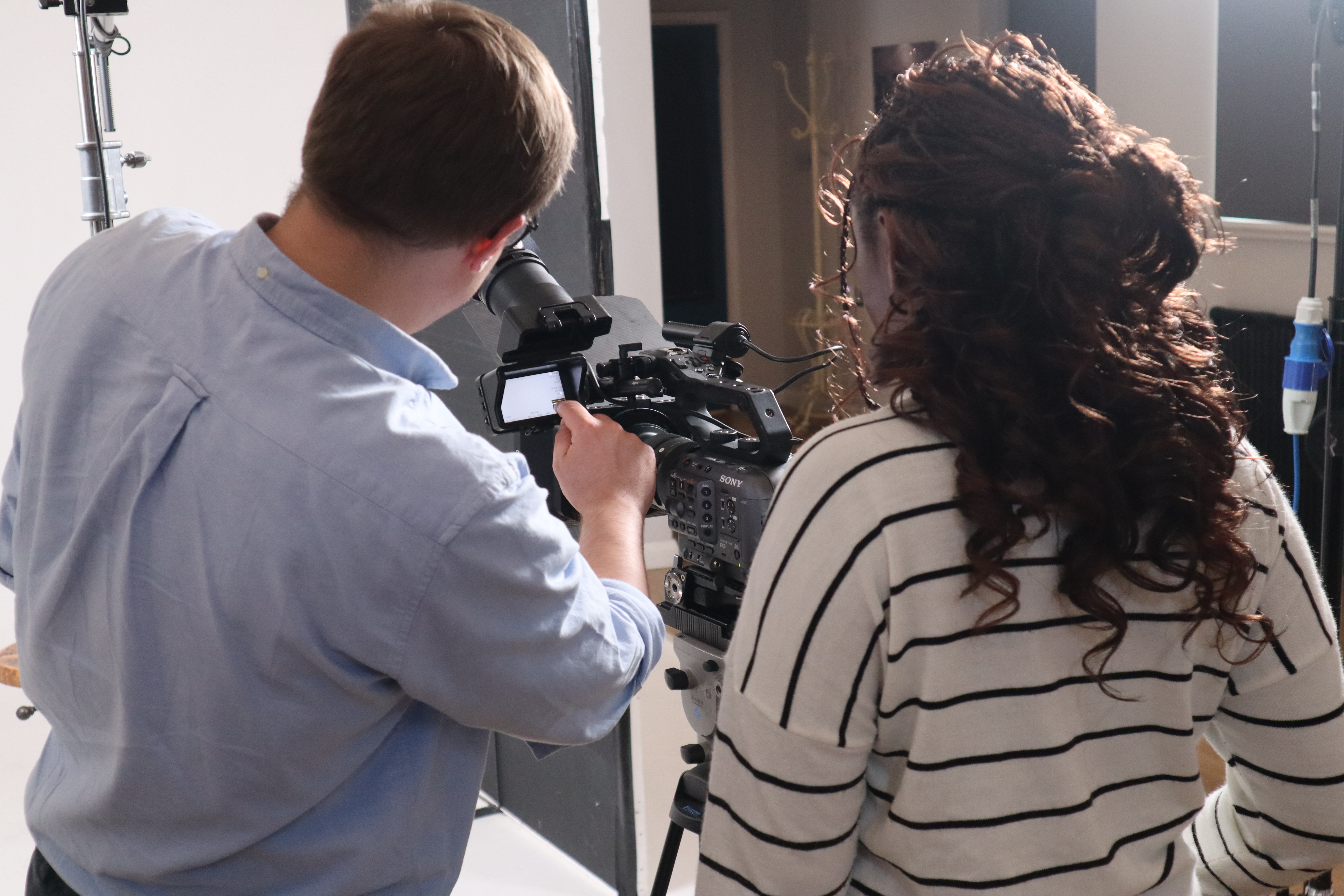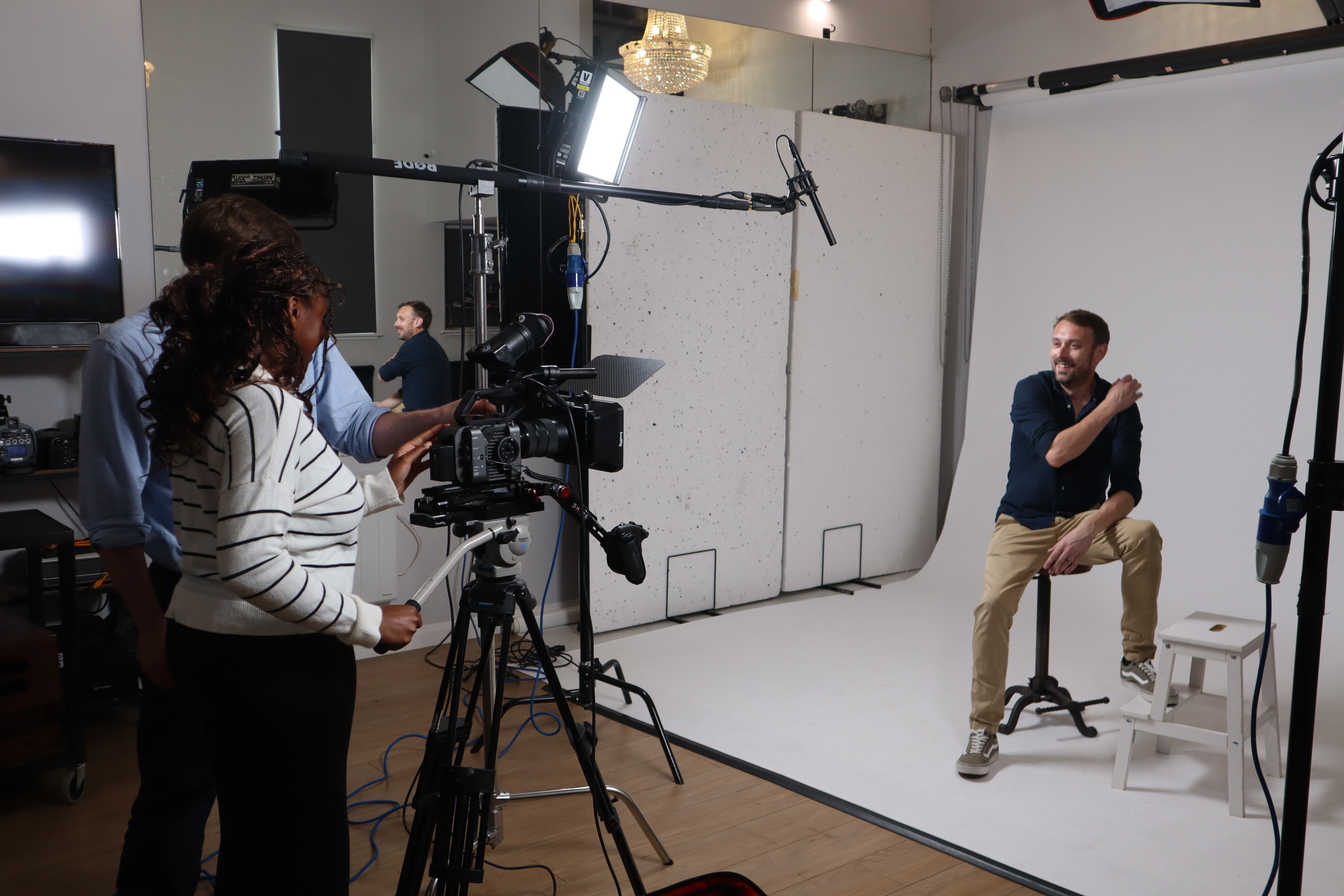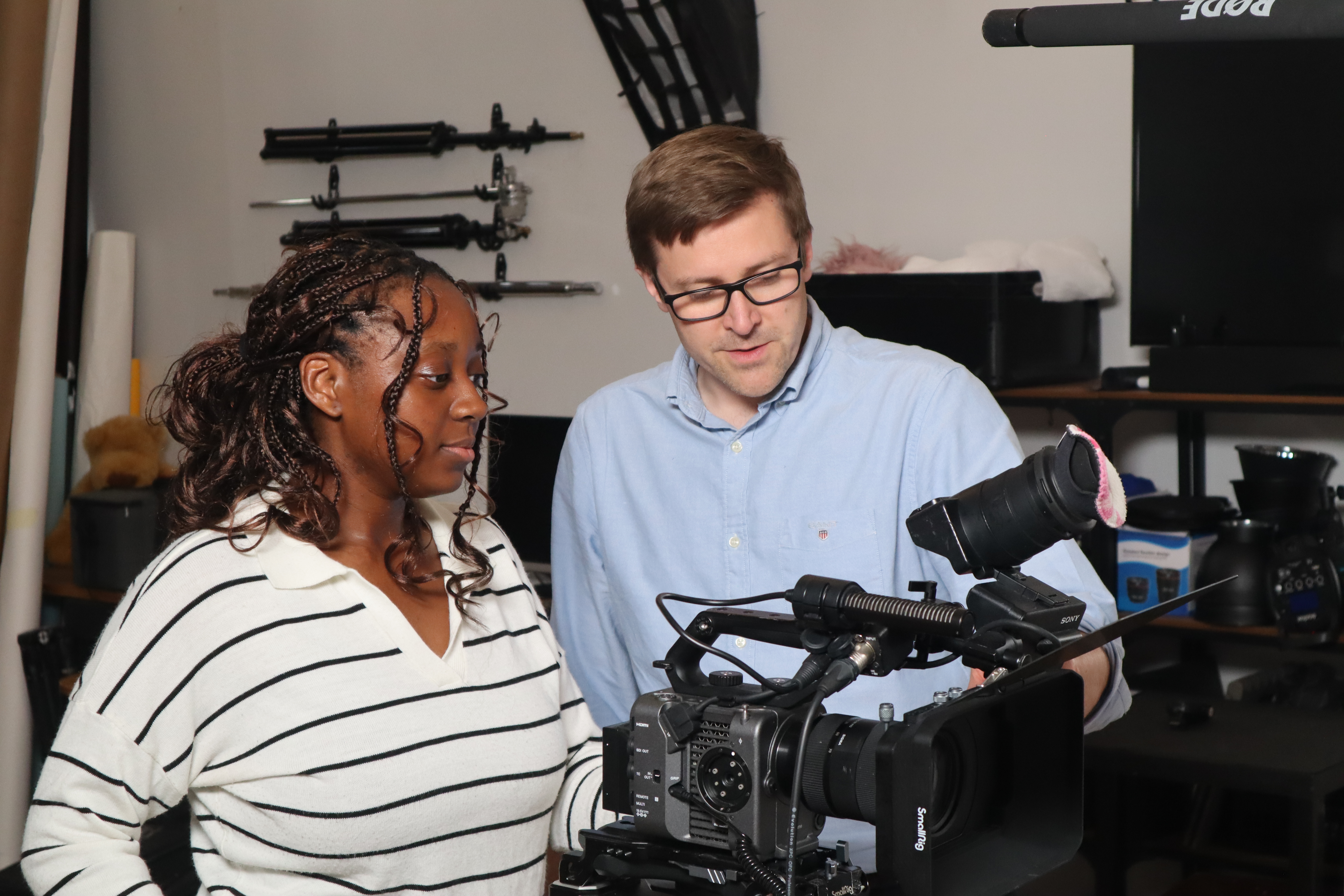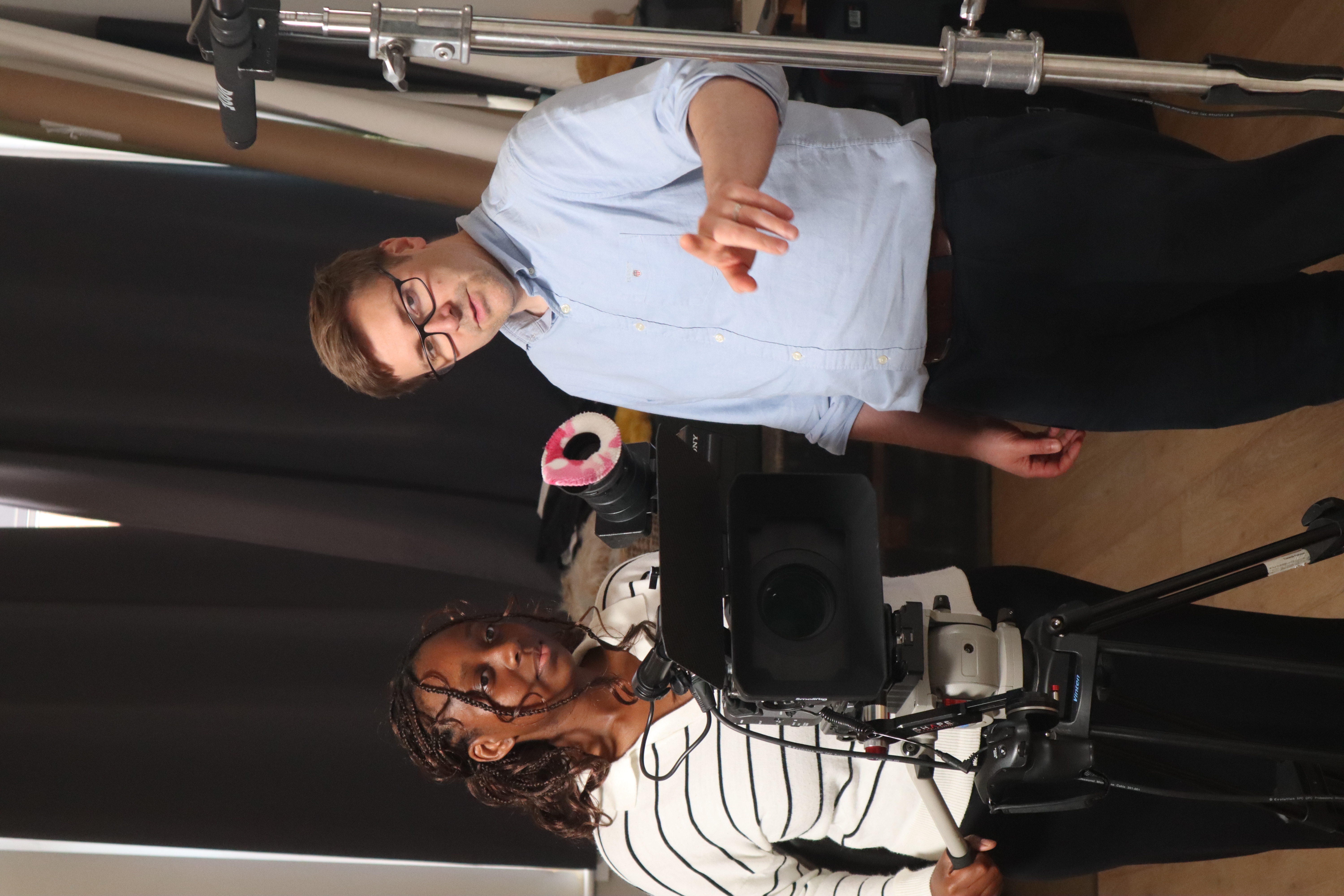

Back in the summer, John had the pleasure to go out and meet Dom at Borderpoint and interview him as he took on Karlene as a paid intern for a month! They ended up speaking for around 25 minutes around the issues with the industry and the internship itself.
How’s it going today? Today was last day of a shoot?
Yeah, Richard & I were out of the office doing a podcast in Bournemouth with a celebrity chef. The car was packed to the brim – we had to take everything with us! It was boiling in a fairly big kitchen in sunny Bournemouth, trying to keep the fans running and Windows open then having to close them to film and then open them.
How’s Karlene been with during her time with you?
They’ve been great. It’s worth clarifying the position as it has panned out was part-time and for a limited period. We felt for her to get the most out of it we wanted to do quite a time sensitive piece of work on a YouTube series that we’re working on called Bacon’s Sandwich. The piece of work we had Karlene working on was researching at a potential stories which we then worked up, scripted, filmed in the studio, and are now in post-production. Karlene’s been working on videos, which is what we’re hoping to get it pretty much done and ready to post. I think we’ll be a little way off but nonetheless, she’s done some really good work on it and I think it’s going to be a strong opener for this for run of series.
Bacon’s Sandwich is a science engagement channel. The idea is that it’s presenter led from a guy called Greg Szulgit who’s really good on camera. The idea is to find interesting topics that are quite current or are big questions that people might be curious as to what the answer is and it’s really about the process of the science and the people who do the science. The brief really is to find stories that are intriguing but also have some interesting science behind it.
What else has Karlene been doing with you?
What’s nice about this piece of work is that it’s really well defined. The reason we selected Karlene for this was because her experience and interest really fitted with what we were looking for. Her role has been a researcher in TV terms. On the surface of it, it’s about finding things out but for production you get to cover quite a lot of the basics which I think is a great way for entrants to learn what working in content creation and TV is like.
It started off with taking our brief and then researching. We asked Karlene to find between 12 or 14 potential stories. Then write summaries as to what those stories are, so Greg and I look at them and make a choice of what we thought would be the best ones. We ran through them together and through a democratic process, chose the ones we thought to be best. Then gave those to Karlene to start scripting up.
It’s not a fully scripted show. Greg doesn’t read off of an auto cue but it’s actually making what we call a beat sheet which lays out the structure of the story and you do lightly script in what the story is. But it’s not a script that’s read verbatim. Then we also think about the visuals. One way we try and make the content a bit more engaging is we use props or demonstrations just to bring it to life a bit more. All those things that we tried to pull together and then hopefully, if everything pans out, we have everything ready for the day and we film. The goal was to film eight items and we did actually film eight items in a day! They’re short at around five minute per piece so that’s still pretty good going.
Bacon’s Sandwich is a bit of an experiment. We went into it really to test the water and understand a bit more about how YouTube works. We didn’t really have a specific audience in mind and that’s something we’ve started to focus on more and I think it is younger skewing but it’s for A-Level and up. It’s really for the science curious because we do go into the science. We don’t shy away and skim the surface. We try dig into it and try and unpack it.
Youtube as we know has exploded as a platform and there are science content creators out there. There’s a few British ones but the main bulk of the English Language content comes out of America and I think what’s nice about it (Bacon’s Sandwich), Greg’s American but we’re making this with a British sensibility so the idea is we’re crossing over.
The first season we made was actually picked up by an organisation which represent content into secondary school and education settings. That just came out of the blue, we didn’t go chasing but they contacted us. That really helped build our conference that actually what we’re doing might have some value. It’s more than an experiment and that’s why we kept with it.
You’ve had EP students over the past few years. How have you found working with EP students you have had?
I think for us we’re, we’re a small company, so we don’t have a big HR department. A lot of a lot of us is about learning for us how can we bring new entrants into the company and give them a structure and the support they need to do valuable work but also feel like they’re able to grow.
The first student we had that was a quite a steep learning curve from our point of view because I think Rob did three months. and I was thinking. I hadn’t really thought it through if I’m being honest with you and he did a lot of work but thinking about it, not that much of the work has necessarily panned out into projects.
Learning from that I realised we needed to be a lot more structured and so with the second student we had last year did a very targeted project and got a really good piece of work from it. However, we were still responding to the hybrid working and working from home, I wondered how much they got out of it without that closer mentorship. So this time round I said to Karlene I think was going to be best as if we make it so that you’re coming to the office basically and then we’re here. If you have any questions, we have these conversations.
I need perhaps a bit of time to just to reflect on everything, but I think it’s been a better experience. I think the next step for us would be to try and offer a bit more work next time around, so more days over a longer period of time, which hopefully next year, we will be in a better position to do.
It’s very much on our radar to grow the business and part of that will be taking on permanent staff. What’s interesting about our sector is that a lot of it is freelance, so a small company like ours wouldn’t necessarily start employing lots of people because the nature of projects that you get in might not sustain having them on your payroll.
For us, it’s great. It’s a way for us to experiment really which might not be completely fair on the students I suppose because they might want the experience of what a structured work environment is like but for us, it’s really valuable to figure out as we’re looking to grow how do we actually put in place systems such that we can bring people in and they can get to understand the company how we work and what’s expected of them such that they can learn and grow. Whenever we take on somebody for work experience, we do it on the understanding that we’re going to be giving quite a lot to help them learn. It’s just us so it’s important we factor that in to our already busy schedules.
Funding is a problem within the creative sector and there’s a lot of conversation going on around how, how can you fix it? It’s not so much fixing it. It’s more scrapping it and starting again. A part of the rationale certainly for me setting up here because a lot of my work up until now was exclusively in London and working with production companies in London. The rationale for setting up here was actually try and address some of those issues and figure out a way that you can to make a sustainable company that can employ people locally.
And again, this is a great thing of working with students from Kent is that we start to understand what the talent pool is. Richard was saying to me, “why do you keep asking for history and biology students? Why aren’t you talking to the film course?” I know he’s coming from a filmmaking point of view. It’s because my background in factual documentary is that it’s more valuable to have the knowledge base of these disciplines than the filmmaking base. So when we’re researching, we’re doing science shows and it’s great having someone who’s come up through Science Education. We would rather those disciplines rather than somebody who knows how to operate the camera because, frankly, we already know that bit and if we don’t, we’ll just call in a freelance camera operation basically.
But equally and part of the reason we were getting the kit out now, we’re keen to give new entrants that opportunity because my first job in TV was a runner in the science unit at the BBC, but have always had an affinity for working with cameras and the series editor could see me just loitering around the camera team. He’s was like, “Do you want to take a camera and film something?” I was like, “Yes, I would.” So he let me do it. I actually got credited as a camera assistant on some of the episodes, because of that. Probably, to the chagrin of the camera team, but again it’s knowing that giving new entrants opportunities is like that is really valuable and helps them grow, basically.
How has Karlene been impactful on your business this year?
It’s a bit early to say. What I can say is, we always knew that we were going to do this Bacon’s Sandwich mini-series run. and that’s why I had an eye on who we might select, to come and work with us on it, but the difference with having a student is that they just they’ve built out the capacity to mean that we can actually go out, we’ve got the content for eight episodes. I think they’re going to be eight really strong episodes. They’ve driven the beginning of the post-production process. Previously, when we’ve done this it’s taken me forever to get the material together, because it’s essentially an unfunded project. So I’m fitting it in around other bits and then we film it. We nail a day that we’re going to film it and we’re going to film it come hook or crook. Then I’m left all the rushes and it’s at some point, it will get edited and if you look at our YouTube channel, you’ll see like for some it’s taken months and months and months for them to come out.
But with Karlene here, it’s a catalyst for action. We’ve very quickly been able to generate eight, really good stories. We’ve got them filmed and we’ve filmed them to a higher standard than we did last time and we’ve already got our first episode well down the road in the edit.
So I mean, it’s highly likely that’s going to be posted next week. And then, of course, now that she’s finished, that flips the burden back on me to get into the other seven done. But that’s, that’s a really good place to be. In that sense, it’s been very valuable just to help to have the capacity to move that project through.
There’s always a bit of a risk when you’re working with someone who’s never necessarily encountered this line of work, but what I was really impressed with Karlene was that she is really taking it very quickly and the quality of the work has been really good which is a great testament to her, but I suspect it reflects quite well on the University as well.
If somebody was wanting to apply for one of your roles, what would you advise them to put into their application?
This isn’t really criticism of the applicants because I’ve been in their shoes before, I know where they’re coming from but I think if you’re genuinely interested in coming on this position, the applicant should understand that this isn’t free work experience where it’s like “I’ll just turn up and it’ll be a bit of fun.” It’s not a secondary school work experience, where you’re basically put a broom cupboard and asked to make tea. You’re actually being paid to do work.
Applicants should really think about that when they’re talking about why they’re applying to this. And with that in mind, I think it might sharpen the reasons why they’re applying. I understand that as a student, you might be applying for this because it might be of interest.
But what I want here as an employer is that you have a genuine passion for filmmaking and you’re seriously considering a career in it because otherwise I’m putting time and financial resource into someone who might not want to be employed by me in the future and as an employer I have to think, ”Well maybe that’s not such a good great investment from my point of view.” That might sound very cold and business-like but in the current climate, you kind of have to be like that.
I really like the interview days because you get to meet an interesting range of people with very different backgrounds and very different outlooks on life. But I am ultimately thinking “do you have the credentials to work in my company?” I think Karlene demonstrated she had a real passion for science communications. I thought “big tick” and she did stand out as I did walk away thinking I was probably going to offer it to Karlene because I’ve got a project that is a great fit for her.
I appreciate for those who didn’t get the position. There was a candidate with a history background who was a good candidate and I could imagine giving them a project, but ultimately, Karlene was the better fit. When I put the advert out, we were genuinely looking at both science in history and since then, we’re now more looking at science.
It’s the fit with the company, but also, there’s a bit of guesswork involved. There’s only so much you can get through that interview process. You’re not going to get to know someone in that 20 minutes, half an hour. That’s why obviously if you go and work for a company for a permanent position there’s almost always a three-month calling off period. It might turn out you’re a terrible fit for the business, or the business is a terrible fit for you.
I’m really pleased that we came on board with the scheme three years ago. We learn a lot from it. It’s very much a part of our outlook is to support development of skills in the area, and so being able to offer experience and opportunities, it’s very much a part of what we want to do. But also, we want to set the groundwork so that when we are in a position to grow, we know that there is a talent pool we can draw from.
It’s not just the University of Kent. It’s Christ Church as well and there’s the colleges as well. I mean Ashford is now doing media courses too. I imagine the leavers there I’m probably looking to then go and do higher education degree although, it is perfectly reasonable to them to come out of college and straight into a media job.
One last question, which is how has the Santander Funding helped when it comes to offering EP rewards?
It’s very straightforward. From our point of view, it’s really helped de-risk giving these opportunities. It’s helped us. To be honest with you, is the difference between us actually doing it and not doing it. In that respect, it’s really important.
As a business owner you have to be quite pragmatic about these things but you know, Looks like we’re busy but it, if you’ve been reading anything around the media industry, It’s pretty embattled at the moment. It’s a challenging environment to be working in and it’s something I certainly wrestle with like we’re very keen to support new entrants into the industry, but I’m also aware that it’s not a great industry to be going into.
Like that being said, we still need fresh new talent coming in and it’s on us as business owners to try and solve these challenges. So that there are decent job prospects for your new talent to come in to otherwise our industry just doesn’t get to survive.
We’re very grateful to Santander and the University of Kent being able to offer the opportunities do it.
Check out Bacon’s Sandwich here: https://www.youtube.com/@baconssandwich
Find out more about Borderpoint Films here: https://borderpointfilms.com/
Thank you to Santander University Funding for funding this opportunity!