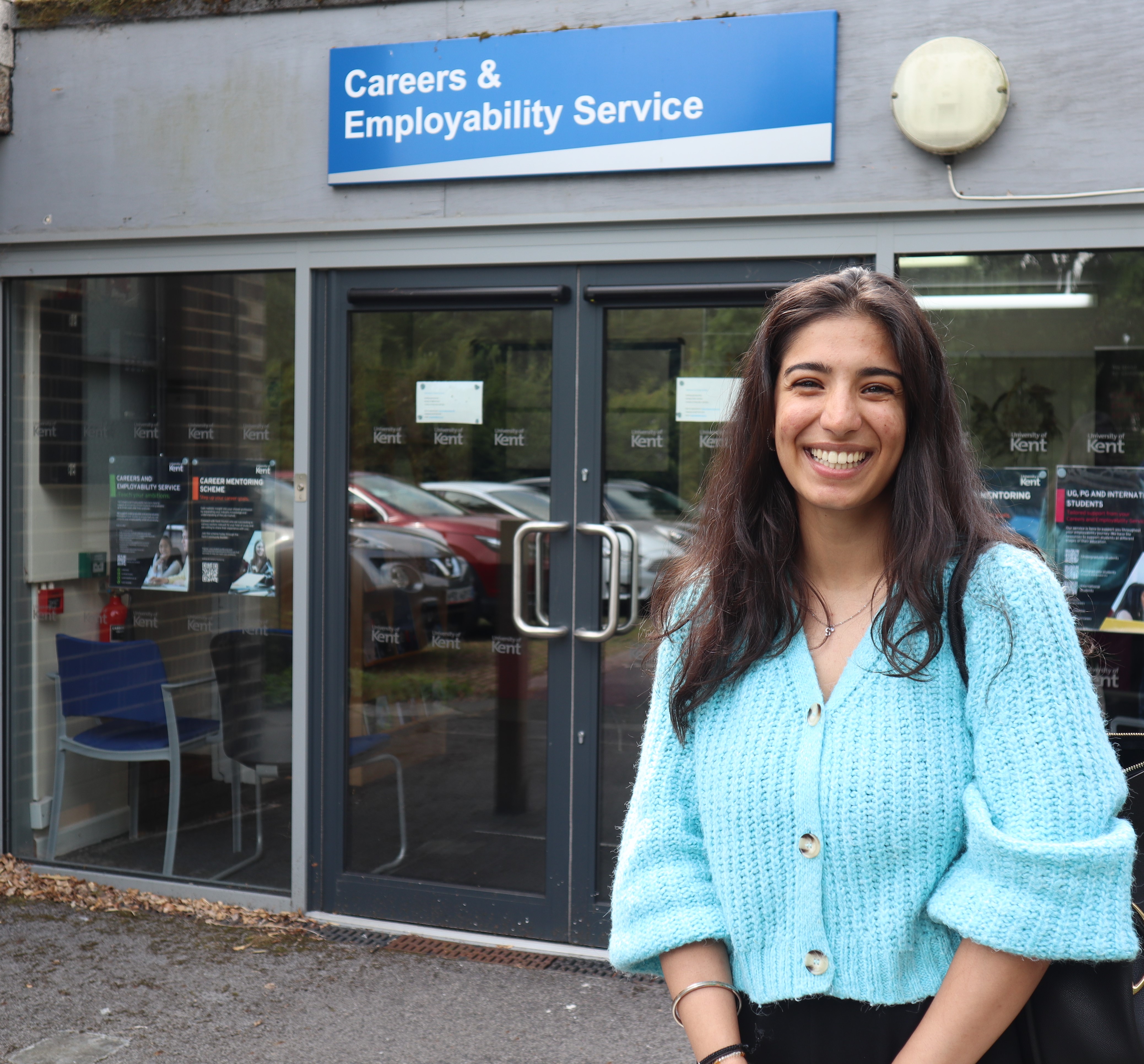
Serina came into the office this week and spoke about her lab internship at Virology Research Services with John! It sounds like an interesting internship!
How are things going?
Good! It’s been two months now I think. It’s been going good & I’ve definitely learnt a lot.
What have you been doing as part of the role?
I’ve been working like alongside the other scientists, the two directors themselves as they work in that lab as well. They’ve been training me and I’ve been working with cells, with viruses and just learning the different procedures because there’s a lot of different types of experiments. You know, seeing how everything actually works and then slowly I get to do things unsupervised when I’ve learnt everything.
How have you found working with Virology Research Services so far?
Quite good. I think it’s a nice small group because there’s four scientists. Five with the directors. They’re very supportive of everything and they want to see me learn more as well. It’s not them putting me in at the deep end. Whenever I have questions, they always want to expand on it and explain everything. Even then they always tell me to ask about anything that I’m in doubt about or anything I want to ask about and they always explain.
Are there any new skills you have developed while working at VRS?
Obviously, my lab skills. I would also say maths skills. I’ve worked on a lot of my maths, which I didn’t think there was as much of in the lab. It’s very challenging, so it pushes me to use different maths skills that I’m not used to using. It’s calculating the volumes but obviously not as simple as that, but you have to determine what the concentrations you need to use, or the specific ratios. So it’s a lot of like in-depth calculations and it’s a lot more than what I expected.
Is there anything surprising about the role which you’ve been doing?
Definitely the maths, but also a lot of the different processes and the different kinds of experiments. For example, you’ll have one type of titration but for different kinds of viruses, there’s different protocols for each one and it’s very specific methodology which are similar to each other but different.
How much PPE do you have to wear for the role?
There’s four different lab coats. There’s one for the virus lab, one for the tissue culture lab and one for just the outside. and in the just the white coloured lab. But and then there’s also the CL3. That’s cat three, but that’s completely different gear and you have to get covered up for that, but I don’t work in that yet. Hopefully in the future.
How have you found going from your degree to working with VRS?
A lot of the protocols, so a lot of the safety aspects, you have to make sure you follow, for example, you have to wipe down surfaces when they’ve been used, make sure that the different bins have been used correctly. Just the different protocols, there wasn’t a lot of that in the labs that we worked in at uni. I mean there wasn’t a lot of lab work that we did at uni. I think we would benefit from doing a bit more because it was a lot to take in and a lot to remember. Nothing goes out of the lab that was in there. Even the different lab coats, the gloves and of the PPE, it’s a lot different than how it was at uni.
What’s been the impact of this role on you?
I think just very challenging and I think it definitely pushed me to want to be better and learn more, It’s definitely pushed me out of my comfort zone, especially when it came to like the maths or even just trying to remember like what I’m doing at every single moment, because you can’t miss any steps because if you miss like one step then it could cause an issue, so it’s more just staying focused at all times while in the lab. I think it definitely pushed me. Especially just making sure that you go over everything in sense of keeping track of everything and, documenting everything as you go. If something goes wrong in the experiment, it might just be one aspect, i.e. you’ve missed a step or you’ve done something wrong, like even if the the volume is slightly out by the smallest little amount. You need to develop those problem solving skills to try and think, “what could be the reason that went like that?” It definitely alters the results you get.
What did you do to earn your Employability Points?
I did a lot of different things. I watched a lot of webinars and workshops. I did some CV courses and had some meetings with careers and employability advisors. I also got a part-time job and had a summer job. I went to a lot of different societies and different socials. I tried getting into sports as well. Just a range of different things.
Tell me a bit about the summer and part time jobs you had.
I was working as a waitress over the summer and then I got a different part-time job in marketing, so it was nothing related to my degree or my course. Just to get some experience and some working experience.
Other than just going to events, did you get involved with any particular society?
The volleyball society over my entire degree. I did football and went to the Punjabi Society. I went to a lot of tasters, but I didn’t necessarily stick with those. I stuck with volleyball throughout my entire time at uni.
Thinking back, what was the most impactful thing you did when you earnt Employability Points?
Probably the societies. It definitely pushed me out of my comfort zone to speak to new people, to interact with different kinds of events and activities. I think a lot of the webinars I went to were quite useful. A lot of working how to develop your interviews & how to develop your CV. That was all quite beneficial especially in my third year because it’s definitely things that you start thinking about a bit more.
How has the scheme enhanced your employability?
A lot of the skills that I have gained from doing all these different activities or events I didn’t necessarily think they could be helpful, but they are skills that can be applied to other things in my life as well. Even in your work life or even just trying to apply for jobs some employers do you look for other things that you’re doing even with sports or music. I played the guitar and when I was having my interview, they asked me about other things that I was doing. So, it does definitely help you realise that there’s other skills that can be transferable.
How has the EP scheme helped you?
It definitely gave me a route to actually help me build my career. They’ve offered me a job, so has definitely led to something a lot better. But even just the internship itself, it really helped me get that because I know that it is a struggle nowadays to try and even get an opening anywhere. There’s a lot of like criteria to match and that just even getting and being on a waiting list for an interview is hard enough. Getting the internship has definitely helped me get to that. It’s help me gain a lot more skills and made me a lot more open-minded about what I was doing or just other activities on the side that I was doing.
I did just want to say that I was a little disappointed that I didn’t know about the Employability Points Scheme in my first couple of years When in the third year that’s when I actually saw it. I remember seeing all the webinars/workshops but I don’t know why I wasn’t aware of it before then.