
By Dr Natalia Zielonka and Dr Jess Fisher
Last Friday, DICE hosted the first-ever East Kent Conservation Research Symposium, funded and organised by the E3 Sharing Space for Nature initiative. This event brought together around 170 delegates from across the university, local government, conservation NGOs, community groups, landowners, and schools. The aim was to create a community of practice, listen to experts, and discuss the future of conservation in Kent.
Professor Bob Smith’s opening lecture introduced the E3 project and launched the DICE Innovation Team’s E3 East Kent Nature Recovery Atlas, a new tool mapping areas relevant to regional nature recovery. Sustainability Officer Emily Mason then launched the University of Kent’s new Landscape and Biodiversity Strategy, supporting the University’s pledge to become a Nature Positive University.
Session 1: Wilder Blean – Co-Hosted with Kent Wildlife Trust
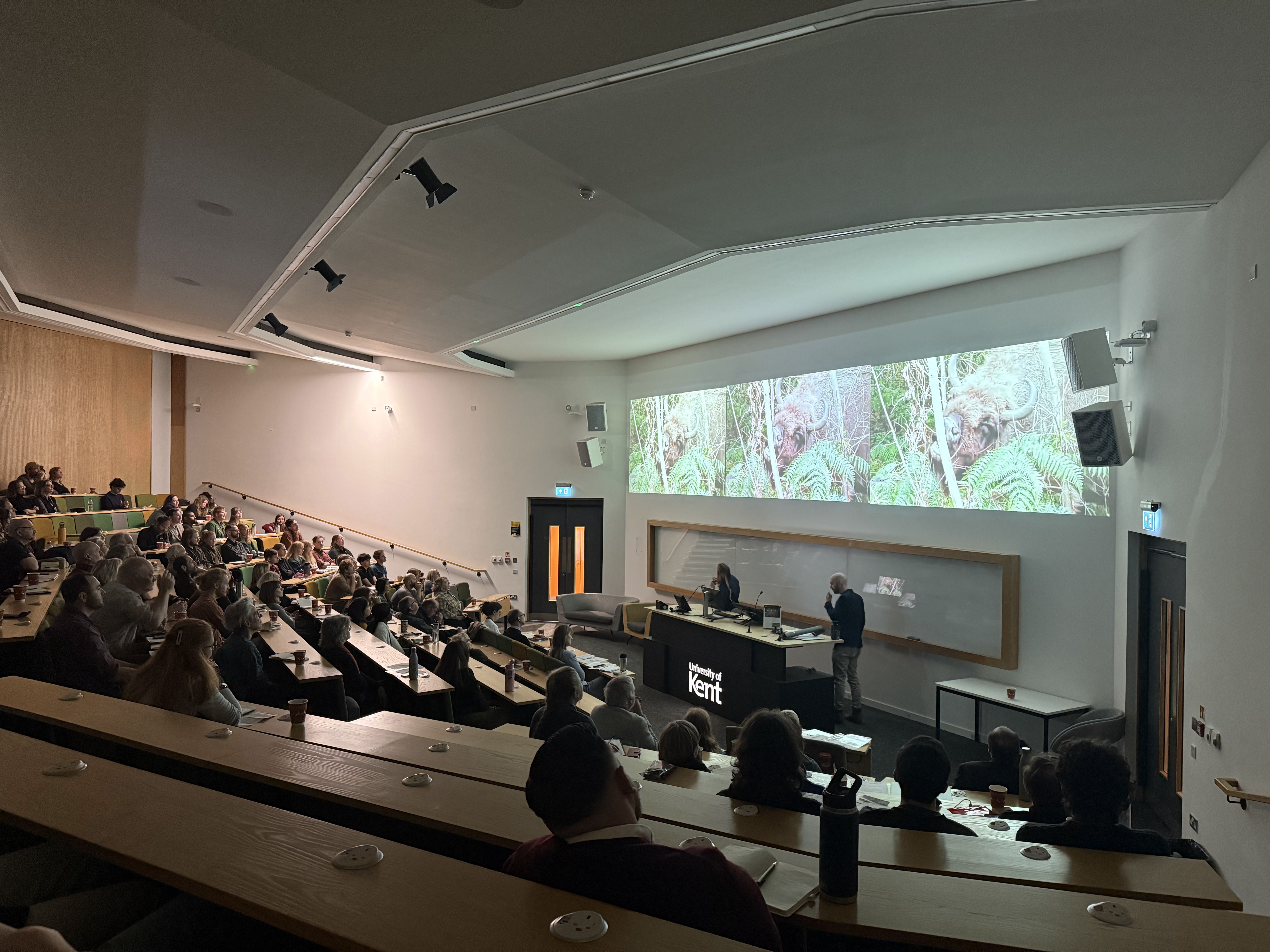
Our first session, chaired by Dr Lawrence Ball and Dr Cristina Juan from Kent Wildlife Trust, focused on the Wilder Blean project. They highlighted lessons from the UK’s first European bison reintroduction, including how bison behaviour helps manage woodland – from creating deadwood through debarking to producing dung that supports diverse invertebrates and other taxa.
Grace Moore, a PhD student from Queen Mary University of London, explored how dust-bathing by large herbivores can alter woodland hydrology, vegetation structure and soil properties. This was followed by DICE PhD student, Sam Aizlewood, who presented a long-term approach to nature recovery – the use of systematic conservation planning to identify suitable areas for passive wilding in Southern England.
The session concluded with Dr Rufus Howard from Greenfriars, who emphasised the need for sustained funding for long-term conservation and proposed bioregional trusts and investment funds that channel green finance into place-based regenerative projects.
Session 2: Marine Conservation in East Kent
After lunch, focus shifted to East Kent’s seascapes. Chaired by Dr Rachel Seary from DICE, the session opened with a lecture from Dr Chris Yesson (Zoological Society of London) on restoring coastal habitats across Kent. He explained how habitat-suitability modelling, experimental trials and remote sensing can identify the most feasible locations for restoring native oysters, saltmarsh and seagrass.
Dr Ian Tittley from the Natural History Museum highlighted declines in kelp beds across southeast England, including their complete disappearance in parts of East Sussex. Ian also described the spread of an invasive kelp species, now established along the Thanet coast, and stressed the importance of understanding drivers, such as rising sea temperatures.
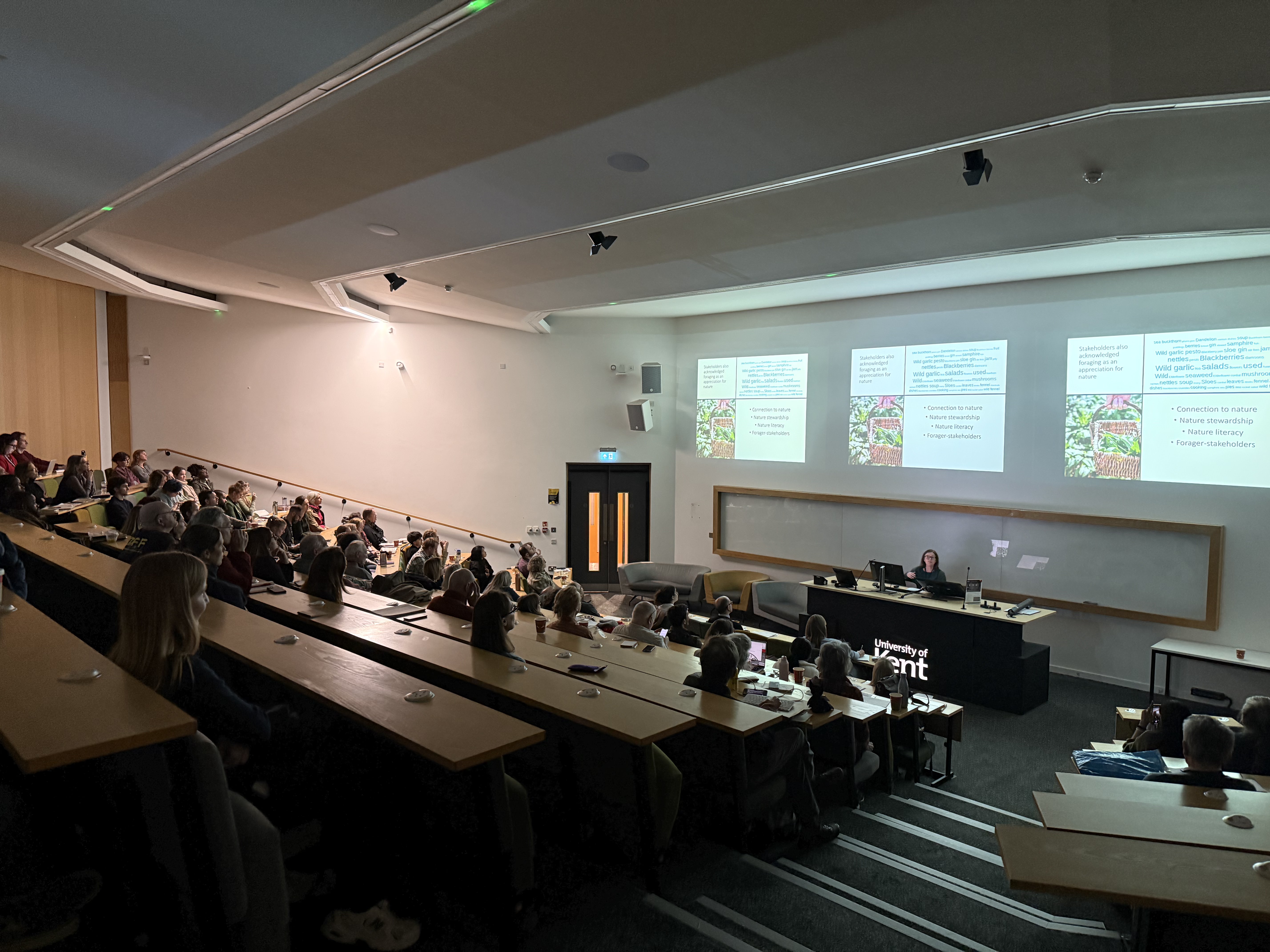
The final speaker, Dr Holly Harris (DICE), examined coastal conservation through a social lens, discussing the rise of coastal foraging among recreational foragers, educators, chefs and influencers. Holly emphasised the need for clearer governance, better relationships with authorities and further research linking social and ecological aspects of seascapes.
Session 3: Nature Recovery Across East Kent
The final session – chaired by DICE’s Dr Gail Austen – focused on nature recovery, from ecological restoration to community-led initiatives.
Dr Laura Kor, from the DICE Biodiversity Consulting team, introduced the new Woodland Management Plan for the University of Kent campus, outlining practical steps to assess habitats and inform management at the University.
Then, Dr Allyn Thomas (University of Kent) spoke on the invasive yellow-legged hornet (Vespa velutina) in southern England, its threat to pollinators and management case studies from Guernsey and Jersey. Following this, DICE PhD researcher, Tom Hurst, shared his research in beaver monitoring, using markings on the animals’ tails as unique ‘fingerprints’ to identify individuals and track populations.
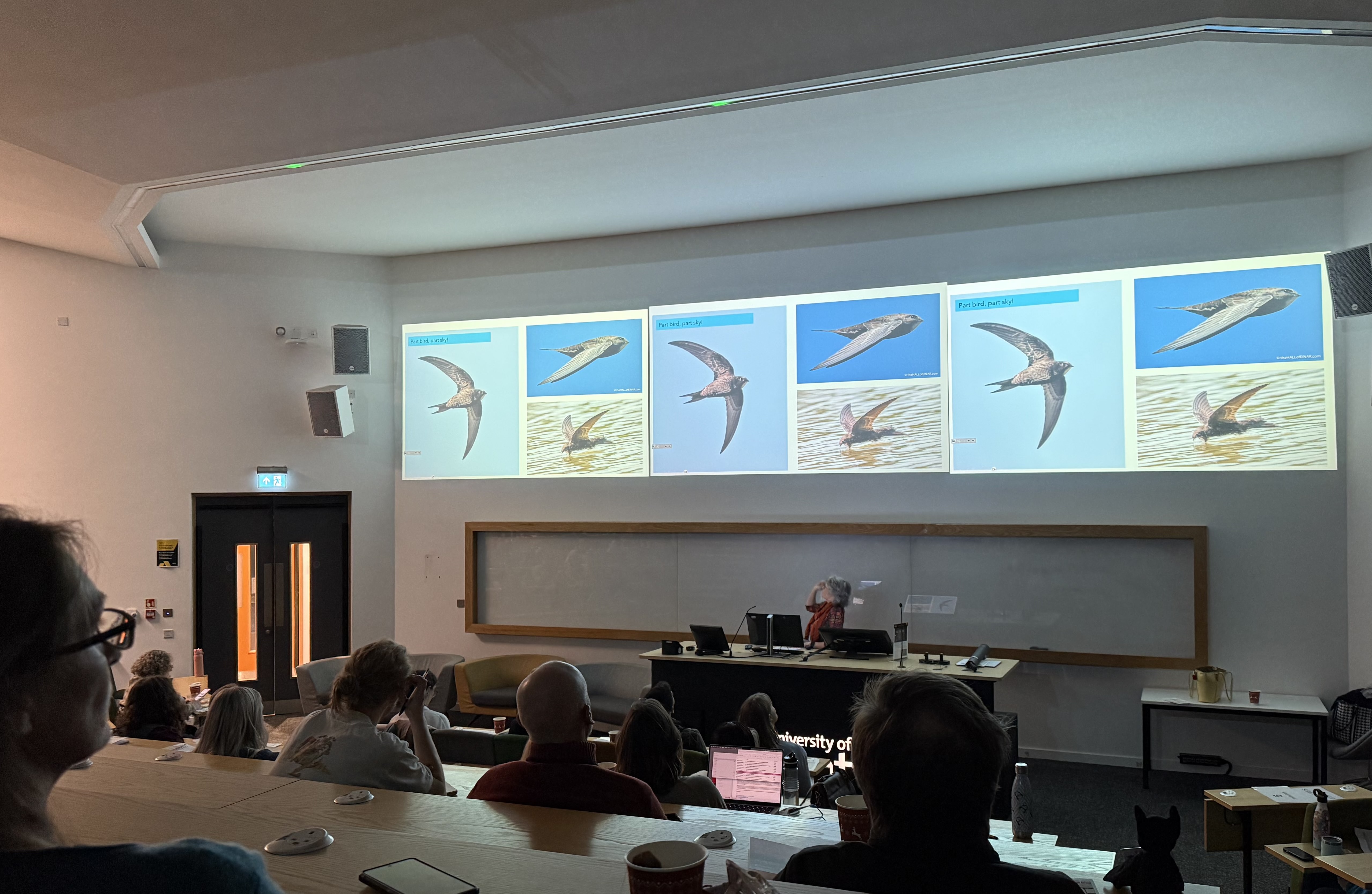
On community conservation, Colin Welch from Denton Parish Council spotlighted the community-led landscape stewardship efforts in his area. Ginny Wenban (Canterbury District Swift Initiative) highlighted the pressures facing swifts, including the loss of nesting sites and the lack of legal year-round protection. She shared community-led solutions like ‘swift streets’, which rely on individuals and communities installing swift boxes to help ‘rewild our skies’. Finally, Keith Dugmore, landowner from Kent and DICE collaborator, shared his personal nature recovery success story, where new ponds created at his family orchard have attracted species such as turtle doves and nightingales.
The session concluded with Dr Ben Jones (Animal and Plant Health Agency), who introduced a genomic sequencing initiative for tick monitoring called TickTools and discussed the relationship between climate change and tick prevalence.
Continuing the Conversation
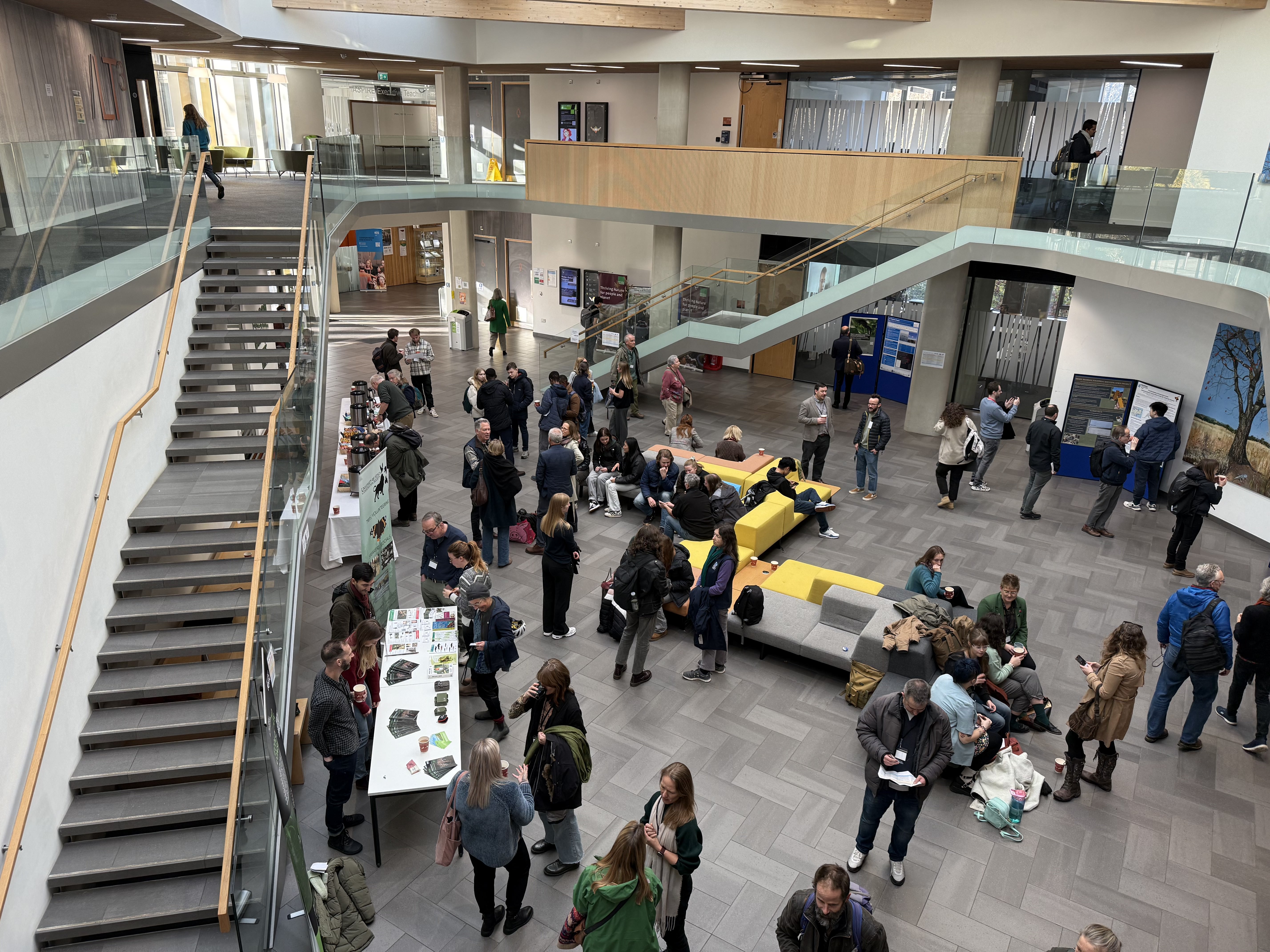
Delegates then attended a poster session, where researchers presented their work on a range of topics, from bumblebee conservation to the use of AI in monitoring small mammals.
In the evening, the public joined for an open lecture, delivered by Landscape Recovery Manager and author of Beautiful Beasts, Beautiful Lands, Dr Mark Infield. Mark discussed aspects of his work in protected areas from Africa to his current role in Ashdown Forest. The replay of the talk is now available to watch on our YouTube channel.
From an organiser’s perspective, we were thrilled by the enthusiasm of all who took part and the fantastic feedback we received from attendees. This inaugural East Kent Conservation Research Symposium was a success, and we are excited to repeat it next year, growing our community of practice working together for nature conservation across our region.