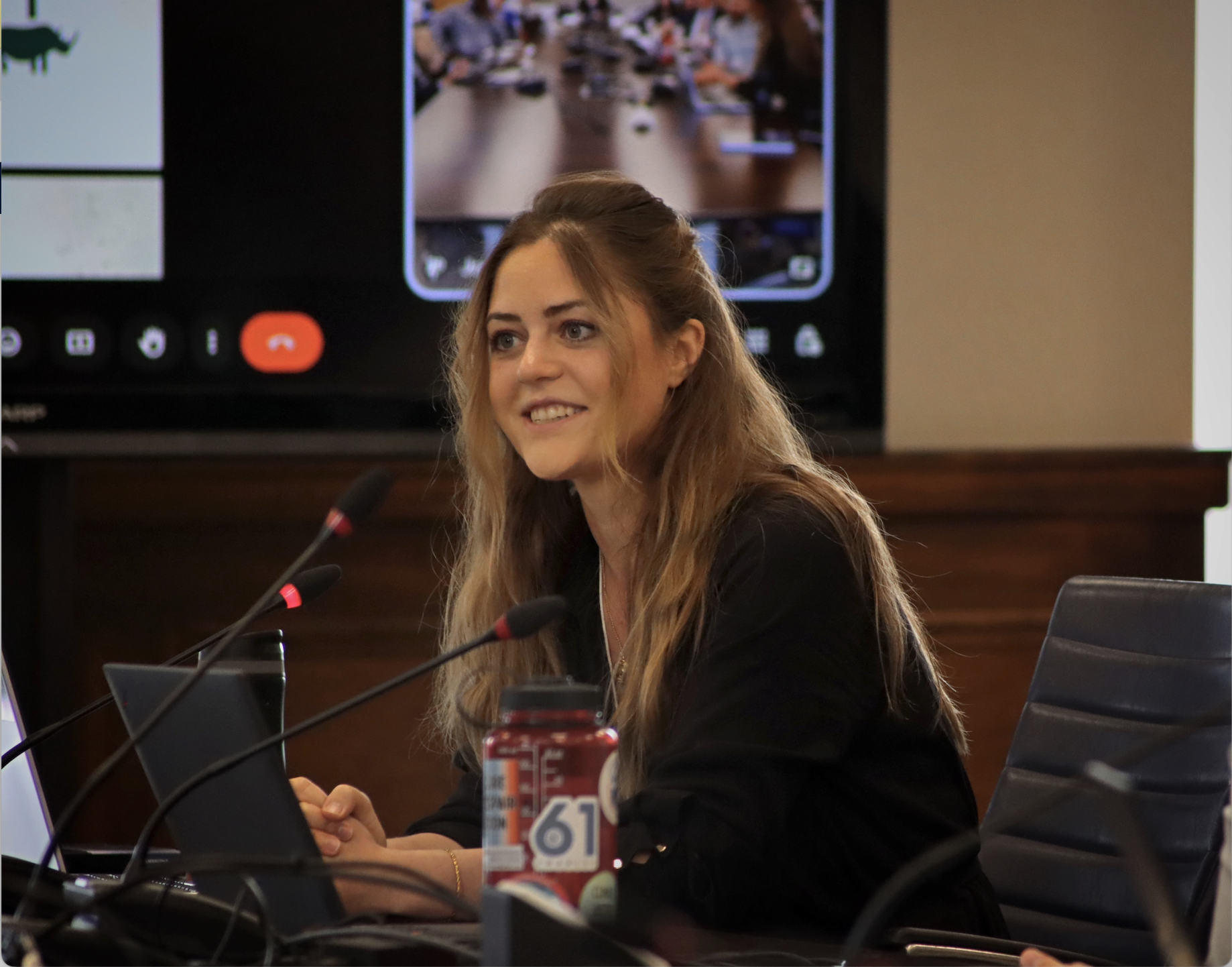
Earlier this year, Dr Michelle Anagnostou was awarded the Governor General’s Gold Medal. Shortly after this interview was conducted, she was also awarded the University of Waterloo Alumni Gold Medal, for her “groundbreaking research” using “financial data to combat illegal wildlife trade networks”. In this interview, Michelle talks about what inspired her to get started in conservation, her memories of DICE, and current research.
Thanks for joining us, Michelle. Can you talk a bit about yourself and your research interests?
I’m a Banting Postdoctoral Fellow at the University of Oxford, which basically means that I’m funded by the Government of Canada to do research at Oxford. I studied at DICE in 2017-2018, looking at how local communities around protected areas contribute actionable information to law enforcement and to park rangers and the Uganda Wildlife Authority. So that kind of really kick-started and solidified my passion for understanding wildlife crime, the human dimensions of wildlife crime.
What is your highlight from your time at DICE?
I think my highlight was all the friendships that I was able to make as a DICE student. Meeting people from all around the world who are passionate about similar topics – we were here studying together in the Marlowe Building until 11pm, midnight, sometimes even 1am, writing our assignments and theses.
But my whole career was basically inspired by what I learned here at DICE. While I was here, I attended the 2018 London Conference on Wildlife Crime that gave me the whole idea for my PhD. I was listening to talk, after talk, after talk of people saying, “The illegal wildlife trade is perpetuated by the same people committing acts of terror and trafficking in drugs, humans, and arms.” From there, I realised there’s not a lot of empirical evidence on this. So, I drafted a proposal and ended up researching that for a five-year PhD. I wrapped that up last year, which was very exciting – five years in the making. Being able to continue that research now as a postdoc is something that I’m very grateful that I’m able to do.
What first inspired you to pursue a career in conservation?
I think what first inspired me was having kind of a very traditional Canadian upbringing. We would spend a lot of time outdoors, go camping, swimming and hiking – always having that love for wildlife and the natural environment. Then, as I started to pursue my academic studies, I began to get more interested in the complexities like social, political, cultural complexities that are fascinating to better understand the natural world and how humans interact with it.
What are you working on at the moment?
Right now, I’m researching how we can better leverage anti-money laundering interventions to combat wildlife trafficking. It came up as a glaring gap in knowledge from my PhD that we don’t really have the best understanding of how criminal networks are moving their dirty money and how we can better combat this. It’s a new topic for the wildlife enforcement space, understanding the anti-money laundering and ‘following the money’ approach. Similarly for banks, they don’t necessarily have a lot of expertise in combating wildlife crime because it’s also very complicated. There are thousands and thousands of species in trade, from at least 160 reported countries. We’re trying to bridge these knowledge gaps and use implementation science, which is an academic approach to see how we can better help practitioners implement the thing that they’re supposed to be doing. In this case that thing that we’re implementing is a ‘following the money’ intervention to combat illegal wildlife trade. I’m very excited that we’re looking a little bit more at the Canadian context, which has been very understudied for a long time.
You can read more about Michelle’s work on the University of Oxford website. Michelle gave the October DICE Talk at the University of Kent, which you can now watch on our YouTube channel.