Our campus is home to more than 1,000 species of plants, animals, and fungi. This diversity is supported by the range of different habitats that we have on site, from tidy flowerbeds, to complex ancient woodlands that have persisted since at least 1600 AD.
Like many native woodlands across Britain, active management of Bluebell, Brotherhood, and Park Woods declined in the late 20th century, leading to changes in their structure and ecology. To reverse this trend and enhance biodiversity, a Woodland Management Plan was introduced in 2016. This led to a range of activities by our Grounds Team, including coppicing ─ a method of cutting trees to stumps and allowing them to regenerate. While this was traditionally done to harvest wood, it’s now used to increase structural diversity and thereby support more woodland wildlife.
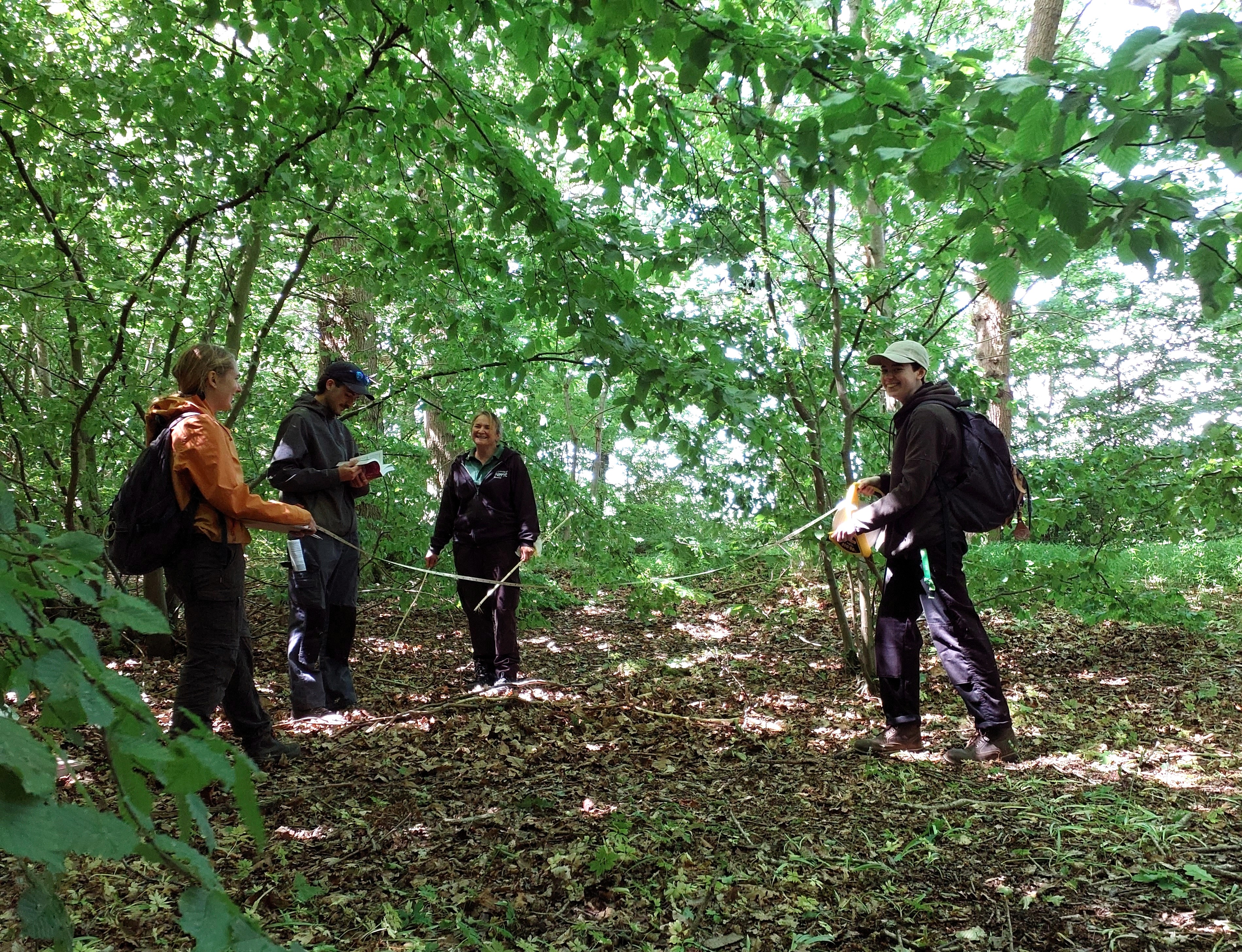
Nearly a decade into the Plan’s implementation, I was excited to lead surveys of the woodlands just outside my office to investigate how they were doing. This was driven by an exciting collaboration between DICE Biodiversity Consulting, the University of Kent’s Grounds and Sustainability Teams, and students in the Conservation Society. Our goal? To answer questions such as: What types of woodlands are on campus? What is their ecological condition? And which features could be managed to better support wildlife? To do this, we applied the UK Habitat Classification (UKHab) and National Vegetation Classification (NVC) systems to categorise the woodlands, while recording their plant species. We also used the Woodland Condition Assessment (WCA) method to understand their state. Alongside our ecological goals, we delivered training and invited student and staff volunteers to join us on fieldwork to learn about these methods. Their enthusiasm and questions turned out to be a real highlight of the project, that pushed me to also keep learning more.
Our findings were encouraging.
We recorded 104 unique vascular plant species, 30 of which are considered to be ancient woodland indicator species in the region. All of our woodlands can be classed as the Priority Habitat type lowland mixed deciduous woodland. And while there is variation between and within the woods, most areas fall under the NVC community of Quercus robur-Pteridium aquilinum-Rubus fruticosus (pedunculate oak-bracken-bramble).
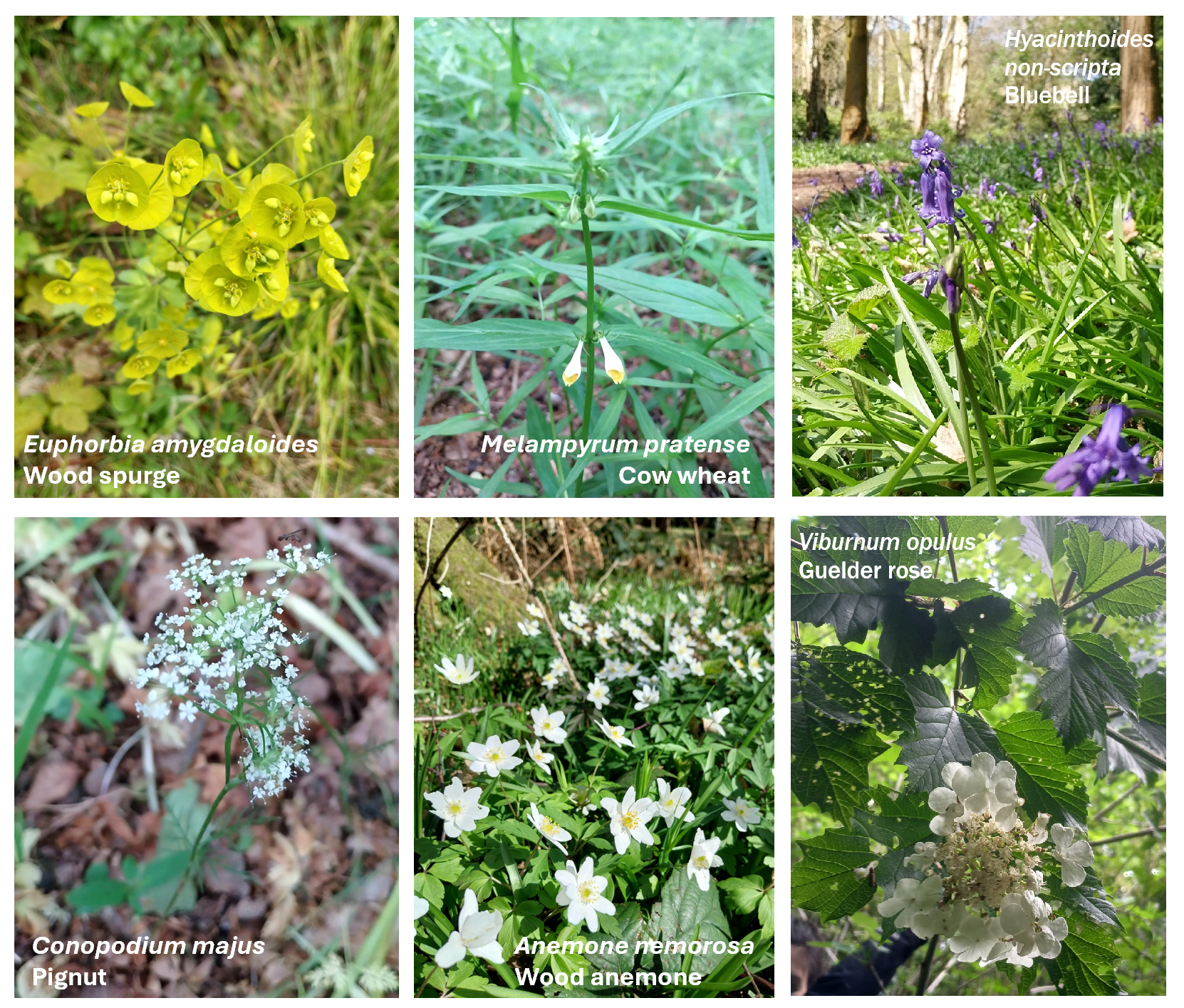
Bluebell Wood lives up to its name, carpeted in deep blue flowers each spring. It also boasts the highest vascular plant diversity on campus — a reflection of the varied habitats packed into its 5.1 ha. From areas with canopies dominated by veteran oaks, to patches of single-species plantations of hornbeam and Norway maple, its mosaic of woodland types tells a story of changing management over time.
Meanwhile, Brotherhood Wood scored highest in ecological condition. Its oak-hornbeam communities, interspersed with a Kentish favourite of sweet chestnuts are bordered by farmland and enriched with ancient features such as historic boundary banks and ditches. More recent additions, like forest school areas, show how the woodland continues to evolve as a shared space.
Based on our findings and vision for resilient, biodiverse, and educational woodlands, we’ve identified six key objectives, for which we’re now developing associated actions:
- Boost structural diversity through coppicing, thinning, and creating rides or glades.
- Control invasive species like rhododendron and cherry laurel.
- Restore woodland ponds to enhance habitat quality.
- Expand educational use of the woodlands.
- Support native ground flora through shading reduction.
- Build resilience to climate change, pests, and disease.
This is just the beginning! Our Woodland Action Plan is one part of the University’s new Biodiversity and Landscape Strategy. Meanwhile, the DICE Biodiversity Consulting Team, working with other colleagues from DICE, are about to set up environmental monitoring stations. This will help us better understand how levels of noise, air, light and pollution vary across the campus’ habitats, including its woodlands.
With the campus forming part of the Blean Complex, our work here contributes to restoring nature across the wider landscape.
Acknowledgements: This work is being undertaken with the support of the University of Kent’s Grounds Team, Sustainability Team, and the E3 Sharing Space for Nature Initiative.