It was a summer morning, the sun so bright that I could barely keep my eyes open, yet its warmth felt comforting. On this beautiful day, I planned to visit my brother in Edinburgh. I packed my bags, boarded the train, and six and a half hours later, I arrived in the historic yet vibrant city where medieval charm meets cultural brilliance under the watchful gaze of its castle: Edinburgh.
Stepping out of Waverley Station, the city unfolded like a storybook. Cobblestone streets wound between towering spires, and the scent of fresh bread and coffee drifted from cafés tucked into narrow closes. Above it all, Edinburgh Castle perched like a silent guardian, its stone walls glowing golden in the summer sun. I wandered through the city, feeling the pulse of history underfoot, yet sensing the vibrant hum of modern life in the street performers, bustling markets, and lively chatter around me. I have recently developed a newfound fascination with beaches and the life forms that inhabit them. Creatures of the water world are endlessly curious and unlike anything we witness every day on land or in the air. The mystery of aquatic life draws me in; each ripple seemed to whisper of ancient, delicate, and endlessly enchanting beings. Exploring animal life near beaches has become my favorite pastime.
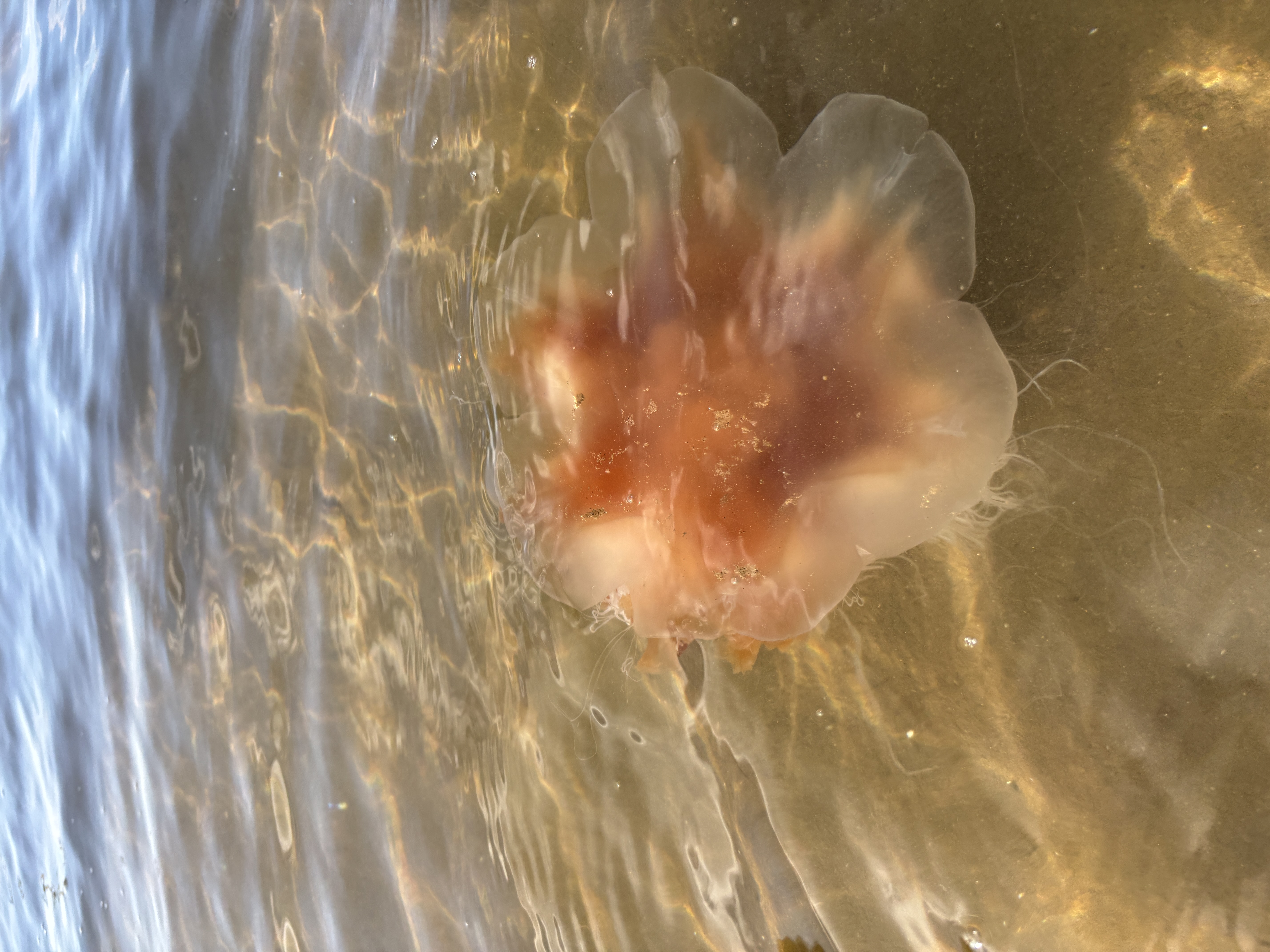
Without wasting any time, we went to the Portobello Beach, close to my brother’s residence. I pulled up my trouser legs and jumped into the water, bending down to examine every inch of the sandy floor for movement. And then I saw it. Drifting through the cold, grey waters of the coast, an animal floated leisurely, looking like a fiery crown come alive. It was the lion’s mane jellyfish (Cyanea capillata). I was blown away. It was the first time I had ever seen a jellyfish in the wild. Jellyfish have existed for over 500 million years, making them older than dinosaurs and even trees. The lion’s mane jellyfish is the largest species in the world, with tentacles that can reach 30– 36 meters. They prefer colder waters, and seeing one in its natural habitat was simply awe-inspiring.
After this magnificent encounter, I continued my search, scanning the water with eagle-eyed focus while my brother shouted warnings not to wander too far. Then something else caught my eye. A couple of blue jellyfish (Cyanea lamarckii) floated nearby, much smaller than the lion’s mane, with bells typically 10–30 cm across. They glimmered like jewels in the grey water, their deep blue and purple-tinged bodies distinctly visible. Though herpetology is my main passion, I have realised that every animal fascinates me equally. Each creature carries its own magnificence and mystery, and with it comes a lesson about its importance in the ecosystem, showing the unseen ways in which life, even the smallest and most delicate, sustains the world we rely on.
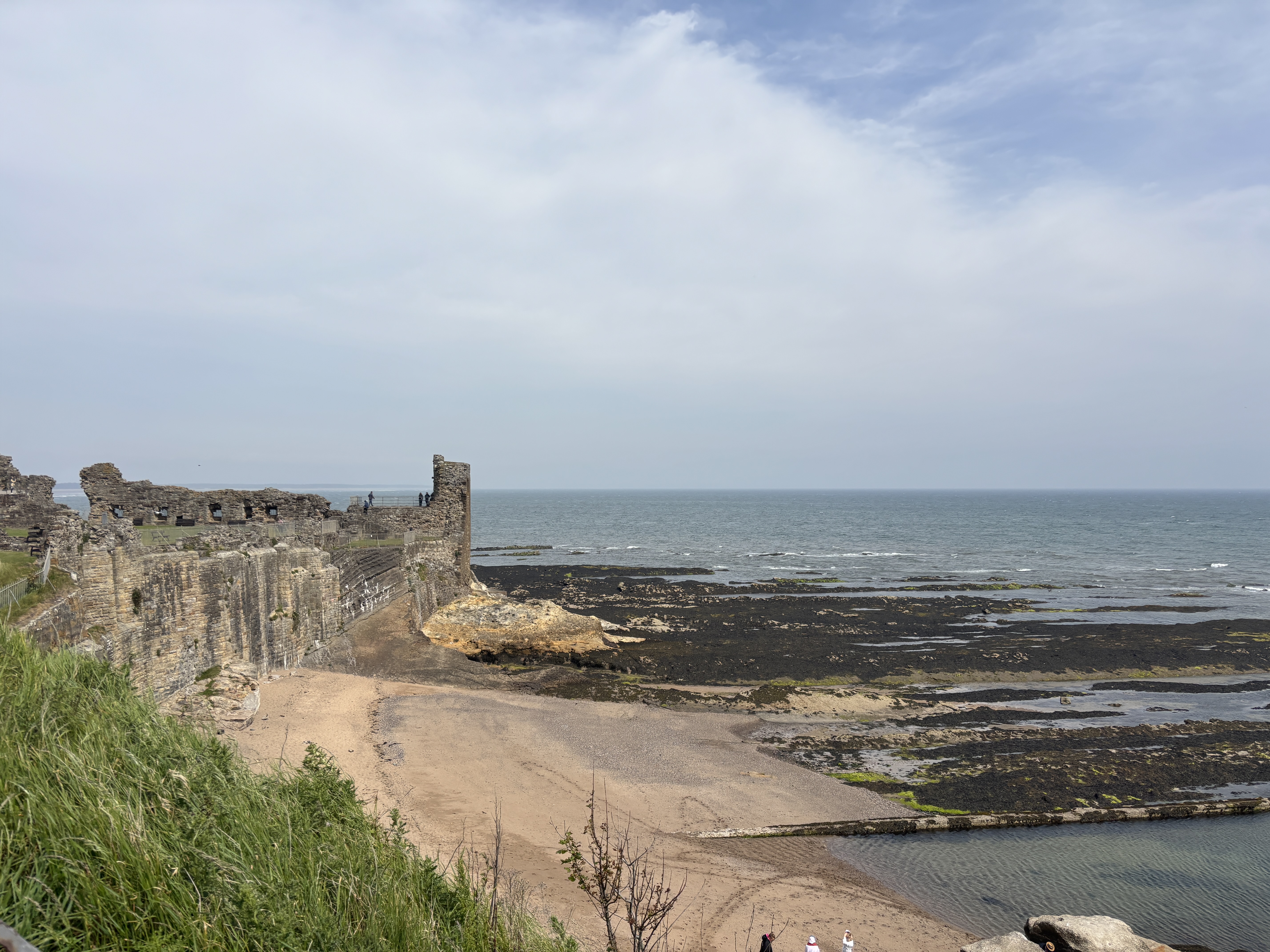
Next, it was time to head to the town of St Andrews, a historic seaside town where medieval streets, a world-famous university, and dramatic North Sea shores meet, for a day trip to celebrate my brother’s birthday. Yet again, I found myself enchanted by nature. I suppose that is the beauty of our work in conservation – the mysterious connection and fascination we have with the natural world, and the ability to notice its details wherever we go. While exploring the remains of the St Andrews Castle, I paused by Castle Sands, a small but dramatic stretch of beach tucked beneath the ruins. Enclosed by rugged cliffs and washed by the restless North Sea, it feels both secluded and wild. When the tide is out, rock pools glisten with marine life, while seabirds wheel above the ancient walls, tying history, nature, and the sea into one timeless scene.
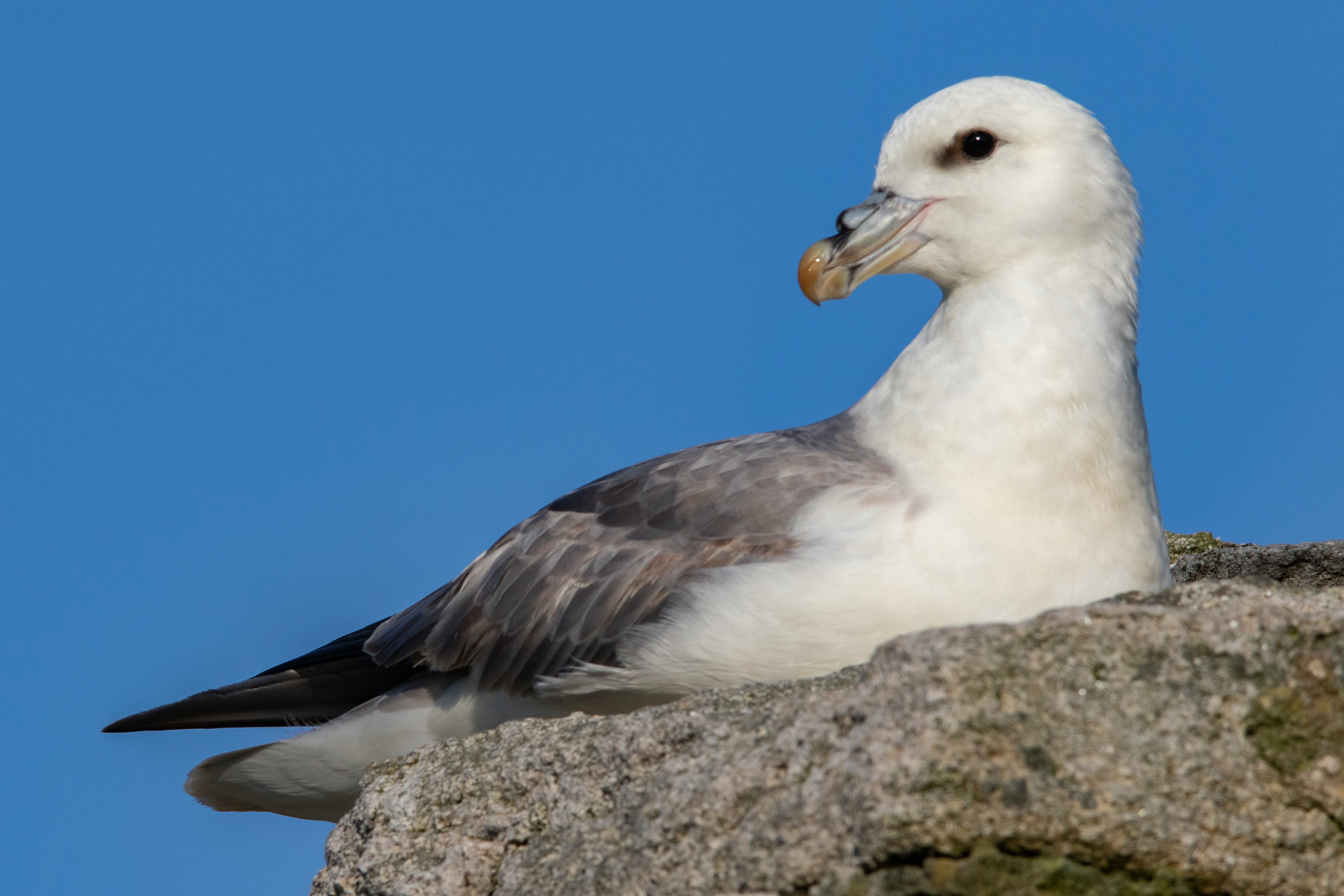
Suddenly, I spotted a seagull-like bird, and as I looked closer, I noticed there were many more. But they seemed a little different from ordinary gulls. I realised these were northern fulmars (Fulmarus glacialis). Often mistaken for gulls, fulmars are actually relatives of albatrosses and petrels, belonging to the family Procellariidae. Their most distinctive feature is the tube-shaped nostrils on top of their beak, which they use to excrete excess salt from seawater. They circled the castle walls as if they, too, were guardians of the coast, living symbols of the wild sea spirit that defines this corner of St Andrews. Born of the northern seas, fulmars carry salt in their breath and endurance in their bones, wandering endlessly across the horizon. Truly, they are mesmerising creatures.
These two encounters were the highlight of my visit, along with, of course, exploring countless second-hand bookshops, historic sites, and cathedrals. After a few days spent wandering the city of spires and secrets, I headed back to Canterbury. I threw my bag on the floor and crashed onto my bed, quickly falling asleep, dreaming of jellyfish and fulmars and a summer well-spent.
Where did you go this summer?