
Cambodia is one of the most biodiverse countries in Southeast Asia. Its four distinct ecoregions are home to many species, notably endemics – species found nowhere else on earth. However, like many other countries in the region, it faces the challenge of achieving economic development while minimising risks to nature.
Remarkably, over 40% of Cambodia’s land is already conserved, though the network of protected sites does not comprehensively include the country’s most important biodiversity. The marine realm remains under-protected, with less than 2% formally within protected area. Yet, as well as protected areas, there are a range of management interventions across the country that also benefit biodiversity. Some examples include community fisheries, community forests and ecotourism areas.
Other Effective area-based Conservation Measures, more commonly known as OECMs, allow for the recognition of sites that deliver biodiversity outcomes even if biodiversity conservation is not their primary management objective. This means lots of places and governance systems – from community-managed fisheries, sacred groves, and ecotourism sites managed by the private sector – could all be recognised as OECMs based on a key set of criteria.
Importantly, OECMs contribute to local and global biodiversity targets such as the “30-by-30” target of the Kunming-Montreal Global Biodiversity Framework, of which Cambodia is a signatory country. This specific target aims to conserve 30% of land and sea through protected and conserved areas. Such recognition has the potential to validate the biodiversity importance of sites, attract more funding and livelihood opportunities, and in some cases, support people to secure their rights to lands and seas.
As part of a broader effort to help countries in the Greater Mekong region recognise OECMs, DICE worked with WWF Cambodia to take the first step towards OECM operationalisation in the country. Our work comprised five main stages to develop a framework for OECMs for Cambodia.
- Legal and policy review – evaluating laws and policies governing potential OECM area types against international OECM criteria
- Institutional analysis – consulting with representatives from government ministries, non-government partners, Indigenous Peoples and local community groups to understand the current institutional set-up for managing potential OECM areas
- Spatial mapping – assembling datasets of potential OECM sites, to evaluate their potential value for biodiversity conservation
- Development of an OECM framework for Cambodia – focussing on four key dimensions: (a) establishing and strengthening institutional arrangements (including the establishment of an OECM working group); (b) integrating OECMs into the national legal frameworks; (c) testing, refining and further developing criteria, tools and systems required for OECM recognition and management; and (d) incentivising sustained OECM in the country through capacity building, funding, tenure security
- Validation – stakeholder workshops to validate and improve the proposed framework
This collaboration showed that OECMs can make a significant contribution towards biodiversity conservation in Cambodia, particularly in the marine realm. It also highlighted the need for further dialogue between stakeholders involved in governing and managing areas that could be recognised as OECMs. In particular, the importance of streamlining and strengthening the ways such sites are currently governed and ensuring that OECM recognition will lead to tangible benefits to those dependent on such areas will be crucial.
This work was conducted by DICE Biodiversity Consulting in collaboration with Sao Sotheary (local consultant) as a project contracted by WWF Cambodia.
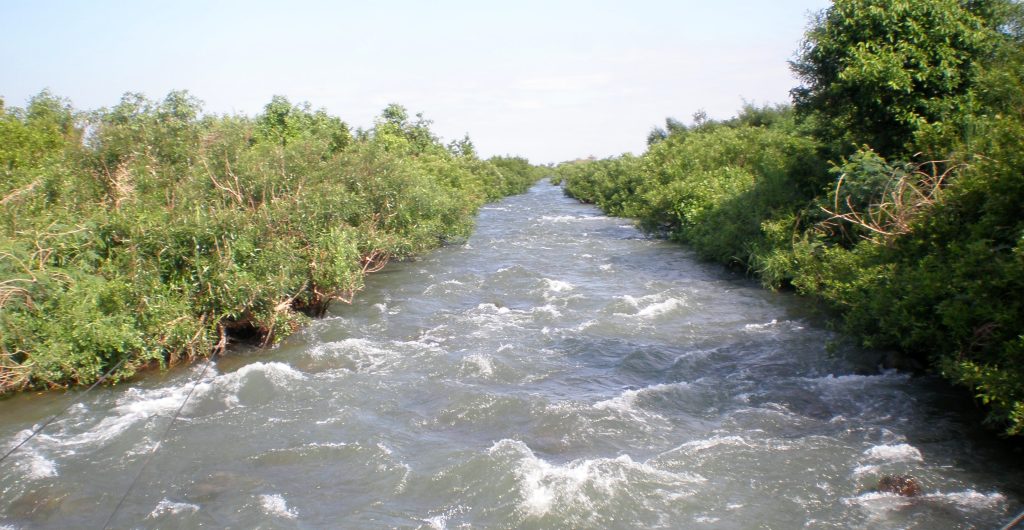
Image credit: Mekong tributary in Stung Treng province, Wikirictor
