What is artisanal gold mining and how does it impact biodiversity?
Artisanal gold mining is a major driver of deforestation, in tropical forests and other habitats. Gold is in many electronics and is increasingly needed in the green energy transition. It’s also closely tied to economics – some countries invest in gold when currency is not as predictable. The higher the price of gold, the more lucrative it is to deforest tropical forests to mine the gold.
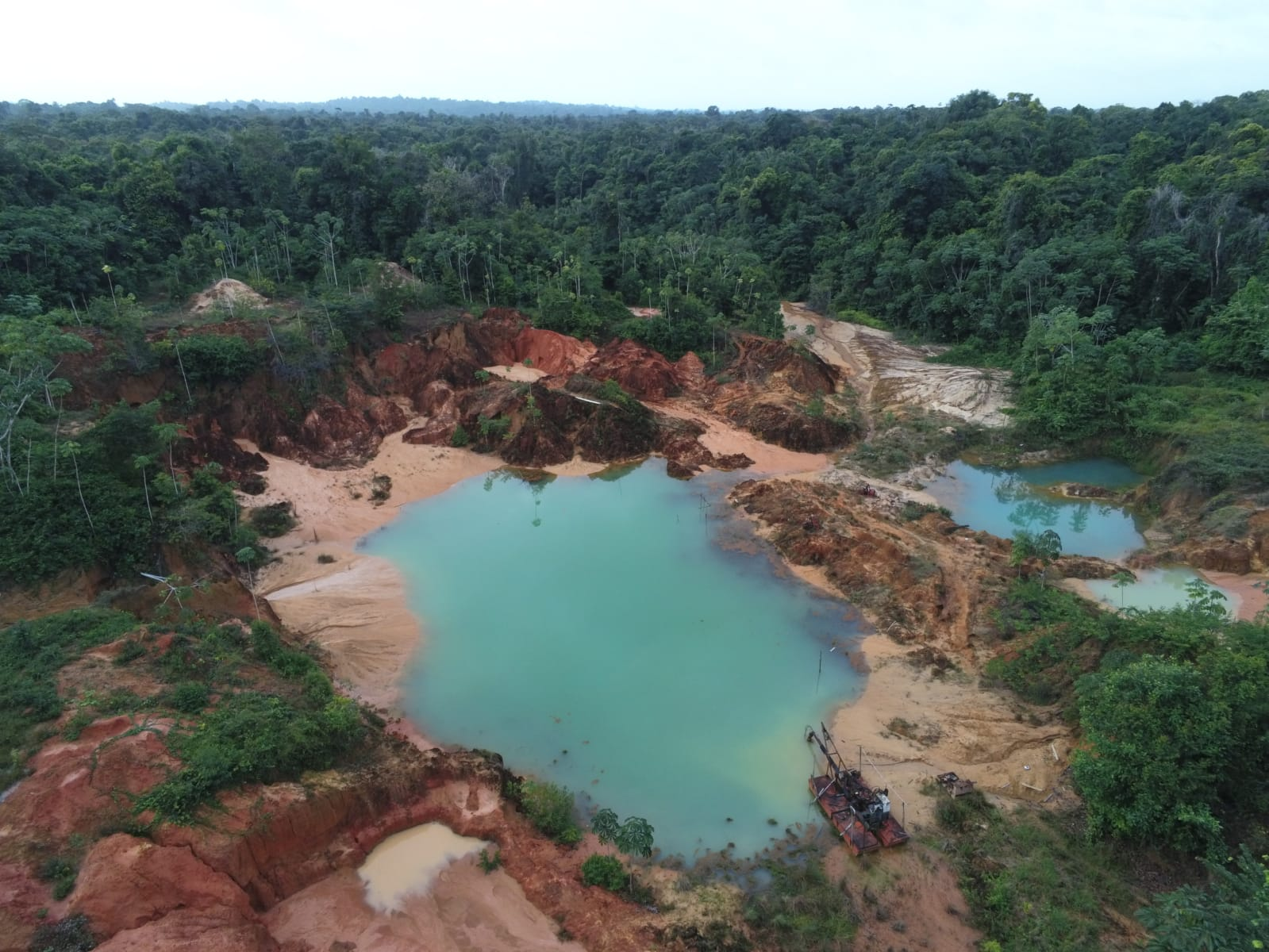
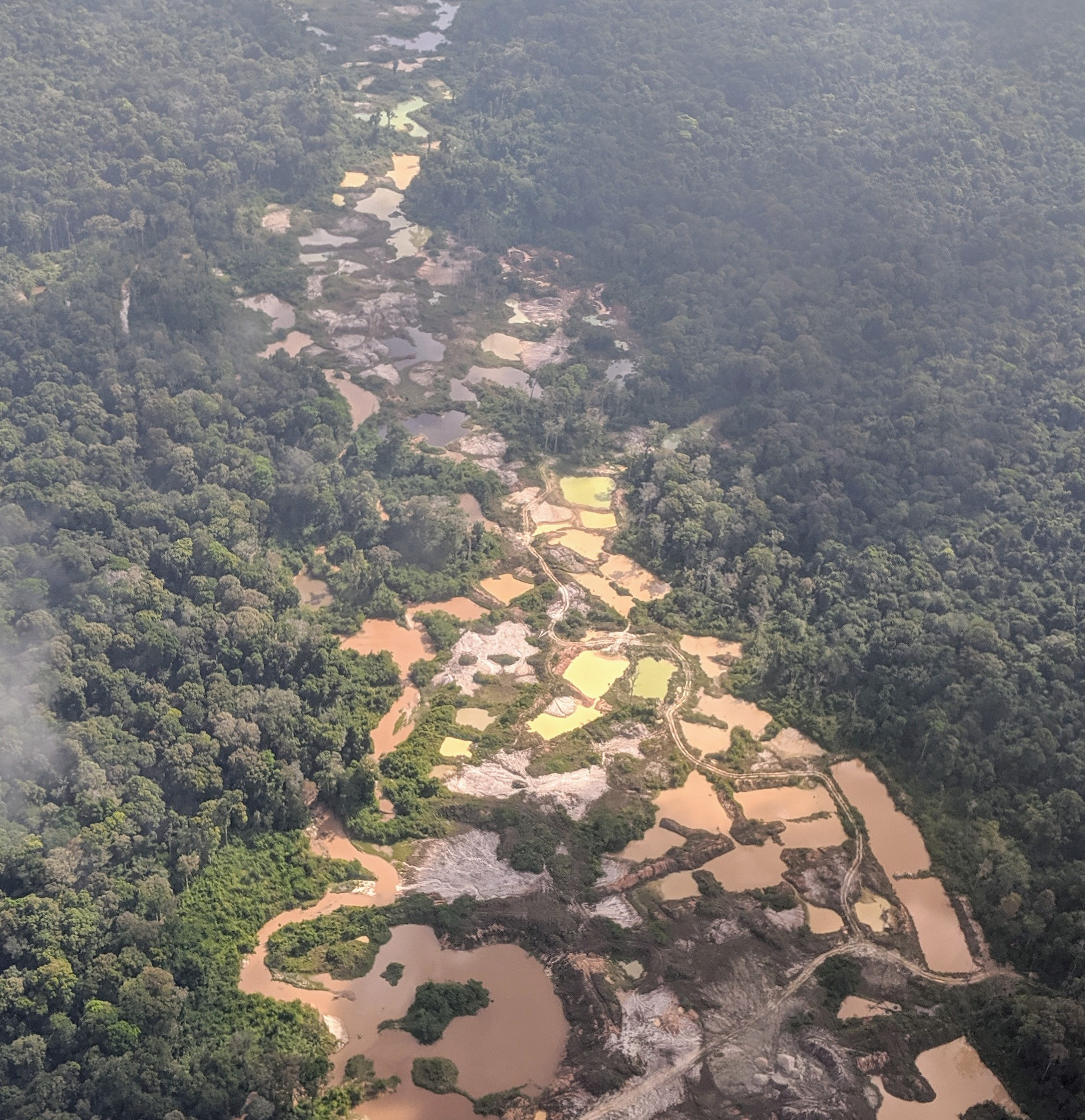
This has impacts for forests and the things that live in those forests. Artisanal gold mining leaves scars, which are easily observed on satellite data and maps. They take the form of barren dunescapes of sand, mud and water, which range in size between a few football pitches wide, to the size of a small city. There are millions of these gold mines all over the planet, though the exact number is not fully known. This is something we are getting to the bottom of in our research, where we are using satellite imagery from present day and back through 1995, to observe the number of artisanal gold mines and how that has changed over time.
What research is DICE carrying out on this topic?
The two papers we’ve just published are about the biodiversity impacts of these artisanal gold mining landscapes. In the first paper, we looked at the impacts of artisanal gold mines on tropical forest birds. In the second, we looked at the impact on dung beetles, which are a really important group in terms of the functioning of the forest, because they cycle nutrients, supporting the forest from the ground up.
We show that important birds that depend on forests mostly disappear from the areas within the mines, and get replaced by generalist bird species, such as those that you see in cities – these species are of lower conservation value than forest birds, because they tend to be quite common and adaptable.
We looked at the impacts around the mines as well. We found that 100 metres into the forest, surprisingly, you find fairly intact forest and bird communities, with no obvious impact, despite being surrounded by a landscape which is full of these mining scars. Whereas the dung beetles are a bit more sensitive than the birds. Even 100 metres away from those mines, we’re seeing a different dung beetle community than we’d expect in a forest.
What are you planning next?
We’re extending this research to look at other biodiversity in these gold mines, focusing our field work in Guyana, northern South America. We have a research programme looking at mapping artisanal gold mines globally and understanding how they might regenerate their vegetation and heal their scars.
Our lab working on gold mining currently includes two PhD students; these two papers were led by Sean Glynn, with collaborators from DICE – myself (Dr Jake Bicknell), Professor Zoe Davies, and Dr Matthew Struebig. Also Monty Ammar, who is working on using remote sensing and machine learning to prioritise the recovery of degraded tropical forests. This work is harnessing the power of AI to automatically detect mining, and use the resulting datasets to ask some global questions about mining.
Our research group also includes understanding the socioeconomic impacts of artisanal gold mining on local communities. That work was carried out by Dr Will Hayes, who completed his PhD at DICE and now works at Royal Holloway University. He also looked at forecasting deforestation from gold mining.
What are your recommendations?
Artisanal gold mines are frequently abandoned after the gold is extracted, and the miners move on. This yields an interesting opportunity in terms of forest restoration and recovery. Indeed, we find that some of these mines recover their vegetation and grow back into a forest without help, whilst others don’t at all. We are now working on understanding forest recovery after mining, and looking at ways to kickstart the recovery process.
Sean Glynn was funded by an ARIES NERC and Monty Ammar is funded by DICE, University of Kent.