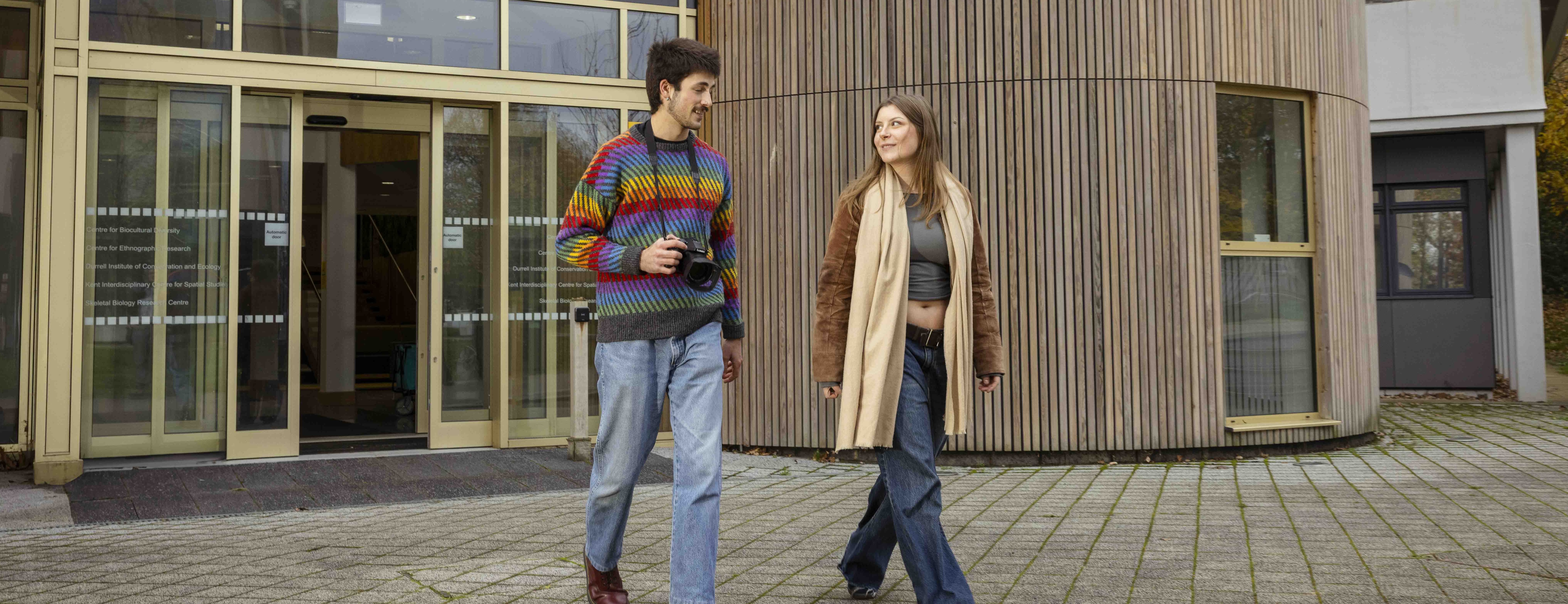
This past autumn saw Stage 1 undergraduate students exchanging lecture rooms for wellies, to get experience of conservation fieldwork. Module Convenor, Dr Holly Harris, takes us through the highlights, with quotes from first-year student, Evan Denning.
As part of the autumn term ENVI4000 Biodiversity module, four field trips to the campus woodlands, ponds, Community Oasis Garden (Kent COG), and grassland habitats were made. Students got to experience the breadth and diversity of our campus green spaces with practical hands-on experience of surveying for species richness in the grasslands below Eliot College, identifying pollinators in the last of the year’s flowering spaces at COG, conducting a woodland condition assessment and assessing the habitat suitability of university ponds for newts.
Field Trip #1: Kent Community Oasis Garden
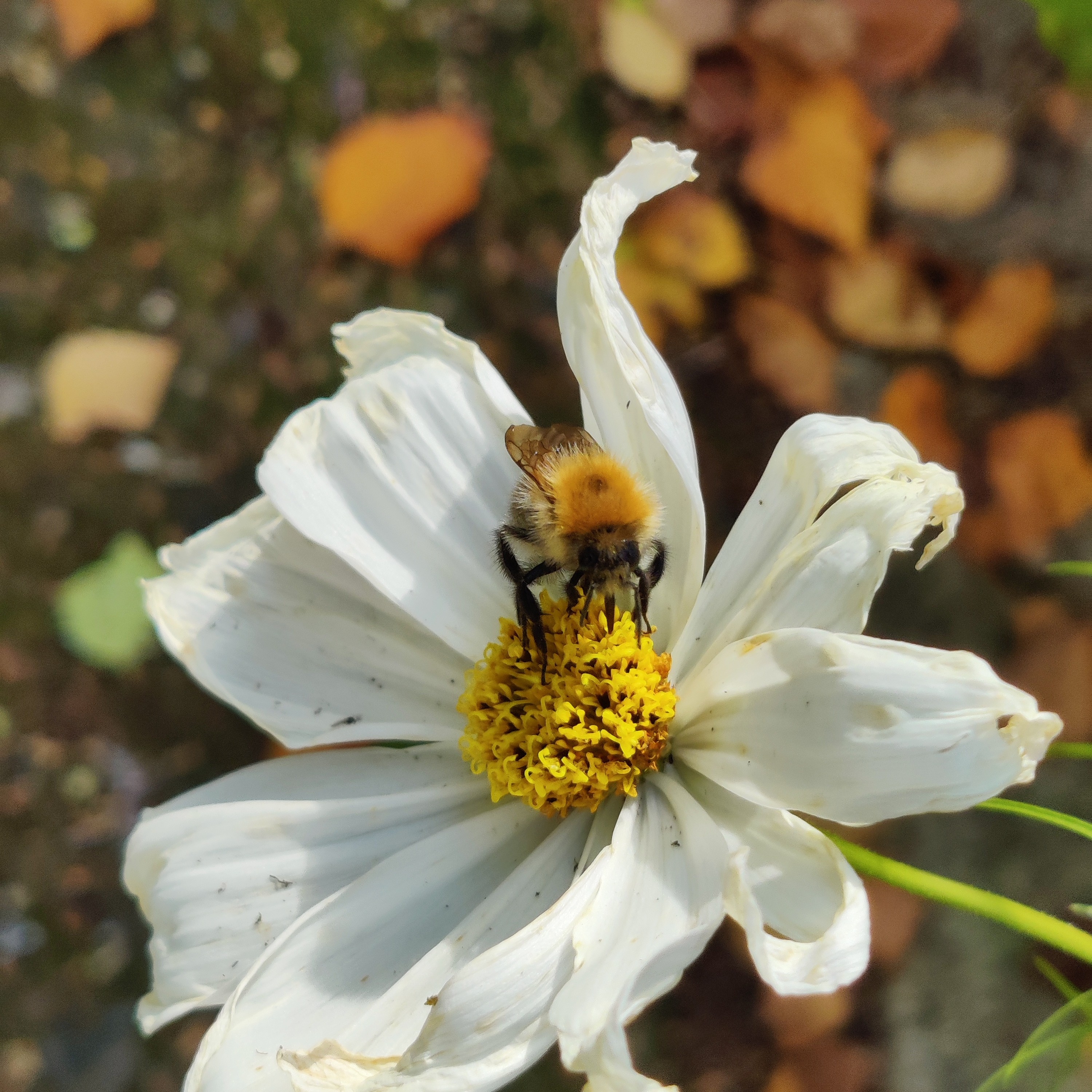
The field trip to the Kent Community Oasis Garden to identify pollinators was led by BSc Ecology and Conservation student Elinor Casey, who is currently doing a Year in Placement with the University of Kent Sustainability team. Prior to the field trip, Elinor and DICE PhD Leverhulme student, Sam Maddison, ran a seminar for students on using the citizen science platform, iNaturalist, and introduced us to the Kent COG iNaturalist project. Pollinators identified on the day were: buff-tailed bumblebees, common carder bumblebees, honeybees, wasps and a celery fly and these were added to the Kent COG iNaturalist project. Aside from the beautiful autumn weather, students learned about the supply of free food from the garden that comes with volunteering at COG, and the variety of projects on offer. Elinor tells me a number of students returned the next week.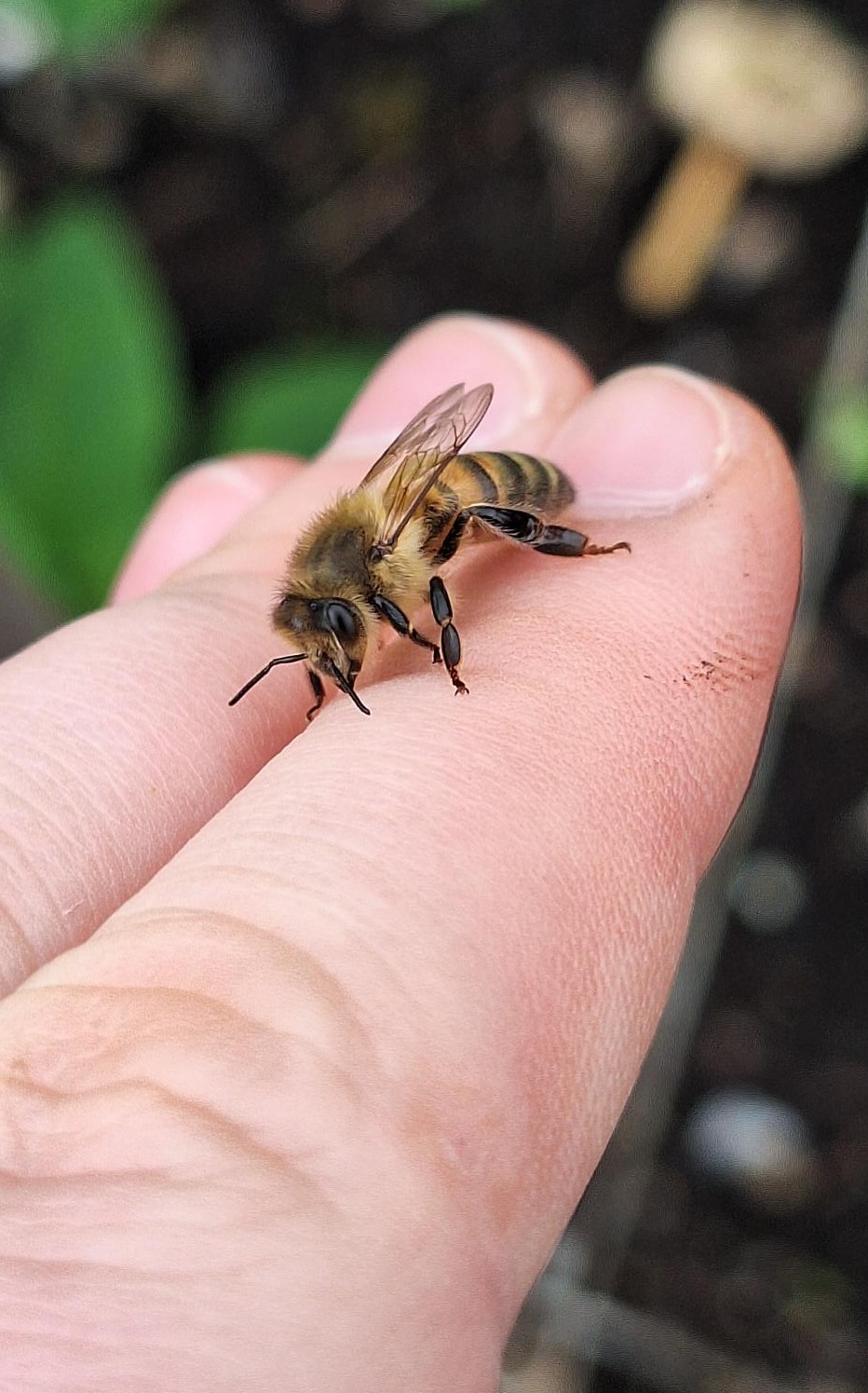
“We visited the vegetable patch, the pollinator garden and the new pumpkin patch,” first-year student, Evan, recounted. “Elinor explained how they use no pesticides in the garden, plant low-water-use flowers and are a no-dig garden to avoid harming soil health or hibernating newts. This is the kind of real-world knowledge and practice we, as conservation students, can take with us for future work. While only there for an hour, I felt I learnt a lot, especially from Elinor. I’m going to start going to the biweekly volunteer gardening session, not only to help out, but to improve my green thumb and spend more time in nature where I feel best. Visiting the garden reminded me why it’s so important for everyone to have green spaces. Even small ones can have a huge impact on both wildlife and wellbeing.”
Field Trip #2: Campus Woodlands
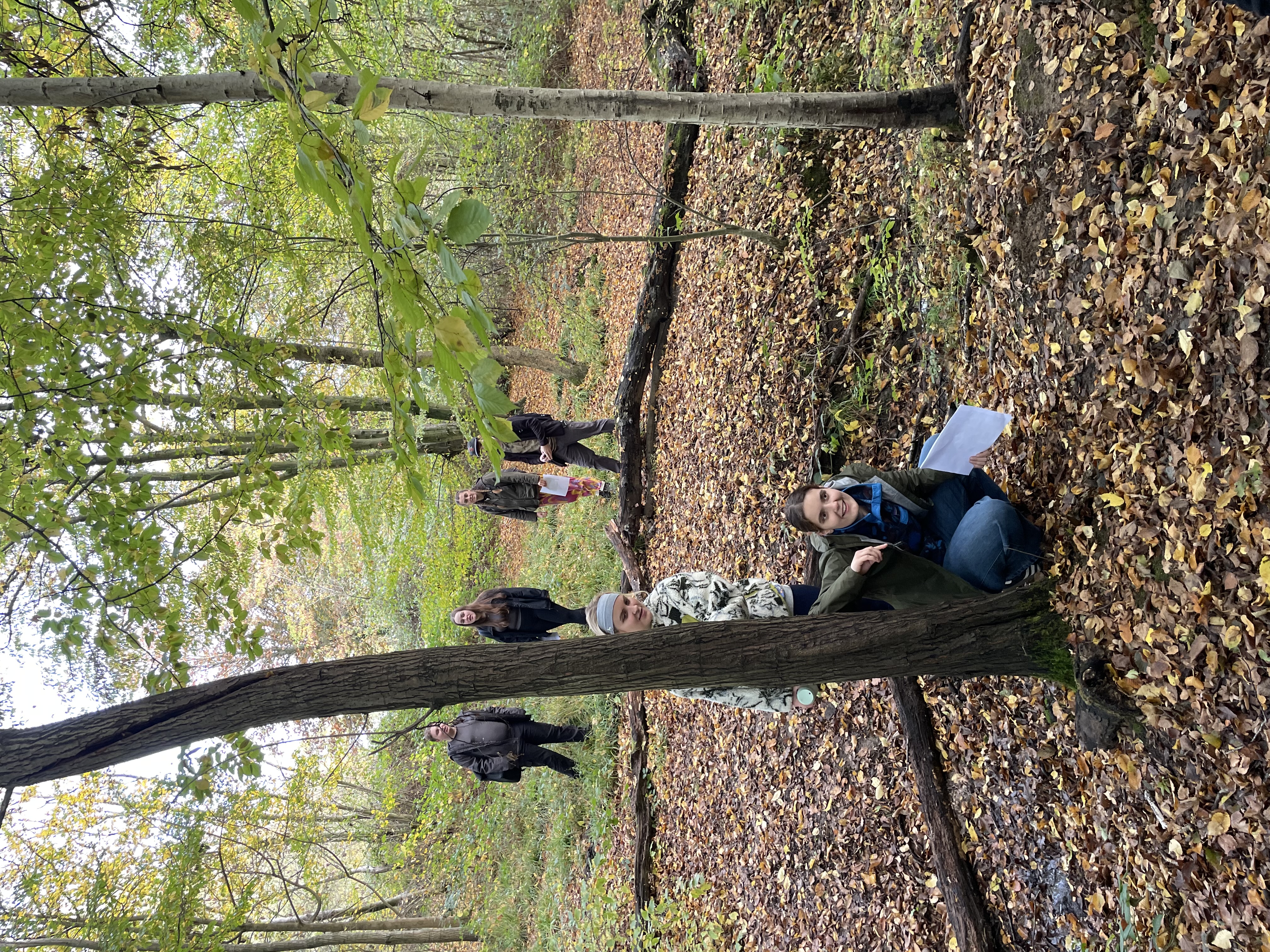 Additional DICE colleagues supported the field trips to other locations on campus, starting with the campus woodlands. Students learned how to conduct Woodland Condition Assessments, with an expert training session beforehand, from E3 Innovation Fellow, Dr Laura Kor. In the woods, students used transect sampling and vegetation surveys and assessed the health and biodiversity of the Bluebell Woods against the UKHAB/WCA criteria. A bonus on this trip was discovering a diversity of fungi, lichens and mosses, with plenty of opportunities for posing with fungi and general merriment that comes with tramping about in woods!
“Laura gave us a demonstration of what needed to be done to survey the area, explaining how the canopy layers, shrubbery and deadwood hold value to wildlife,” said Evan. “Our first survey site was a near classically picturesque area of the wood where the sycamore encompassed the entire canopy. This tree is not native to the UK and was planted commercially all over the UK in the 16th century, it is now seen as naturalised as it is so widespread.
The next site was more varied and contained a lot of English oak which dominated the upper canopy layers, along with a few smaller hawthorn throughout. In places where the canopy was open or thinner, the light allowed a patch of mixed shrubbery to grow. Then, the third site was the most complex and varied of all three, next to a pond with a tall willow shading the water. This area had several layers of canopy and a busy shrub layer. We recorded ten different species and saw our first invasive species, a big snowberry bush which we made sure to note.
It was really nice to get outside again to learn a good mix of practical skills and knowledge. I can’t wait to revisit Bluebell Woods throughout the seasons to see how it changes!”
Field Trip #3: The Ponds
 The final field trip, led by Professor Richard Griffiths, applied specific ecological methods to assess the habitat suitability for newts across the University’s network of ponds with a post-fieldwork session to analyse the data, and discover which of the ponds assessed has newts.
“Our task today was to have a go at a HSI (Habitat Suitability Index) for two of the ponds on campus,” Evan reported. “We learned that the HSI is a short, simple survey to assess ponds for how well they may support Great Crested Newt populations. Emeritus Professor Richard Griffiths, an expert on all things amphibians and reptiles, taught us about the history of the ponds, the goals of assessments like this, and about the star of the show, the Great Crested Newt.
He explained that Keynes Pond was initially built as a security barrier for Keynes to limit access from the public road. I had never really considered that dimension before; in our lectures we have been looking at ecosystem services concepts but this is a niche use that we hadn’t discussed yet and is a great solution to keeping students safe while making space for nature. This pond hosted a wide variety of bugs from flatworms, damselfly nymphs to water louse which, at this time of year, is a good indication of a healthy pond.
The second pond, the Lower Elliot Pond, we visited was a lot quieter. No water fowl here, less light penetrating due to the thick canopy and a lot less bugs netted out of the water. Although quieter it did seem more ‘wild’ and separated from human activities which may make it more suitable for the newts.
At the end of assessing both ponds we returned to Richard who opened a discussion about our assessments and some of the pros and cons. In our follow-up lecture, we looked at our survey results and generated scores using the HSI calculator and habitability for newts.”
Final Thoughts
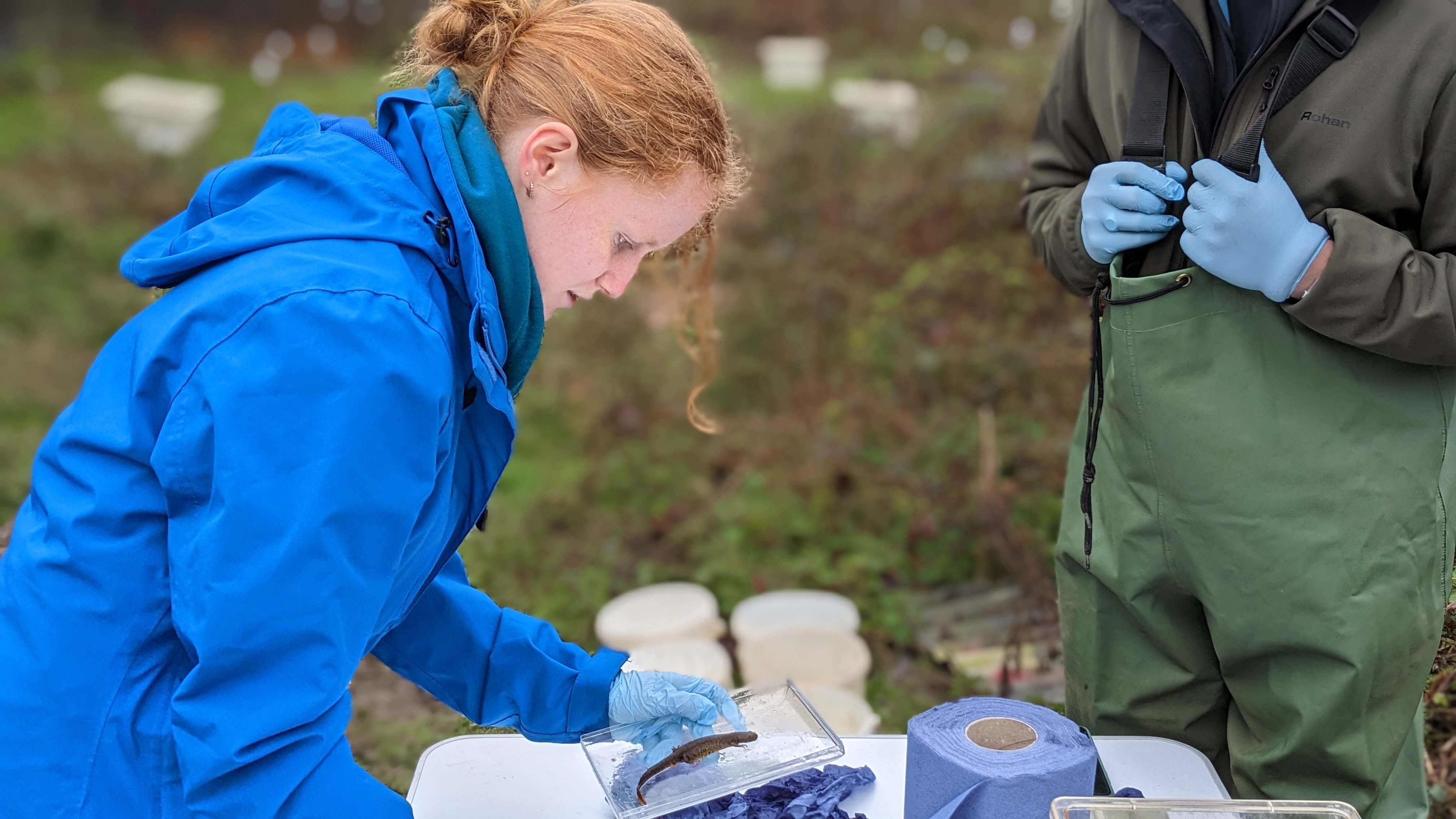
Feedback from our mid-term module evaluation has been extremely positive, with ‘being outside’ a prominent response to the question, ‘What have you enjoyed about this module?’ In response to the question, ‘What could be better?’ the majority of responses stated ‘more field trips!’. Definitely to be considered for next year!