Thanks for agreeing to be this month’s spotlight! Where are you in the world right now?
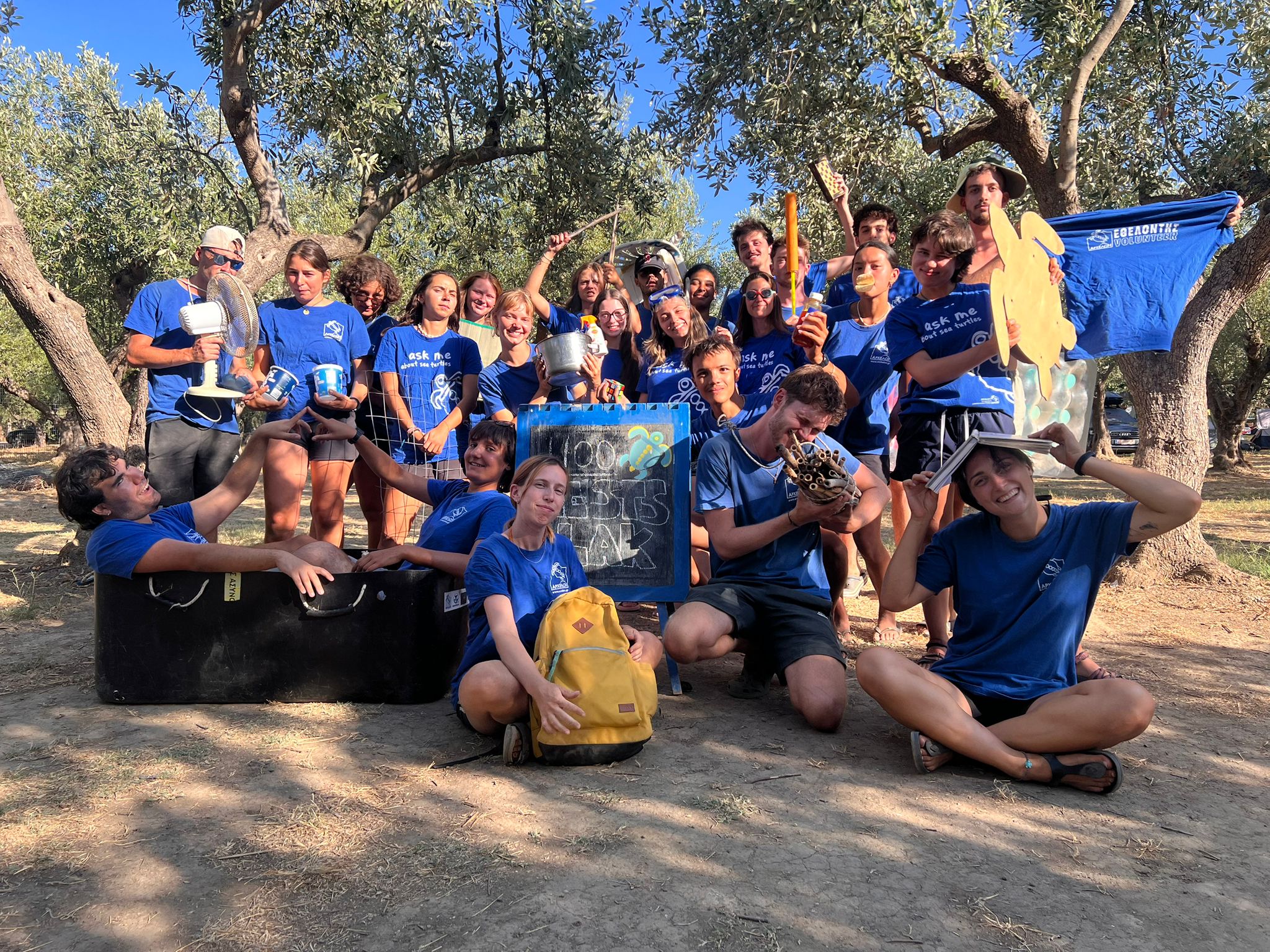
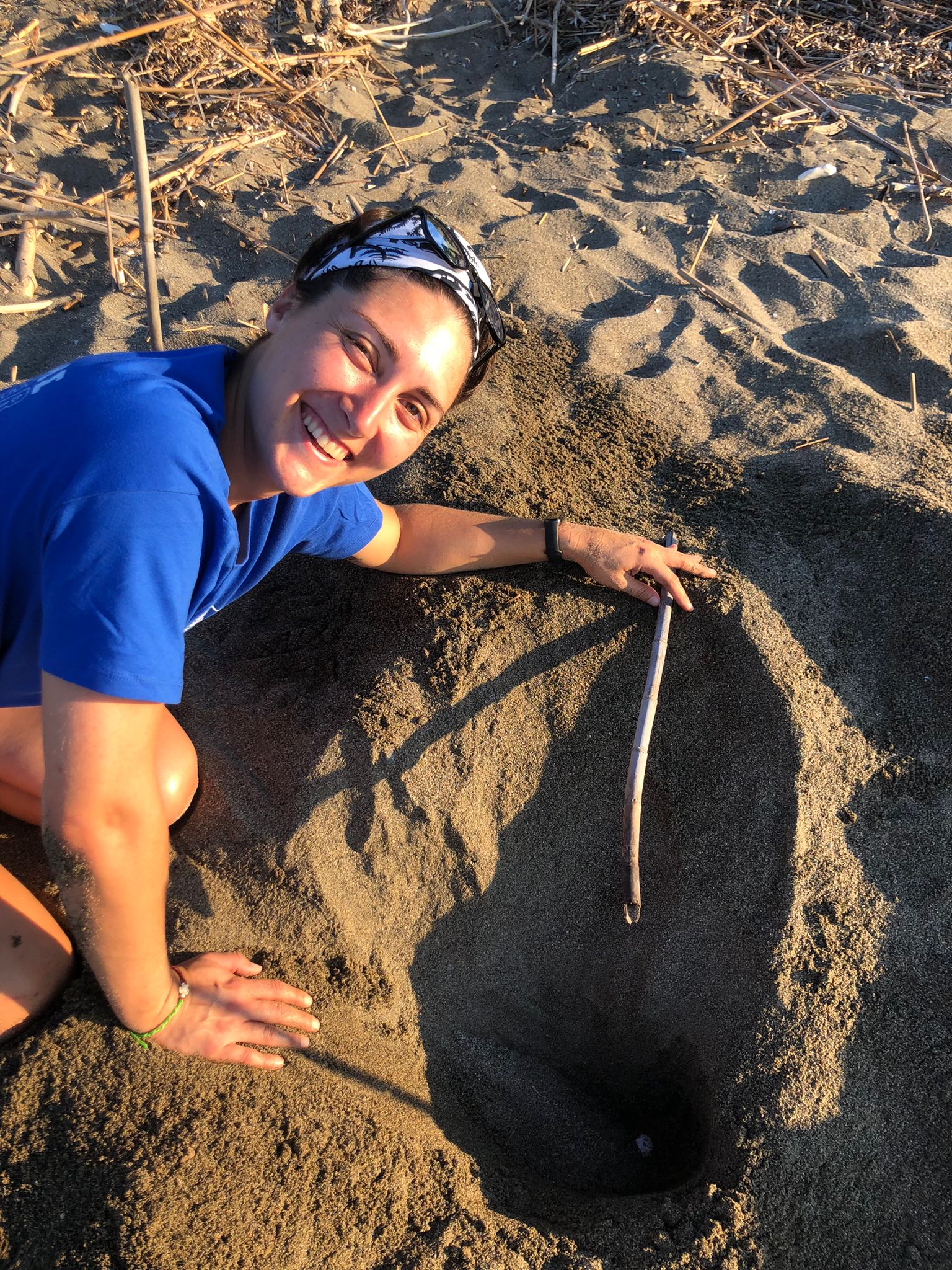
I’m currently in Greece, in the Peloponnese. I got here on the 12th of July. I’m the monitoring leader of the Lakonikos Bay conservation project of Archelon, a non-profit organisation dedicated to the protection of sea turtles in Greece, mainly loggerhead. On a usual day, we wake up before sunrise to monitor the beaches. We locate and protect turtle nests that were laid during the night, and we record the hatching events. The beaches here are very touristic, so we use grids and bamboo sticks to create a perimeter and protect them from people walking, beach equipment, as well as dogs and other predators. During the rest of the day, we work on the database, fix equipment, collect bamboo, prepare shading to protect the nests from the artificial light, and we also have public awareness shifts.
What have been some highlights of the past year, since you graduated?
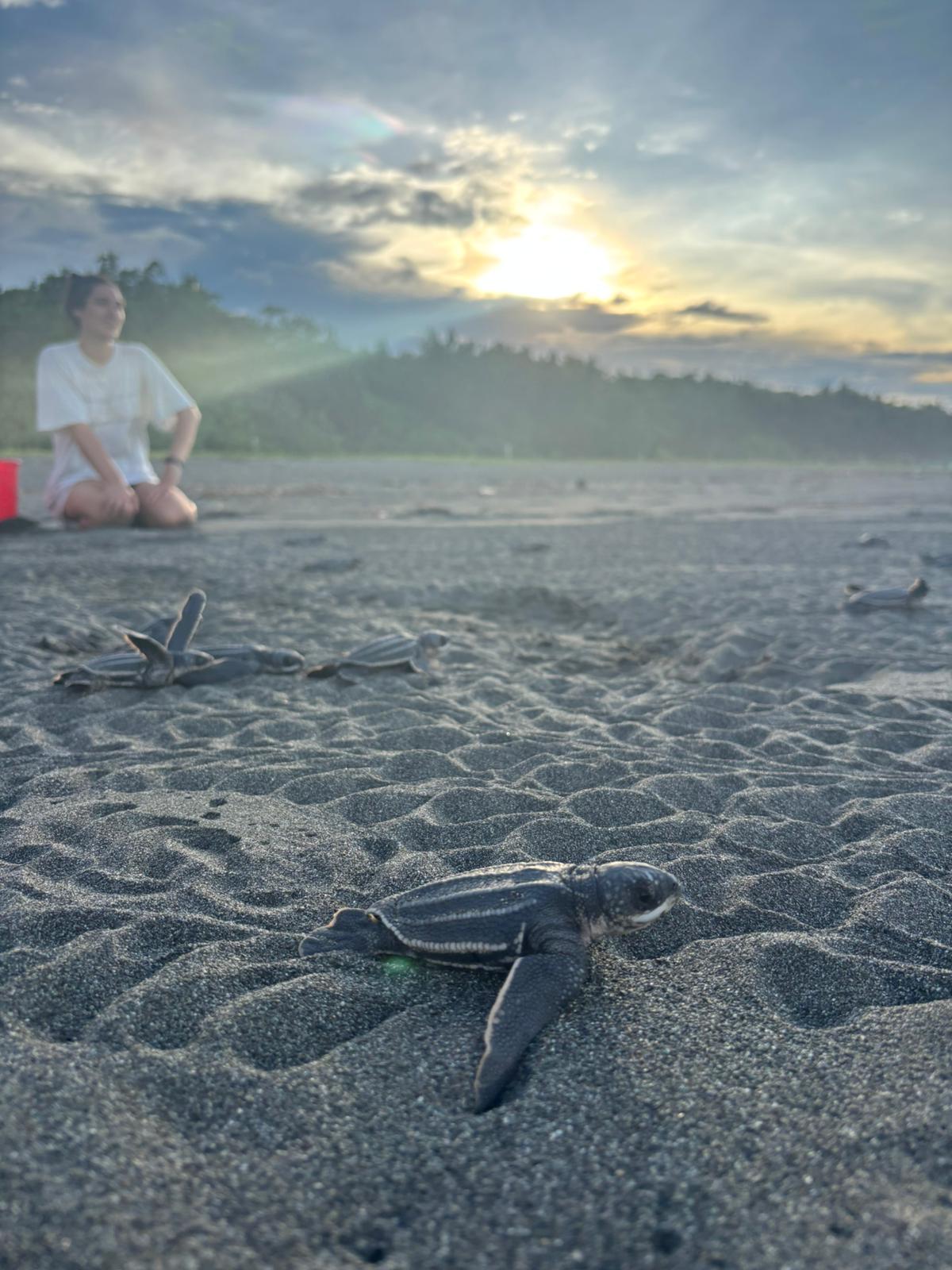
Turtles, baby turtles. They are very, very cute. What I love about conservation work with sea turtles is that you can really see the result of your efforts. It is very rewarding when you see the hatchlings crawl to the sea. You think back on all the hard work, the lack of sleep, all the efforts made to protect them, and you can see with your eyes that they worked, and everything was worth it.
The other main highlight has been people, definitely all the incredible people I met, but also how I changed my mind regarding education and raising awareness. Before coming to Greece, I was a Research Assistant at Pacuare Reserve in Costa Rica. When I got the position, I knew that part of my role would be to explain our work to the schools and tourists visiting. It was something I was really not looking forward to. But I didn’t know I would completely change my mind. I remember the first time I was explaining the work I really cared about to a class and it was amazing. You could see the spark of realisation in their eyes when they understood why we protect the sea turtles, and in that moment they started to care as well. I believe that’s where the key lies, in education and raising awareness, to start a change in the mindsets of the younger (and older!) generations and make a positive impact in the conservation field. That’s the direction I would like to follow in my career moving forward.
Is this something you always saw yourself doing?
I honestly never imagined I would end up working with sea turtles. My dad is a marine biologist, so since I was a kid I always knew that I wanted to work with animals, but the ‘how’ has not always been clear. At the beginning, I wanted to be a vet. Then I decided to focus more on prevention, so I did animal welfare and husbandry for my undergraduate study in Italy. During the last year of that course, we had a class about the role of zoos in conservation. I remember our professor showing us a video about the reintroduction of wolves in the Yellowstone National Park in the US. It showed how reintroducing one single species had helped the whole ecosystem, even the vegetation and the water flow. I found it amazing, like a big puzzle, and I thought, ‘I want to do that. I want to help bring back the balance.’ So, I started looking a bit more in the conservation field. I volunteered at a rescue centre in Thailand and after that experience, I was sure I wanted to do a Master’s in conservation. And that’s how I decided to join DICE, specialising in international wildlife trade, and in the long run, how I ended up working with sea turtles.
What was the standout from your programme at DICE?
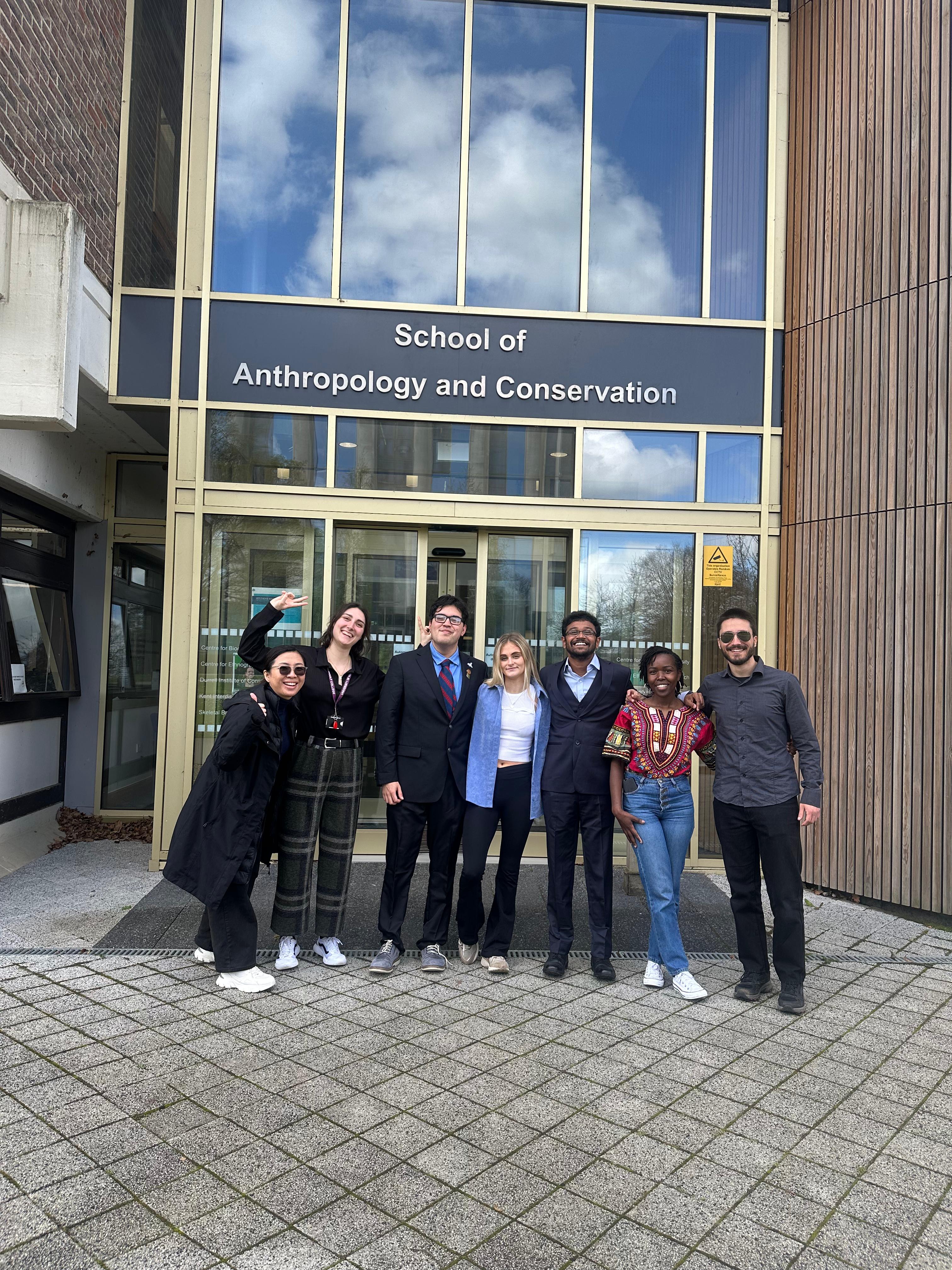
The people. It was incredible to be able to meet people from different backgrounds, with different passions. I made a lot of amazing friends, friends from DICE but also from other fields. And I think that they, all the connections that I’m carrying with me now, are the main standout of my year at Kent.
What was your research topic during your degree?
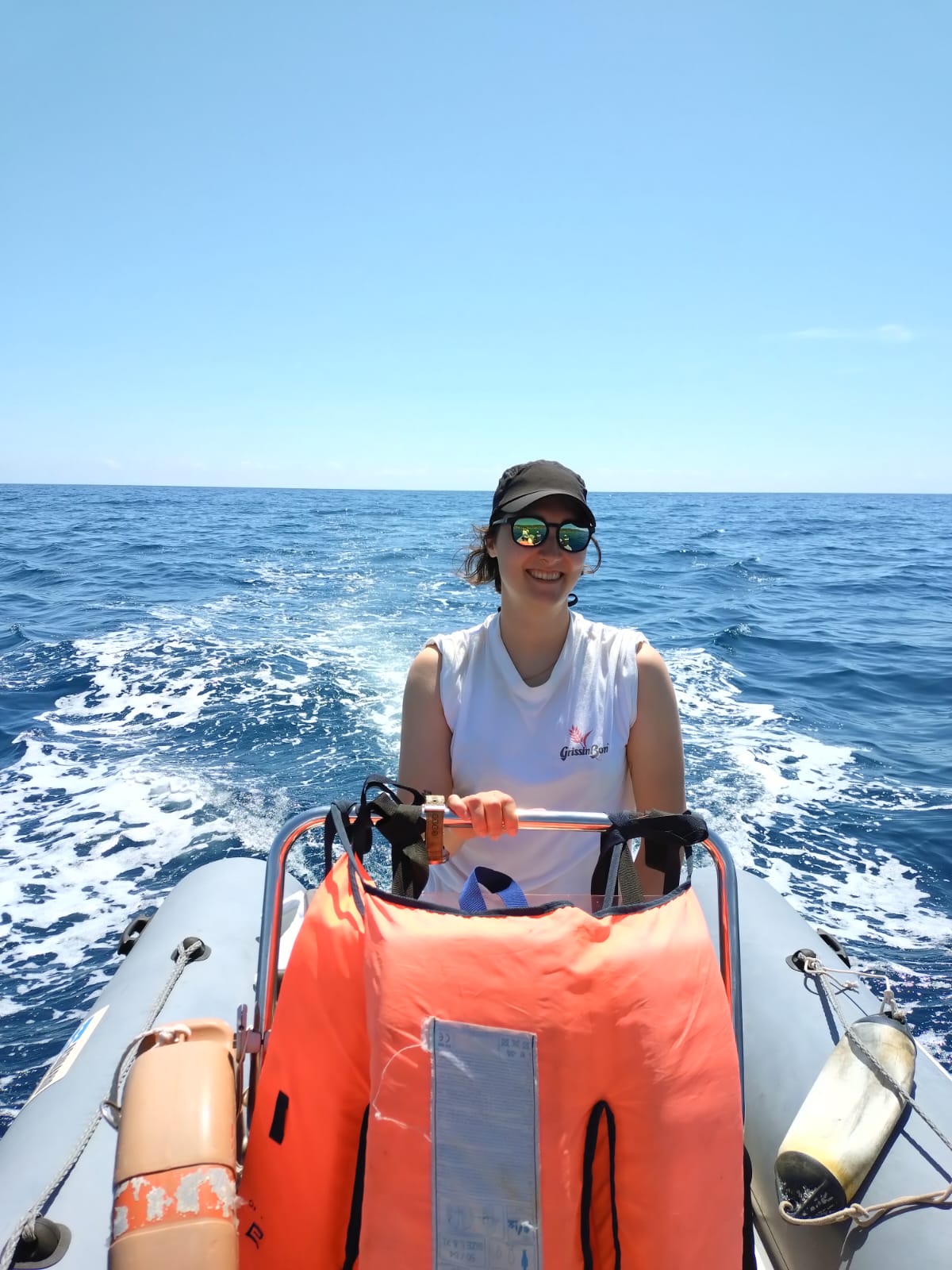
My project was about analysing the impact of different types of boats on the encounter rates of bottlenose dolphins in the Ligurian Sea. We would collect data doing surveys with a boat to record the presence of dolphins and fishing or leisure boats. What emerged is that bottlenose dolphins learned to use trawling boats like fast food basically, eating fish through the net. It’s so interesting to see how clever they are, being able to use our fishing techniques to their advantage. Trawling is definitely a finishing technique that is destroying our sea floors, and that I personally think should be banned. But what my research made me reflect on a lot is that sometimes we don’t realise the impact our actions have on animals at a behavioural level. Trawling has changed the behaviour of dolphins, so, if we decide to ban it, this aspect should be considered as well. And maybe a gradual removal could allow dolphins to change their feeding techniques again.
How did you end up in your current role? Do you have any advice for our students?
After my Master’s, I knew I wanted to do something within the marine conservation field. But it’s not that easy to find where to start from. Volunteering and getting experience in conservation is very hard because for most of the opportunities you have to pay to volunteer. If I could give some advice, I’d say start looking on social media to have a look at organisations, to see which ones you are interested in, and get in touch with them to say you’re finishing your degree soon and you’re interested in working for them.
And just apply, apply, apply. Even if you are missing something from the requirements; for both of my experiences, the one in Costa Rica and now in Greece, I applied missing at least one of the requirements and I still got the position. It’s about passion, being honest in your interviews about what you like, taking a leap and believing in yourself.
My final piece of advice would be to talk with people, with the DICE staff, network with professors in different fields. It’s a piece of advice that is not always easy to follow if you’re introverted, though it’s very common to hear. But start somewhere and things will happen. The more you open up and talk with people, the more experiences you are going to have the chance to get. And all those experiences are going to change you, to teach you something, and at one point you’re just going to do it naturally. So be eager to discover, be willing to change your mind, and follow your instincts. There’s a wonderful world and amazing people waiting just for you, so good luck and enjoy every second!