
The United Kingdom’s exit from the European Union (Brexit) was long and protracted and placed the country’s uncodified constitutional arrangements under great strain.
A system of government and administration based on representative democracy suddenly had to determine what to do after an expression of direct, popular democracy produced a result the political classes had not anticipated.
The Bennett Institute for Public Policy and the Institute for Government released a report in 2023, calling for the existing political constitution to be strengthened, including instituting new parliamentary committees and independent offices, as well as giving Parliament new scrutiny powers.
Such reforms were necessary to address the problems afflicting the ‘mother of Parliaments’ and the democratic stability that the British have long enjoyed.
This story of stability has entered the British national myth, telling as it does a story about a secure nation state, in contrast to the perceived tumults experienced by its neighbours in the European continent.
In 2019, at paragraph 39 of the Miller (No 2) judgment, the Supreme Court noted that the UK constitution’s stability is to do with its longevity:
“Although the United Kingdom does not have a single document entitled “The Constitution”, it nevertheless possesses a Constitution, established over the course of our history by common law, statutes, conventions and practice. Since it has not been codified, it has developed pragmatically, and remains sufficiently flexible to be capable of further development.”
The current UK constitution is an evolved version of constitutions of the past. Decisions and principles from previous centuries are passed down to modern students and scholars and taught as foundational principles.
This dominant constitutional history omits the fact that the UK’s past constitution was also the constitution of the British Empire. This imperial context has shaped the development of the country’s constitutional order to the present day. The UK’s 21st century constitution is still in many ways the constitution of the Empire. That Empire was based on ideas of executive discretion, a marked distinction between formal legal equality and discriminatory treatment in practice, and a ‘civilising mission’ which hid acts of exploitation and abuse that were officially sanctioned.
The UK’s constitutional order is therefore best understood as reflecting an ‘imperial constitutionalism’, the logic of which is still with us.
For example, Empire created different classes of British subjecthood and citizenship, with rights and remedies denied to many subjects and citizens yet granted to others. These disparities are reflected today in citizenship laws within which powers to deprive individuals of their citizenship fall disproportionately on Britons racialised as non-White.
Dylan Lino has explored how the doctrine of parliamentary sovereignty, so central to modern debates on the role of the courts and the limits of judicial review, was formed to project imperial unity at the heart of British imperial power in the 19th century.
Equally, the rationality ground of judicial review has a long history, reflecting a view of imperial courts as providing a large zone of discretion to imperial decision-makers to deal with the administration of the colonies and especially emergencies or resistance to British rule.
But the UK has also undergone a legal and political ‘forgetting’, both intentional and unintentional. Unfavourable records depicting imperial excesses in British colonies were systematically destroyed. Scholars have founded research groupings like the History Reclaimed Project to ‘fight back’ against perceived academic assaults on Britain’s imperial past. In this way, the history of the British Empire, and its legacy, have become a front line in the ongoing culture wars which are dominating British politics in this decade.
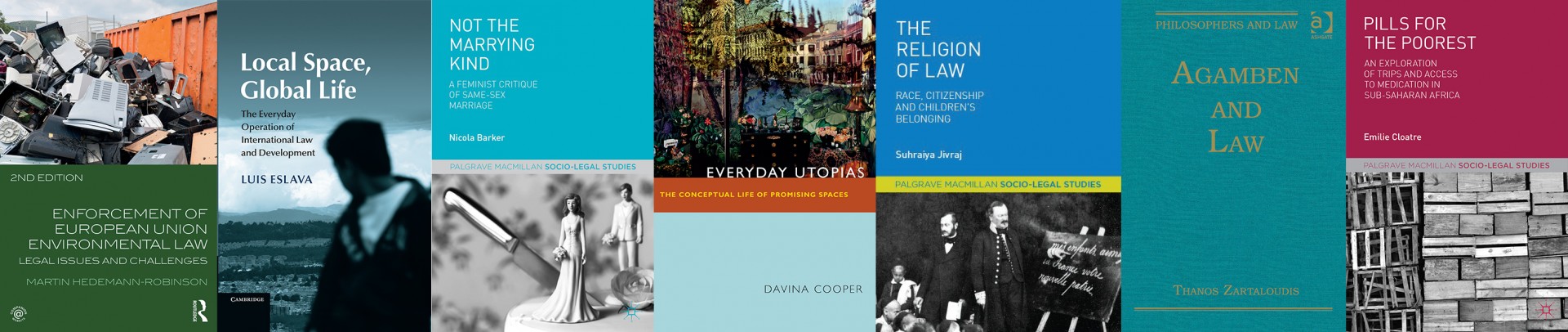
What would it mean to understand the UK’s constitution as fundamentally imperial? This is what I am exploring in my current research project, which will be published as Empire’s Law by Hart Publishing as part of the Kent Critical Law Series. This builds on funding I received from the Socio-Legal Studies Association Research Grants Scheme in 2022.
Mainstream approaches to teaching and presenting Public Law recreate and reinforce imperial logics. As a result, we do not have an accurate perception or picture of the UK’s constitution, which is presented in many texts without any imperial or colonial context.
Through this research, I will retell important cases and constitutional principles through the words and testimonies of those involved and present them in their wider imperial context, by drawing on official governmental archives and documentation, documented witness statements and interviews, as well as court records. Central to this project is the use of archival materials, drawn from official sources, like The National Archives in London, as well as the official legal records of cases and legislation, and secondary legal and historical research. As courts decide matters of law, not history, this archival record is not part of many judgments, as historical events and disputes must be translated into heads of claim.
UK courts have been participants in an official forgetting and sanitising of empire. Courts have interpreted the rule of law as upholding exercises of martial law and the ex post facto legalisation of the killing of British subjects; limitation periods have been deployed to prevent historical justice litigation from British colonies from proceeding in the UK; and courts have declined to order official inquiries into allegations of state collusion in the murder of British citizens, deferring the decision to the UK government. All of these, I argue, are examples of a form of constitutional reasoning which was present and developed during the apogee of British imperium.
The aims of Empire’s Law are not just to explore and expose the realities of this imperial constitutionalism. I am seeking to show what just needs to change and be changed in the UK’s constitutional order to help us build a modern constitution, not built on the legacies of empire.