
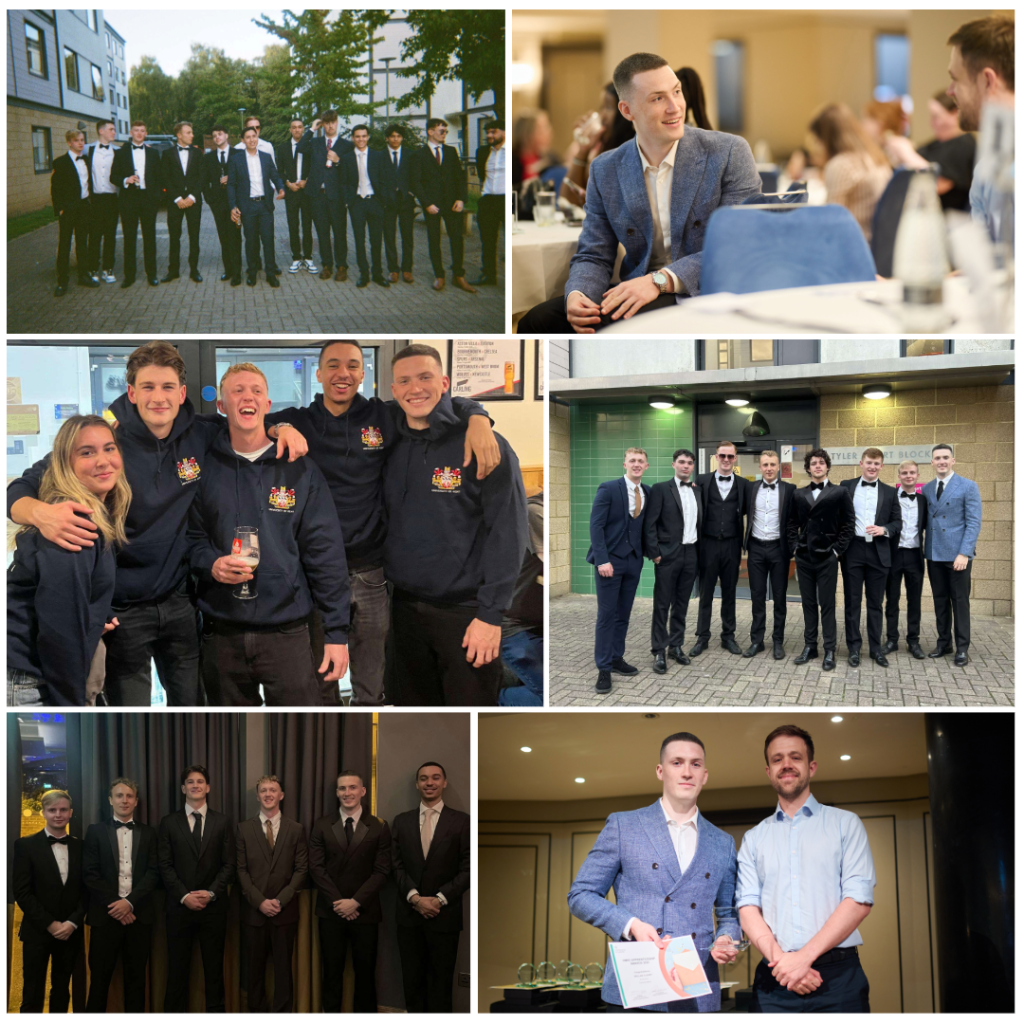
How Declan Built His Career Through a Degree Apprenticeship?
University was never really part of Declan’s plan.
Whilst studying for his A-levels at grammar school, Declan watched many of his peers prepare for university. But he wasn’t convinced that following the same route was right for him, particularly without a clear idea of what he wanted to gain from it.
Instead, he chose an apprenticeship in financial services, where he discovered that he preferred learning through practical experience. It was a decision that suited him, but his interest in economics remained, and he wanted to find a way to develop that interest without stepping away from working life.
When he discovered the Professional Economist Degree Apprenticeship with the University of Kent and HMRC, he found a route that brought both ambitions together. He could study economics, work towards a degree and continue building his professional experience.
“It felt like the best of both worlds rather than a compromise.”
Today, Declan has graduated with a First-Class degree, taken on significant analytical responsibilities at HM Revenue and Customs (HMRC) and secured a Grade 7 role with the Health and Safety Executive (HSE), three grades above his current position.
Looking back, the experience has exceeded his expectations.
“I got the degree, the career, and a real community of other apprentices and professionals around me, all without the trade-offs I was trying to avoid in the first place.”

Bringing Learning into the Workplace
For Declan, one of the most valuable aspects of the apprenticeship has been the opportunity to apply his academic learning directly to his work.
Modules such as applied econometrics and public economics helped him develop a deeper understanding of the economic principles behind the analysis he was undertaking at HMRC.
This became particularly valuable when he led scenario analysis on tax forecasts during a period of significant market volatility. Rather than relying on a single forecast, he was able to draw on his academic learning to consider different scenarios and approach uncertainty more carefully.
“The economic reasoning behind why you’d choose a scenario approach over a single forecast came straight from what I’d been taught, not just what I’d picked up on the job.”
As his knowledge developed, so did his confidence in making professional judgements. He began to recognise that economic analysis is not always about finding one correct answer, but about understanding the evidence, explaining assumptions and making well-reasoned decisions.
“Early on I thought I wanted the ‘right’ answer. Now I understand that in real analytical work, especially under uncertainty, the job is to make a defensible, well-reasoned decision and be transparent about what you know versus what you’re assuming.”
A First-Class Achievement
The opportunity to apply his learning at work was valuable, but balancing the demands of a degree alongside a professional role was not always straightforward.
Whilst completing his dissertation, Declan was also leading fiscal forecasting work at HMRC, including high-pressure Chancellor-facing analysis during a period of market volatility.
One of his most significant professional experiences involved leading a major forecast base update during an unusually complex period of mergers and acquisitions. The work later underwent a full National Audit Office audit, requiring him to explain and defend his methodology to external auditors.
At the same time, his academic studies were strengthening his ability to question assumptions and evaluate the methods behind his work.
“I think about defensibility from the start, not as an afterthought.”
Achieving a First-Class degree whilst managing those responsibilities made the result particularly meaningful.
“The First felt less like an academic achievement in isolation and more like proof that the balancing act had actually worked. I won’t pretend every week felt like it was working at the time.”
Preparing for the Next Chapter
As Declan approached the final End-Point Assessment (EPA) stage of his apprenticeship, he was also navigating several important changes in his personal and professional life.
Alongside his responsibilities at HMRC, he was moving house and actively applying for new roles. Managing these commitments required careful planning, clear priorities and a willingness to focus on what mattered most.
That period of preparation has since led to an exciting new opportunity. Declan has secured a Grade 7 economist role with the Health and Safety Executive, where he will apply his skills to different economic challenges, including market failure and public safety.
He believes the apprenticeship played an important role in preparing him for this next step, providing the academic foundation to complement the experience he had gained through complex analytical work at HMRC.
During the recruitment process, his ability to explain the economic reasoning behind his work proved particularly valuable.
“Panels want to know why you chose an approach, not just what you did, and that’s something the degree specifically trained me to articulate properly.”
Looking ahead, Declan is excited to apply his knowledge in a different environment while continuing to develop as an economist.
“I want to keep building on the same instinct the apprenticeship gave me: starting from the economic reasoning, being honest about uncertainty, and always bringing it back to the decision someone actually needs to make.”
Making a Difference Beyond His Own Apprenticeship
Whilst Declan’s academic achievements and career progression have been significant, one of the experiences he values most is the opportunity to support others.
Having started his apprenticeship learning to navigate a new profession, he now leads a network of around 68 apprentices across the Liverpool region, bringing together people from a wide range of professional backgrounds.
Through this role, he has helped develop a stronger sense of community among apprentices, something he considers one of his proudest achievements.
“Watching that go from something fairly fragmented into a genuine community has been one of the most rewarding parts of the whole experience, separate from the degree itself.”
For Declan, the experience reflects how much has changed since he began, not only in his professional confidence but also in his ability to support others on their own journeys.
Looking Back and Moving Forward
Reflecting on his apprenticeship, Declan is open about the challenges of combining academic study, professional responsibilities and personal commitments.
His advice to anyone considering the apprenticeship is to recognise both the commitment involved and the opportunities it can create.
“If you’re wondering whether it’s worth it, my honest answer is that it’s more demanding than it looks, but it compounds. Everything you learn has somewhere real to go immediately.”
For those beginning their apprenticeship, he encourages them to look for ways to connect their academic learning with their day-to-day responsibilities.
“Look for the overlap deliberately, because it’s there more often than you’d think, and it’s what makes the whole thing sustainable.”
For apprentices approaching their final year or EPA, he recommends building academic projects around their professional experiences wherever possible.
“Start thinking about your EPA and dissertation topic as something you can build from your actual day job, not something separate from it. It makes the workload far more manageable, and the work ends up genuinely better because you’re not starting from scratch.”
Looking back, there is also one piece of advice Declan wishes someone had given him when he first started.
“It’s completely normal for some periods to feel unsustainable, and that doesn’t mean you’re doing it wrong. I wish I’d worried less in the hard weeks and focused more on the big picture.”
For Declan, that bigger picture is now coming into focus. What began as a decision to take a different route into higher education has developed into a career shaped by academic achievement, professional experience and the opportunity to support others.
University may not have been his original plan, but through his degree apprenticeship, Declan found a way to pursue his interest in economics whilst building the career he wanted.
Ready to find your own path?
Whether you’re just starting to explore your options or already know where you want your career to take you, a degree apprenticeship could help you gain the skills, experience and qualification to get there.
Explore the University of Kent’s apprenticeship programmes and discover where your journey could begin.
Contact us
Has Declan’s story inspired you to hire an apprentice? Please contact us on recruitapprenticeships@kent.ac.uk to learn more about how we can support your workforce development needs.